Costs
German Shorthaired Pointer cost in Seattle
About $140–$270/month, $2,000–$3,400 for year one — above average, where this breed's short coat handles the region's real, persistent rain notably better than a heavier coat would.

See German Shorthaired Pointer price across all cities →
Quick answer
German Shorthaired Pointer cost in Seattle
About $140–$270/month, $2,000–$3,400 for year one — above average, where this breed's short coat handles the region's real, persistent rain notably better than a heavier coat would.
A German Shorthaired Pointer in Seattle costs about $140–$270 a month, with the first year around $2,000–$3,400 — above the national average, in a genuinely rainy climate this breed's short, dense coat handles better than a heavier, fluffier coat would.
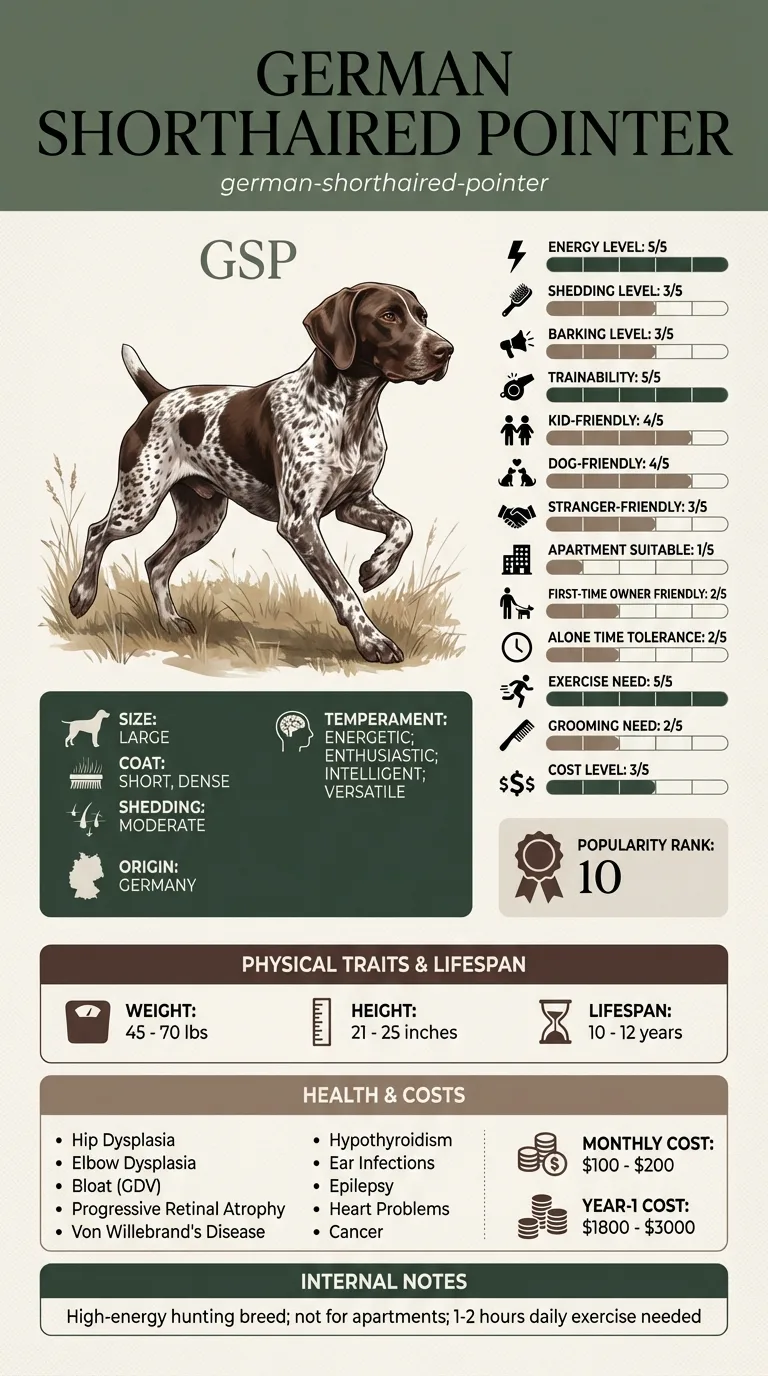
Bloat is a sudden emergency risk given this breed's deep chest — no warning, immediate surgery needed. Hip and elbow dysplasia are the separate, ongoing joint risks worth budgeting real, recurring vet attention for.
These figures reflect Seattle's above-national-average pricing, with real rain gear priced in, though this breed's short coat spares it the intensive grooming costs a heavier coat would add here.
Estimate · source: estimation · confidence: medium · updated 2026-10-06 · not a quote
| Item | Cost range |
|---|---|
Rain gear and field equipment A genuinely worthwhile cost given this breed's high exercise needs and Seattle's persistent rain, without the intensive coat maintenance a heavier breed would add. | $45 - $130 |
One-time setup (initial vet visit, spay/neuter, gear) Covers the first exam, vaccinations, spay/neuter if needed, and gear sized for this breed's large adult weight — priced at Seattle's above-average rates. | $390 - $665 |
| Item | Cost range |
|---|---|
Food Above the national average for a large, highly active breed, consistent with Seattle's overall high price level. | $73 - $115 |
Heartworm and flea/tick prevention Runs long, close to ten months, given Seattle's mild, damp climate. | $13 - $22 |
Each range starts from a national baseline for this breed's size class and is then adjusted for local cost of living and veterinary pricing. The baselines, and the source each one came from, are listed on our sources page (dataset 2026.09). Two inputs, the purchase price and the emergency reserve, have no published national figure we could verify, so we leave them to you rather than invent them.
These are planning estimates, not quotes. Your own numbers will move with the individual dog, your vet and your insurer. Build a budget with your own figures.
For a German Shorthaired Pointer in Seattle, insurance is worth taking seriously given the breed's documented bloat and joint risk, on top of the region's above-average general vet pricing.
This breed's well-documented bloat and joint risk makes insurance worth locking in early — a policy bought before any diagnosis covers costs a self-funded emergency fund alone often can't stretch to match.
Owners with a solid emergency fund and the discipline to leave it untouched for anything but a genuine vet emergency can reasonably self-insure instead.
Seattle's above-average costs are real, but this breed's genuinely low-maintenance coat is a real advantage worth appreciating compared with heavier-coated local breeds.
Seattle's near-constant light rain causes real, documented grooming headaches for many local breeds, matting, slow drying and the musty odor that comes with a heavier coat staying damp too long. This breed's genuinely short, dense coat sidesteps most of that, shedding water easily and drying fast without the same intensive maintenance a fluffier breed would need here, a real, practical advantage most owners don't think to credit until they compare notes with a friend's double-coated dog.
What rain doesn't change is this breed's documented one-to-two-hour daily exercise need, which still requires a genuine plan, real gear and a tolerance for wet conditions, rather than skipping days when the weather turns.
Seattle's high general cost of living shows up clearly in vet pricing, and the region's mild, damp weather keeps the flea season running long, close to ten months, a real recurring cost on top of the city's already above-average pricing.

A Seattle German Shorthaired Pointer owner braced for the same intensive drying and de-matting routine their neighbor's Golden Retriever went through every damp week, only to realize their own dog's coat needed nothing more than a quick towel-off after a rainy walk. The contrast became obvious the first time both dogs got soaked on the same outing, one requiring a lengthy blow-dry session, the other shaking off and drying within the hour on its own.
Key takeaway: In Seattle specifically, this breed's real coat advantage over heavier local breeds is easy to overlook until you see the difference firsthand.
About $140–$270, above the national average, consistent with Seattle's overall high cost of vet care and pet services.
Roughly $2,000–$3,400, including the initial vet exam, spay/neuter if needed, and gear on top of ongoing monthly costs.
Genuinely, yes — its short, dense coat sheds water and dries fast, avoiding the matting and slow-drying issues a heavier or double coat would face in Seattle's persistent rain.
Not really, though it does require real rain gear and a tolerance for wet conditions — this breed's documented one-to-two-hour daily exercise need doesn't shrink just because the weather turns.
Worth pricing out given the breed's documented bloat and joint risk, bought while the dog is young and before anything is on record.
Around $920 covers a typical significant vet visit in this market, reflecting Seattle's above-average general pricing.
About $140–$270/month, $2,000–$3,400 for year one — above average, where this breed's short coat handles the region's real, persistent rain notably better than a heavier coat would.
This guide is not medical advice. If your dog shows pain, sudden behavior change, or worsening symptoms, consult a licensed veterinarian.
Some links may be affiliate links. We may earn a commission at no extra cost to you. We only suggest products we believe are helpful for dog owners.
We research and check what we publish, but we do not warrant that any figure, date, price, or statement is accurate, complete, or current, and we accept no liability for any loss, cost, injury, or other harm arising from the use of this site. Use it as one reference among several. You remain responsible for your own decisions and for your dog's care - confirm anything that matters with a licensed veterinarian or another qualified professional before you act on it. Full disclaimer.
One sheet with every line item, the emergency fund and when insurance pays off - unlocks on this page.
You get: 12-month budget sheet
No spam. One-click unsubscribe. See our privacy policy.
See a sample page before you decide.