Health
Why does pancreatitis raise diabetes risk later?
Repeated pancreatic inflammation can damage insulin-producing cells, linking the two conditions mechanically over time.

Quick answer
Why does pancreatitis raise diabetes risk later?
Repeated pancreatic inflammation can damage insulin-producing cells, linking the two conditions mechanically over time.
In an aging Akita, pancreatitis and diabetes aren't always two separate problems that happen to occur together — sometimes one directly causes the other.
Owners of Akitas in their senior years, especially those managing a dog with a history of prior pancreatitis episodes, are the ones who see this connection play out directly.
This guide is not medical advice. If your dog shows pain, sudden behavior change, or worsening symptoms, consult a licensed veterinarian.
Some links may be affiliate links. We may earn a commission at no extra cost to you. We only suggest products we believe are helpful for dog owners.
We research and check what we publish, but we do not warrant that any figure, date, price, or statement is accurate, complete, or current, and we accept no liability for any loss, cost, injury, or other harm arising from the use of this site. Use it as one reference among several. You remain responsible for your own decisions and for your dog's care - confirm anything that matters with a licensed veterinarian or another qualified professional before you act on it. Full disclaimer.
Check this first
A diabetic dog that suddenly stops eating, vomits repeatedly, becomes lethargic, or has breath with a sweet or acetone-like smell may be developing diabetic ketoacidosis, a life-threatening complication, especially if a concurrent pancreatitis flare is also present. This combination needs same-day emergency veterinary care.
A known diabetic dog that seems disoriented, wobbly, or collapses may be experiencing a dangerous blood sugar drop (hypoglycemia), particularly if it's eating less than usual due to a pancreatitis flare — this also needs immediate attention, often including giving a small amount of corn syrup on the gums en route to the vet if your vet has specifically instructed you to do so in this situation.
More gradual signs — increased thirst and urination, weight loss despite a normal appetite, or intermittent vomiting — warrant a prompt but non-emergency vet visit for bloodwork to evaluate both conditions.
If any of these apply, call your vet or an emergency clinic now. The rest of this page is for the cases that are not an emergency.
Pancreatitis and diabetes are mechanically connected in senior dogs because the pancreas handles both digestive enzyme production and insulin production, and repeated inflammation can damage the insulin-producing tissue over time. In an aging Akita with a history of pancreatitis, this connection is a real reason for closer, proactive monitoring rather than treating each condition in isolation.
This specific combination becomes more common as dogs age, particularly in those with a documented history of pancreatitis, and it's a recognized pattern across breeds in veterinary internal medicine rather than something unique to the Akita.
There's no confirmed Akita-specific genetic link driving this combination; it reflects a general biological connection between pancreatic inflammation and insulin production that applies across breeds. The Akita's relevance here is simply that, as a large breed with a hearty appetite, dietary-indiscretion-triggered pancreatitis is a realistic risk over a long lifespan, which is what sets the stage for this later complication.
Diet composition and consistency are the dominant environmental factors — a pattern of high-fat meals or repeated dietary indiscretion raises the odds of recurrent pancreatitis, which in turn raises the odds of eventual diabetes. Obesity independently compounds both risks.
See a vet the same day for lethargy, repeated vomiting, sweet-smelling breath, or collapse in a dog with either condition — these can indicate a dangerous complication. Schedule a visit for increased thirst and urination or unexplained weight loss.
Because these two conditions can compound each other, a few specific mistakes carry outsized long-term risk in a senior dog.
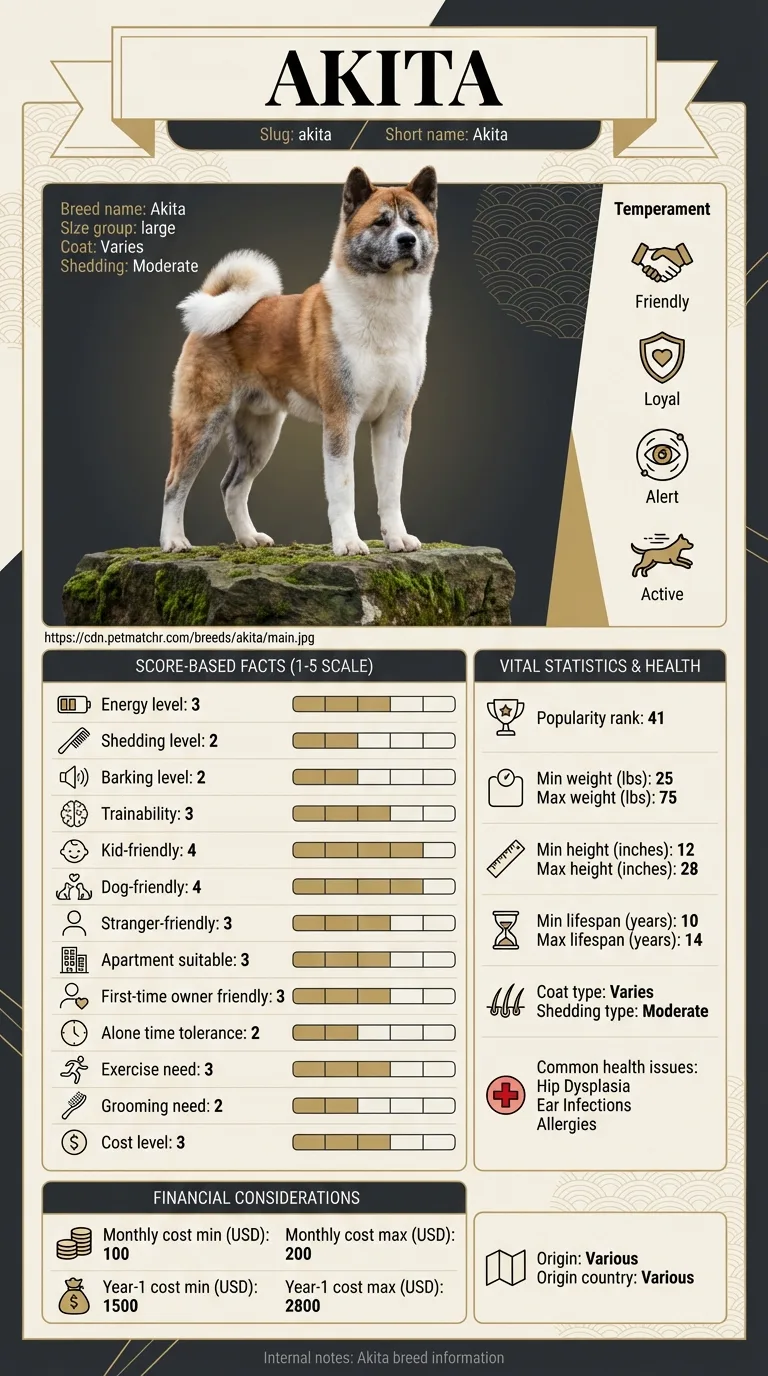
See all Akita health problems, which breeds are prone to pancreatitis diabetes, or the full Akita breed guide for temperament, exercise needs and ownership costs.
Diabetes management typically takes several weeks of monitoring and dose adjustment to stabilize blood sugar levels initially, after which it becomes an ongoing daily routine. Pancreatitis flares layered on top usually add days to a couple of weeks of more intensive management before returning to the baseline routine.
Success is stable blood sugar control with minimal pancreatitis flares, achieved through consistent diet, medication timing, and regular veterinary monitoring — a manageable long-term routine rather than a cure.
If you think your Akita has pancreatitis & diabetes, the plan is three steps: write down what you have seen and when it started, book a veterinary appointment rather than waiting for the next flare, and take video of the behaviour or symptom before you go — the thing you are worried about rarely happens in the consulting room. Screening in the parents covers hip dysplasia, progressive retinal atrophy, hypothyroidism.
What the vet visit should produce is a diagnosis and a written plan, not just reassurance: what is being ruled out, what the monitoring interval is, and which signs mean you come back sooner. Ask what the treatment costs across a year rather than per visit, because that is the number that decides whether you are managing this condition or reacting to it.
Between appointments, keep a short log — dates, what you saw, what changed. It is the single most useful thing an owner brings to a follow-up, and for pancreatitis & diabetes it is often what separates a clear pattern from a guess.
Zoe's ten-year-old Akita, Titan, had two separate pancreatitis flares over about a year in Baltimore. During a follow-up visit after the second episode, routine bloodwork revealed elevated blood sugar, and further testing confirmed diabetes had developed. Zoe's vet explained the connection between the two conditions and helped her set up a consistent daily insulin and feeding schedule alongside a strict low-fat diet to reduce the odds of further pancreatitis flares. A year later, Titan's blood sugar has stayed well controlled, and he hasn't had another pancreatitis episode.
Key takeaway: A history of pancreatitis in an aging dog is a genuine reason to watch more closely for diabetes — the two conditions are mechanically connected rather than coincidental.
The pancreas produces both digestive enzymes and insulin. Repeated inflammation from pancreatitis can damage the insulin-producing cells over time, which is why a history of pancreatitis raises future diabetes risk in dogs of any breed.
The mechanism is a general feature of canine pancreatic biology, not something unique to Akita genetics, though any dog with a history of pancreatitis, including this breed, carries elevated future diabetes risk.
Increased thirst and urination, weight loss despite a normal or increased appetite, and sometimes cloudy eyes from cataracts (a common diabetes complication) are the classic early signs.
Daily insulin injections combined with a consistent diet and feeding schedule are the standard approach, with regular blood glucose monitoring to adjust the insulin dose appropriately.
Yes — reduced appetite during a flare affects how much insulin is appropriate, which is why dogs managing both conditions need closer coordination with their vet during any active flare.
Ongoing insulin, monitoring supplies, and prescription diet commonly add up to a meaningful monthly cost, often in the range of $50 to $150 depending on the dog's size and specific needs, on top of periodic vet monitoring visits.
Managing pancreatitis aggressively after a first episode — including a strict low-fat diet — is the most direct way to reduce the risk of the condition progressing to diabetes over time.
Repeated pancreatic inflammation can damage insulin-producing cells, linking the two conditions mechanically over time.
Increased thirst and urination in an older dog is the classic early sign worth checking with bloodwork.
Often $50 to $150 a month for insulin, supplies, and prescription diet, plus periodic vet monitoring costs.
Yes — a consistent low-fat, appropriately timed diet supports both pancreatitis and diabetes management simultaneously.
Very — consistent feeding and insulin timing is central to keeping both conditions stable.
A one-page prep sheet for this condition: the signs, the questions to ask, what to get priced. Unlocks here.
You get: Vet visit prep sheet
No spam. One-click unsubscribe. See our privacy policy.
Preview page 1 before you decide.