Costs
Chow Chow cost in New Orleans
About $135–$262/month, $1,750–$3,250 for year one — near average, with real Mardi Gras crowd stress worth planning around given this breed's reserved temperament.

See Chow Chow price across all cities →
Quick answer
Chow Chow cost in New Orleans
About $135–$262/month, $1,750–$3,250 for year one — near average, with real Mardi Gras crowd stress worth planning around given this breed's reserved temperament.
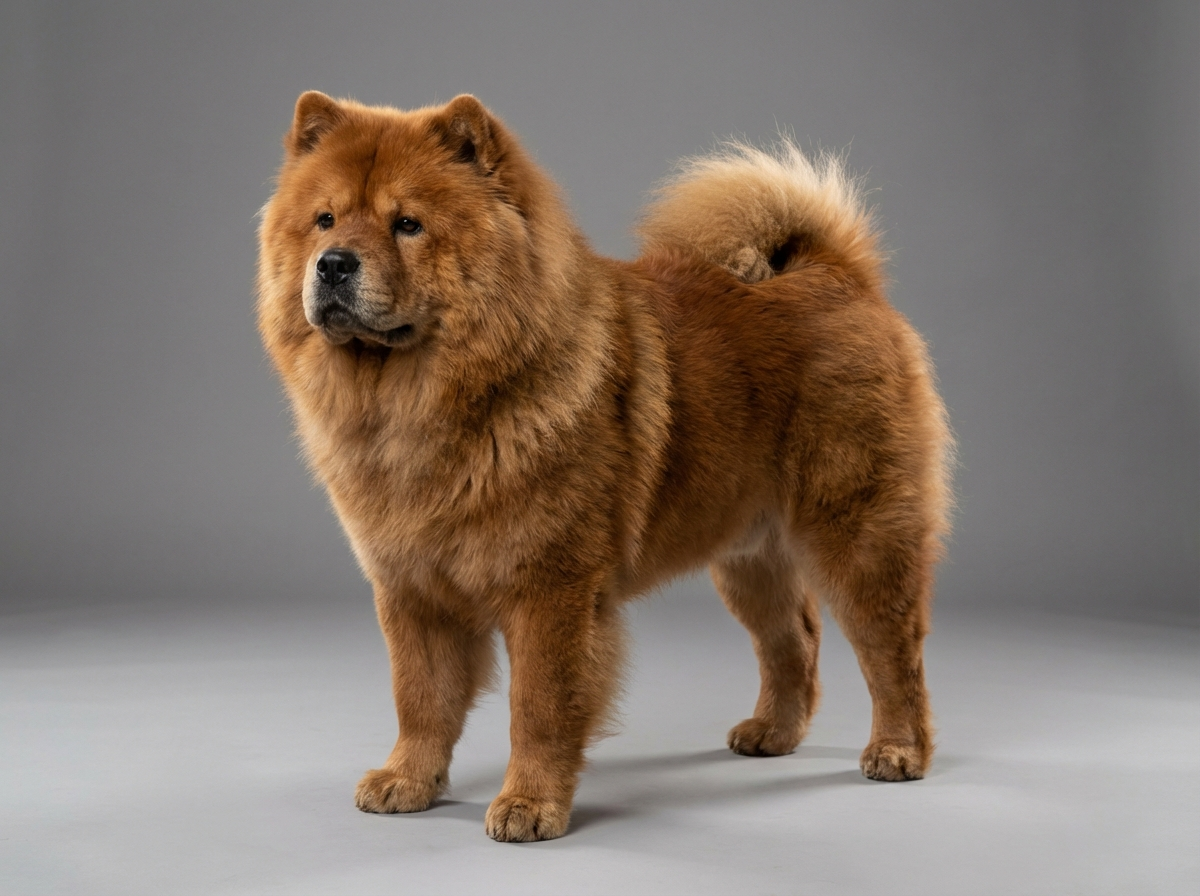
A Chow Chow in New Orleans costs about $135–$262 a month, with the first year around $1,750–$3,250 — close to the national average, in a city whose signature season is worth planning around for this breed's temperament.
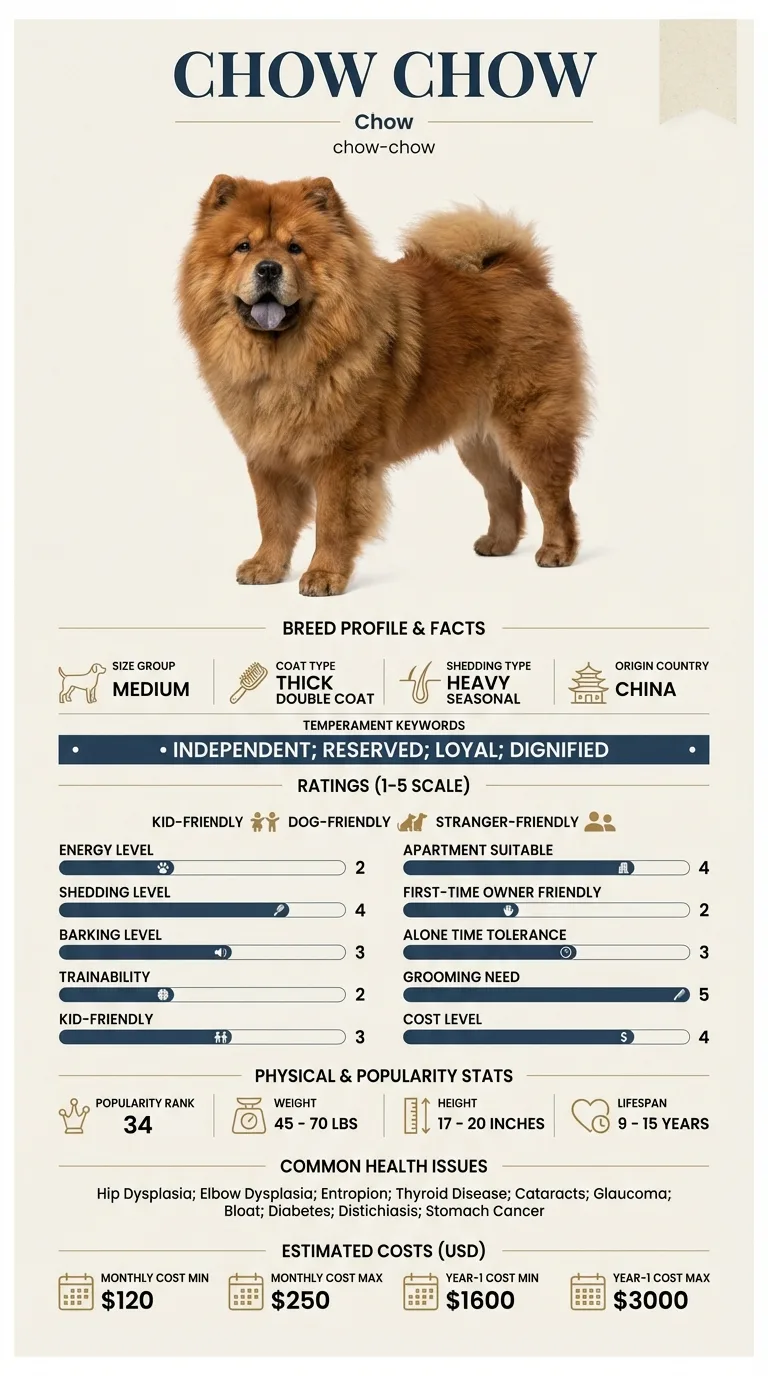
Entropion, an inward-rolling eyelid, is common enough in this breed to often require corrective surgery rather than just monitoring. Bloat is the separate, sudden emergency risk given this breed's deep chest — no warning, immediate surgery needed.
These figures reflect New Orleans's near-national-average pricing, with a genuine year-round heartworm and parasite window and a real dog-walking cost given the city's yard-scarce older housing.
Estimate · source: estimation · confidence: medium · updated 2026-10-06 · not a quote
| Item | Cost range |
|---|---|
One-time setup (initial vet visit, spay/neuter, gear) Covers the first exam, vaccinations, spay/neuter if needed, and gear sized for this breed's medium-large adult weight. | $365 - $620 |
| Item | Cost range |
|---|---|
Food Close to the national average for a medium-large breed, consistent with New Orleans's general cost of living. | $51 - $83 |
Professional grooming (heavy double coat) This breed's dense double coat and heavy seasonal shedding make regular professional grooming a genuinely common cost. | $58 - $115 |
Dog walker (yard-scarce shotgun-house housing) A common cost for New Orleans's older housing stock, given this breed's moderate but real exercise needs. | $50 - $115 |
Heartworm and flea/tick prevention A genuine year-round cost given Louisiana's humid subtropical climate. | $14 - $26 |
Each range starts from a national baseline for this breed's size class and is then adjusted for local cost of living and veterinary pricing. The baselines, and the source each one came from, are listed on our sources page (dataset 2026.09). Two inputs, the purchase price and the emergency reserve, have no published national figure we could verify, so we leave them to you rather than invent them.
These are planning estimates, not quotes. Your own numbers will move with the individual dog, your vet and your insurer. Build a budget with your own figures.
For a Chow Chow in New Orleans, insurance is worth taking seriously given the breed's documented entropion and bloat risk, independent of the region's genuinely average general pricing.
This breed's well-documented entropion and bloat risk make insurance worth locking in early — a policy bought before any diagnosis covers costs a self-funded emergency fund alone often can't stretch to match.
Owners with a solid emergency fund and the discipline to leave it untouched for anything but a genuine vet emergency can reasonably self-insure instead.
New Orleans's near-average costs are straightforward; the real, genuinely local planning here is a parade-season routine that respects this breed's actual temperament.
Mardi Gras season brings genuinely dense, loud crowds to the city's traditional parade routes, and this breed's documented reserved, independent temperament makes that kind of chaotic, unfamiliar environment a real source of stress rather than excitement. Unlike a more outgoing breed that might thrive on the energy, many longtime local owners of this breed simply plan to leave the dog at home, in a calm, familiar space, during the densest parade weekends rather than bringing it along.
New Orleans's classic shotgun-house housing stock is often older and without much private yard space, making dog-walking a real, recurring cost in the city's denser neighborhoods, and this breed's moderate exercise needs still mean regular outdoor time is genuinely necessary.
Louisiana's year-round humidity makes flea, tick and heartworm prevention a genuine twelve-month cost, and the heat is a real management concern for this breed's dense double coat.

A New Orleans Chow Chow owner brought their dog along to a neighborhood parade for the first time, expecting the outing to be a fun bonding experience. The dog spent the entire event pressed against the owner's legs, visibly overwhelmed by the noise and crowd, and the following season the family left the dog home with a sitter instead, opting for a much calmer walk once the streets had cleared.
Key takeaway: In New Orleans specifically, this breed's genuine temperament is worth respecting during parade season rather than assuming every dog enjoys the city's signature festival energy.
About $135–$262, close to the national average, consistent with New Orleans's broader cost-of-living profile.
Often, genuinely, yes — this breed's documented reserved, independent temperament doesn't naturally handle unfamiliar, chaotic parade crowds well, and many local owners simply keep the dog home during peak parade weekends.
Roughly $1,750–$3,250, including the initial vet exam, spay/neuter if needed, and gear on top of ongoing monthly costs.
Often, yes — this breed's moderate exercise needs mean regular outdoor time is genuinely necessary, and New Orleans's yard-scarce shotgun-house housing makes a dog-walker a realistic recurring cost for many owners.
Worth pricing out given the breed's documented entropion and bloat risk, bought while the dog is young and before anything is on record.
Around $780 covers a typical significant vet visit in this market, reflecting both the national baseline and this breed's real heat and bloat risk.
About $135–$262/month, $1,750–$3,250 for year one — near average, with real Mardi Gras crowd stress worth planning around given this breed's reserved temperament.
This guide is not medical advice. If your dog shows pain, sudden behavior change, or worsening symptoms, consult a licensed veterinarian.
Some links may be affiliate links. We may earn a commission at no extra cost to you. We only suggest products we believe are helpful for dog owners.
We research and check what we publish, but we do not warrant that any figure, date, price, or statement is accurate, complete, or current, and we accept no liability for any loss, cost, injury, or other harm arising from the use of this site. Use it as one reference among several. You remain responsible for your own decisions and for your dog's care - confirm anything that matters with a licensed veterinarian or another qualified professional before you act on it. Full disclaimer.
One sheet with every line item, the emergency fund and when insurance pays off - unlocks on this page.
You get: 12-month budget sheet
No spam. One-click unsubscribe. See our privacy policy.
See a sample page before you decide.