Health
Is cloudiness always a cataract?
No. A blue-grey central haze in an older dog is usually normal lens ageing. A cataract is whiter and blocks the view into the eye.

Quick answer
Is cloudiness always a cataract?
No. A blue-grey central haze in an older dog is usually normal lens ageing. A cataract is whiter and blocks the view into the eye.
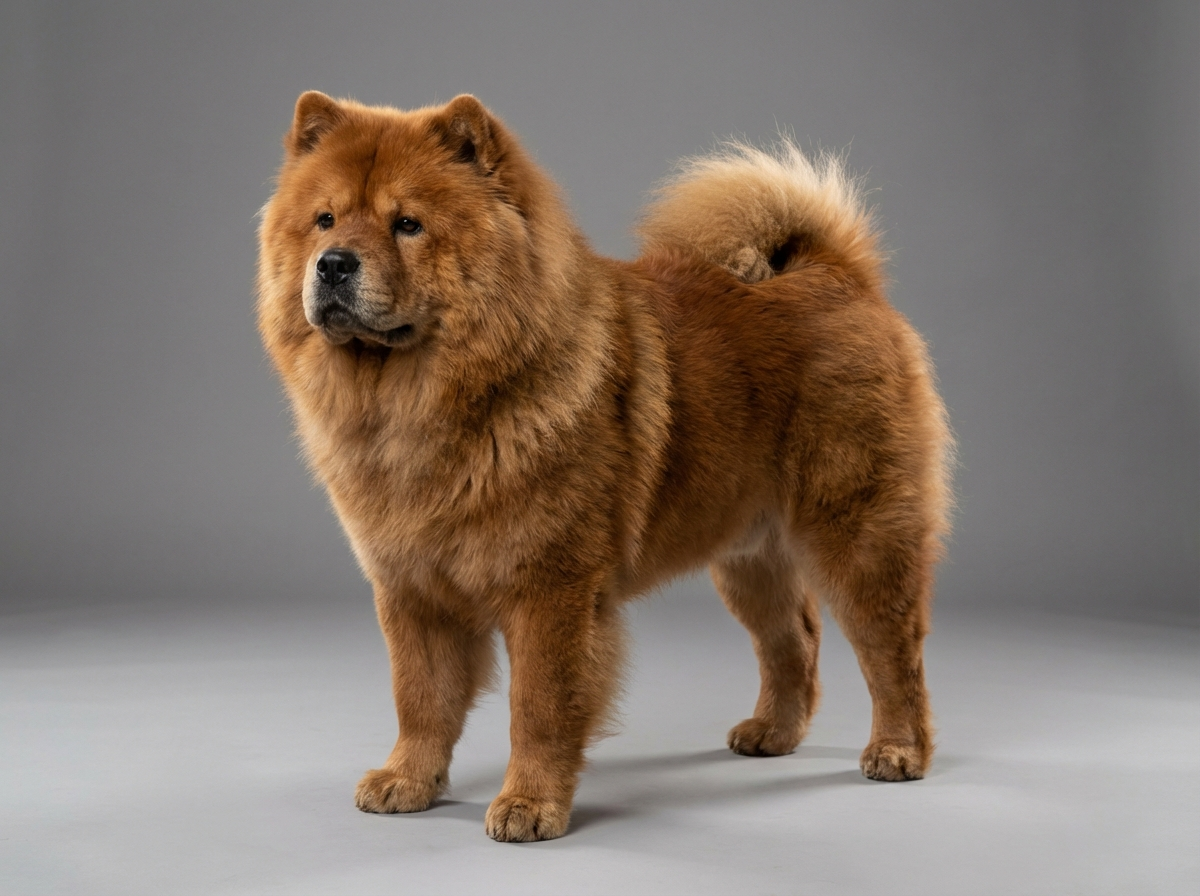
Chow Chow eyes are set deep, small relative to the head, and framed by a heavy brow and a thick surrounding ruff. Almost nothing about that arrangement invites a good look. Getting a proper view requires positioning the dog with a light source, and most owners have never done it once.
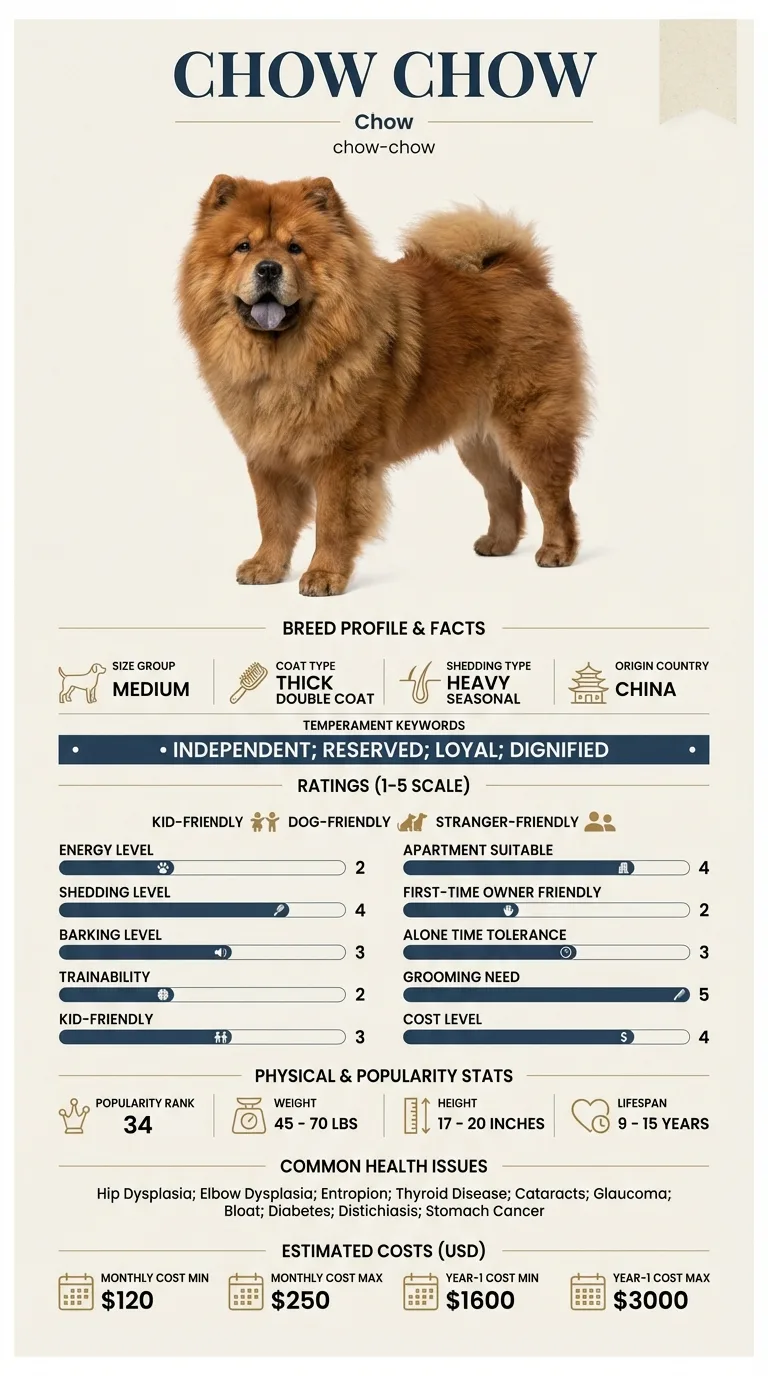
Owners of older Chows trying to distinguish normal ageing change from genuine cataract, and owners of any Chow diagnosed with diabetes, since diabetic cataracts can develop over a matter of weeks rather than years. It also matters to anyone whose dog has become hesitant in dim light.
This guide is not medical advice. If your dog shows pain, sudden behavior change, or worsening symptoms, consult a licensed veterinarian.
Some links may be affiliate links. We may earn a commission at no extra cost to you. We only suggest products we believe are helpful for dog owners.
We research and check what we publish, but we do not warrant that any figure, date, price, or statement is accurate, complete, or current, and we accept no liability for any loss, cost, injury, or other harm arising from the use of this site. Use it as one reference among several. You remain responsible for your own decisions and for your dog's care - confirm anything that matters with a licensed veterinarian or another qualified professional before you act on it. Full disclaimer.
A cataract is clouding of the lens that scatters light and reduces vision, ranging from a small incidental opacity to complete blindness. It is documented in the Chow Chow, and the breed's deep-set eyes make it harder to detect at home than in most breeds. Its most rapid form occurs secondary to diabetes, another condition documented in this breed.
Cataracts are among the more frequently encountered eye conditions in dogs generally, and their presence on this breed's documented list means Chow owners should treat them as a realistic prospect rather than a rare misfortune. Given a nine to fifteen year lifespan, many Chows will develop at least some lens opacity, though only a proportion will lose functional vision.
The inherited component is the primary driver and is why cataracts sit on the breed's documented list. The Chow's eye conformation compounds the practical problem: eyes that are small, deep-set and framed by a heavy brow and dense surrounding coat are physically difficult to examine, which delays detection. Documented eyelid disorders in the breed add a further layer, since chronic irritation and inflammation of the eye contribute to lens change over time. And documented diabetes provides a separate and much faster route to cataract formation in affected individuals.
Environment plays a limited role in cataract development itself, though eye injuries are more likely in dogs allowed to push through dense undergrowth, and the Chow's coat around the face can carry debris towards the eye. The larger environmental factor is how a visually impaired dog is managed: a home with a stable furniture layout, consistent lighting and predictable routes allows a dog with poor sight to function far better than one where things move.
Book an appointment for any new cloudiness, for hesitancy on stairs or in the dark, or for a diabetic dog whose sight seems to have changed at all. Seek same-day emergency care for a painful eye - one held shut, watering, red, or with a visibly enlarged or bulging globe - and for sudden blindness. Acute eye pain and rapidly rising pressure inside the eye can destroy vision within a day, and glaucoma is documented in this breed. Never put any drop, ointment or home remedy into a painful eye without veterinary instruction.
See all Chow Chow health problems, which breeds are prone to cataracts, or the full Chow Chow breed guide for temperament, exercise needs and ownership costs.
Age-related cataracts typically progress over months to years, and many never reach the point of significant impairment. Diabetic cataracts can go from clear lens to dense opacity in weeks. If surgery is pursued, expect a specialist assessment including retinal testing, then a demanding post-operative medication schedule lasting several weeks and follow-up examinations over months.
Where surgery is appropriate, success is restored functional vision - a dog navigating confidently again. Where it is not, success is a comfortable dog with a stable home layout, no painful complications, and an owner who has adapted the household rather than the dog. Both are legitimate outcomes, and a blind but comfortable Chow with a predictable environment usually has a very good quality of life.
Almost every dog over about seven develops a bluish-grey haze in the centre of the lens. This is nuclear sclerosis, a normal age change in which the lens fibres compact, and it causes little meaningful vision loss. Owners frequently see it and assume the worst.
The practical distinction is that you can still see through sclerosis. Shine a light into the eye at an angle in a dim room and, with sclerosis, you can still make out the reflective layer at the back. A true cataract blocks that view: the opacity looks white or crystalline rather than smoky blue, and the light does not get past it.
This check is harder on a Chow than on most breeds. Deep-set eyes under a heavy brow and surrounded by dense coat mean you need the dog facing you, in dim light, with a phone torch held slightly off to the side rather than straight on. Photograph what you see. Comparing this month's photograph with one from six months ago is far more reliable than trusting your memory of a small dark eye.
There is one more reason for care here. The breed carries documented eyelid disorders, and inward-rolling lids or extra lashes rubbing the cornea can also make an eye look cloudy. Corneal cloudiness sits on the surface; a cataract sits behind the pupil. Telling them apart is a job for a vet, but knowing they are different is what gets you there.

Dogs compensate for gradual vision loss extremely well within a familiar home, so the earliest signs almost always involve novelty, darkness or height.
Yuki was ten and had been diagnosed with diabetes in the spring. Her owner, Callum, had settled into the routine of managing it and felt they were doing well. In early July he noticed she was hesitating at the back step, which she had never done. He took a photograph of her eyes with his phone torch, the way the practice nurse had shown him, and compared it with the one he had taken at diagnosis. In the earlier picture he could see the reflective layer at the back of both eyes. In the new one he could not see past either lens. He phoned the following morning. Yuki was referred and assessed for surgery, and the specialist was direct that the six-week timescale was entirely typical for diabetic cataract. She was a candidate, the surgery went well, and Callum's clearest memory of the whole episode is how much difference having two dated photographs made to how quickly things moved.
Key takeaway: In a diabetic Chow, eyes should be checked weekly rather than at annual visits, because the lens can go from clear to opaque within a month. On a deep-set eye a dated phone photograph is worth more than any amount of looking, since it removes memory from the comparison.
Cataracts appear on the Chow Chow's documented health condition list, so yes, this is a recognised breed concern rather than simply an ageing issue. That is a good reason to include a proper eye examination in every routine check-up rather than only mentioning it when something looks wrong.
Diabetes is also documented in the Chow Chow, and diabetic cataracts can form remarkably quickly - sometimes within weeks - and often affect both eyes. Any diabetic dog whose vision changes suddenly needs prompt assessment, because rapid lens swelling can cause painful inflammation inside the eye as well as blindness.
No. Drops and supplements marketed as dissolving cataracts do not work, and money spent on them is wasted. Surgical removal of the lens is the only established treatment, and whether a particular dog is a candidate depends on the retina's health, which is assessed by a specialist.
A stable cataract itself is not painful, but complications can be. A cataract that swells or breaks down can trigger significant inflammation inside the eye, and cataracts can contribute to secondary glaucoma - which is documented in this breed and is genuinely painful. That is why a diagnosed cataract needs monitoring rather than ignoring.
Most dogs adapt considerably better than their owners expect, particularly when vision is lost gradually and the home layout stays constant. The Chow's independence works in its favour here. What needs managing is the increased startle risk in a breed that is already wary of strangers.
For the right candidate it restores functional vision and is a genuinely good outcome. It requires general anaesthesia, which needs careful planning in this breed, plus an intensive medication schedule for weeks afterwards. Discuss honestly with a specialist whether your individual dog and household can manage that regime.
No. A blue-grey central haze in an older dog is usually normal lens ageing. A cataract is whiter and blocks the view into the eye.
In a dim room, with the dog facing you and a phone torch held slightly off-axis. Photograph each eye and compare over time.
No. There is no medical treatment that clears a cataract. Surgery is the only established option.
Keep furniture in fixed positions, announce your approach verbally, and use scent or texture markers at stairs and doorways.
A one-page prep sheet for this condition: the signs, the questions to ask, what to get priced. Unlocks here.
You get: Vet visit prep sheet
No spam. One-click unsubscribe. See our privacy policy.
Preview page 1 before you decide.