Costs
Chow Chow cost in Philadelphia
About $150–$290/month, $1,950–$3,650 for year one — above average, worth checking a rowhome's actual doorway and hallway width before committing.

See Chow Chow price across all cities →
Quick answer
Chow Chow cost in Philadelphia
About $150–$290/month, $1,950–$3,650 for year one — above average, worth checking a rowhome's actual doorway and hallway width before committing.
A Chow Chow in Philadelphia costs about $150–$290 a month, with the first year around $1,950–$3,650 — above the national average, in a city where the housing stock itself is worth measuring before move-in.
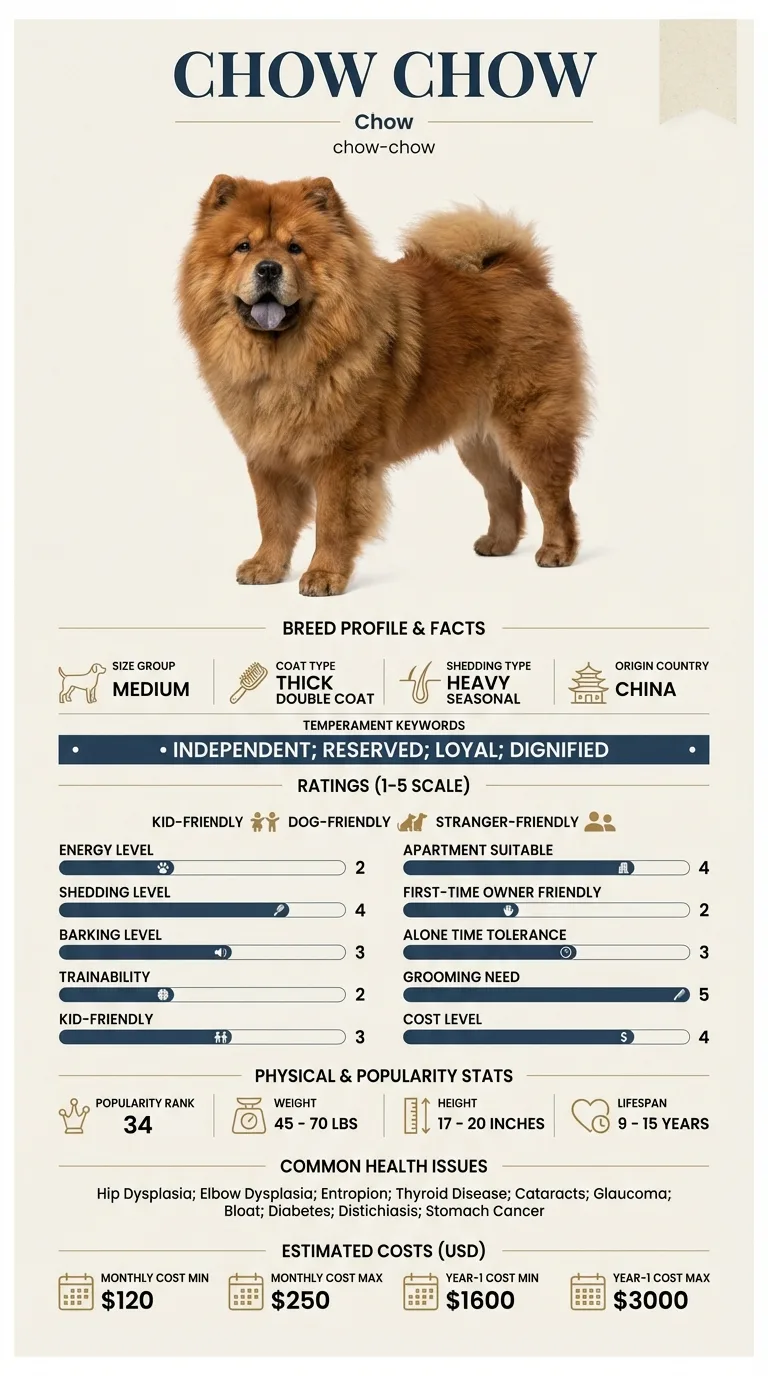
Entropion, an inward-rolling eyelid, is common enough in this breed to often require corrective surgery rather than just monitoring. Bloat is the separate, sudden emergency risk given this breed's deep chest — no warning, immediate surgery needed.
These figures reflect Philadelphia's above-national-average Northeast-corridor pricing, with a dog-walking line item reflecting the city's rowhouse housing stock.
Estimate · source: estimation · confidence: medium · updated 2026-10-06 · not a quote
| Item | Cost range |
|---|---|
One-time setup (initial vet visit, spay/neuter, gear) Covers the first exam, vaccinations, spay/neuter if needed, and gear sized for this breed's medium-large adult weight. | $400 - $680 |
| Item | Cost range |
|---|---|
Food Above the national average for a medium-large breed, consistent with the broader Northeast corridor. | $56 - $92 |
Professional grooming (heavy double coat) This breed's dense double coat and heavy seasonal shedding make regular professional grooming a genuinely common cost. | $62 - $125 |
Dog walker or daycare (rowhouse without yard) A common cost for Philadelphia's rowhouse-heavy housing stock, given this breed's real, moderate exercise needs. | $65 - $145 |
Each range starts from a national baseline for this breed's size class and is then adjusted for local cost of living and veterinary pricing. The baselines, and the source each one came from, are listed on our sources page (dataset 2026.09). Two inputs, the purchase price and the emergency reserve, have no published national figure we could verify, so we leave them to you rather than invent them.
These are planning estimates, not quotes. Your own numbers will move with the individual dog, your vet and your insurer. Build a budget with your own figures.
For a Chow Chow in Philadelphia, insurance is worth taking seriously given the breed's documented entropion and bloat risk, independent of the housing-fit question a specific rowhome might raise.
Given how commonly entropion and cataracts affect this breed, insurance purchased while the dog is young and healthy is one of the higher-value purchases an owner of this breed can make anywhere.
Owners who've built a genuinely large emergency fund and are comfortable managing a serious case's cost themselves can reasonably self-insure instead.
Philadelphia's above-average costs are real, but confirming a rowhome's actual doorway and hallway width in person before signing avoids a real, avoidable daily friction.
Philadelphia's oldest rowhomes, particularly in neighborhoods dating to the colonial and Victorian eras, carry genuinely narrow doorways, hallways and staircases compared with modern construction. For a dog this breed's size and build, that's a real, physical fit question worth walking through in person rather than assuming any rowhome works the same way. A newer or renovated unit with wider passages makes daily life meaningfully easier than an unaltered historic layout.
Philadelphia's rowhouse-heavy neighborhoods, often without much private yard space, also make dog-walking a real, recurring cost for many owners, though this breed's moderate exercise needs make that somewhat more manageable than for a higher-energy breed.
Philadelphia's general cost of living runs above the national average, consistent with the broader Northeast corridor, and Pennsylvania's temperate climate keeps flea-and-tick prevention seasonal rather than year-round.

A Philadelphia family renting an unrenovated colonial-era rowhome discovered only after move-in how genuinely narrow the front hallway was, making daily trips in and out with their Chow Chow an awkward squeeze past furniture. A move to a similarly priced but renovated unit a year later, with wider doorways throughout, made an ordinary daily routine noticeably easier for both the dog and the family.
Key takeaway: In Philadelphia's historic housing stock specifically, walking a unit in person with this breed's size in mind is worth the extra effort before signing, not something to discover after the lease is final.
About $150–$290, above the national average, consistent with the broader Northeast corridor's pricing.
Roughly $1,950–$3,650, including the initial vet exam, spay/neuter if needed, and gear on top of ongoing monthly costs.
It genuinely depends on the specific unit — the city's oldest colonial and Victorian-era rowhomes carry narrow doorways and staircases by modern standards, worth walking through in person before committing, while newer or renovated units are typically less of an issue.
Often, yes — Philadelphia's rowhouse-heavy housing stock without much private yard space makes dog-walking a real, recurring cost, though this breed's moderate exercise needs make it somewhat more manageable than for a higher-energy breed.
Worth pricing out given the breed's documented entropion and bloat risk, bought while the dog is young and before anything is on record.
Around $850 covers a typical significant vet visit in this market, reflecting Philadelphia's above-average Northeast-corridor pricing.
About $150–$290/month, $1,950–$3,650 for year one — above average, worth checking a rowhome's actual doorway and hallway width before committing.
This guide is not medical advice. If your dog shows pain, sudden behavior change, or worsening symptoms, consult a licensed veterinarian.
Some links may be affiliate links. We may earn a commission at no extra cost to you. We only suggest products we believe are helpful for dog owners.
We research and check what we publish, but we do not warrant that any figure, date, price, or statement is accurate, complete, or current, and we accept no liability for any loss, cost, injury, or other harm arising from the use of this site. Use it as one reference among several. You remain responsible for your own decisions and for your dog's care - confirm anything that matters with a licensed veterinarian or another qualified professional before you act on it. Full disclaimer.
One sheet with every line item, the emergency fund and when insurance pays off - unlocks on this page.
You get: 12-month budget sheet
No spam. One-click unsubscribe. See our privacy policy.
See a sample page before you decide.