Health
What are the main signs of hypothyroidism in a dog?
Dull thinning coat without itching, weight gain despite steady food intake, lethargy, heat-seeking, and skin infections that keep recurring.

Quick answer
What are the main signs of hypothyroidism in a dog?
Dull thinning coat without itching, weight gain despite steady food intake, lethargy, heat-seeking, and skin infections that keep recurring.
A dog who has become slower, heavier and shabbier looking is easy to write off as simply older. Sometimes that is exactly what it is. Sometimes a blood test says otherwise.
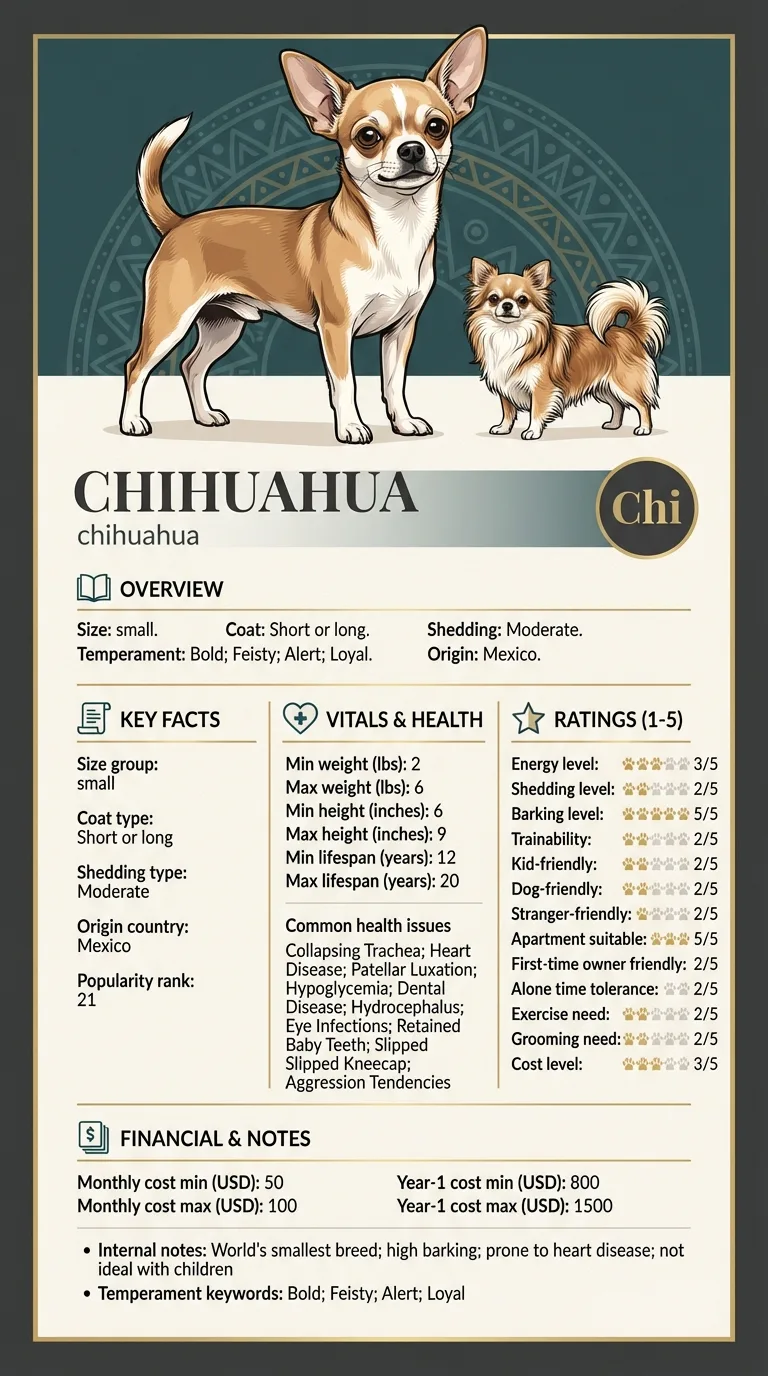
Owners of middle-aged Chihuahuas who have noticed a cluster of vague changes and cannot decide whether they add up to anything. Also owners who have had a borderline thyroid result and been told to retest rather than treat.
This guide is not medical advice. If your dog shows pain, sudden behavior change, or worsening symptoms, consult a licensed veterinarian.
Some links may be affiliate links. We may earn a commission at no extra cost to you. We only suggest products we believe are helpful for dog owners.
Hypothyroidism is an insufficient supply of thyroid hormone, which slows metabolism across many systems at once. It typically appears in middle age and builds gradually, so the changes are easy to attribute to ageing. Diagnosis rests on blood testing interpreted alongside the clinical picture, and treatment is daily hormone replacement for life.
Hypothyroidism is one of the more frequently diagnosed hormonal conditions in dogs generally, but the burden falls mainly on medium and large breeds. It is not listed among the Chihuahua's documented health problems. Owners of this breed should therefore treat it as a condition worth testing for rather than one worth assuming.
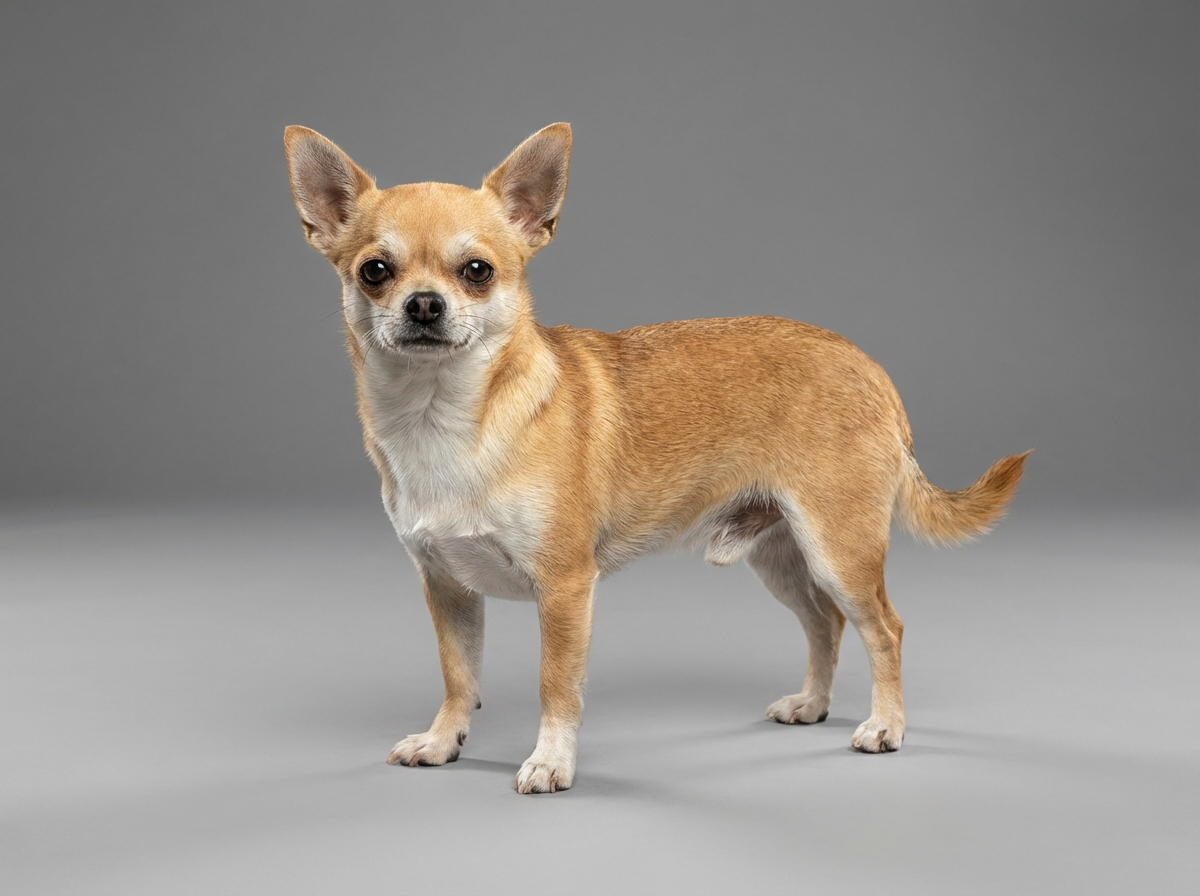
In most affected dogs the thyroid gland is gradually destroyed, either by the dog's own immune system attacking the tissue or by the gland shrinking and being replaced with fat. Both processes take years and neither is specific to small breeds. The Chihuahua's relevance here is mainly practical rather than genetic: at 2 to 6 pounds, small absolute weight changes represent large proportional ones, and a coat that is short or long but always fine shows thinning early.
Nothing in the home causes thyroid failure. What the environment does is shape how quickly the change is noticed and how confidently it is interpreted. A dog living in a cold house who has always burrowed into blankets gives no useful signal from heat-seeking. A dog fed by several household members may gain weight for reasons that have nothing to do with hormones. Concurrent illness and certain medications alter test results, which makes the timing of the blood draw an environmental factor in its own right.
Book a routine appointment for progressive coat thinning without itching, unexplained weight gain, persistent lethargy in a normally bold dog, repeated skin or ear infections, or a dog who has become noticeably intolerant of cold beyond her usual baseline. None of these is urgent, but all of them deserve investigation rather than being filed under ageing. Seek prompt or same-day care instead for weakness with collapse, tremors, disorientation, or a dog who is unresponsive and cold to the touch, since low blood sugar is documented in this breed and produces overlapping signs on a much faster and more dangerous timescale. Never start, stop or adjust thyroid medication without veterinary direction; dosing a two to six pound dog leaves very little margin for error.
See all Chihuahua health problems, which breeds are prone to hypothyroidism, or the full Chihuahua breed guide for temperament, exercise needs and ownership costs.
Getting to a firm diagnosis often takes several weeks, because the first result frequently prompts a retest at a time when the dog is otherwise well. Once treatment starts, expect a recheck blood test within about a month to set the dose, then periodic monitoring for life. Improvements arrive in a predictable order: demeanour in weeks, skin in a month or two, coat in three to six months. Weight comes down only with deliberate calorie control alongside treatment.
Success is an unremarkable dog. She is back to her usual bold, opinionated self, her coat has filled in and holds its texture, her weight is stable in the two to six pound range, and the recurring skin infections have stopped. The condition has not gone anywhere; it has simply become a tablet given at the same time each day and a blood test on the calendar.
The coat usually goes first and it goes in a characteristic way. Hair becomes dull and dry, sheds without regrowing, and thins symmetrically over the flanks and tail rather than in patches. In a long-coated Chihuahua this shows as a coat that no longer holds its shape; in a short-coated one the skin simply looks bare in places. The skin itself may thicken, darken, or become greasy, and recurrent skin infections that keep coming back after treatment are a classic pattern.
Weight gain follows, and it is deceptive. The dog is eating the same amount, or even less, and still gaining. In a breed with a two to six pound healthy range, a gain of half a pound is a substantial change that an owner might not register visually.
Behaviourally, the change is toward less. A bold, alert breed becomes subdued. She seeks out warmth constantly, which is easy to dismiss in a Chihuahua because the breed is famous for burrowing under blankets anyway. Exercise tolerance drops. Some dogs become mentally slower or, less commonly, anxious and reactive.
None of this is specific. Every one of those signs has other explanations, several of which are more common. That is exactly why hypothyroidism is over-diagnosed by owners and under-diagnosed by exactly no one, and why the blood test matters more than the symptom list.

A low result on a screening test is not the same as a diagnosis. Several things reliably muddy the picture.
If you think your Chi has hypothyroidism, the plan is three steps: write down what you have seen and when it started, book a veterinary appointment rather than waiting for the next flare, and take video of the behaviour or symptom before you go — the thing you are worried about rarely happens in the consulting room. Screening in the parents covers collapsing trachea, heart disease, patellar luxation.
What the vet visit should produce is a diagnosis and a written plan, not just reassurance: what is being ruled out, what the monitoring interval is, and which signs mean you come back sooner. Ask what the treatment costs across a year rather than per visit, because that is the number that decides whether you are managing this condition or reacting to it.
Between appointments, keep a short log — dates, what you saw, what changed. It is the single most useful thing an owner brings to a follow-up, and for hypothyroidism it is often what separates a clear pattern from a guess.
Bandita was seven and had put on nine ounces over a year. Her flanks had gone thin-coated and she had stopped climbing onto the back of the sofa, which had been her post for six years. Her owner Lucia was certain it was her thyroid, and the first blood test agreed. Her vet declined to treat. Bandita had also been fighting a skin infection at the time of the draw, and the vet explained that being unwell drags thyroid values down. He treated the skin, waited six weeks, and reran a fuller panel. The second result was normal. The actual problem was a combination of a slowly worsening dental infection, which had made her subdued and reluctant to jump, and two household members both feeding her dinner. After the dental and a single feeding rota on the fridge, she was back on the sofa within a month. Lucia's takeaway was that the vet's refusal to treat on the first result had been the most valuable thing he did.
Key takeaway: One low thyroid value in a dog who is unwell for another reason is not a diagnosis. Insisting on a retest when she is otherwise stable protects you from years of treating the wrong condition.
It is not among the ten health issues documented for the breed, and hypothyroidism as a whole is more strongly associated with medium and large breeds. It does occur in toy dogs. The practical implication is that a Chihuahua with these signs deserves a broad workup rather than a thyroid test alone, because something else is statistically more likely.
No, but it is one of the more satisfying conditions in veterinary medicine to manage. The missing hormone is replaced daily, lifelong, and dogs who genuinely have the disease usually respond well. The management is simple; the difficulty is entirely in getting the diagnosis right in the first place.
Energy and demeanour tend to change first, often within two to four weeks. Skin improves over one to two months. Coat regrowth is the slowest and can take three to six months, because hair grows at its own pace regardless of how quickly the underlying problem was corrected. Weight loss also lags and requires calorie control alongside treatment.
Because treating a dog who does not have the disease is not harmless, and a single low value is a common finding in dogs who are unwell for other reasons. Starting lifelong hormone replacement on a false positive means the real problem goes unaddressed. Retesting when the dog is otherwise well, and running a fuller panel, is the correct sequence rather than caution for its own sake.
Very likely, yes. Skin allergies, parasites, hormonal conditions other than thyroid, and simple friction from a harness all cause hair loss in this breed. The pattern helps: symmetrical thinning over the flanks with a dull coat and no itching points more toward a hormonal cause, while intense itching points elsewhere.
Yes. Dose is checked by bloodwork after starting, adjusted, then rechecked periodically for life. In a dog this small, dose accuracy matters, and body weight changes over the years can require adjustment. Never change a dose yourself based on how the dog seems.
Dull thinning coat without itching, weight gain despite steady food intake, lethargy, heat-seeking, and skin infections that keep recurring.
It is not listed among the breed's documented health issues and is more associated with larger breeds, though it does occur in toy dogs.
Usually not reliably. A single low screening value is common in dogs sick from other causes, so confirmation normally needs a fuller thyroid panel.
Daily medication for a two to six pound dog is among the cheaper long-term treatments; the recurring costs are the monitoring blood tests rather than the drug.
A one-page prep sheet for this condition: the signs, the questions to ask, what to get priced. Unlocks here.
You get: Vet visit prep sheet
No spam. One-click unsubscribe. See our privacy policy.
Preview page 1 before you decide.