DogBreedCompass

Pit Bull or Chihuahua: The Same Two Hard Ratings at Ten Times the Size

A 4 pound Chihuahua and a 50 pound Pit Bull share their two most awkward ratings: 2/5 with other dogs and 2/5 for first-time owners. The difference is that only one of them is taken seriously about it.

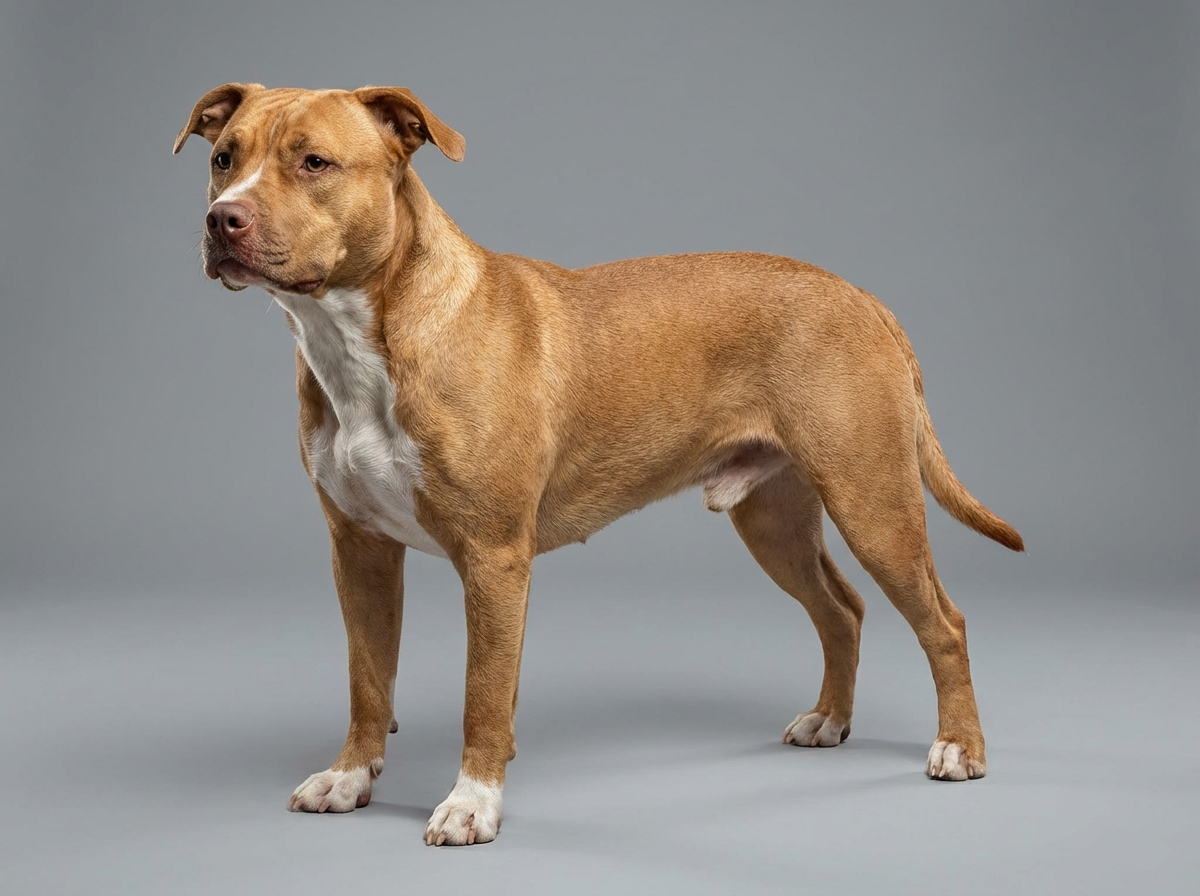
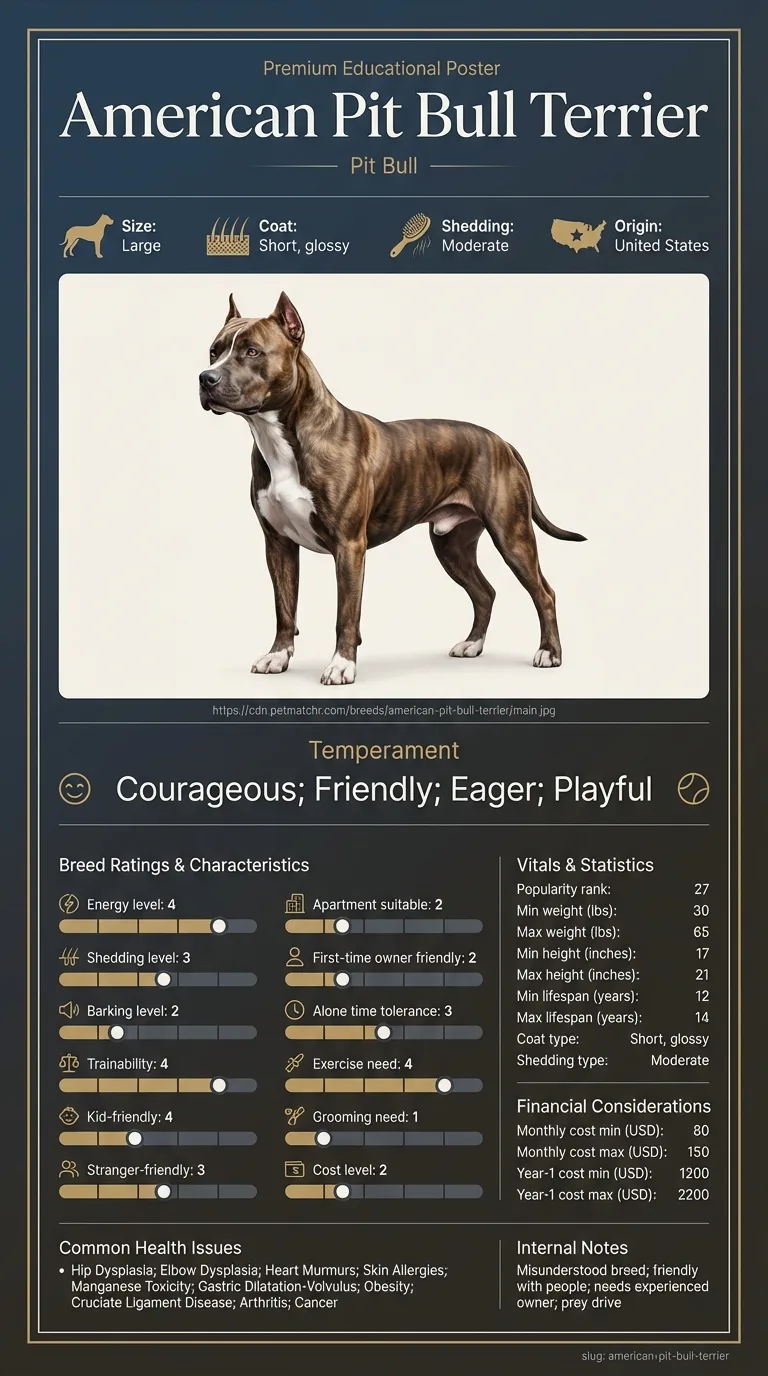
american pit bull terrier infographic
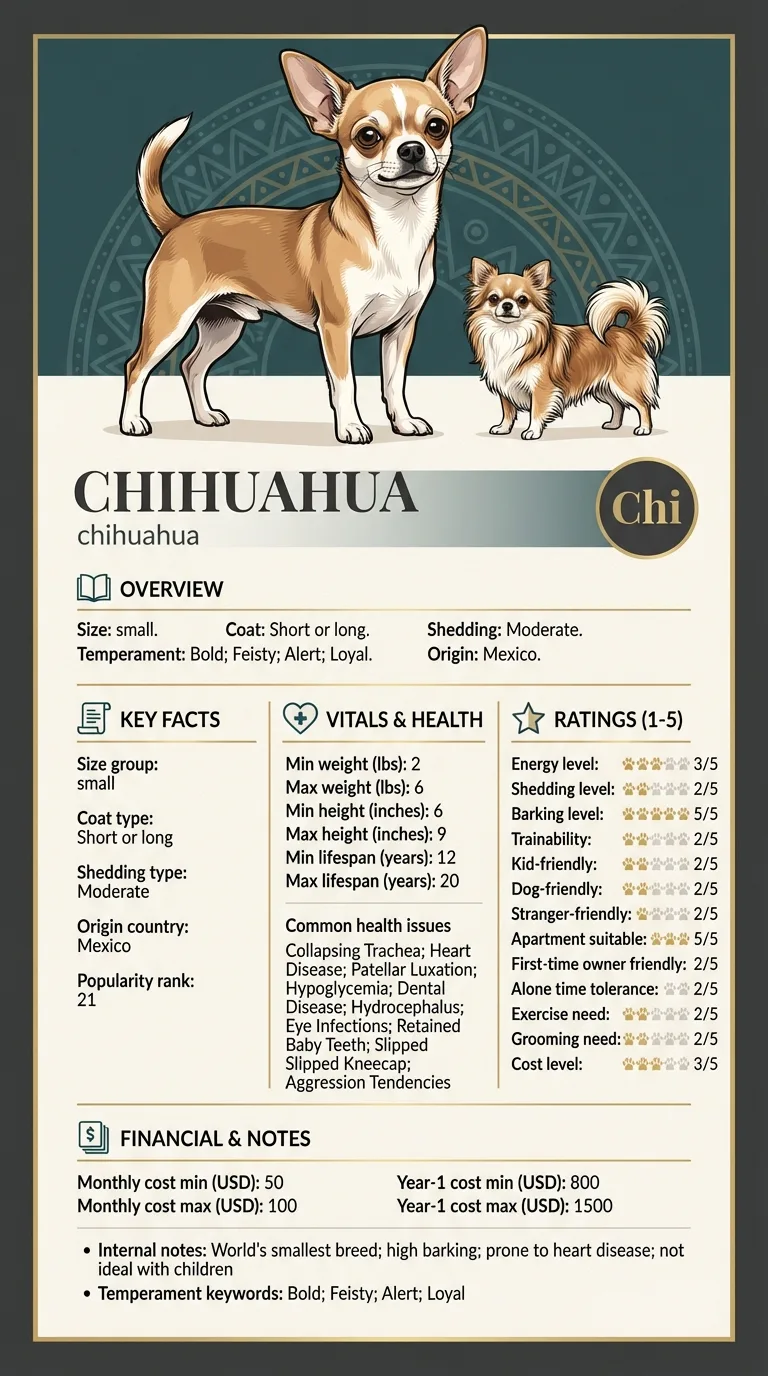
chihuahua infographic

This page is for someone weighing the cheapest, longest-lived dog available against an athletic mid-sized one, and wanting an honest account of why the small dog's behaviour has a reputation.

Quick verdict

The Chihuahua is extraordinarily cheap, portable and long-lived, and its reputation for reactivity is mostly a training and socialisation failure that a committed owner can avoid.

Choose american pit bull terrier if...

Choose the American Pit Bull Terrier if you want an athletic, trainable dog with a robust temperament around children, and you can supply an hour a day and manage careful introductions to other dogs.

Choose chihuahua if...

Choose the Chihuahua if you want a genuinely tiny, inexpensive, potentially twenty-year companion for a flat, and you will train and socialise it as seriously as you would a large dog.

Head-to-head comparison

Featureamerican pit bull terrierchihuahuaWinner
Weight30–65 lbs2–6 lbsEqual
Height17–21 in6–9 inEqual
Lifespan12–14 years12–20 yearschihuahua
CoatShort, glossyShort or longEqual
Grooming need1/52/5american pit bull terrier
Shedding3/5 — moderate2/5 — moderatechihuahua
Energy level4/53/5chihuahua
Exercise need4/52/5chihuahua
Trainability4/52/5american pit bull terrier
Barking2/55/5american pit bull terrier
Good with kids4/52/5american pit bull terrier
Good with other dogs2/52/5Equal
Friendly to strangers3/52/5american pit bull terrier
Apartment suitability2/55/5chihuahua
Good for first-time owners2/52/5Equal
Tolerates being alone3/52/5american pit bull terrier
Typical monthly cost$80–150$50–100chihuahua
Typical first-year cost$1,200–2,200$800–1,500chihuahua

Deep dive

Aggression tendencies: what that entry actually describes

The Chihuahua's health list ends with aggression tendencies, which is unusual — most lists name diseases. It is worth being precise about what that reflects, because the honest answer is more useful than either the caricature or the defence.

What produces snappy small dogs is a chain rather than a temperament. Start with a dog whose world is full of things ten times its size, and add a genuine fragility: a 4 pound dog can be badly injured by a foot, a fall or another dog's play. Defensive behaviour in that situation is rational.

Then add what owners typically do. Small dogs are carried past things they should be learning to walk past. They are picked up when they growl, which removes the situation and teaches that growling works. They are allowed to guard laps, bark at visitors and snap at handling, because a 4 pound dog doing it is not frightening and correcting it feels unkind. And they are frequently under-socialised, because carrying a puppy everywhere is easier than walking it.

The result is a dog that has learned distance-increasing behaviour works and has never learned that people and dogs are unremarkable. That is not a breed defect; it is a training outcome that this breed's size makes very easy to fall into.

What prevents it is concrete. Put the dog on the ground and let it walk. Socialise it as deliberately as you would a large breed, through the first year, with the option to retreat and no forced greetings. Ask for the same manners you would from a big dog. Do not punish a growl — it is information. And protect it physically, so it does not learn that the world is dangerous.

The Pit Bull's 2/5 with other dogs is a different thing entirely: not fear-driven, and not fixable by socialisation alone. It is managed rather than trained away — no dog parks, no on-lead greetings with unknown dogs, careful neutral-ground introductions, and the knowledge that tolerance can decline at social maturity.

Barking 5/5 against 2/5

The Chihuahua rates 5/5 for barking, the maximum on the scale, and the breed's own notes name high barking directly.

It is an alert dog with strong territorial instincts in a very small body, and it announces the corridor, the lift, the post, footsteps, other dogs and things nobody else can identify. The bark is sharp, high-pitched and carries well, which matters more in a flat than the dog's size suggests. It is also self-reinforcing — a Chihuahua that barks at a delivery driver and watches the driver leave draws the obvious conclusion.

Its 5/5 apartment rating and its 5/5 barking rating are in genuine tension, and anyone in a terrace or a flat with shared walls should weigh the second more heavily than the first.

What helps is not shouting, which the dog hears as joining in. It is blocking visual access to the door and window, teaching a quiet cue early before the habit hardens, meeting the modest exercise requirement so the dog is not patrolling out of boredom, and — connecting back to the previous section — socialising it so that arrivals are unremarkable rather than alarming. At 2/5 trainability progress is slower than in a biddable breed, so starting early matters.

The Pit Bull's 2/5 is one of the quieter ratings on this site. It is not a naturally vocal breed and it settles indoors readily. In noise terms it is a considerably better neighbour, which is an irony given that flats and insurers restrict bully-type dogs far more often than Chihuahuas.

That administrative point is worth checking in writing before committing: breed restrictions in tenancy agreements, housing rules and insurance policies commonly cover bully-type dogs, often by appearance rather than pedigree.

Teeth, trachea, blood sugar and a soft spot on the skull

The Chihuahua's health list is long for such a small animal, and four entries shape daily routine.

Dental disease is first and is likely to be the largest recurring veterinary cost across a life that may run twenty years. Forty-two adult teeth in the smallest jaw in dogdom means severe crowding, early plaque, gum recession and tooth loss. Retained baby teeth appear separately on the list and make the crowding worse — they should be removed rather than left, usually at neutering. Daily brushing from puppyhood plus professional scaling under anaesthetic every one to three years is what carries the dog into its teens with a functional mouth.

Collapsing trachea is second, and the fix is free: use a harness, never a collar. The windpipe's cartilage rings can weaken and flatten, producing a dry honking cough that worsens with excitement, heat or lead pressure on the throat.

Hypoglycaemia is third and matters most in puppies and the smallest adults. A 2 pound dog has almost no glycogen reserve, so a missed meal or a long stressful day can produce wobbling, weakness and collapse. Frequent small meals are standard advice, and many owners of very small Chihuahuas keep a glucose gel in the house.

Hydrocephalus is fourth. Many Chihuahuas have a molera — an open soft spot on the top of the skull where the bones have not fully fused. A small one is common and usually harmless, and simply means protecting the head from knocks. A large one, or a domed head with neurological signs such as circling, disorientation or seizures, is a different matter and needs veterinary assessment.

Heart disease, patellar luxation and eye infections complete the list.

The Pit Bull's risks are larger and less frequent: hip and elbow dysplasia, skin allergies, heart murmurs, bloat, obesity, cruciate ligament disease, arthritis and cancer.

The cheapest dog here, and possibly the longest-lived

The Chihuahua runs $50 to $100 a month with a first year of $800 to $1,500. Those are the lowest figures on this site, and they are real — food for a 4 pound dog is trivial, grooming at 2/5 is a weekly mitt or a comb for a long-coated dog, and every weight-dosed veterinary item sits at the bottom of the price list.

The lifespan is 12 to 20 years, which is the widest and highest range here. Twenty is exceptional rather than typical, but fifteen or sixteen is entirely ordinary, and that changes what ownership means. A Chihuahua bought at thirty may still be alive when its owner is fifty. It is a genuinely long commitment in a genuinely small package.

The two things that decide where a dog lands in that range are the teeth and the weight. Dental infection across two decades is not a cosmetic issue, and an overweight Chihuahua puts avoidable load on a trachea, a heart and two very small knees.

Insurance climbs steeply in the last third of a long life, which is an argument for starting early and keeping the policy.

The Pit Bull's $80–150 a month and 12 to 14 years are also good figures — it is one of the cheaper mid-sized dogs available. Its financial uncertainty is insurance availability rather than cost, since bully-type breeds are frequently declined or surcharged.

On exercise the gap is straightforward: 2/5 against 4/5. A Chihuahua wants twenty to thirty minutes of walking plus indoor play; a Pit Bull needs an hour to ninety minutes of real activity with no indoor substitute. That single line explains most of the 5/5 against 2/5 apartment ratings.

With children the Pit Bull leads 4/5 to 2/5, and the reason is fragility on one side and robustness on the other. A 4 pound dog is genuinely at risk from a toddler, and a frightened dog defends itself. The breed's own notes say not ideal with children, and that is worth taking at face value.

Doing right by either dog

Both breeds rate 2/5 for first-time owners, and the shared score is more meaningful than it first looks.

For the Chihuahua, the work is behavioural and it is front-loaded. Walk the dog rather than carrying it. Socialise it deliberately through the first year — new people, surfaces, noises and calm dogs, always with the option to retreat. Teach a quiet cue before barking becomes a habit. Ask for ordinary manners. Use a harness. Feed measured meals and brush the teeth nightly. None of that is difficult; it is simply rarely done, and the difference between a Chihuahua that is a pleasure and one that is a menace is almost entirely this list.

Also, buy carefully. Very small examples marketed as teacup are not a recognised size and carry disproportionate rates of hypoglycaemia, hydrocephalus and fragile bones. A responsible breeder is not trying to produce the smallest dog possible, and will not sell before about twelve weeks.

For the Pit Bull, the work is management and paperwork. Check breed restrictions where you live and where you might move, in writing. Read your insurance exclusions. Plan the walks, the introductions and the equipment. If you are adopting — which is how most dogs of this type are acquired — a rescue that has assessed the adult around other dogs is worth more than any pedigree.

Both breeds are affectionate with their people, both are cheap by the standards of this site, and both are widely misunderstood in opposite directions: one dismissed as harmless because it is small, the other assumed to be dangerous because it is not.

The practical question is the ordinary one. Can you supply an hour of daily exercise? If yes, the Pit Bull is the more robust family dog. If no, the Chihuahua fits almost any life — provided you treat it like a dog.

American Pit Bull Terrier vs Chihuahua at a glance

A 4 pound Chihuahua and a 50 pound Pit Bull share their two most awkward ratings on this site: 2/5 with other dogs and 2/5 for first-time owners. The difference is that only one of the two is usually taken seriously about it.

The Chihuahua is extraordinarily cheap, portable, and potentially long-lived compared to the Pit Bull, and its reputation for reactivity is mostly a training and socialisation failure that a committed owner can avoid entirely.

Choose the American Pit Bull Terrier if you want an athletic, trainable dog with a robust temperament around children, and you can supply an hour a day and manage careful introductions to other dogs. Choose the Chihuahua if you want a genuinely tiny, inexpensive, potentially twenty-year companion for a flat, and you will train and socialise it as seriously as you would a large dog.

Frequently asked questions

Are Chihuahuas actually aggressive?

Reactivity in the breed is usually fear-based and learned rather than innate. A dog that is carried everywhere, picked up when it growls and never socialised learns that distance-increasing behaviour works. Training and socialisation prevent most of it.

How loud is a Chihuahua?

It rates 5/5, the maximum. The bark is sharp, high-pitched and carries well, and it is self-reinforcing when barking at arrivals appears to make them leave. A quiet cue taught early and blocked sight lines are the main tools.

Why should a Chihuahua wear a harness?

Collapsing trachea is on the breed's health list, and lead pressure on a two to six pound neck contributes to it. A harness removes that pressure entirely and costs nothing extra.

What is a molera?

An open soft spot on the top of the skull where the bones have not fully fused, common in the breed. A small one is usually harmless and means protecting the head from knocks; a large one or a domed head with neurological signs needs assessment.

How long do Chihuahuas live?

Twelve to twenty years — the widest and highest range on this site. Fifteen or sixteen is ordinary and twenty is exceptional, and dental health and body weight are the two factors most within an owner's control.

Which is better with children?

The Pit Bull at 4/5 against 2/5. A two to six pound dog is genuinely at risk from a toddler, and a frightened dog defends itself. The breed's own notes say not ideal with children.

Which is cheaper to keep?

The Chihuahua, at $50–100 a month and $800–1,500 in the first year — the lowest figures here. Dental work across a very long life is the cost that most often exceeds expectations.

Quick answers

View more answers
Living

Pit Bull or Chihuahua: which should I choose?

The Chihuahua if you want a tiny, inexpensive, potentially twenty-year companion for a flat and will train and socialise it properly. The Pit Bull if you want a robust family dog, can supply an hour a day and can manage dog-dog introductions.

Costs

Which is cheaper to own?

The Chihuahua at $50–100 a month against $80–150, and $800–1,500 in the first year against $1,200–2,200 — the cheapest dog compared anywhere on this site.

Health

What is the biggest health cost for a Chihuahua?

Dental disease. Forty-two teeth in the smallest jaw of any breed means crowding and early loss, so daily brushing from puppyhood and periodic scaling under anaesthetic across a very long life.

Training

How do I avoid a snappy small dog?

Put it on the ground and let it walk, socialise it deliberately through the first year with no forced greetings, ask for the same manners you would from a large dog, and never punish a growl.

Related DogBreedCompass guides

  • American Pit Bull Terrier breed guideThe Pit Bull profile covers temperament, exercise and the practical realities of ownership.
  • Chihuahua breed guideThe Chihuahua profile covers small-breed handling, coat options and health monitoring.
  • common genetic disorders in ChihuahuasThe breed's inherited risks are numerous for its size and worth reading as a set.
  • dental disease in Pit Bull TerriersDental disease is the dominant lifetime cost in a very small jaw and a very long life.
  • excessive barking in Pit Bull TerriersA 5/5 barking rating in a flat-friendly breed is the issue most likely to cause friction.
  • American Pit Bull Terrier vs DachshundReaders weighing tiny long-lived breeds usually want the other structurally fragile option too.

Related guides

Important reminder

Health information here is general and is not veterinary advice. Toy-breed concerns such as tracheal collapse, hypoglycaemia and hydrocephalus should be discussed with your own veterinarian.

Some links on this site are affiliate links. We may earn a commission if you buy through them, at no additional cost to you.

Find Your Perfect Breed

Match your lifestyle to the right dog.

Take quiz

Find your match

Not sure which breed is right for you? Take our 2-minute quiz to find out.

Take the quiz