Health
What are quick tips for managing Great Dane hypothyroidism?
Keep up with regular vet check-ups and blood tests to monitor hormone levels. Administer prescribed medication consistently and watch for any changes in behavior or health.

Quick answer
What are quick tips for managing Great Dane hypothyroidism?
Keep up with regular vet check-ups and blood tests to monitor hormone levels. Administer prescribed medication consistently and watch for any changes in behavior or health.
Great Dane hypothyroidism is a common health issue that can significantly affect your dog's quality of life. Understanding it is crucial for every owner.
Owners of Great Danes often face challenges with this condition, especially first-time dog parents. Those who may not be familiar with breed-specific health issues are particularly vulnerable to overlooking symptoms.
This guide is not medical advice. If your dog shows pain, sudden behavior change, or worsening symptoms, consult a licensed veterinarian.
Some links may be affiliate links. We may earn a commission at no extra cost to you. We only suggest products we believe are helpful for dog owners.
We research and check what we publish, but we do not warrant that any figure, date, price, or statement is accurate, complete, or current, and we accept no liability for any loss, cost, injury, or other harm arising from the use of this site. Use it as one reference among several. You remain responsible for your own decisions and for your dog's care - confirm anything that matters with a licensed veterinarian or another qualified professional before you act on it. Full disclaimer.
Check this first
Recognizing when Great Dane hypothyroidism becomes an emergency is crucial for your dog's health. If you notice any severe symptoms, it's time to call your vet immediately. These red flags include sudden weight gain or loss, extreme lethargy, difficulty breathing, or any signs of severe skin infections. These symptoms could indicate a serious thyroid imbalance that needs urgent attention.
On the other hand, if your Great Dane shows mild symptoms, such as slight changes in energy level, coat condition, or appetite, you may choose to monitor them for a while. Creating a watch-and-wait plan can be effective. Regularly check for worsening symptoms and maintain open communication with your vet. Monitoring your dog's health, especially in terms of diet and activity levels, is essential during this period.
In summary, know the signs of an emergency versus those that can be managed at home. When in doubt, it's always better to consult your veterinarian for guidance. Your Great Dane's health depends on your vigilance and responsiveness.
If any of these apply, call your vet or an emergency clinic now. The rest of this page is for the cases that are not an emergency.
Great Dane hypothyroidism is a condition where the thyroid gland doesn't produce enough hormones. This can lead to weight gain, lethargy, and skin issues. For Great Danes, this condition can be particularly concerning due to their size and health vulnerabilities.
Hypothyroidism is relatively common in Great Danes, especially as they age. Many owners notice symptoms in middle age, typically between 4 to 8 years old.
Great Danes are prone to hypothyroidism due to genetic factors. Their large size and rapid growth can lead to hormonal imbalances, making them more susceptible to thyroid issues as they age.
Environmental factors like diet, stress, and exposure to toxins can influence thyroid health. A poor diet lacking essential nutrients or high-stress environments may exacerbate thyroid problems in Great Danes.
If you notice significant weight gain, lethargy, or coat changes like excessive shedding, it’s time to talk to your vet. They can perform tests to confirm hypothyroidism and discuss treatment options.
Managing Great Dane hypothyroidism can be challenging. Here are some common mistakes that can delay improvement and worsen your dog's condition.
Start here: Great Dane Most Common Genetic Disorders: What to Screen For
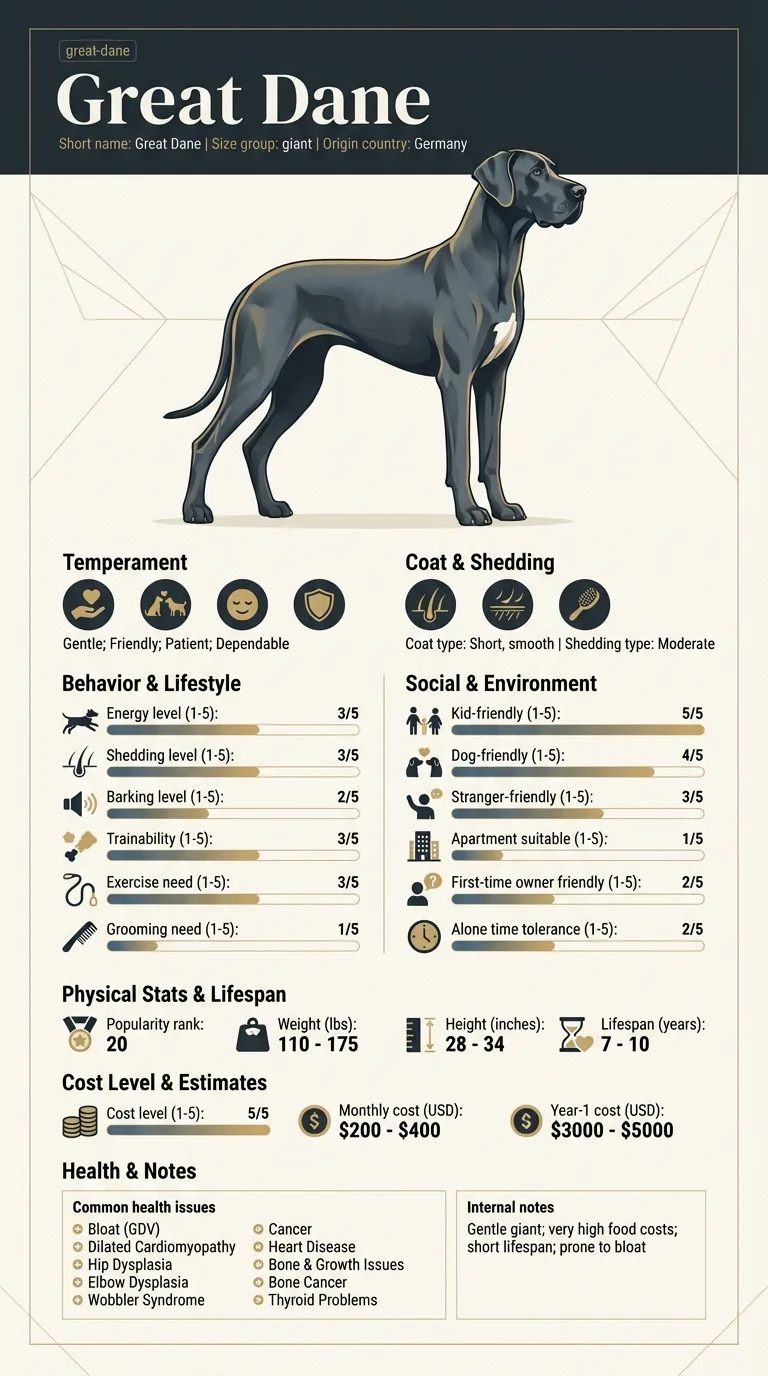
See all Great Dane health problems, which breeds are prone to hypothyroidism, or the full Great Dane breed guide for temperament, exercise needs and ownership costs.
Managing Great Dane hypothyroidism typically takes 6 to 12 weeks to see noticeable improvements with proper treatment. Regular vet check-ups are essential during this period.
Success means your Great Dane regains energy, maintains a healthy weight, and has a shiny coat. You'll also notice improved overall behavior and mood.
Samantha, a first-time dog owner, adopted Max, her Great Dane, who seemed lethargic and gained weight quickly. After a vet visit, she learned that Max had hypothyroidism. Initially overwhelmed, Samantha followed the vet's advice to change Max's diet and start medication. With consistent care and regular vet check-ups, Max's energy returned within a few months, and he became the playful companion Samantha had hoped for.
Key takeaway: Regular vet visits and proper treatment can significantly improve the quality of life for a Great Dane with hypothyroidism.
Great Danes can develop hypothyroidism due to autoimmune diseases that affect the thyroid gland. This condition is often hereditary and can result in a deficiency of thyroid hormones, impacting your dog's energy and overall health. Regular vet check-ups can help identify this issue early.
Common symptoms of Great Dane hypothyroidism include weight gain, lethargy, and a dull coat. You may also notice increased shedding or skin issues. If you observe these signs, it's important to consult your vet for a proper diagnosis.
Your vet will conduct blood tests to measure thyroid hormone levels. A low level of thyroxine (T4) usually indicates hypothyroidism. It's important to rule out other conditions that could mimic these symptoms.
While you can't prevent hypothyroidism, you can manage it effectively with medication. Your vet will prescribe synthetic thyroid hormones that need to be given regularly. Regular monitoring of hormone levels is crucial to ensure the right dosage.
The primary treatment is daily medication in the form of synthetic thyroid hormones. Most dogs respond well to treatment and can lead a normal life with proper management. It's essential to follow your vet's instructions and schedule follow-up appointments.
While a balanced diet won't cure hypothyroidism, it can support overall health. Consult your vet for dietary recommendations that complement the medication and help maintain a healthy weight.
Regular, moderate exercise is important to prevent obesity, which can worsen symptoms. Additionally, maintaining a stress-free environment can help your dog feel more comfortable. Training can also be beneficial to keep them mentally stimulated.
While a healthy diet can support overall well-being, hypothyroidism typically requires medication to manage. A vet may recommend a specific diet to help your Great Dane maintain a healthy weight while on thyroid medication.
Hypothyroidism can occur in Great Danes of any age, but it is more commonly diagnosed in middle-aged dogs. Older Great Danes may also have other health issues that can complicate treatment, so regular vet check-ups are crucial.
If your Great Dane with hypothyroidism is experiencing anxiety, consult your vet for tailored advice. They may suggest behavioral training, medication, or adjustments to their treatment plan to address both issues.
Keep up with regular vet check-ups and blood tests to monitor hormone levels. Administer prescribed medication consistently and watch for any changes in behavior or health.
Monthly costs for medication can range from $20 to $100, depending on your dog's needs. Regular vet visits can add to the overall annual costs, so budget accordingly.
Yes, training provides mental stimulation and can reduce anxiety. Consider basic obedience training to help your dog feel more secure and engaged.
While no specific diet can cure hypothyroidism, a balanced diet tailored to their needs can help manage weight. Consult your vet for the best dietary options.
If you notice symptoms like lethargy or weight gain, schedule a vet appointment immediately. Early diagnosis is key to effective treatment.
A one-page prep sheet for this condition: the signs, the questions to ask, what to get priced. Unlocks here.
You get: Vet visit prep sheet
No spam. One-click unsubscribe. See our privacy policy.
Preview page 1 before you decide.