Health
How fast does IVDD Type I progress?
Sometimes within hours. A dog walking unevenly in the morning can be unable to stand by evening, which is why same-day assessment matters.

Quick answer
How fast does IVDD Type I progress?
Sometimes within hours. A dog walking unevenly in the morning can be unable to stand by evening, which is why same-day assessment matters.
A Type I herniation is not a strain that got worse. It is a sudden mechanical event, and the clock that matters starts the moment it happens.
Owners in the middle of an acute episode who need to understand what the neurologist is asking them to decide, and owners weighing the cost and realism of spinal surgery for a very small dog.
This guide is not medical advice. If your dog shows pain, sudden behavior change, or worsening symptoms, consult a licensed veterinarian.
Some links may be affiliate links. We may earn a commission at no extra cost to you. We only suggest products we believe are helpful for dog owners.
Type I disc herniation is an abrupt rupture in which mineralised disc material is forced into the spinal canal, compressing and bruising the cord simultaneously. It affects small chondrodystrophic breeds, presents suddenly, and can worsen within hours. Decisions about advanced imaging and surgery are usually made on the same day, guided by neurological examination rather than by the level of apparent pain.
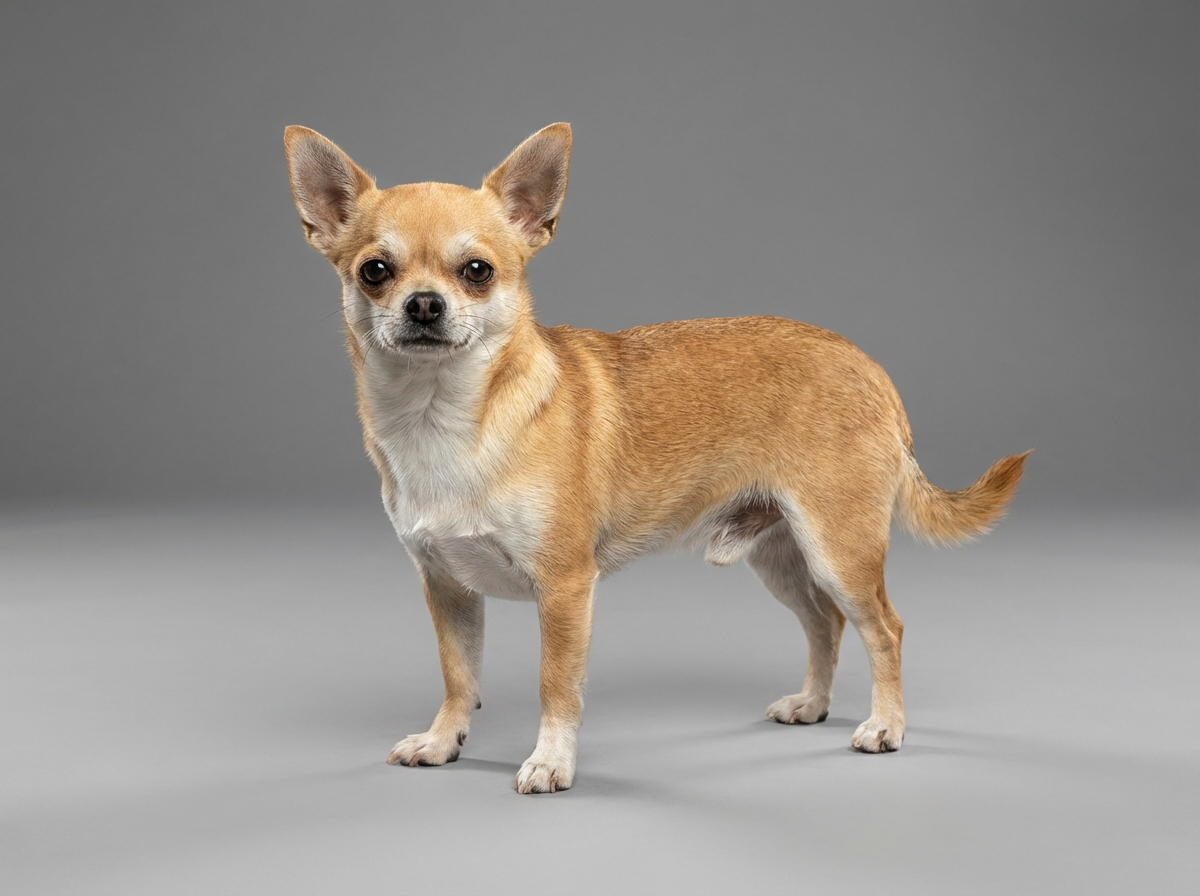
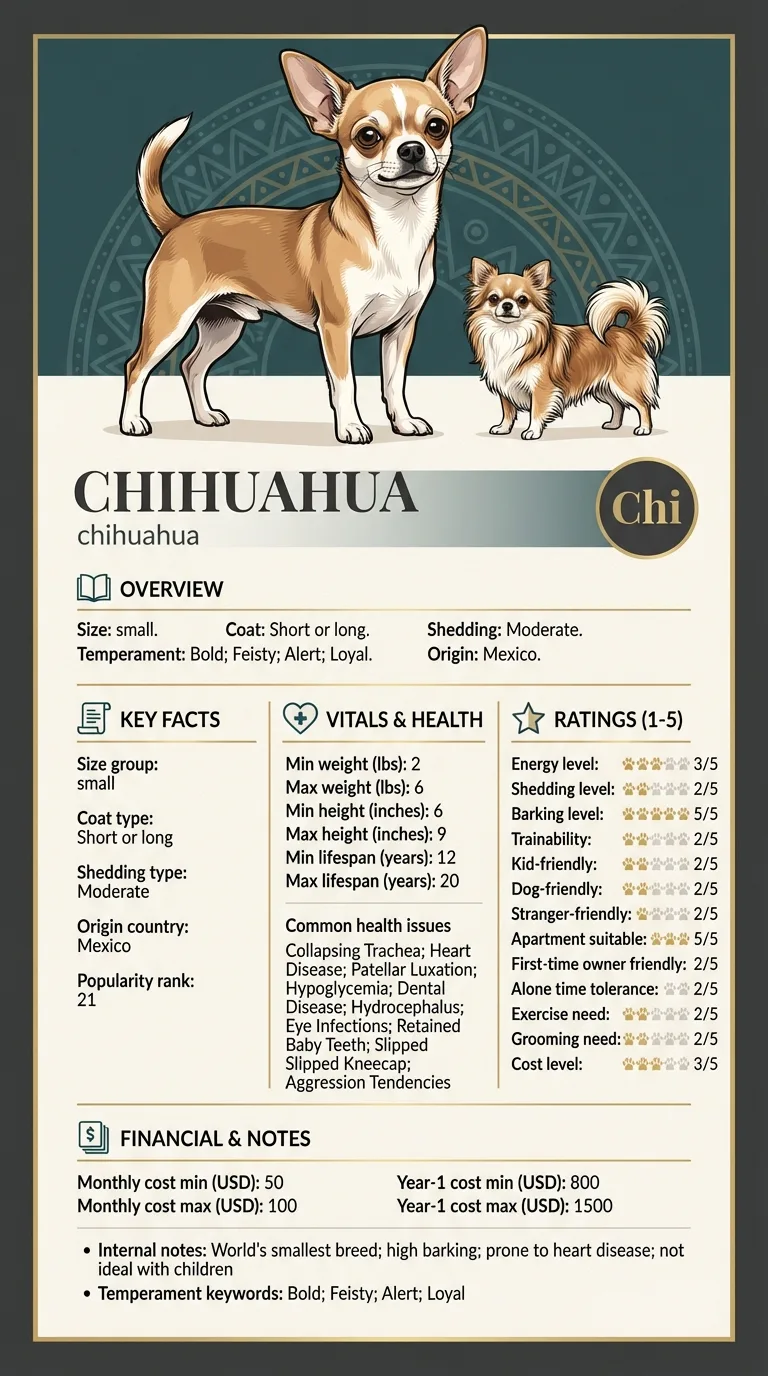
Type I herniation is the dominant form of disc disease in small breeds, and while Chihuahuas are less affected than the classic long-backed breeds, cases do occur and are handled identically. It is not listed among the ten health issues documented for this breed, but it belongs on the differential for any Chihuahua with sudden back pain or hind-limb weakness.
Early mineralisation of the disc centre is the underlying change, and it is driven by inherited traits affecting cartilage development that are widespread in small breeds. Once the centre hardens, it stops absorbing load and starts transmitting it, so ordinary movement can produce extraordinary pressure at a weak point in the outer ring. In a Chihuahua standing 6 to 9 inches tall, the spinal canal is proportionally very narrow, which means even a modest volume of extruded material can produce severe compression.
The events that precipitate a rupture are almost all household ones. Human furniture presents drops that are proportionally enormous for a nine-inch dog. Hard floors remove the traction needed to land and turn safely. Doorbells, letterboxes and visitors trigger the explosive acceleration this alert breed is known for, often across exactly those slippery surfaces. Being habitually lifted under the armpits leaves the spine hanging unsupported many times a day.
This is one of the clearest emergencies in small-dog medicine. Go to a veterinary clinic immediately, at any hour, if she suddenly cannot use her back legs, is dragging or knuckling her hind feet, cannot stand, has lost bladder control, has become suddenly and severely painful with a rigid posture, or will not lift or lower her head. Do not wait to see whether she improves overnight, because swelling worsens compression over the first hours and the surgical window narrows with every one of them. Transport her supported and flat, do not manipulate her spine, and give no human pain medication of any kind. Call the clinic while travelling so a neurologist can be alerted before you arrive.
See all Chihuahua health problems, which breeds are prone to intervertebral disc disease ivdd type i, or the full Chihuahua breed guide for temperament, exercise needs and ownership costs.
The acute event unfolds over hours. Imaging and surgery, when chosen, typically happen within the first day or two of presentation. Hospitalisation runs several days, often with bladder management. The first two to four weeks after surgery are where most of the recovery of walking occurs in dogs who are going to recover it; progress after six to eight weeks is slower and more limited. Full rehabilitation commonly takes two to three months, and some dogs retain a permanently altered gait.
For a dog who retained deep pain sensation, success usually means walking again, perhaps imperfectly, and returning to a normal life inside a house that has been permanently rearranged around ramps and traction. For a dog who lost deep pain sensation, success is defined more carefully: comfort, a manageable bladder routine, healthy skin, and either a functional cart or a stable assisted mobility. Both are real outcomes and neither is a failure. What counts as success is best decided with your veterinary team, honestly, and early.
In a healthy disc, the centre is gel-like and distributes pressure evenly. In chondrodystrophic small breeds, that centre begins mineralising into something closer to gravel within the first years of life. Hardened material does not deform under load; it transmits force. When the outer ring finally gives way, the mineralised core is ejected upward into the canal with real velocity.
This produces two distinct injuries at once. The first is compression: material now occupies space the spinal cord needs. The second is concussion, the bruising delivered by the impact itself. Surgery can relieve the compression. It cannot undo the concussion, and that is the single most important thing to understand about the prognosis. Two dogs with identical imaging can have very different outcomes because the force of the initial strike differed.
Swelling follows, and it compounds the compression over the next hours. This is why a dog who is walking unevenly at breakfast may be unable to stand by lunchtime, and why watching and waiting is such a costly strategy in this specific condition.
Most herniations occur in the lower back, producing hind-limb signs, or in the neck, producing severe pain and sometimes weakness in all four limbs. Neck cases often present as an intensely painful dog who will not lower her head to her bowl, which owners frequently misread as a throat or appetite problem.

Owners are often asked to decide quickly and with incomplete information. These are the factors that genuinely drive it.
Chispa was seven when she jumped off the arm of a chair on a Sunday afternoon and yelped. Within twenty minutes she could not use her back legs. Her owner Dev had read about disc disease two years earlier and had, unusually, written the neurology referral centre's number on the inside of a kitchen cupboard. He slid her onto a baking tray with a folded towel, called the centre from the car, and was there in ninety minutes. She still had deep pain sensation on examination. MRI that evening showed a single ruptured disc in the lower back and she was operated on before midnight. She walked, wobbling, on day five. By three months she was running again with a slightly splayed hind gait that never resolved. The neurologist's comment stayed with Dev: the outcome was decided less by the surgery than by the fact that nobody in the household had spent the afternoon waiting to see if she would perk up.
Key takeaway: In an acute Type I herniation the useful variable is time. Knowing where to go, having something flat to carry her on, and refusing to wait overnight are the parts of the outcome you personally control.
It is the perception carried by the innermost, best-protected fibres of the spinal cord. Because those fibres are lost last, their absence indicates the most severe cord injury. It is tested by a vet applying firm pressure to a toe and watching for a conscious reaction, turning the head or vocalising, not merely a reflex withdrawal. Owners frequently mistake a leg jerking back for a positive result, which is why this test belongs to a professional.
The sooner the better, and the urgency scales with severity. For a dog who has lost deep pain sensation, the strongest results come from surgery within roughly the first day, and chances fall as time passes. For dogs who are down but still have deep pain, there is somewhat more time, but this is still a same-day referral rather than a Monday morning appointment.
The extruded material is gradually broken down by the body over weeks, and dogs with milder grades often recover well on strict confinement and prescribed pain relief. What conservative management cannot do is relieve severe compression quickly, which is why it is not the right choice for a dog who cannot walk or who is deteriorating.
It depends mainly on deep pain status and the severity of the initial concussion. Dogs who retain deep pain sensation have a good chance of walking again after surgery. Dogs who have lost it face a much more uncertain outlook even with prompt surgery, and some do not regain walking. Your neurologist can give a far more specific estimate once they have examined her.
It can be genuinely good, and a two to six pound dog is far easier to manage than a large one. Wheeled carts fit small dogs well, bladder expression becomes a routine part of the day, and skin care over pressure points matters. This requires real commitment and honest self-assessment about what your household can sustain, and it is a conversation to have with your vet rather than alone at three in the morning.
Surgery addresses the disc that ruptured. Other discs in the same spine have usually undergone the same mineralisation and remain capable of herniating. Recurrence at a different site is a real possibility, which is why the household changes are permanent rather than temporary.
The early signs are set out in the sections above, and they are the reason to book a veterinary appointment rather than wait. Intervertebral Disc Disease (IVDD) Type I in Chis is diagnosed by a vet, not from a symptom list, and the sooner it is on record the more options remain open.
Sometimes within hours. A dog walking unevenly in the morning can be unable to stand by evening, which is why same-day assessment matters.
Deep pain sensation, assessed by a veterinarian. Its presence or absence is the strongest single predictor of whether the dog will walk again.
Yes, at specialist facilities, though it requires advanced imaging first and is among the more expensive procedures in small-animal practice.
Support the whole body on a flat rigid surface such as a baking tray or book, keeping the spine level, rather than lifting her under the front legs.
A one-page prep sheet for this condition: the signs, the questions to ask, what to get priced. Unlocks here.
You get: Vet visit prep sheet
No spam. One-click unsubscribe. See our privacy policy.
Preview page 1 before you decide.