Behavior
What are Labradoodle intervertebral disc disease (IVDD) quick tips?
Keep your Labradoodle at a healthy weight to reduce strain on their back. Limit jumping and provide a supportive bed for comfort.

Quick answer
What are Labradoodle intervertebral disc disease (IVDD) quick tips?
Keep your Labradoodle at a healthy weight to reduce strain on their back. Limit jumping and provide a supportive bed for comfort.
Labradoodle intervertebral disc disease (IVDD) is a serious spinal condition that can affect your dog's mobility and quality of life.
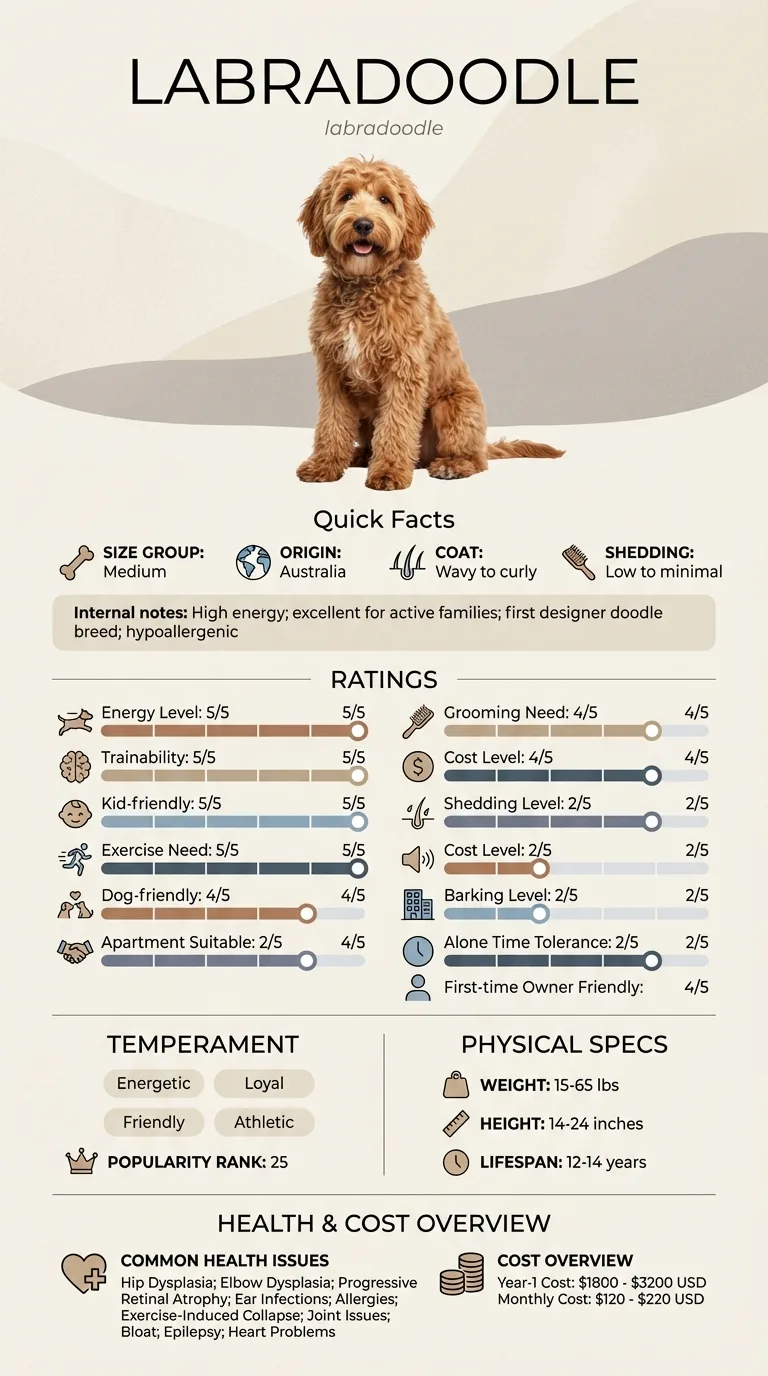
Typically, Labradoodle owners face this issue, especially those with older dogs or those that are particularly active. It can also be a concern for first-time dog owners who might not recognize the symptoms right away.
This guide is not medical advice. If your dog shows pain, sudden behavior change, or worsening symptoms, consult a licensed veterinarian.
Some links may be affiliate links. We may earn a commission at no extra cost to you. We only suggest products we believe are helpful for dog owners.
We research and check what we publish, but we do not warrant that any figure, date, price, or statement is accurate, complete, or current, and we accept no liability for any loss, cost, injury, or other harm arising from the use of this site. Use it as one reference among several. You remain responsible for your own decisions and for your dog's care - confirm anything that matters with a licensed veterinarian or another qualified professional before you act on it. Full disclaimer.
Check this first
Recognizing when Labradoodle intervertebral disc disease (IVDD) is an emergency is crucial for your dog's health. If your dog shows any severe symptoms, it’s time to call your vet immediately. Red-flag signs include sudden loss of mobility, severe pain when touched, or any signs of paralysis. If your Labradoodle is unable to stand or walk, seek veterinary care right away.
On the other hand, there are cases where you can monitor your dog at home. Mild signs may include slight stiffness, reluctance to jump or climb stairs, or minor discomfort that seems manageable. In these situations, keep a close watch on your dog's behavior and adjust their activity level accordingly. A plan for gradual movement and gentle exercise can be helpful, but always consult your vet for specific guidance.
It's important to differentiate between urgent and non-urgent cases. If your Labradoodle experiences mild symptoms but is still eating, drinking, and behaving normally, you might be able to wait. However, if symptoms worsen or new ones appear, don't hesitate to reach out to your vet. Early intervention can make a significant difference in treatment outcomes.
If any of these apply, call your vet or an emergency clinic now. The rest of this page is for the cases that are not an emergency.
Labradoodle intervertebral disc disease (IVDD) is a serious condition affecting the dog's spine. This often leads to pain, weakness, or even paralysis. Common signs include reluctance to move, yelping when touched, or difficulty walking. Owners may notice their Labradoodle struggling with everyday activities like jumping or climbing stairs.
IVDD is relatively common in Labradoodles, particularly in those aged 5 years and older. While not every Labradoodle will face this issue, awareness is crucial, especially for those with a family history of the condition.
Labradoodles are medium-sized dogs with a high energy level, which can lead to injuries, including intervertebral disc disease (IVDD). Their athleticism may cause them to jump or climb frequently, putting stress on their spine. Additionally, certain genetic factors inherited from their parent breeds, the Labrador Retriever and Poodle, can predispose them to spinal issues.
A Labradoodle's environment also plays a critical role in the development of IVDD. Factors such as rough play, excessive jumping, or not having a proper resting area can increase the risk. Furthermore, if they live in spaces where they can easily access stairs or slippery floors, it can lead to falls or accidents that may exacerbate spinal problems.
If your dog exhibits severe symptoms or if you're concerned about their condition, consult a veterinarian. They can provide a comprehensive evaluation and suggest medical interventions if necessary.
Avoiding these common mistakes can help your Labradoodle manage intervertebral disc disease (IVDD) more effectively.
Start here: Labradoodle Most Common Genetic Disorders: Screening
See all Labradoodle health problems, which breeds are prone to intervertebral disc disease ivdd, or the full Labradoodle breed guide for temperament, exercise needs and ownership costs.
Addressing Labradoodle intervertebral disc disease (IVDD) typically takes several weeks to months of consistent management and care.
Success means your Labradoodle shows improved mobility, reduced pain, and a better quality of life through proper treatment and lifestyle adjustments.
Emily, a busy dog mom in Seattle, noticed her Labradoodle Charlie struggling to jump onto the couch and seemed less playful than usual. After a visit to the vet, she learned Charlie had intervertebral disc disease (IVDD). Determined to help him, Emily researched treatment options, including medication and physical therapy. She made adjustments at home, like creating a ramp for the couch and limiting Charlie's jumping. Over the next few months, with consistent care and vet follow-ups, Charlie regained much of his mobility and joy, allowing him to enjoy walks again.
Key takeaway: Early diagnosis and proactive management, including lifestyle changes and veterinary support, can significantly improve the quality of life for Labradoodles with IVDD.
Intervertebral disc disease (IVDD) in Labradoodles can be caused by genetic factors, obesity, or high-impact activities. Since Labradoodles are a mix of Labrador Retrievers and Poodles, they may inherit predispositions to this condition. Maintaining a healthy weight and avoiding excessive jumping can help reduce the risk.
Common symptoms of IVDD include back pain, difficulty walking, or reluctance to jump or play. You might also notice changes in posture or weakness in the limbs. If you observe any of these signs, it's essential to consult your veterinarian promptly.
To help a Labradoodle with IVDD, provide a comfortable, supportive bed and limit their physical activity. Gradual walks and controlled exercise can aid recovery while preventing further injury. Always follow your veterinarian's recommendations for medication and rehabilitation.
IVDD can often be managed through medication, physical therapy, and in severe cases, surgery. While some dogs may recover fully, others might have long-term mobility issues. Early intervention is key to improving outcomes.
Preventing IVDD in Labradoodles involves maintaining a healthy weight, limiting high-impact activities, and ensuring proper nutrition. Regular vet check-ups can also help catch any underlying issues early. Training your dog to avoid jumping on and off furniture can further minimize risk.
The long-term outlook for Labradoodles with IVDD varies depending on the severity of the condition and the treatment received. Many dogs can lead active lives with proper management and care. Regular follow-ups with your vet will help monitor their progress.
Early signs of Labradoodle intervertebral disc disease (IVDD) include reluctance to jump or climb stairs, changes in walking or running, and signs of pain when touched along the spine. If you notice any of these symptoms, it's crucial to consult a vet as soon as possible.
Yes, Labradoodles may inherit a predisposition to intervertebral disc disease (IVDD) due to their genetic background. It's important to choose reputable breeders who screen for genetic issues to reduce the risk of IVDD in future puppies.
Managing Labradoodle intervertebral disc disease (IVDD) at home involves providing a comfortable resting area, limiting strenuous activities, and using pain management as prescribed by your vet. Consider physical therapy options to help maintain mobility and strength.
If your older Labradoodle shows signs of intervertebral disc disease (IVDD), such as stiffness or difficulty moving, schedule a vet appointment immediately. Early intervention can help manage pain and improve quality of life.
Yes, certain exercises can help strengthen your Labradoodle's back and core muscles, potentially preventing intervertebral disc disease (IVDD). Low-impact activities like swimming or gentle walks are beneficial, but always consult your vet for a tailored exercise plan.
Keep your Labradoodle at a healthy weight to reduce strain on their back. Limit jumping and provide a supportive bed for comfort.
Focus on short, controlled walks and gentle play to avoid exacerbating their condition. Always consult your vet for tailored exercise plans.
Contact your veterinarian immediately if you notice signs like pain or difficulty walking. Early diagnosis is crucial for effective treatment.
Surgery may be required for severe cases of IVDD, but many dogs respond well to conservative treatments like medication and therapy.
Treatment costs for IVDD can vary widely, ranging from a few hundred dollars for conservative management to several thousand for surgical options.
A one-page prep sheet for this condition: the signs, the questions to ask, what to get priced. Unlocks here.
You get: Vet visit prep sheet
No spam. One-click unsubscribe. See our privacy policy.
Preview page 1 before you decide.