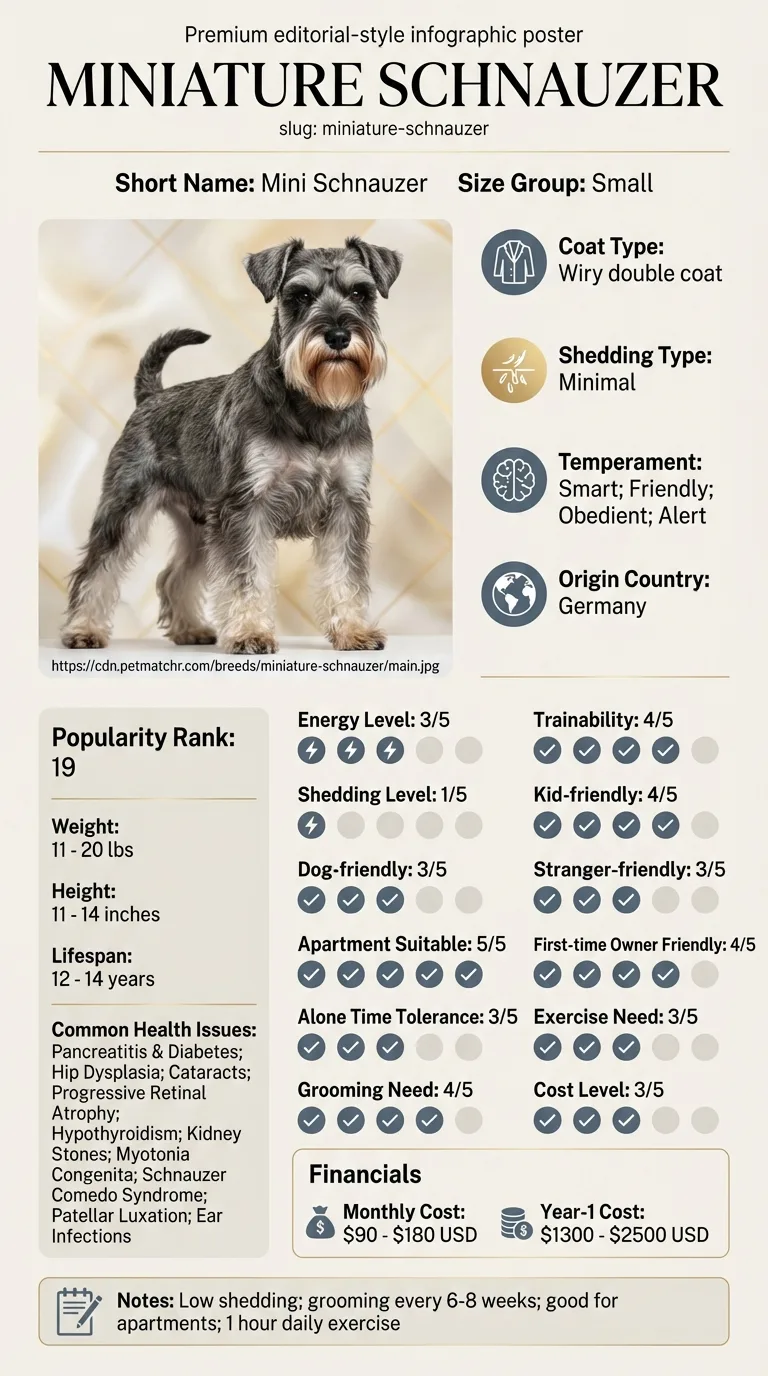
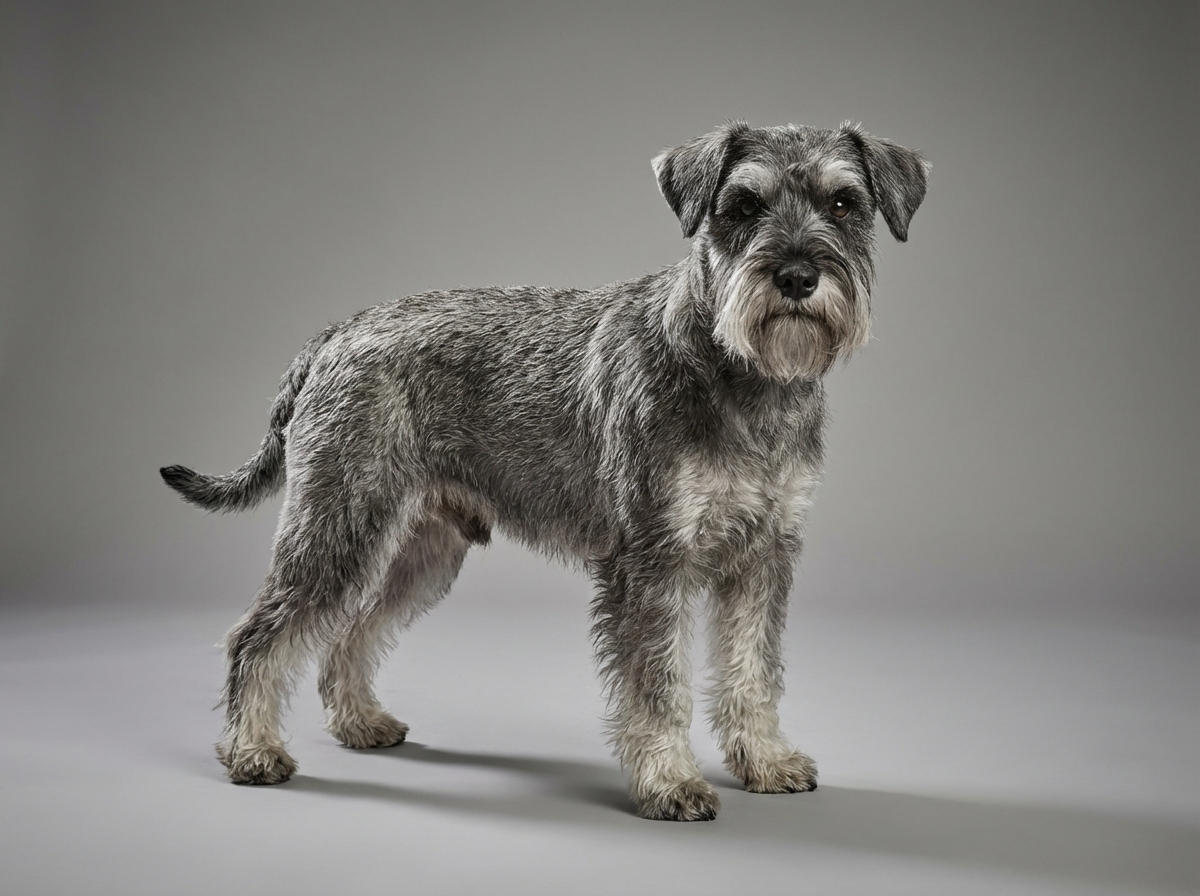
How to stop Miniature Schnauzer intervertebral disc disease (IVDD)?
To manage and reduce the risk of IVDD, maintain a healthy weight and keep your dog active with low-impact exercises. Avoid jumping from heights and consider using ramps or steps for access.
Miniature Schnauzer intervertebral disc disease (IVDD) is a serious health concern that affects their spine.
Many Miniature Schnauzer owners, especially those with older dogs or those with a history of back issues, find themselves facing the challenges of IVDD. It's crucial for these owners to understand the symptoms and treatment options available.
Important reminder
This guide is not medical advice. If your dog shows pain, sudden behavior change, or worsening symptoms, consult a licensed veterinarian.
Some links may be affiliate links. We may earn a commission at no extra cost to you. We only suggest products we believe are helpful for dog owners.
We research and check what we publish, but we do not warrant that any figure, date, price, or statement is accurate, complete, or current, and we accept no liability for any loss, cost, injury, or other harm arising from the use of this site. Use it as one reference among several. You remain responsible for your own decisions and for your dog's care - confirm anything that matters with a licensed veterinarian or another qualified professional before you act on it. Full disclaimer.
Check this first
When Miniature Schnauzer Intervertebral Disc Disease (IVDD) is an Emergency
Recognizing when Miniature Schnauzer intervertebral disc disease (IVDD) is an emergency can save your dog's life. If your dog shows signs of severe pain, inability to walk, or sudden loss of bladder control, you need to call your vet immediately. These are red-flag symptoms that indicate a critical situation requiring fast action.
If any of these apply, call your vet or an emergency clinic now. The rest of this page is for the cases that are not an emergency.
What this problem looks like
Miniature Schnauzer intervertebral disc disease (IVDD) can present day-to-day as your dog showing signs of pain or discomfort, especially in their back. You might notice them hesitating to jump or climb stairs, or they may seem less active than usual. Common triggers include sudden movements, rough play, or even age-related degeneration.
Common triggers
Sudden movements or jumps
Rough play with other dogs or children
Age-related changes in the spine
IVDD is relatively common in Miniature Schnauzers, especially as they age. Many owners may notice early signs by the time their dog is five years old, making awareness and preventative care essential.
Why this happens
Breed factors
Miniature Schnauzers are prone to intervertebral disc disease (IVDD) due to their small size and unique spinal structure. This breed has a higher chance of disc degeneration, which can lead to painful spinal issues. Genetic factors also play a role, making some Mini Schnauzers more susceptible than others.
Environment factors
Environmental factors can contribute to IVDD as well. Activities like jumping off furniture or rough play can strain their backs. Additionally, obesity can worsen the condition, placing extra stress on their spine.
What you can do at home (once it is not an emergency)
When to talk to your vet
Consult your vet if your dog shows signs of pain, such as yelping, reluctance to move, or difficulty walking. Early intervention can prevent further complications.
At home, alongside your vet's plan
Limit jumping and rough play to protect your Miniature Schnauzer's spine. Use ramps for furniture to prevent jumps.
Maintain a healthy weight through regular exercise and a balanced diet. Aim for about an hour of moderate activity daily.
Provide a supportive bed and avoid surfaces that are too soft or too hard to help with back support.
Mistakes that make Intervertebral Disc Disease (IVDD) worse
Avoiding certain common behaviors can significantly improve your Miniature Schnauzer's situation with intervertebral disc disease (IVDD). Here are some common mistakes to steer clear of.
Ignoring early symptoms: Many owners dismiss signs like reluctance to jump or stiffness. Early intervention can prevent deterioration.
Overlooking weight management: Extra weight puts more strain on your dog's spine. Keeping them at a healthy weight can alleviate pressure on their discs.
Allowing excessive jumping: Letting your Mini Schnauzer jump on furniture may seem harmless but can worsen their condition. Use ramps or steps to help them access high places safely.
Neglecting exercise restrictions: Too much vigorous play can worsen IVDD. Opt for gentle, controlled walks instead of roughhousing.
Skipping regular vet check-ups: Regular vet visits ensure any changes in your dog's condition are monitored. Don't wait until symptoms become serious to see the vet.
Using inappropriate collars: Certain collars can strain a dog's neck and back. Opt for a well-fitted harness that distributes pressure evenly.
Failing to provide a supportive environment: Hard surfaces can lead to discomfort. Provide soft bedding and avoid slippery floors to enhance comfort.
You can expect noticeable improvements in your Miniature Schnauzer's comfort and mobility within 4 to 8 weeks of consistent treatment and care.
Success means your Miniature Schnauzer is more active, shows less pain, and can enjoy daily activities without discomfort.
When to Watch and Wait
In less severe cases, if your Miniature Schnauzer is showing minor signs like mild stiffness or reluctance to jump, you can monitor them at home. Create a comfortable resting space and limit their activity. If symptoms persist for more than a day or worsen, it's time to contact your vet for further advice.
Miniature Schnauzer - When to Watch and Wait
Emily's Journey with Charlie's IVDD
Emily, a busy nurse in Chicago, noticed her Miniature Schnauzer, Charlie, was having trouble jumping onto the couch. After a vet visit, she learned Charlie had intervertebral disc disease (IVDD). Initially overwhelmed, Emily committed to a treatment plan that included physical therapy and controlled exercise. Over the next few weeks, she saw Charlie regain his energy and joy. With patience and consistency, Charlie was soon able to jump and play again, making both of them much happier.
Key takeaway: With the right care and commitment, you can help your Miniature Schnauzer manage IVDD and enjoy a fulfilling life.
Frequently asked questions
What causes Miniature Schnauzer intervertebral disc disease (IVDD)?
Miniature Schnauzers are prone to intervertebral disc disease (IVDD) due to their genetic makeup and body structure. This condition occurs when the discs between the vertebrae degenerate, leading to pain and mobility issues. Factors such as age, obesity, and lack of exercise can worsen the condition.
How can I tell if my Miniature Schnauzer has IVDD?
Signs of IVDD in Miniature Schnauzers include difficulty walking, reluctance to jump, or signs of pain when touched along the back. If your dog exhibits these symptoms, it's important to consult a veterinarian for a proper diagnosis and treatment plan. Early intervention can greatly improve outcomes.
What treatments are available for Miniature Schnauzer IVDD?
Treatment for IVDD can range from conservative management, like rest and medication, to surgical options in severe cases. Your vet may recommend anti-inflammatory medications or physical therapy. In some situations, surgery may be necessary to relieve pressure on the spinal cord.
Can I prevent IVDD in my Miniature Schnauzer?
While you can't completely prevent IVDD, you can reduce the risk by maintaining a healthy weight, providing regular exercise, and avoiding high-impact activities. Careful handling and proper training can also help avoid injuries. Regular vet check-ups can aid in early detection of potential issues.
What is the long-term outlook for Miniature Schnauzers with IVDD?
The long-term outlook for Miniature Schnauzers with IVDD varies based on the severity of the condition and the treatment chosen. Many dogs recover well with appropriate care and management. However, some may face ongoing mobility challenges, so understanding your dog's specific needs is important.
Can Miniature Schnauzers develop intervertebral disc disease (IVDD) as they age?
Yes, older Miniature Schnauzers are more prone to intervertebral disc disease (IVDD). As they age, their spinal discs can degenerate, increasing the risk of IVDD. Regular vet check-ups can help monitor their spinal health.
What are the signs of intervertebral disc disease (IVDD) in Miniature Schnauzers?
Common signs of IVDD include difficulty walking, reluctance to jump or climb stairs, and signs of pain like whining or yelping. If you notice these symptoms, it's important to consult your vet promptly.
How can I help my Miniature Schnauzer if they have intervertebral disc disease (IVDD)?
To support a Miniature Schnauzer with IVDD, limit their physical activity and provide a comfortable resting area. Pain management, prescribed by your veterinarian, and physical therapy may also be beneficial.
Is surgery always necessary for Miniature Schnauzers with intervertebral disc disease (IVDD)?
Not always. Some Miniature Schnauzers can manage IVDD with medical treatment and lifestyle changes. Surgery is typically recommended for severe cases or if conservative treatments aren't effective.
What preventative measures can I take to reduce the risk of intervertebral disc disease (IVDD) in my Miniature Schnauzer?
To reduce the risk of IVDD, maintain a healthy weight, ensure proper exercise, and avoid high-impact activities. Regular vet visits can help catch any potential issues early.
How to stop Miniature Schnauzer intervertebral disc disease (IVDD)?
To manage and reduce the risk of IVDD, maintain a healthy weight and keep your dog active with low-impact exercises. Avoid jumping from heights and consider using ramps or steps for access.
Living
What are Miniature Schnauzer intervertebral disc disease (IVDD) quick tips?
Regular vet check-ups, maintaining a healthy diet, and providing a safe environment can help manage IVDD risks. Early detection of symptoms is key to effective treatment.
Health
Is IVDD painful for Miniature Schnauzers?
Yes, IVDD can cause significant pain and discomfort. If you notice your Miniature Schnauzer showing signs of pain or mobility issues, consult your vet promptly.
Training
Can training help with IVDD in Miniature Schnauzers?
Training can help by teaching your dog to avoid risky behaviors, like jumping or rough play. Obedience training can also strengthen your bond and improve communication.
A fuller vet-visit kit for Miniature Schnauzer Intervertebral Disc Disease Ivdd
The free prep sheet covers the same-day warning signs, a symptom log and the questions to ask. We are considering a fuller kit that adds a cost worksheet for the usual tests and treatments (US price ranges with their sources) and a plain-English guide to ways of covering the bill. It is not built yet; this list tells us whether it is worth building.
One email, no spam, unsubscribe anytime. Information only, not veterinary advice.