Behavior
What are quick tips for Schnauzer (Standard) intervertebral disc disease (IVDD)?
Keep your Schnauzer at a healthy weight, avoid jumping, and provide a soft, supportive bed. Regular vet check-ups can help monitor their spine health.

Quick answer
What are quick tips for Schnauzer (Standard) intervertebral disc disease (IVDD)?
Keep your Schnauzer at a healthy weight, avoid jumping, and provide a soft, supportive bed. Regular vet check-ups can help monitor their spine health.
Schnauzer (Standard) intervertebral disc disease (IVDD) can lead to serious back and spine issues. Knowing how to manage this condition is crucial for your dog’s health.
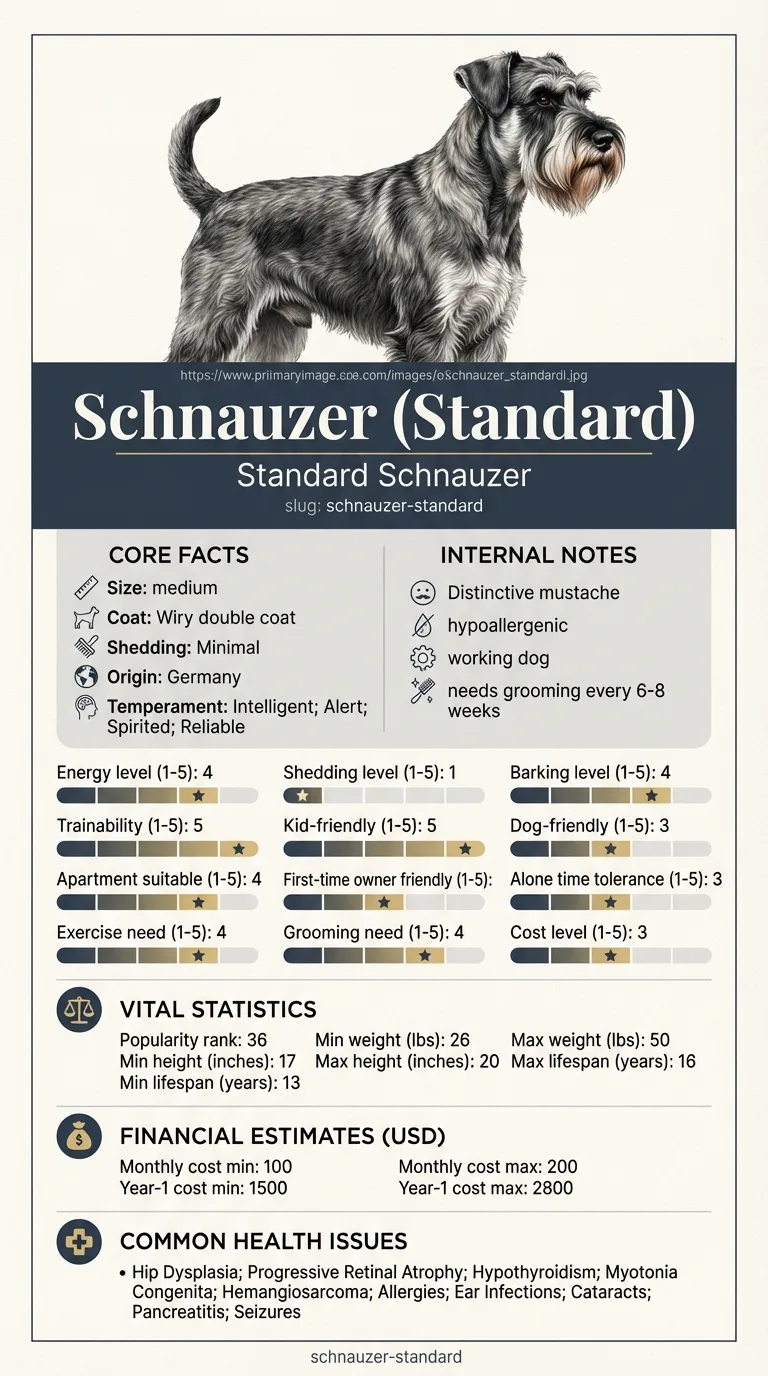
Owners of Schnauzers often face challenges when their dog shows signs of IVDD. This includes pet parents who may notice their furry friend hesitating to jump or play, as well as those concerned about the costs of treatment and care.
This guide is not medical advice. If your dog shows pain, sudden behavior change, or worsening symptoms, consult a licensed veterinarian.
Some links may be affiliate links. We may earn a commission at no extra cost to you. We only suggest products we believe are helpful for dog owners.
We research and check what we publish, but we do not warrant that any figure, date, price, or statement is accurate, complete, or current, and we accept no liability for any loss, cost, injury, or other harm arising from the use of this site. Use it as one reference among several. You remain responsible for your own decisions and for your dog's care - confirm anything that matters with a licensed veterinarian or another qualified professional before you act on it. Full disclaimer.
Check this first
Recognizing when Schnauzer (Standard) intervertebral disc disease (IVDD) becomes an emergency is crucial for your dog's health. If your dog shows severe symptoms, such as sudden paralysis, inability to walk, or extreme pain when touched, you should call your vet immediately. These signs indicate a serious situation that requires prompt medical attention.
Mild cases, on the other hand, can be monitored at home. Symptoms like minor limping, slight reluctance to jump, or occasional yelping can be signs of discomfort but are not necessarily emergencies. In these cases, keep a close watch on your Schnauzer's behavior and consult your vet to create a management plan. This might include rest, adjusting their activity level, or medication to alleviate pain.
It’s essential to differentiate between these situations. If your Schnauzer experiences loss of bladder control, wobbly walking, or exhibits persistent whining or crying, don’t hesitate—contact your vet right away. Early intervention can significantly improve outcomes and prevent further damage to your dog's spine.
If any of these apply, call your vet or an emergency clinic now. The rest of this page is for the cases that are not an emergency.
Schnauzer (Standard) intervertebral disc disease (IVDD) is a serious condition affecting the spine. It often causes pain, weakness, or even paralysis in the hind legs. This problem is particularly concerning for Schnauzers due to their medium size and unique body structure.
IVDD is relatively common in Schnauzers, especially as they age. Many owners report symptoms in their pets, making it an important health issue to watch for.
Schnauzers (Standard) are prone to intervertebral disc disease (IVDD) due to their medium build and genetics. Their unique spinal structure can lead to degenerative changes, making them vulnerable to disc problems as they age. Additionally, their spirited nature may result in activities that increase the risk of injury.
Environmental factors like obesity, lack of exercise, and inadequate support during play can contribute to IVDD. A home with slippery floors can exacerbate the risk of spinal injuries. Stress from an unstructured environment may also lead to behaviors that put strain on their backs.
Consult your vet if you notice symptoms like difficulty jumping, reluctance to move, or signs of pain. These could indicate worsening IVDD or other health issues that need medical attention.
Understanding common mistakes can help you support your Schnauzer (Standard) better. Here are some behaviors to avoid that might worsen intervertebral disc disease (IVDD) and safer alternatives.
Start here: Standard Schnauzer Most Common Genetic Disorders: Screening
See all Schnauzer Standard health problems, which breeds are prone to intervertebral disc disease ivdd, or the full Schnauzer Standard breed guide for temperament, exercise needs and ownership costs.
With consistent care and follow-up with your vet, you may see improvement in your Schnauzer's condition within 4 to 6 weeks. However, full recovery can take several months, depending on the severity of the IVDD.
Success means your Schnauzer regains mobility, shows reduced pain, and is able to enjoy regular activities without signs of discomfort.
Sarah, a busy nurse in Atlanta, noticed her Standard Schnauzer, Max, struggling to jump onto the couch. He often yelped in pain after playing or going for walks. Concerned about his health, she took him to the vet, who diagnosed him with intervertebral disc disease (IVDD). After starting a strict regimen of medication, physical therapy, and gentle training exercises, Sarah dedicated herself to Max's recovery. She learned to recognize his limits and adjusted their activities accordingly. Over several months, Max slowly regained his strength and mobility, eventually returning to his playful self. Sarah now prioritizes Max's health with regular vet check-ups and a tailored exercise routine.
Key takeaway: Consistency and patience are key to managing IVDD in Schnauzers. With the right care, dogs can lead happy, active lives.
Intervertebral disc disease (IVDD) in Schnauzers often stems from genetic predispositions and aging. Disc degeneration can lead to herniation, which compresses the spinal cord. Keeping your Schnauzer at a healthy weight and avoiding high-impact activities can help reduce risks.
Signs of IVDD in your Schnauzer may include back pain, difficulty walking, or reluctance to jump. Look for symptoms like yelping when touched or changes in mobility. If you notice any of these signs, consult your vet for an evaluation.
Treatment for IVDD can range from conservative care, such as rest and medication, to more severe cases requiring surgery. Your vet will recommend the best course of action based on the severity of the condition. Early intervention can lead to better outcomes.
Preventing IVDD from worsening involves limiting your Schnauzer's activity during recovery and maintaining a healthy weight. Regular vet check-ups and physical therapy can also help manage the condition. Always follow your vet's guidance for specific care instructions.
While training can't cure IVDD, it can help manage your dog's condition. Gentle exercises and obedience training can strengthen muscles and improve stability. Work with a professional trainer experienced in handling dogs with mobility issues.
Yes, IVDD can be hereditary in Schnauzers. Breeding practices can influence the likelihood of developing this condition. It's important to research breeders and choose ones who prioritize health testing.
If your Schnauzer shows signs of a back injury, limit their movement and seek veterinary care immediately. Early treatment is crucial for the best recovery. Your vet may recommend diagnostics and a tailored treatment plan.
Early signs of IVDD may include reluctance to jump, difficulty walking, or changes in how your Schnauzer (Standard) moves. You might also notice them being more sensitive to touch around their back. If you see these signs, it’s important to consult your vet.
Yes, older Schnauzers (Standard) are at a higher risk for developing intervertebral disc disease (IVDD). As dogs age, the discs in their spine can lose elasticity and become more prone to injury. Regular check-ups with your vet can help monitor their spinal health.
Managing pain often involves medication prescribed by your vet, along with physical therapy. You can also create a comfortable, secure environment for your Schnauzer (Standard) to rest, minimizing stress on their back. Always follow your vet's guidance regarding treatment options.
Gentle, low-impact exercises are beneficial for Schnauzers (Standard) to strengthen their back muscles without straining their spine. Swimming and short walks on soft surfaces can be great options. Always consult your vet before starting any new exercise routines.
Intervertebral disc disease (IVDD) can be caused by a combination of genetic factors and lifestyle. Some Schnauzers (Standard) may be genetically predisposed to spinal issues, while obesity or lack of exercise can worsen the condition. Regular vet visits are key to monitoring their spine health.
Keep your Schnauzer at a healthy weight, avoid jumping, and provide a soft, supportive bed. Regular vet check-ups can help monitor their spine health.
Treatment costs for Schnauzer (Standard) IVDD can range from $1,500 to $4,000, depending on whether conservative or surgical care is needed.
Yes, physical therapy can be beneficial for managing IVDD in Schnauzers. It helps improve mobility and strengthen muscles supporting the spine.
Provide a calm environment, limit activity, and use ramps to help them navigate. Keeping them comfortable and stress-free is key.
If your Schnauzer shows signs of pain, such as whining or reluctance to move, or exhibits a wobbly gait, it's time to visit the vet.
A one-page prep sheet for this condition: the signs, the questions to ask, what to get priced. Unlocks here.
You get: Vet visit prep sheet
No spam. One-click unsubscribe. See our privacy policy.
Preview page 1 before you decide.