Health
What is Rottweiler intervertebral disc disease (IVDD)?
Rottweiler intervertebral disc disease (IVDD) is a back condition where the discs in the spine degenerate or herniate, causing pain and mobility issues.

Quick answer
What is Rottweiler intervertebral disc disease (IVDD)?
Rottweiler intervertebral disc disease (IVDD) is a back condition where the discs in the spine degenerate or herniate, causing pain and mobility issues.
Rottweiler intervertebral disc disease (IVDD) can lead to serious back issues that affect your dog's mobility and quality of life.
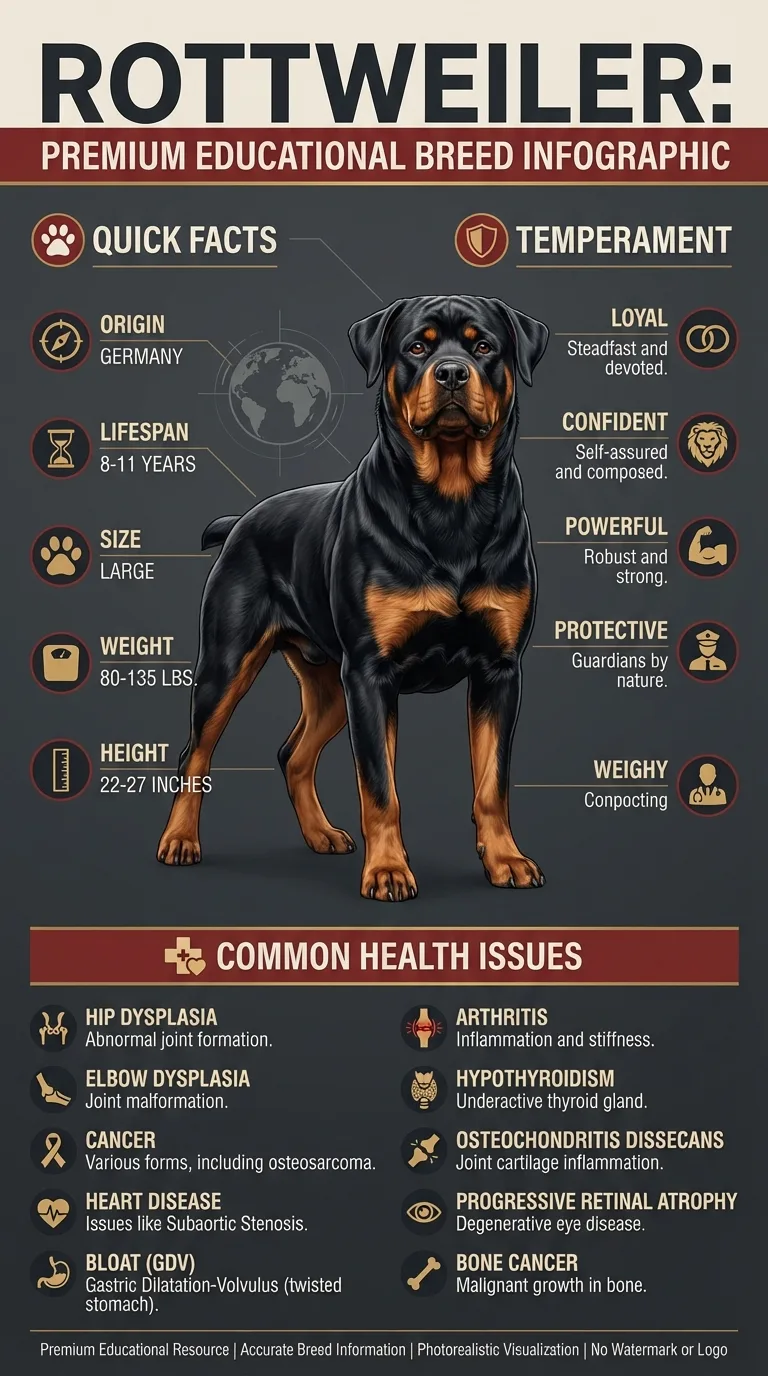
Owners of Rottweilers, especially those with older dogs or those who have been diagnosed with back issues, often face challenges managing this condition. It can be particularly stressful for first-time dog owners who may not know the signs and treatments.
This guide is not medical advice. If your dog shows pain, sudden behavior change, or worsening symptoms, consult a licensed veterinarian.
Some links may be affiliate links. We may earn a commission at no extra cost to you. We only suggest products we believe are helpful for dog owners.
We research and check what we publish, but we do not warrant that any figure, date, price, or statement is accurate, complete, or current, and we accept no liability for any loss, cost, injury, or other harm arising from the use of this site. Use it as one reference among several. You remain responsible for your own decisions and for your dog's care - confirm anything that matters with a licensed veterinarian or another qualified professional before you act on it. Full disclaimer.
Check this first
Recognizing when Rottweiler intervertebral disc disease (IVDD) is an emergency can save your dog's life. If your Rottweiler shows signs of severe pain, such as crying out when touched, or if they suddenly can't walk, these are red flags. Other critical signs include loss of bladder or bowel control, or a notable change in their mobility.
If you encounter any of these symptoms, call your vet immediately.
On the other hand, mild symptoms can often be monitored at home. If your Rottweiler is experiencing slight discomfort, such as occasional whining or reluctance to jump, but still walks and plays normally, you might not need an emergency visit. In these cases, observe their behavior and implement a plan to manage their discomfort.
Keeping them calm and limiting activities can help prevent worsening the condition.
Always err on the side of caution. If you're unsure about your dog's condition, it's better to consult your vet. Early intervention can make a significant difference in treatment outcomes for Rottweiler intervertebral disc disease (IVDD).
If any of these apply, call your vet or an emergency clinic now. The rest of this page is for the cases that are not an emergency.
Rottweiler intervertebral disc disease (IVDD) can cause significant pain and mobility issues for these large dogs. This condition affects the spine, leading to pain, weakness, or even paralysis in severe cases. Daily activities, such as walking or jumping, can become challenging for affected Rottweilers, making it crucial for owners to recognize early signs.
IVDD is relatively common in Rottweilers, especially in older dogs. Many Rottweilers may show early signs by age five, while those with a genetic predisposition may develop symptoms even earlier. Awareness and preventative care can help manage the risk.
Rottweilers are large, powerful dogs, which can put extra strain on their spines. Their heavy weight and strong build make them more susceptible to intervertebral disc disease (IVDD). Additionally, certain genetic factors may predispose them to spinal issues.
Environmental factors can also contribute to IVDD in Rottweilers. Lack of proper exercise, obesity, and repetitive stress from jumping or rough play can worsen spinal health. Poor flooring or inadequate support can lead to slips and falls, increasing injury risk.
If your Rottweiler shows symptoms like limping, reluctance to move, or signs of pain, it's important to consult your vet. Early intervention can prevent further issues and help manage their health effectively.
Avoiding common pitfalls is crucial for managing Rottweiler intervertebral disc disease (IVDD). Here are some mistakes many dog owners make that can hinder recovery or worsen the condition.
See all Rottweiler health problems, which breeds are prone to intervertebral disc disease ivdd, or the full Rottweiler breed guide for temperament, exercise needs and ownership costs.
It may take several weeks to months to see improvement in your Rottweiler's condition after implementing a treatment plan.
Success looks like your Rottweiler regaining mobility, showing less pain during movement, and resuming normal activities with a manageable level of exercise.
When Lisa adopted Max, her energetic Rottweiler, she noticed he was struggling to jump onto the couch. After a vet visit, she learned that Max had intervertebral disc disease (IVDD). Determined to help him, Lisa followed a strict regimen of physical therapy and medication. Over time, Max's mobility improved significantly. He could now chase his favorite ball without showing any signs of pain.
Key takeaway: Early intervention and a consistent treatment plan can greatly improve a Rottweiler's quality of life when facing IVDD.
Rottweilers are prone to intervertebral disc disease (IVDD) due to their size and genetic factors. This condition occurs when the discs between the vertebrae deteriorate or herniate, causing pain and mobility issues. Regular vet check-ups can help catch early signs.
To help your Rottweiler with IVDD, ensure they get a comfortable, supportive bed and limit their jumping or running. Controlled exercise, such as short walks, can maintain muscle strength without putting too much strain on their back.
Symptoms of IVDD in Rottweilers include difficulty walking, reluctance to move, yelping when touched, and muscle spasms. If you notice these signs, it’s crucial to consult your veterinarian for a proper diagnosis and treatment plan.
Yes, IVDD can be treated in Rottweilers. Treatment options range from medication and physical therapy to surgery in severe cases. Early intervention can significantly improve your dog's quality of life.
While you can't completely prevent IVDD, you can reduce the risk by maintaining a healthy weight and providing regular low-impact exercise. Avoiding extreme activities and ensuring your Rottweiler has a safe environment also helps.
Early signs of Rottweiler intervertebral disc disease (IVDD) can include a reluctance to jump, stiffness in the back, or unusual postures. You may also notice your Rottweiler hesitating while walking or showing signs of pain when touched along the spine.
Yes, intervertebral disc disease (IVDD) is more common in older Rottweilers. As dogs age, the discs in their spine can degenerate, making them more susceptible to this condition. Regular vet check-ups become increasingly important as they age.
If your Rottweiler shows signs of severe pain, difficulty walking, or any sudden changes in behavior, it's time to see a vet. Early intervention can improve outcomes for dogs with intervertebral disc disease (IVDD).
Many Rottweilers with intervertebral disc disease (IVDD) can live normal lives with proper management. This may include medication, physical therapy, and lifestyle adjustments. It's crucial to follow your vet's advice for the best quality of life.
To help your Rottweiler manage intervertebral disc disease (IVDD) at home, provide a comfortable and supportive bed, limit strenuous activities, and maintain a healthy weight. Regular, gentle exercise can also aid in their recovery, but always consult your vet for a tailored plan.
Rottweiler intervertebral disc disease (IVDD) is a back condition where the discs in the spine degenerate or herniate, causing pain and mobility issues.
Manage your Rottweiler's IVDD by providing a supportive bed, controlling their activity, and giving them a comfortable environment to move around safely.
If your Rottweiler shows signs of IVDD, contact your veterinarian immediately for an evaluation and appropriate treatment options.
While there's no specific diet for IVDD, maintaining a healthy weight with high-quality dog food can help reduce stress on your Rottweiler's spine.
Training for a Rottweiler with IVDD should focus on gentle exercises that promote strength without stressing the back, like leash walking and basic commands.
A one-page prep sheet for this condition: the signs, the questions to ask, what to get priced. Unlocks here.
You get: Vet visit prep sheet
No spam. One-click unsubscribe. See our privacy policy.
Preview page 1 before you decide.