Health
What's a common early sign of a growth-related bone issue?
Shifting lameness — favoring one leg, then another, without an obvious injury — is the classic early pattern in growing Akitas.

Quick answer
What's a common early sign of a growth-related bone issue?
Shifting lameness — favoring one leg, then another, without an obvious injury — is the classic early pattern in growing Akitas.
An Akita puppy can put on more weight in its first year than most dog breeds ever will, and that pace of growth is exactly why growing-bone problems show up in this breed.
First-time large-breed owners are the most caught off guard here, since the instinct to let a puppy 'run it off' or feed for maximum growth is exactly backwards for a breed built this fast.
This guide is not medical advice. If your dog shows pain, sudden behavior change, or worsening symptoms, consult a licensed veterinarian.
Some links may be affiliate links. We may earn a commission at no extra cost to you. We only suggest products we believe are helpful for dog owners.
We research and check what we publish, but we do not warrant that any figure, date, price, or statement is accurate, complete, or current, and we accept no liability for any loss, cost, injury, or other harm arising from the use of this site. Use it as one reference among several. You remain responsible for your own decisions and for your dog's care - confirm anything that matters with a licensed veterinarian or another qualified professional before you act on it. Full disclaimer.
Check this first
A puppy that suddenly refuses to bear weight on a leg, cries when a limb is touched, or has an obviously swollen joint needs to be seen the same day. These can indicate an acute fracture, a severe panosteitis flare, or in rare cases a bone infection, and delaying care during active growth can affect how the bone heals.
More commonly, growth-related bone pain in Akita puppies shows up as shifting-leg lameness — the puppy favors one leg for a few days, then seems to favor a different one weeks later, without any obvious injury. This pattern, sometimes called 'growing pains' or panosteitis, is uncomfortable but generally self-limiting, and a scheduled vet visit rather than an emergency one is usually appropriate.
The deciding factor is severity and whether it's improving. A limp that is getting worse over a day or two, or a puppy that seems reluctant to move at all, is different from a puppy that's a little stiff after a big play session and back to normal by the next morning.
If any of these apply, call your vet or an emergency clinic now. The rest of this page is for the cases that are not an emergency.
Bone and growth issues in Akita puppies stem from how much mass this breed adds in a short window — often going from a few pounds at birth to well over half its adult weight within the first year. That pace can outstrip how quickly bone and cartilage can properly form, leading to shifting lameness, joint tenderness, or in some cases developmental joint disease.
Mild growth-related discomfort such as panosteitis is common enough in fast-growing large breeds like the Akita that many vets consider it an expected part of puppyhood. More serious developmental joint disease is less universal but still occurs at meaningfully higher rates in large and giant breeds than in small dogs.
An adult Akita can weigh anywhere from 70 to 130 pounds, and virtually all of that growth happens before 18 months of age. That compressed timeline means bones are lengthening and joints are forming while already bearing significant, increasing weight — a mechanical situation smaller breeds simply don't face at the same intensity.
How a puppy is fed and exercised during this window matters as much as genetics. Overfeeding, unnecessary supplementation, and high-impact activity like jumping or sprinting on hard surfaces all add mechanical or nutritional stress on top of what the breed's size already creates.
See a vet the same day if your puppy suddenly won't bear weight on a leg, cries when a limb is handled, or has a visibly swollen joint. For lameness that shifts between legs over days to weeks without a clear injury, schedule an exam to rule out panosteitis versus a developmental joint condition.
Well-meaning choices during the growth window can do lasting harm to an Akita puppy's skeleton. These are the ones to avoid.
See all Akita health problems, which breeds are prone to bone growth issues, or the full Akita breed guide for temperament, exercise needs and ownership costs.
Panosteitis episodes typically resolve within a few weeks per flare, with the overall tendency fading by 18 to 24 months. If a specific developmental joint condition is diagnosed, the timeline depends on severity and can range from weeks of rest to a longer surgical recovery.
Success is a puppy that grows into an adult with a steady, even gait, no persistent limp, and joints that hold up to normal adult exercise without recurring soreness.
Marcus brought home Taro, an Akita puppy, at eight weeks old in Portland and was startled by how fast he grew — by six months, Taro was already over 50 pounds. Around that time, Taro started favoring his front left leg for a few days, then seemed fine, then started favoring the other leg. Marcus's vet diagnosed panosteitis after ruling out anything more serious with X-rays, and recommended switching Taro fully onto a large-breed puppy formula, cutting back on the vigorous fetch sessions Marcus had been running, and giving him rest days between walks. The shifting lameness resolved within a few weeks and didn't return.
Key takeaway: Fast growth in an Akita puppy is normal, but managing diet and activity level during that window meaningfully reduces the discomfort and risk that come with it.
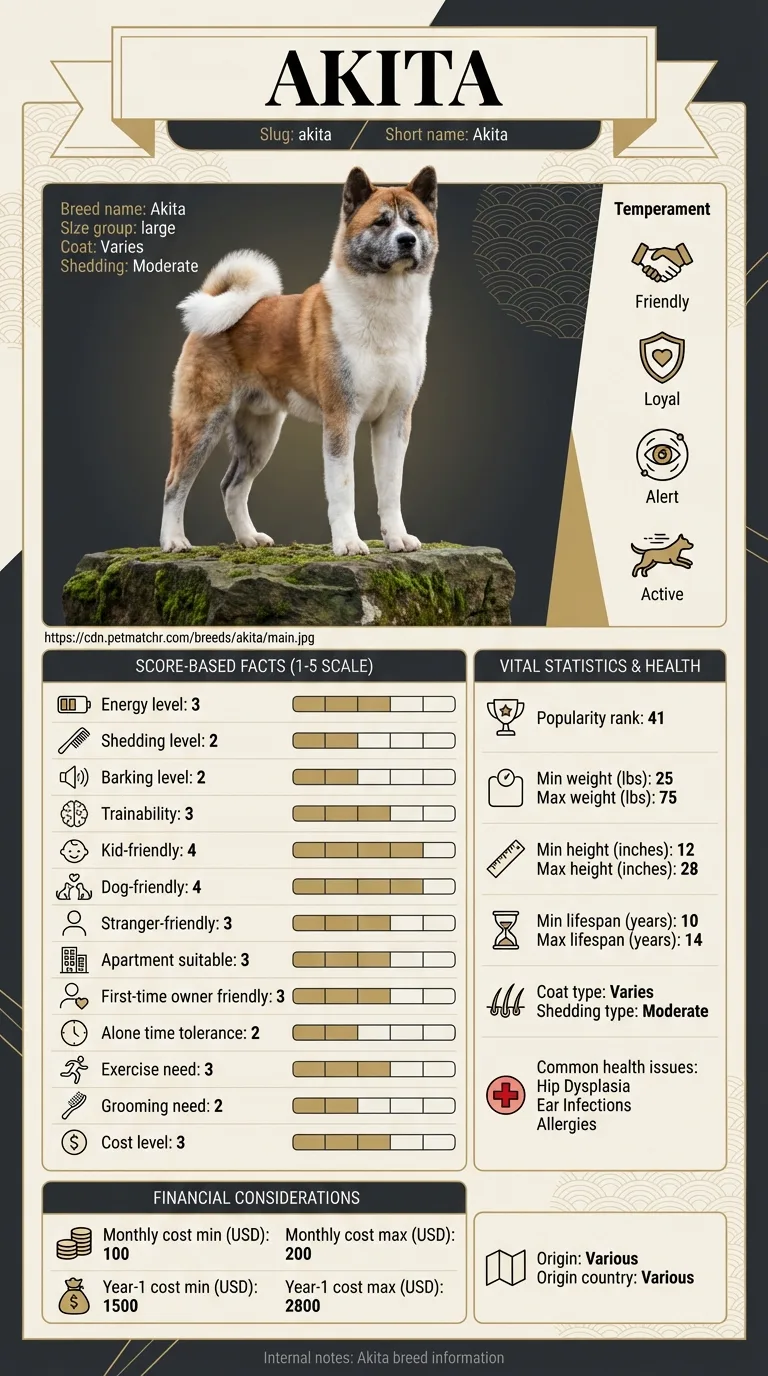
Akitas are a large breed that can reach 70 to 130 pounds as adults, and most of that mass is added in the first year. That growth rate puts unusual stress on developing bones and joints compared to a small or medium breed.
Panosteitis is inflammation within the long bones of growing large-breed dogs, causing shifting-leg lameness. It's commonly seen in fast-growing large breeds and typically resolves on its own by 18 to 24 months as growth slows.
Yes — large-breed puppy formulas are designed with controlled calcium and calorie levels specifically to slow growth to a healthier pace, which meaningfully lowers orthopedic risk compared to regular or high-calorie puppy food.
Most vets recommend waiting until growth plates have closed, generally somewhere around 12 to 18 months for a breed this size, before starting sustained running or repetitive high-impact exercise.
Occasional, mild, shifting lameness during the growth spurt is common enough not to panic over, but it should still be checked by a vet to rule out a more specific joint problem like elbow or hip dysplasia.
Most growth-related bone pain like panosteitis resolves without lasting effects. However, growth-plate injuries or unmanaged developmental joint conditions can contribute to arthritis later, which is why early veterinary evaluation matters.
This varies by individual, but your vet can plot your puppy's weight against a large-breed growth curve at each visit and flag if gain is happening too fast.
Shifting lameness — favoring one leg, then another, without an obvious injury — is the classic early pattern in growing Akitas.
Significantly. A large-breed puppy formula with controlled calcium and calories supports slower, steadier bone growth than a standard or premium all-life-stages food.
Panosteitis itself is usually low-cost (rest and pain control), but ruling out hip or elbow dysplasia may involve X-rays running a few hundred dollars.
Yes — mental training, leash manners, and low-impact obedience work are fine and encouraged; it's high-impact physical exercise that needs to wait.
Roughly the first 12 to 18 months, tapering off as the growth plates close and the skeleton matures.
A one-page prep sheet for this condition: the signs, the questions to ask, what to get priced. Unlocks here.
You get: Vet visit prep sheet
No spam. One-click unsubscribe. See our privacy policy.
Preview page 1 before you decide.