Behavior
What are some quick tips for Havanese bone & growth issues?
Ensure your Havanese receives a balanced diet, limit high-impact activities, and schedule regular vet visits to monitor growth.

Quick answer
What are some quick tips for Havanese bone & growth issues?
Ensure your Havanese receives a balanced diet, limit high-impact activities, and schedule regular vet visits to monitor growth.
Havanese bone & growth issues can lead to serious health concerns. These problems often arise during their rapid growth phase and can affect their overall well-being.
Typically, first-time Havanese owners or those with busy schedules may struggle to identify and manage these issues. If you're juggling work and family, it can be easy to overlook subtle signs of discomfort in your furry friend.
This guide is not medical advice. If your dog shows pain, sudden behavior change, or worsening symptoms, consult a licensed veterinarian.
Some links may be affiliate links. We may earn a commission at no extra cost to you. We only suggest products we believe are helpful for dog owners.
We research and check what we publish, but we do not warrant that any figure, date, price, or statement is accurate, complete, or current, and we accept no liability for any loss, cost, injury, or other harm arising from the use of this site. Use it as one reference among several. You remain responsible for your own decisions and for your dog's care - confirm anything that matters with a licensed veterinarian or another qualified professional before you act on it. Full disclaimer.
Check this first
Havanese bone and growth issues can vary widely in severity. It's crucial to differentiate between situations that require immediate veterinary attention and those that can be monitored. Recognizing the red flags can help you act quickly and protect your furry friend's health.
Call Your Vet Now If You Notice: - Limping or reluctance to put weight on a leg. - Swelling or deformity in the bones or joints. - Severe pain or distress when touched or moved. - Any sudden changes in mobility or behavior. - Signs of fever, lethargy, or loss of appetite, which may indicate an infection.
These symptoms can signal serious conditions like fractures or developmental disorders, and prompt treatment is essential.
Monitor and Wait If You See: - Mild limping that improves with rest. - Slight discomfort after exercise or play. - Occasional stiffness after long periods of inactivity.
In these cases, observe your Havanese closely. Keep a log of their activity and any changes in behavior. Adjust their exercise routine and provide a comfortable resting area. If mild issues persist for more than a few days or worsen, it's time to consult your vet.
By staying aware of your Havanese's health and knowing when to seek help, you can better manage their bone and growth issues while ensuring they lead a happy, active life.
If any of these apply, call your vet or an emergency clinic now. The rest of this page is for the cases that are not an emergency.
Havanese bone & growth issues can be concerning for owners. These small dogs may experience problems with their bones and joints, especially during their growth phases. Common signs include limping, difficulty in getting up, or reluctance to play, which can be distressing for both the dog and the owner.
Bone & growth issues are fairly common in Havanese, especially if they are not bred responsibly. A lack of awareness about their nutritional needs can exacerbate these problems, leading many owners to seek solutions.
Havanese dogs are a small breed, but they can still face specific bone and growth issues. Genetic factors, such as a predisposition to conditions like hip dysplasia and patellar luxation, may affect their skeletal development. Additionally, their rapid growth during puppyhood can lead to imbalances if not properly managed.
The environment can significantly impact a Havanese's bone health. Lack of exercise can contribute to weak bones, while improper diet may lead to nutritional deficiencies. Overweight Havanese are also at greater risk for growth issues due to added stress on their joints.
If you notice persistent limping, swelling, or a sudden change in activity level, it’s important to talk to your vet. They can diagnose any underlying health issues and recommend appropriate treatment options.
Avoiding common mistakes can help improve your Havanese's bone and growth issues. Here are some behaviors to watch out for.
Start here: Havanese Most Common Genetic Disorders: What to Screen For
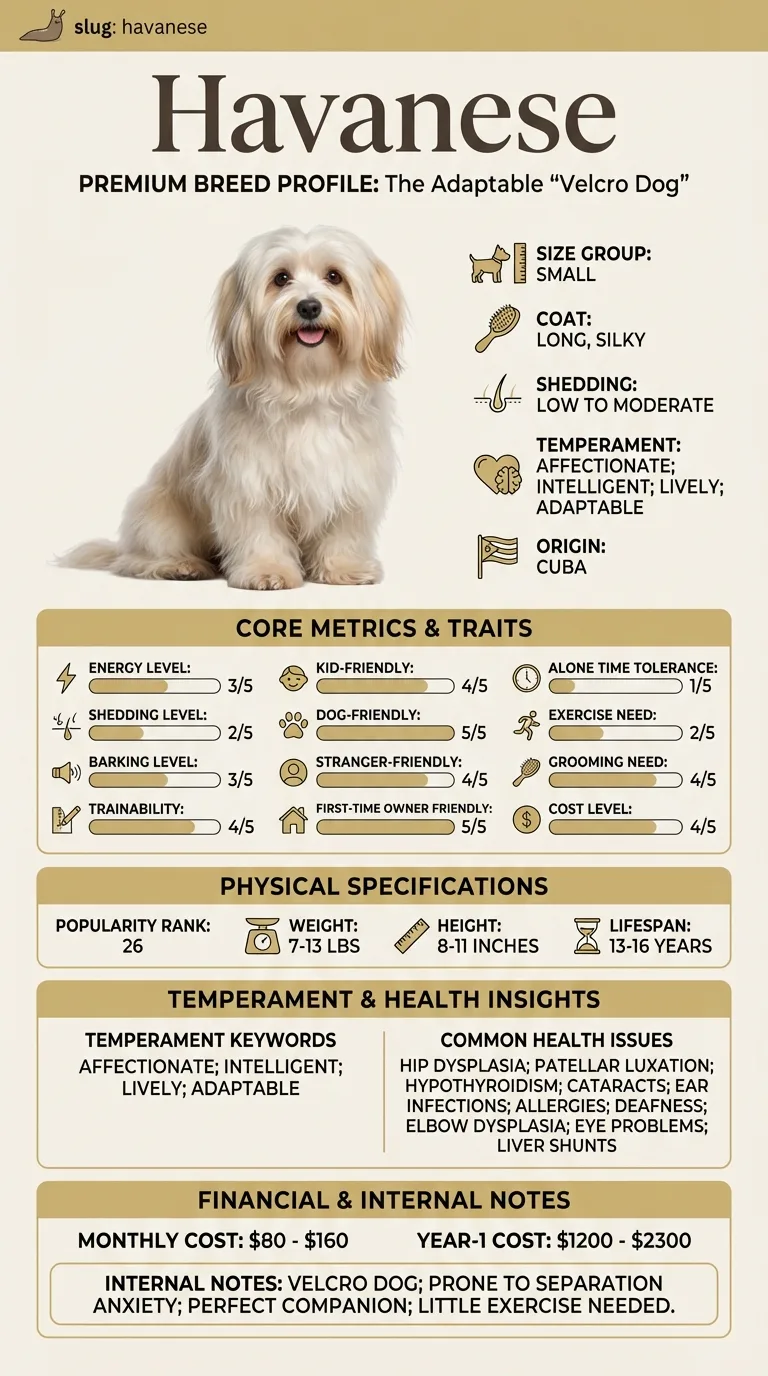
See all Havanese health problems, which breeds are prone to bone growth issues, or the full Havanese breed guide for temperament, exercise needs and ownership costs.
It may take 3 to 6 months to see significant improvement in your Havanese's bone and growth issues.
Success means your Havanese shows improved mobility, reduced pain, and a healthier weight. Regular vet check-ups will confirm growth is on track and any issues are being managed.
Lily, a first-time dog owner, was excited to bring home her Havanese puppy, Max. After a few months, she noticed he was limping and seemed less energetic than expected. Concerned, she took him to the vet, who diagnosed him with bone growth issues due to rapid weight gain. With a tailored diet and a consistent exercise plan, Max slowly regained his strength over the next four months. Lily learned to monitor Max's diet and adjust his activity to prevent further issues. Now, Max is a lively pup who loves to play.
Key takeaway: Regular vet visits and proper diet can help manage Havanese bone and growth issues effectively.
Signs of bone and growth issues in your Havanese may include limping, reluctance to play, or difficulty jumping. You might also notice unusual bone growth or deformities. If you observe these symptoms, it's best to consult your vet.
To address Havanese bone & growth issues, ensure a balanced diet rich in essential nutrients. Provide regular, low-impact exercise to support healthy bone development. Consult your vet for tailored recommendations and potential supplements.
Signs of bone & growth issues in Havanese may include limping, difficulty in rising, or reluctance to play. You might also notice unusual growth patterns or discomfort when touched. If you see these signs, consult your vet promptly.
Yes, positive reinforcement training is effective for Havanese with bone & growth issues. Focus on gentle commands and avoid high-impact exercises. This approach helps build confidence while minimizing stress on their developing bones.
Absolutely. Bone & growth issues can lead to conditions like hip dysplasia or arthritis as your Havanese ages. Early intervention and proper care can help mitigate these risks and ensure a healthier life.
A high-quality, well-balanced diet with adequate calcium and vitamin D is crucial for Havanese with bone & growth issues. Consult your vet for specific dietary recommendations tailored to your dog's needs.
Yes, some bone and growth issues can be hereditary. Conditions like hip dysplasia or patellar luxation may be passed down from the parents. It’s important to discuss the health history of the puppy's parents with the breeder.
To help your Havanese, ensure a balanced diet rich in nutrients necessary for bone health. Regular, low-impact exercise can also support proper growth. Consult your vet for specific dietary recommendations and exercise plans.
If your Havanese shows persistent signs of pain, struggles with mobility, or has visible deformities, you should take them to the vet. Early intervention can lead to better outcomes, especially for growth-related issues.
Training techniques that focus on gentle commands and positive reinforcement can help. Avoid high-impact activities that might worsen bone issues. Consult a professional trainer familiar with Havanese needs for tailored guidance.
Ensure your Havanese receives a balanced diet, limit high-impact activities, and schedule regular vet visits to monitor growth.
Havanese typically need about 30 minutes of exercise each day, focusing on gentle walks and playtime to avoid stressing their bones.
Consult your vet about glucosamine and omega-3 fatty acids, which may support joint health and development in Havanese.
Yes! Training can positively influence behavior and confidence, especially when using gentle commands and positive reinforcement.
A one-page prep sheet for this condition: the signs, the questions to ask, what to get priced. Unlocks here.
You get: Vet visit prep sheet
No spam. One-click unsubscribe. See our privacy policy.
Preview page 1 before you decide.