DogBreedCompass

Malamute or Newfoundland: Both Haul, Only One Wants to Keep Going

These are the two heaviest-coated working breeds on this site: both rate 5/5 for shedding, 4/5 for grooming, 5/5 with children and 1/5 for apartments. The Newfoundland is bigger and needs two exercise ratings less.

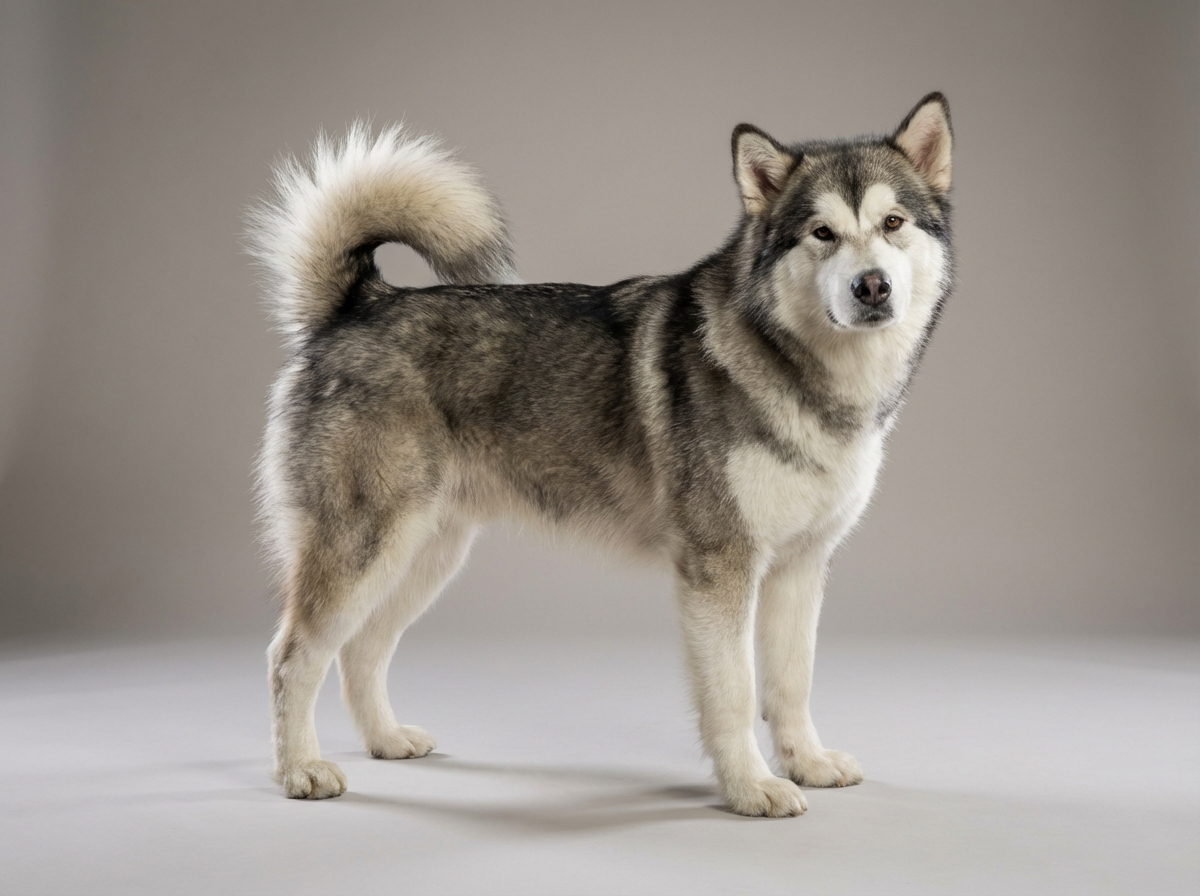
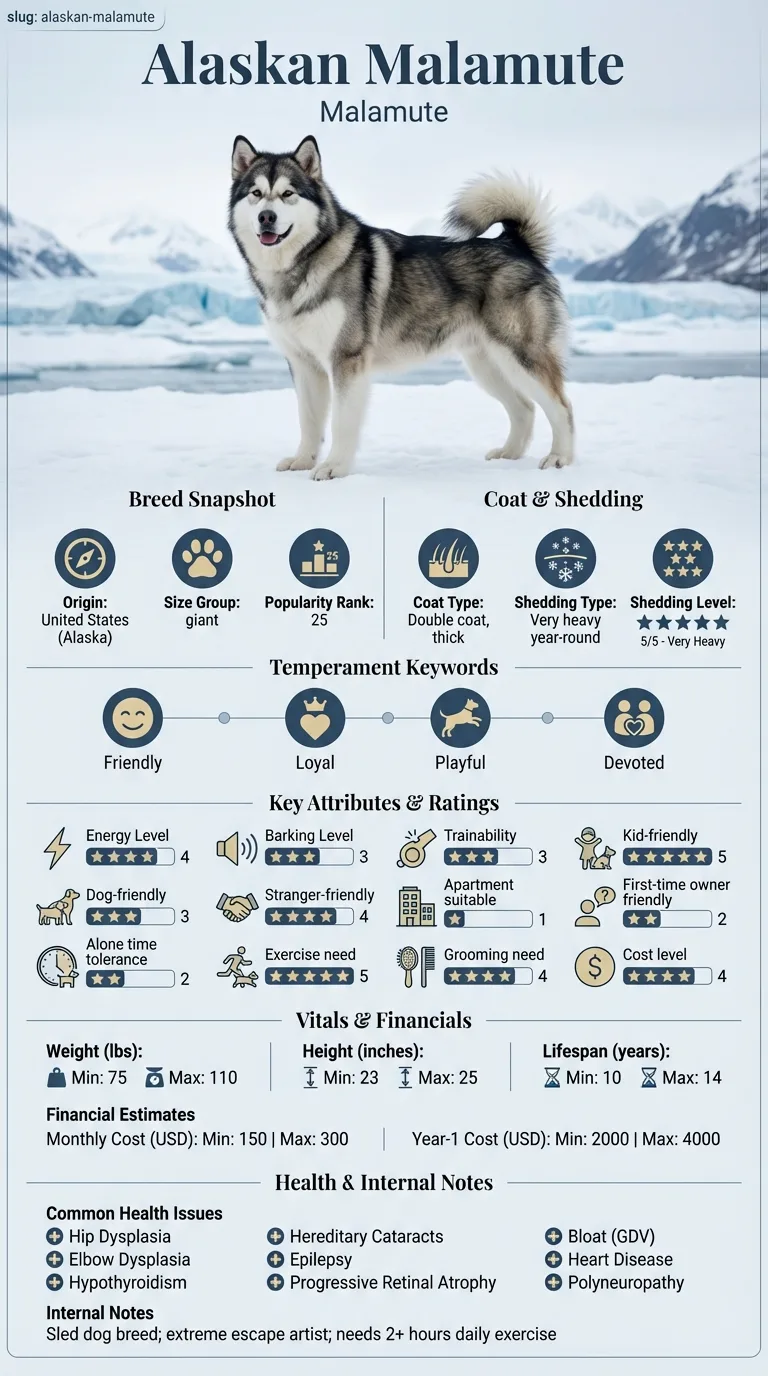
alaskan malamute infographic
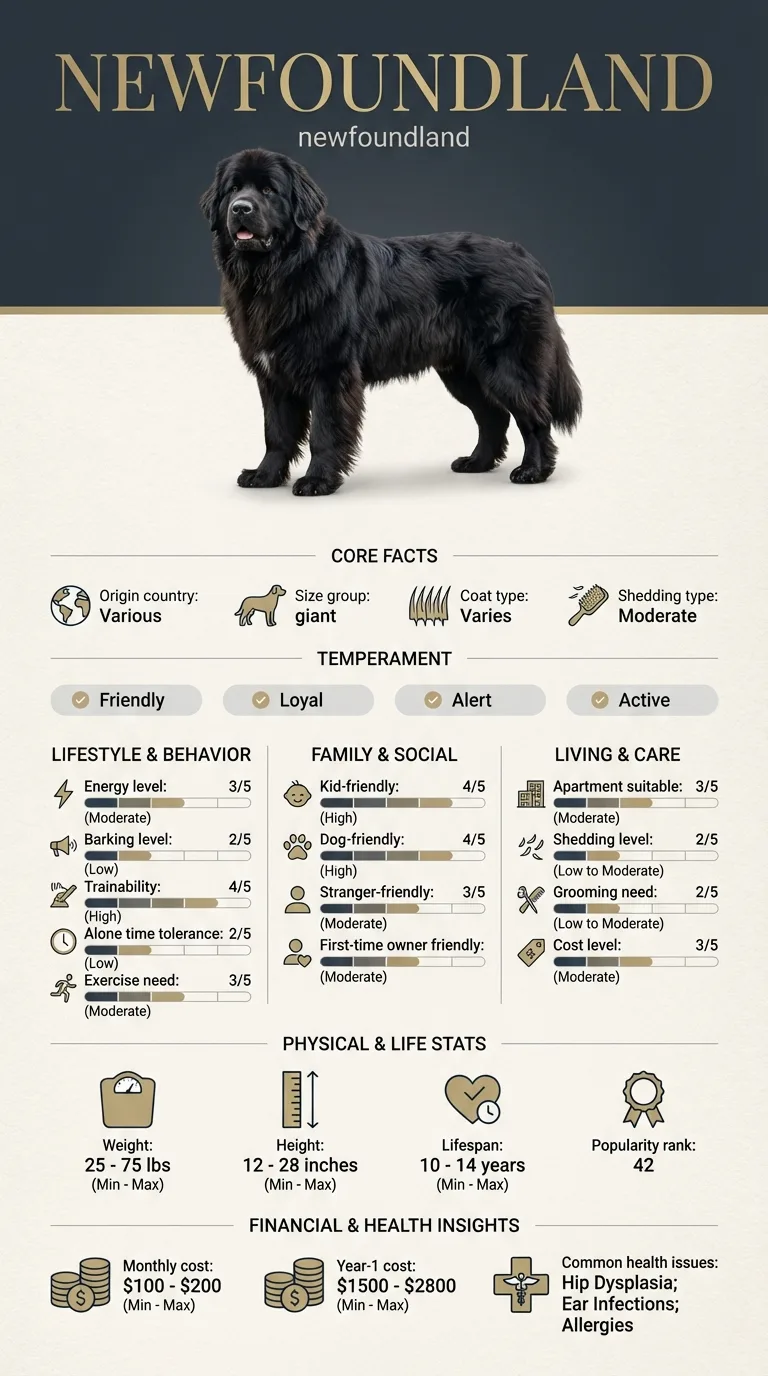
newfoundland infographic

This page is for someone drawn to very large, thick-coated, gentle working breeds who needs to know which one fits their week — and who has probably not yet costed the grooming or the cardiac screening.

Quick verdict

The Newfoundland is calmer, more trainable and better suited to a normal household routine, but it costs more, drools constantly and lives three to four years less than the Malamute.

Choose alaskan malamute if...

Choose the Alaskan Malamute if you want an active outdoor life with a large dog, you have cold weather and secure fencing, and the extra years and lower running costs outweigh a harder daily routine.

Choose newfoundland if...

Choose the Newfoundland if you want a genuinely calm giant with a 3/5 exercise need and a 4/5 trainability, you have space, towels and budget, and you can accept a 9 to 10 year life.

Head-to-head comparison

Featurealaskan malamutenewfoundlandWinner
Weight75–110 lbs100–150 lbsalaskan malamute
Height23–25 in26–28 inalaskan malamute
Lifespan10–14 years9–10 yearsalaskan malamute
CoatThick double coatHeavy water-resistant double coatEqual
Grooming need4/54/5Equal
Shedding5/5 — very heavy year-round5/5 — heavy year-roundEqual
Energy level4/52/5newfoundland
Exercise need5/53/5newfoundland
Trainability3/54/5newfoundland
Barking3/52/5newfoundland
Good with kids5/55/5Equal
Good with other dogs3/54/5newfoundland
Friendly to strangers4/54/5Equal
Apartment suitability1/51/5Equal
Good for first-time owners2/53/5newfoundland
Tolerates being alone2/53/5newfoundland
Typical monthly cost$150–300$150–310alaskan malamute
Typical first-year cost$2,000–4,000$2,200–4,200alaskan malamute

Deep dive

Two hauling breeds with opposite stamina profiles

It is unusual to compare two draft breeds, and the shared history makes the difference in exercise ratings more interesting than a simple energy gap.

The Malamute pulled loaded sledges over distance, and distance is the operative word. Its 5/5 exercise rating and 4/5 energy describe a dog engineered for sustained output — hours of steady work, day after day. Two hours daily is the working expectation, and it has to include resistance to register: a weighted pack on a hike, a pulling harness, a rig or scooter, snow, steep ground. Flat lead-walking does not spend a Malamute.

The Newfoundland pulled nets and carts and swam out to people in heavy water, and every one of those is a short effort at maximum power followed by rest. At 3/5 exercise and 2/5 energy it is a genuinely low-motion dog, content with forty-five minutes to an hour of walking split across the day. Swimming is the exception, and it is the exercise the breed is actually built for — a webbed-footed, oil-coated, powerfully built water dog that will swim happily for far longer than it will walk. If you have access to safe open water, a Newfoundland's exercise problem is solved.

Both breeds also need their exercise restrained in puppyhood. Both carry hip dysplasia on their lists, both grow fast to a large frame, and forced walking, stairs and repetitive jumping before eighteen months are avoidable risks in either.

The practical result is that a Newfoundland fits around a normal week and a Malamute sets one. On a rainy Tuesday in February the Newfoundland is content with a short walk and a long lie-down. The Malamute is not, and will tell you.

Both 5/5 for shedding: the two hardest coats to keep in a house

This is the only pairing on the site where both breeds hit the maximum shedding rating and the maximum practical grooming commitment for a non-clipped coat. Anyone comparing these two on hair volume is choosing between equals.

The Malamute's coat is dry and woolly. The undercoat releases steadily year-round and comes out in sheets during two annual blows, and because the wool is dry it gathers into drifts that sweep up in one piece. An undercoat rake worked to the skin two or three times a week keeps it manageable, and the risk points are behind the ears, in the armpits and along the trousers.

The Newfoundland's coat is longer, coarser and — critically — oily. That oil is what makes it water-resistant, and it is also why the coat behaves differently indoors: shed hair clings rather than drifting, it holds a distinct smell when damp, and it mats more readily than the Malamute's because the length and the oil together bind the dead undercoat into the live coat. A Newfoundland needs a rake and a comb, at least two long sessions a week, with particular attention to the ruff, the britches, behind the ears and the feathering on the legs and tail. A wet Newfoundland takes hours to dry properly and a damp undercoat left in place is how hot spots start.

Neither coat should ever be shaved. Both are two-way insulation, and on the Newfoundland the outer layer is also the waterproofing.

Then there is the drool. Newfoundlands are loose-lipped and produce it constantly, particularly after drinking, and they distribute it by shaking. Malamutes are dry-mouthed. For many households this is the single most decisive practical difference on the page, and it is one people rarely think about until they have lived with it.

Cardiac screening and cystinuria: two questions to ask a Newfoundland breeder

The Newfoundland's health list is short and specific, and two entries on it should shape how a buyer chooses a litter.

Subaortic stenosis is a congenital narrowing below the aortic valve, and the Newfoundland is one of the breeds most associated with it. It ranges from a murmur that never causes trouble to a serious defect that limits exercise tolerance and shortens life. It is detected by cardiac auscultation and confirmed by echocardiography, and the important point for a buyer is that responsible breeders have their breeding stock examined by a cardiologist rather than relying on a general check. Ask directly whether both parents have been cardiac-screened and by whom. Dilated cardiomyopathy also appears on the list, which is the other reason cardiac testing matters in this breed.

Cystinuria is the second. It is an inherited defect in kidney transport that allows cystine to form bladder stones, it affects males far more severely because of their narrower urethra, and an obstruction is a genuine emergency. The Newfoundland is one of the breeds with a well-established DNA test for it, so a breeder can and should know the status of both parents. Signs in an affected dog are straining, frequent small urinations and blood.

Hip dysplasia and bloat complete the list, and both are shared with the Malamute. Bloat management is the same for either dog: split meals, quiet time around eating, a slow-feeder bowl if needed, and a known route to an out-of-hours clinic.

The Malamute's list adds elbow dysplasia, hypothyroidism, epilepsy, progressive retinal atrophy, hereditary cataracts, zinc-responsive dermatosis and inherited polyneuropathy. It is a longer list, but it lacks the cardiac weight that holds the Newfoundland's lifespan down to 9 to 10 years.

Sweet and patient against friendly and independent

Both breeds rate 5/5 with children and 4/5 with strangers, and both are genuinely safe, warm dogs. Neither is a guard dog; the Newfoundland's 2/5 barking rating makes it the quieter of the two by some distance.

The temperament keywords tell the real story. The Newfoundland is described as sweet, patient, devoted and calm — and calm is the word that matters. It is famously tolerant, slow to react and physically gentle for its size, which is why the breed has such a reputation with small children. The Malamute is friendly, loyal, playful and devoted: warm, but busier, and physically boisterous in a way the Newfoundland is not.

On trainability the Newfoundland leads 4/5 to 3/5, and the gap is real. It is a biddable working breed that wants to cooperate, takes to draft and water work readily, and is soft enough that harsh handling backfires. The Malamute understands the instruction and then weighs it, which is why off-lead reliability is a goal most Malamute owners never fully reach.

On solitude and beginners the Newfoundland is also ahead — 3/5 against 2/5 on both. It is not an all-day dog, but a normal working day with company either side is within range, and a committed first-time owner can succeed with one in a way that is harder with a Malamute.

Where the Newfoundland is more demanding is emotionally. It is a leaning, following, physically affectionate breed that wants to be in the room, and 130 pounds of that has consequences for furniture, doorways and anyone carrying a hot drink. The Malamute is affectionate on its own terms and comfortable being separate.

With other dogs the Newfoundland leads 4/5 to 3/5. Around cats it is generally safe, while the Malamute's hunting drive stays live.

Cost level 5/5 and the giant-breed arithmetic

The Newfoundland sits at cost level 5/5 against the Malamute's 4/5, with monthly figures of $150–310 against $150–300 and a first year of $2,200–4,200 against $2,000–4,000. The published ranges look close; the lived difference is larger, because a Newfoundland tends to sit at the upper end of its range while a Malamute does not.

Food accounts for part of it. So does weight-based veterinary pricing on everything from parasite prevention to anaesthesia — a 140 pound dog costs more to sedate, medicate and operate on than a 90 pound one, every single time.

Grooming is the line most people underestimate, because both breeds rate 4/5 and it feels like a wash. It is not. A Newfoundland's longer, oilier, mat-prone coat takes considerably more time per session and is far more likely to end up at a professional groomer, where a giant-breed full groom and blow-dry is priced accordingly. Drying alone after a swim or a wet walk is a job.

Cardiac screening adds cost at the buying stage — an echocardiogram on breeding stock is not cheap, and a breeder who does it will price puppies to reflect it. That is money well spent rather than a warning sign.

The last piece of arithmetic is lifespan. Nine to ten years against ten to fourteen means the Newfoundland's higher annual cost is also compressed into fewer years, and giant-breed veterinary spending concentrates in the final two. It is worth being clear-eyed: this is an expensive dog with a short life and an exceptional temperament, and people choose it knowing all three.

Alaskan Malamute vs Newfoundland at a glance

These are the two heaviest-coated working breeds on this site: both rate 5/5 for shedding, 4/5 for grooming, 5/5 with children, and 1/5 for apartments. The Newfoundland is the bigger dog and needs two exercise ratings less than the Malamute.

The Newfoundland is calmer, more trainable, and better suited to a normal household routine, which makes it the easier giant to live with day to day. What it costs is real money and time — it runs a higher budget than the Malamute, drools constantly, and typically lives three to four fewer years.

Choose the Malamute if you want an active outdoor life with a large dog, cold weather, and secure fencing, and extra years and lower running costs outweigh a harder daily routine. Choose the Newfoundland if you want a genuinely calm giant with a moderate exercise need, you have the space, towels, and budget, and you can accept a shorter life.

Frequently asked questions

Which needs more exercise?

The Malamute at 5/5 against the Newfoundland's 3/5, despite being the smaller dog. The Malamute needs two hours with physical resistance. An adult Newfoundland is content with forty-five minutes to an hour, and would rather swim than walk.

Which sheds more?

Neither — both rate 5/5. The difference is behaviour. Malamute wool is dry and drifts into clumps you can sweep. Newfoundland hair is longer and oilier, clings to fabric, mats more readily and holds a smell when damp.

Do Newfoundlands really drool that much?

Yes, particularly after drinking, and they spread it by shaking their heads. It is one of the most decisive practical differences between the two breeds, since Malamutes are essentially dry-mouthed.

What should I ask a Newfoundland breeder?

Whether both parents have been cardiac-screened by a cardiologist, given the breed's association with subaortic stenosis, and what their DNA test status is for cystinuria. Then hip scores. All three are established, answerable questions.

Which lives longer?

The Malamute, at 10 to 14 years against 9 to 10. The Newfoundland's cardiac burden and greater size are the main reasons its range is one of the shortest of any breed here.

Which is better for a first-time owner?

The Newfoundland at 3/5 against 2/5. It is more trainable at 4/5, calmer, quieter and tolerates a working day better. The commitment it demands is grooming, cost and emotional closeness rather than daily athletics.

Can either live in a flat?

Both rate 1/5. The Malamute because of its two-hour exercise requirement, the Newfoundland because of sheer size and the amount of coat, water and drool it brings indoors.

Quick answers

View more answers
Living

Malamute or Newfoundland: which should I choose?

The Newfoundland if you want a calm, trainable giant that fits a normal week and you can absorb the cost, the coat and the drool. The Malamute if you want an active outdoor dog and three or four more years with it.

Costs

Which is more expensive?

The Newfoundland — cost level 5/5 against 4/5, $150–310 a month and $2,200–4,200 in the first year, with more of that spend concentrated into a shorter life.

Health

What is cystinuria and why does it matter?

An inherited kidney transport defect that causes bladder stones, far more serious in males because obstruction is an emergency. There is a DNA test in Newfoundlands, so a breeder should know both parents' status.

Training

Which is easier to train?

The Newfoundland at 4/5 against 3/5. It is biddable, soft and takes to draft and water work readily. The Malamute considers each instruction on its merits and complies selectively.

Related DogBreedCompass guides

  • Alaskan Malamute breed guideThe Malamute profile covers the exercise load, coat raking and containment the breed requires.
  • Newfoundland breed guideThe Newfoundland profile covers coat care, water work and the breed's calm temperament.
  • common genetic disorders in NewfoundlandsThe breed's inherited risks are few but specific, and worth reading before choosing a litter.
  • hip dysplasia in Alaskan MalamutesHip dysplasia sits on both lists and is the shared screening question for either breeder.
  • bloat in Alaskan MalamutesBloat appears on both health lists and both breeds are deep-chested enough to need a plan.
  • Alaskan Malamute vs English MastiffBuyers shortlisting calm giants usually want the other very large low-energy option beside this one.

Related guides

Important reminder

Health information here is general and is not veterinary advice. Cardiac screening, DNA testing and individual risk should be discussed with your own veterinarian.

Some links on this site are affiliate links. We may earn a commission if you buy through them, at no additional cost to you.

Find Your Perfect Breed

Match your lifestyle to the right dog.

Take quiz

Find your match

Not sure which breed is right for you? Take our 2-minute quiz to find out.

Take the quiz