DogBreedCompass
← Back to breed profile

Dachshund Intervertebral Disc Disease (IVDD) Type I: What You Need to Know

Dachshund intervertebral disc disease (IVDD) type I is a serious condition affecting your dog's spine. It can lead to pain and mobility issues if not addressed promptly.

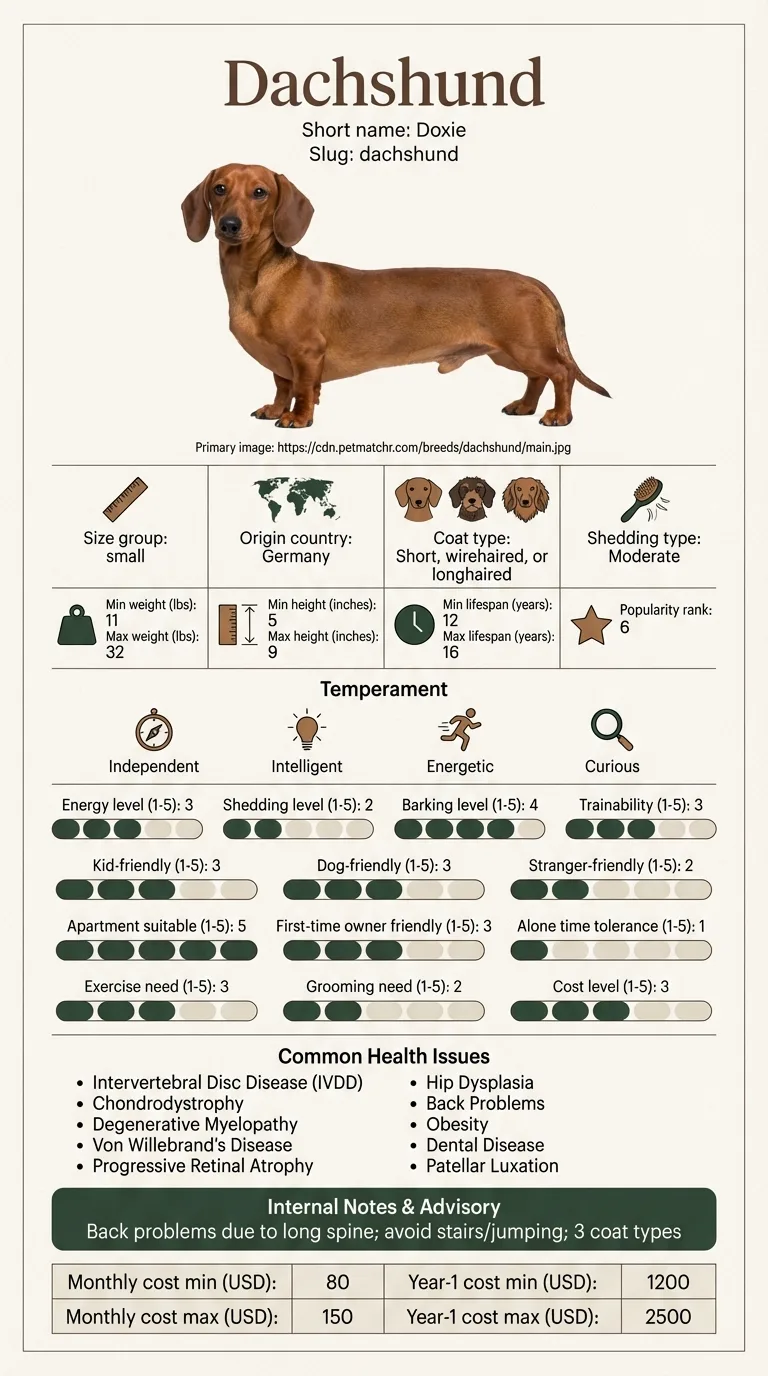
Dachshund Intervertebral Disc Disease (IVDD) Type I: What You Need to Know infographic

Many Dachshund owners face challenges with IVDD, especially those who may not recognize early signs of pain or mobility issues. Busy families or first-time pet owners may find it difficult to manage their dog's needs when symptoms arise.

Important reminder

This guide is not medical advice. If your dog shows pain, sudden behavior change, or worsening symptoms, consult a licensed veterinarian.

Some links may be affiliate links. We may earn a commission at no extra cost to you. We only suggest products we believe are helpful for dog owners.

What this problem looks like

Dachshund intervertebral disc disease (IVDD) type I is a serious back problem common in this breed. It occurs when the discs in the spine herniate, putting pressure on the spinal cord. This can lead to pain, mobility issues, and in severe cases, paralysis.

Common triggers

  • Jumping from heights like couches or beds
  • Playing rough with other dogs
  • Being overweight, which puts extra strain on the back
  • A lack of exercise or sudden movements

IVDD is particularly common in Dachshunds due to their long spines and short legs. Studies show that nearly 25% of Dachshunds will suffer from some form of IVDD in their lifetime.

Why this happens

Breed factors

Dachshunds are prone to intervertebral disc disease (IVDD) due to their long spines and short legs. This breed's unique body structure makes them more susceptible to herniated discs. Their genetic predisposition plays a significant role in the development of this condition.

Environment factors

Environmental factors can also contribute to IVDD in Dachshunds. Activities such as jumping off furniture or climbing stairs can increase the risk of injury to their spines. Additionally, being overweight adds extra stress on their back, further exacerbating the likelihood of developing IVDD.

What you can try

At-home strategies

  • Limit your Dachshund's jumping and climbing. Use ramps or pet stairs to help them access furniture safely.
  • Maintain a healthy weight through a balanced diet and regular exercise. Consult your vet for specific feeding recommendations.
  • Provide a supportive bed that keeps their spine aligned. Orthopedic beds can help alleviate pressure on their back.

When to consider a trainer

If your Dachshund shows signs of anxiety or is consistently jumping or climbing despite your efforts, consulting a professional trainer may help. A trainer can guide you on positive reinforcement techniques to teach your dog safer behavior.

When to talk to your vet

If you notice symptoms like difficulty walking, whining, or reluctance to move, it's essential to talk to your vet. Early intervention can prevent further damage and may lead to better treatment options for your Dachshund.

Realistic expectations

Managing Dachshund intervertebral disc disease (IVDD) type I typically takes several weeks to months. Initial relief from symptoms might be seen in 1-2 weeks with proper care, but full recovery could take longer, depending on the severity of the condition.

Success means your Dachshund shows improved mobility, reduced pain, and an overall happier demeanor. Regular vet check-ups and adhering to a safe exercise regimen are crucial for long-term management.

Mistakes that make this worse

Avoiding certain behaviors can be key in managing Dachshund intervertebral disc disease (IVDD) type I. Here are common mistakes to steer clear of, along with safer alternatives.

  • Letting your Dachshund jump on and off furniture. This can strain their spine. Instead, provide ramps or steps to help them access higher areas safely.
  • Ignoring signs of pain or discomfort. Dismissing these symptoms can worsen their condition. Always consult your vet if you notice behavioral changes or limping.
  • Overexercising your Dachshund. Too much activity can exacerbate IVDD symptoms. Stick to short, controlled walks and gentle play to keep them active without straining their back.
  • Failing to manage their weight. Obesity can increase pressure on the spine. Feed a balanced diet and watch portion sizes to maintain a healthy weight.
  • Neglecting to use supportive gear. Not utilizing harnesses or back support can lead to injury. Invest in a supportive harness to help your Dachshund move safely.
  • Skipping regular vet check-ups. Not monitoring their spine health can lead to serious problems. Schedule routine visits to catch issues early.
  • Not providing a soft, supportive bed. Hard surfaces can be uncomfortable for a Dachshund with IVDD. Ensure they have a cushioned bed to reduce spinal stress.

When Dachshund Intervertebral Disc Disease (IVDD) Type I is an Emergency

Recognizing when Dachshund intervertebral disc disease (IVDD) type I is an emergency is crucial. If your dog shows sudden weakness in their legs, inability to walk, or severe pain when moving, call your vet immediately. These signs indicate that the condition may be severe and needs prompt treatment to prevent further injury.

Dachshund Intervertebral Disc Disease (IVDD) Type I: What You Need to Know - When Dachshund Intervertebral Disc Disease (IVDD) Type I is an Emergency

When to Monitor and Wait

In less severe cases, you may notice mild signs like occasional limping or reluctance to jump. If your Dachshund is still able to walk and show interest in activities, it may be safe to monitor their condition at home. However, keep a close eye on any changes and consult your vet for a plan, especially if symptoms persist or worsen.

Dachshund Intervertebral Disc Disease (IVDD) Type I: What You Need to Know - When to Monitor and Wait

Jenna's Journey with Max and IVDD

Jenna, a busy nurse in Atlanta, noticed her Dachshund Max was struggling to jump on the couch and seemed more irritable than usual. After a vet visit, she learned Max had IVDD type I. At first, Jenna felt overwhelmed, worried about Max's quality of life. She committed to a strict rest and rehabilitation plan, including physical therapy sessions. Over the next few months, Jenna closely monitored Max's progress, adjusting his activities and ensuring he avoided stairs. With patience and dedication, Max gradually regained his strength and was able to enjoy his favorite activities again.

Key takeaway: Understanding and managing Dachshund intervertebral disc disease (IVDD) type I requires dedication but can lead to a fulfilling life for your dog. Regular vet check-ups and a safe exercise routine are essential.

Frequently asked questions

Why does my Dachshund have intervertebral disc disease (IVDD) type I?

Dachshunds are prone to intervertebral disc disease (IVDD) type I due to their unique body structure, particularly their long spines and short legs. This condition can develop from genetics, age, or injury. Regular vet check-ups can help identify early signs.

How can I prevent Dachshund intervertebral disc disease (IVDD) type I?

To help prevent IVDD type I, avoid letting your Dachshund jump from high places or navigate stairs. Maintain a healthy weight to reduce strain on their spine, and consider using ramps for furniture. Regular, low-impact exercise is also beneficial.

What are the signs of Dachshund intervertebral disc disease (IVDD) type I?

Signs may include back pain, reluctance to move, weakness in the legs, or difficulty walking. If your Dachshund shows these symptoms, consult your vet immediately. Early intervention is crucial for better outcomes.

What treatment options are available for Dachshund intervertebral disc disease (IVDD) type I?

Treatment often includes pain management, physical therapy, and in some cases, surgery to relieve pressure on the spinal cord. Your vet will recommend the best approach based on your Dachshund's condition and severity.

Can Dachshund intervertebral disc disease (IVDD) type I be managed at home?

Yes, managing IVDD type I at home can involve providing a comfortable, supportive environment. Limit your dog's activity and provide medications as prescribed by your vet. Monitor their recovery to ensure they are not experiencing unnecessary pain.

What lifestyle changes should I consider for my Dachshund with IVDD?

Consider incorporating ramps for furniture, keeping your dog at a healthy weight, and avoiding strenuous activities. Regular, gentle exercise is essential. Consult with your vet for a tailored plan that fits your dog's needs.

How can training help with Dachshund intervertebral disc disease (IVDD) type I?

Training can help by teaching your Dachshund to follow commands for limited movement. This can minimize the risk of injury and reinforce safe behavior. Consider working with a professional trainer for the best strategies.

What are the early signs of intervertebral disc disease (IVDD) type I in Dachshunds?

Early signs of Dachshund intervertebral disc disease (IVDD) type I may include reluctance to move, difficulty jumping, and changes in posture. You might also notice signs of pain like whining or yelping when picked up. If you observe these symptoms, it’s important to consult your vet promptly.

Is Dachshund intervertebral disc disease (IVDD) type I hereditary?

Yes, Dachshund intervertebral disc disease (IVDD) type I can have a hereditary component. This condition is more common in breeds with elongated spines, like Dachshunds. If your dog has a family history of back problems, they may be at higher risk.

How can I help my elderly Dachshund with intervertebral disc disease (IVDD) type I?

For older Dachshunds with IVDD type I, providing a comfortable resting place and limiting physical activity can help. Gentle exercises, like short walks, may be beneficial but always consult your vet before starting any new routine. Pain management and supportive care are also crucial.

Can intervertebral disc disease (IVDD) type I be managed without surgery?

Yes, many cases of Dachshund intervertebral disc disease (IVDD) type I can be managed without surgery. Conservative treatments may include rest, anti-inflammatory medications, and physical therapy. However, if symptoms persist or worsen, surgery might be necessary.

What lifestyle changes can prevent Dachshund intervertebral disc disease (IVDD) type I?

To help prevent Dachshund intervertebral disc disease (IVDD) type I, maintain a healthy weight and avoid excessive jumping or rough play. Providing ramps or steps can help them navigate furniture without straining their backs. Regular vet check-ups can also catch issues early.

Quick answers

View more answers
Behavior

What are quick tips for Dachshund intervertebral disc disease (IVDD) type I?

Keep your Dachshund's weight in check and provide a safe environment to prevent jumping. Regular vet check-ups can catch issues early. Use ramps to minimize strain on their spine.

Health

How can I help my Dachshund with IVDD feel comfortable?

Provide a soft, supportive bed and limit their movement to reduce discomfort. You can also use heat therapy to soothe any pain. Always consult your vet for the best options.

Living

What should I avoid if my Dachshund has IVDD?

Avoid letting your Dachshund jump off furniture or run on hard surfaces, as this can exacerbate their condition. Also, limit excessive exercise until cleared by a vet.

Related DogBreedCompass guides

  • Dachshund separation anxiety guideLearn how to manage your Dachshund's anxiety, which can be linked to IVDD.
  • Dachshund behavior problemsExplore common behavior problems in Dachshunds that may relate to their health issues.
  • Dachshund cost breakdownUnderstand the costs associated with owning a Dachshund, including health issues like IVDD.
  • Dachshund training tipsFind effective training methods tailored for Dachshunds that may help prevent health issues.
  • Understanding IVDD in DachshundsRead about IVDD in detail to better understand how it affects Dachshunds and their care.

Related guides