Health
Is CDDY documented in Welsh Springer Spaniels?
No — it defines chondrodystrophic breeds like Dachshunds and Corgis, not the normally-proportioned Welsh Springer Spaniel.

Quick answer
Is CDDY documented in Welsh Springer Spaniels?
No — it defines chondrodystrophic breeds like Dachshunds and Corgis, not the normally-proportioned Welsh Springer Spaniel.
CDDY sounds like a niche genetics term, but it defines an entire category of short-legged breeds — and the Welsh Springer Spaniel simply isn't built that way.
This page is for owners who've read about chondrodystrophy while researching canine orthopedic or spinal health and want to know whether it applies to their normally-proportioned Welsh Springer Spaniel.
This guide is not medical advice. If your dog shows pain, sudden behavior change, or worsening symptoms, consult a licensed veterinarian.
Some links may be affiliate links. We may earn a commission at no extra cost to you. We only suggest products we believe are helpful for dog owners.
We research and check what we publish, but we do not warrant that any figure, date, price, or statement is accurate, complete, or current, and we accept no liability for any loss, cost, injury, or other harm arising from the use of this site. Use it as one reference among several. You remain responsible for your own decisions and for your dog's care - confirm anything that matters with a licensed veterinarian or another qualified professional before you act on it. Full disclaimer.
Chondrodystrophy (CDDY) is the genetic trait behind the short, curved legs and long backs of breeds like Dachshunds, Corgis, and Basset Hounds, and it isn't part of the Welsh Springer Spaniel's genetics or body structure. For this breed, hip dysplasia is the genuinely documented orthopedic condition worth understanding and screening for instead.
CDDY is essentially universal within the chondrodystrophic breeds it defines, but it is not recognized as occurring in Welsh Springer Spaniels at all, since this breed doesn't carry the underlying genetic trait. Its relevance to Welsh Springer owners is limited to understanding why their dog's structure and disc-disease risk differ from short-legged breeds.
The genetic insertion responsible for CDDY has been mapped in Dachshunds, Corgis, Basset Hounds, and other chondrodystrophic lines, where it's been selected for over generations to produce the short-legged look. Welsh Springer Spaniel breeding has never selected for this trait, and the breed standard explicitly calls for balanced, proportionate structure instead.
Because chondrodystrophy is a fixed genetic trait rather than something influenced by lifestyle, there are no environmental factors that would introduce it into a Welsh Springer Spaniel. Environmental factors are far more relevant to this breed's actual joint risk — growth-phase nutrition, exercise levels, and body weight all influence hip dysplasia outcomes.
Talk to your vet about any persistent limping, stiffness, or reluctance to jump or climb stairs, since these point toward hip dysplasia rather than anything related to chondrodystrophy. Sudden severe back pain or hind-limb weakness always warrants same-day evaluation, regardless of breed.
Chondrodystrophy shows up often in general canine spine and joint content, which can create confusion when a reader's own breed isn't one of the ones actually affected. Watch for these mistakes.

See all Welsh Springer Spaniel health problems, which breeds are prone to chondrodystrophy cddy, or the full Welsh Springer Spaniel breed guide for temperament, exercise needs and ownership costs.
Because chondrodystrophy doesn't apply to this breed, there's no disease timeline to track for it. If hip dysplasia is the real concern, most dogs show early signs anywhere from 5 months to a few years of age, and it's typically managed as a lifelong, gradually progressing condition.
Success here means recognizing that CDDY research doesn't apply to your Welsh Springer Spaniel and redirecting that attention toward the breed's real, documented risks — especially hip dysplasia. A well-managed Welsh Springer can stay active and comfortable well into its senior years with appropriate weight control and joint care.
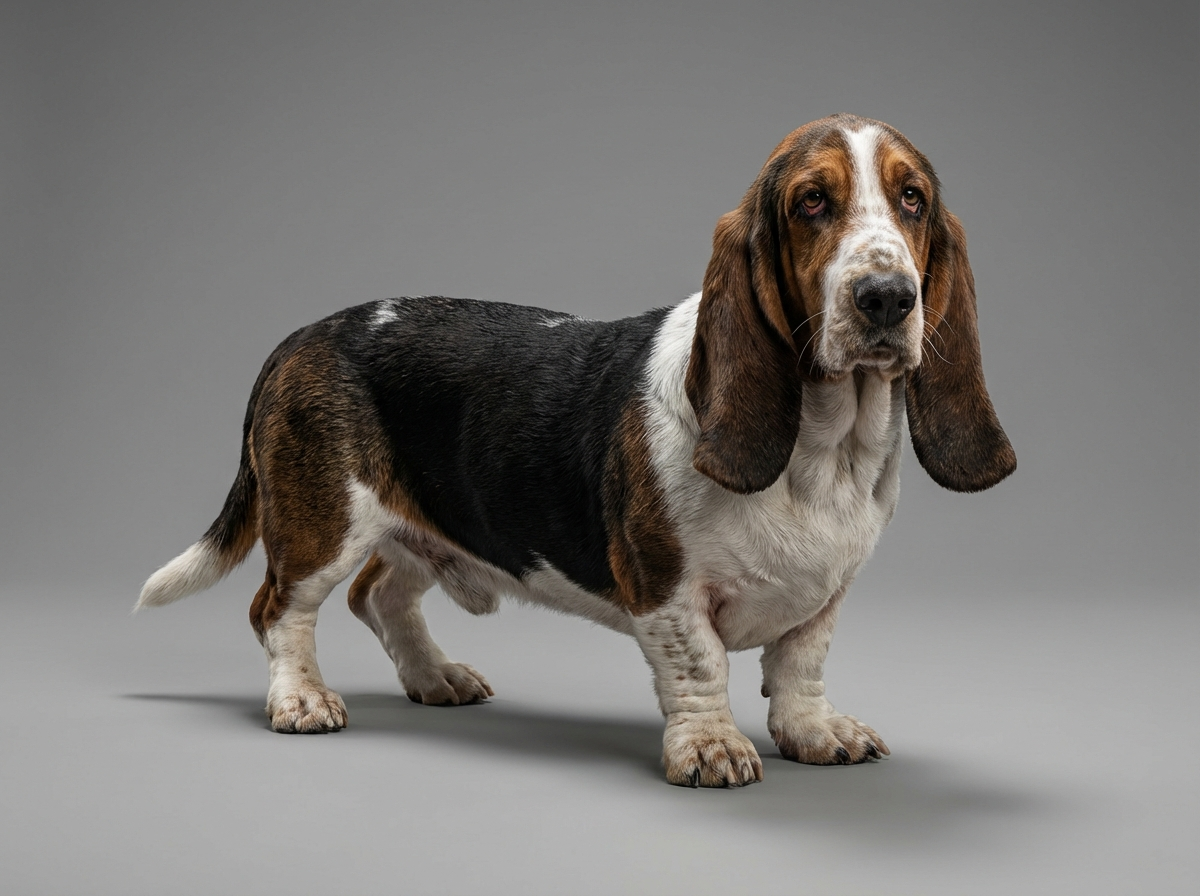
Chondrodystrophy is a specific skeletal dwarfism trait, driven by an extra retrogene insertion near the FGF4 gene, that shortens and bows the long bones while lengthening the trunk. It's the defining structural trait of breeds like Dachshunds, Corgis, and Basset Hounds, and it's also why those breeds carry a much higher lifetime risk of intervertebral disc disease.
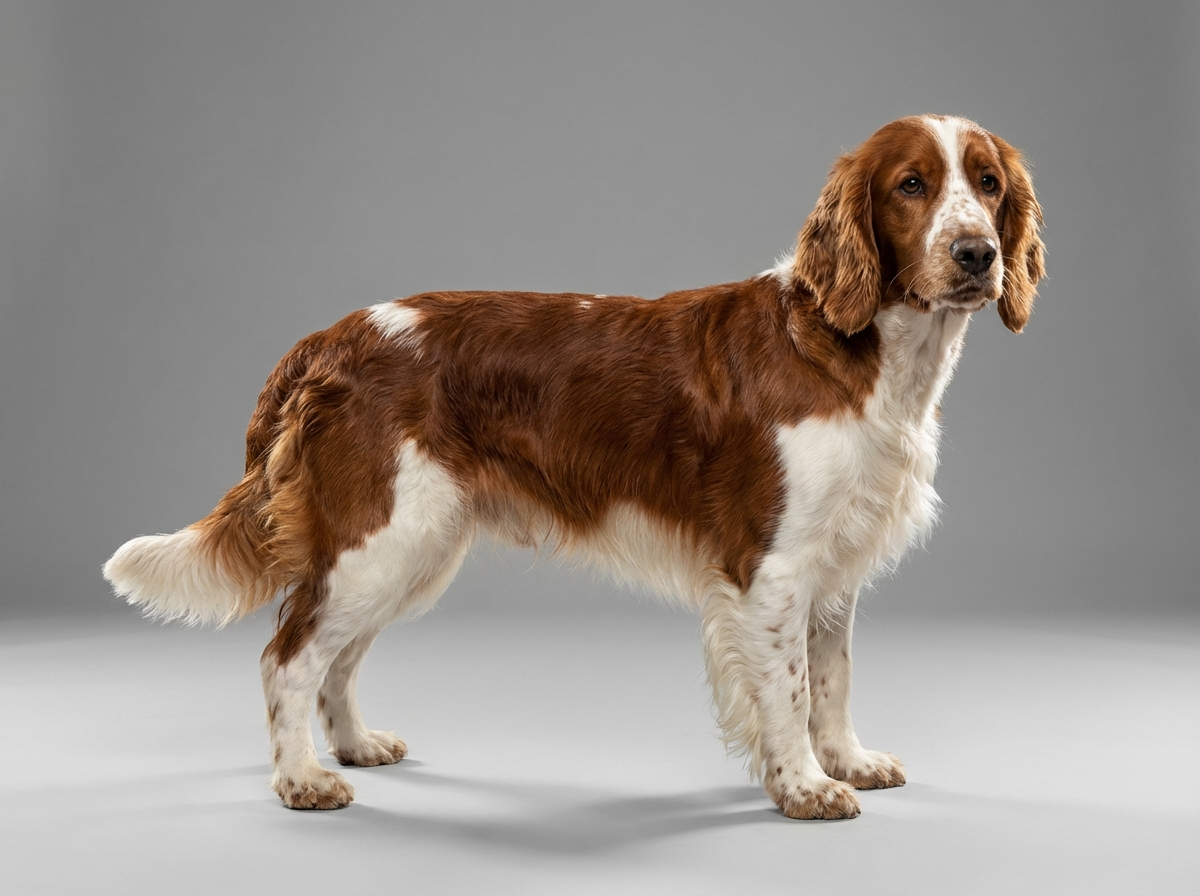
The Welsh Springer Spaniel has none of this. Its legs are proportionate to its body, its back is level rather than elongated, and breed standards call for balanced, moderate structure rather than the dwarfed limbs CDDY produces.
That structural difference matters clinically, not just cosmetically: it's the reason a Welsh Springer's disc and joint risks look nothing like a Dachshund's or Corgi's.
A Welsh Springer Spaniel that's reluctant to jump, stiff after rest, or intermittently lame in a hind leg is showing signs far more consistent with hip dysplasia — a condition genuinely documented in this breed — than with any chondrodystrophy-related spinal problem.
Sudden back pain, dragging a hind paw, or reluctance to move at all warrants a same-day vet visit regardless of the underlying cause, since disc injuries and other spinal emergencies can happen in any breed even without a chondrodystrophic build.
For everyday soreness or gradual mobility changes, the more useful conversation with your vet is about hip and joint health screening, not chondrodystrophy testing, since that's where this breed's actual documented risk lies.

While reading up on canine spinal disease before bringing home a Welsh Springer Spaniel puppy, Owen in Bozeman, Montana came across chondrodystrophy and worried his new puppy might be at risk for disc disease. His breeder explained that CDDY is a trait specific to short-legged breeds like Dachshunds and Corgis, and that his puppy's proportionate build meant it simply wasn't relevant. At her first vet visit, Owen asked instead about the joint health topics that actually applied to the breed, and the conversation shifted to hip screening timelines and healthy growth-phase exercise. He left with a plan to get hip x-rays done once she was old enough, rather than a genetic test that wouldn't have told him anything useful.
Key takeaway: A trait that defines an entirely different category of breeds isn't a realistic concern for a Welsh Springer Spaniel — hip dysplasia is the documented risk actually worth planning around.
No — CDDY is the genetic trait behind the short legs and long backs of breeds like Dachshunds, Corgis, and Basset Hounds, and it isn't part of the Welsh Springer Spaniel's genetic makeup or body structure. This breed has normal, proportionate limb length and a level back.
It defines chondrodystrophic breeds such as Dachshunds, Corgis, Basset Hounds, and Beagles, where it shortens and bows the long bones. These are also the breeds with the highest documented rates of intervertebral disc disease.
There's no established reason to, since CDDY testing is used in breeding programs for chondrodystrophic breeds to manage disc-disease risk. For a Welsh Springer, genetic and health screening is better focused on hip dysplasia and the breed's other documented conditions.
It's unlikely — Welsh Springer Spaniels don't carry the chondrodystrophy trait, so a longer-looking topline in an individual dog is more likely posture, muscle condition, or normal variation. A vet can confirm there's no underlying skeletal issue at a routine exam.
Hip dysplasia is the documented orthopedic concern for Welsh Springer Spaniels, involving abnormal hip joint development rather than the limb-shortening seen in chondrodystrophic breeds. It's worth screening for through hip evaluations, especially in dogs used for breeding.
Yes, intervertebral disc disease can occur in any dog, but chondrodystrophic breeds face a dramatically higher lifetime risk because of their altered spinal anatomy. A Welsh Springer's risk is much closer to that of other medium, normally-built breeds.
The breed's genuinely documented conditions are hip dysplasia, ear infections, epilepsy, glaucoma, and hypothyroidism, and each is worth its own research and vet conversation. Those are a far more productive place to focus than a trait this breed doesn't carry.
No — it defines chondrodystrophic breeds like Dachshunds and Corgis, not the normally-proportioned Welsh Springer Spaniel.
Hip dysplasia is the documented orthopedic risk for Welsh Springer Spaniels, and it's worth screening for with hip evaluations.
No — since CDDY isn't relevant to this breed, that budget is better redirected toward hip and joint screening instead.
Not because of CDDY, but general joint-friendly exercise habits still help manage the breed's real hip dysplasia risk.
No — chondrodystrophy isn't relevant to this breed, so no training adjustments are needed for it.
A one-page prep sheet for this condition: the signs, the questions to ask, what to get priced. Unlocks here.
You get: Vet visit prep sheet
No spam. One-click unsubscribe. See our privacy policy.
Preview page 1 before you decide.