Living
Bichon Frise or Welsh Springer Spaniel for a small apartment?
Bichon Frise, rated 5/5 for apartment suitability versus the Welsh Springer's 2/5.

Quick answer
Bichon Frise or Welsh Springer Spaniel for a small apartment?
Bichon Frise, rated 5/5 for apartment suitability versus the Welsh Springer's 2/5.
Bichon Frise or Welsh Springer Spaniel? On paper they differ most on apartment suitability, and on the scales Welsh Springer Spaniel is the heavier at 35–55 lbs. Here is how the two compare on everything that shapes an ordinary week.
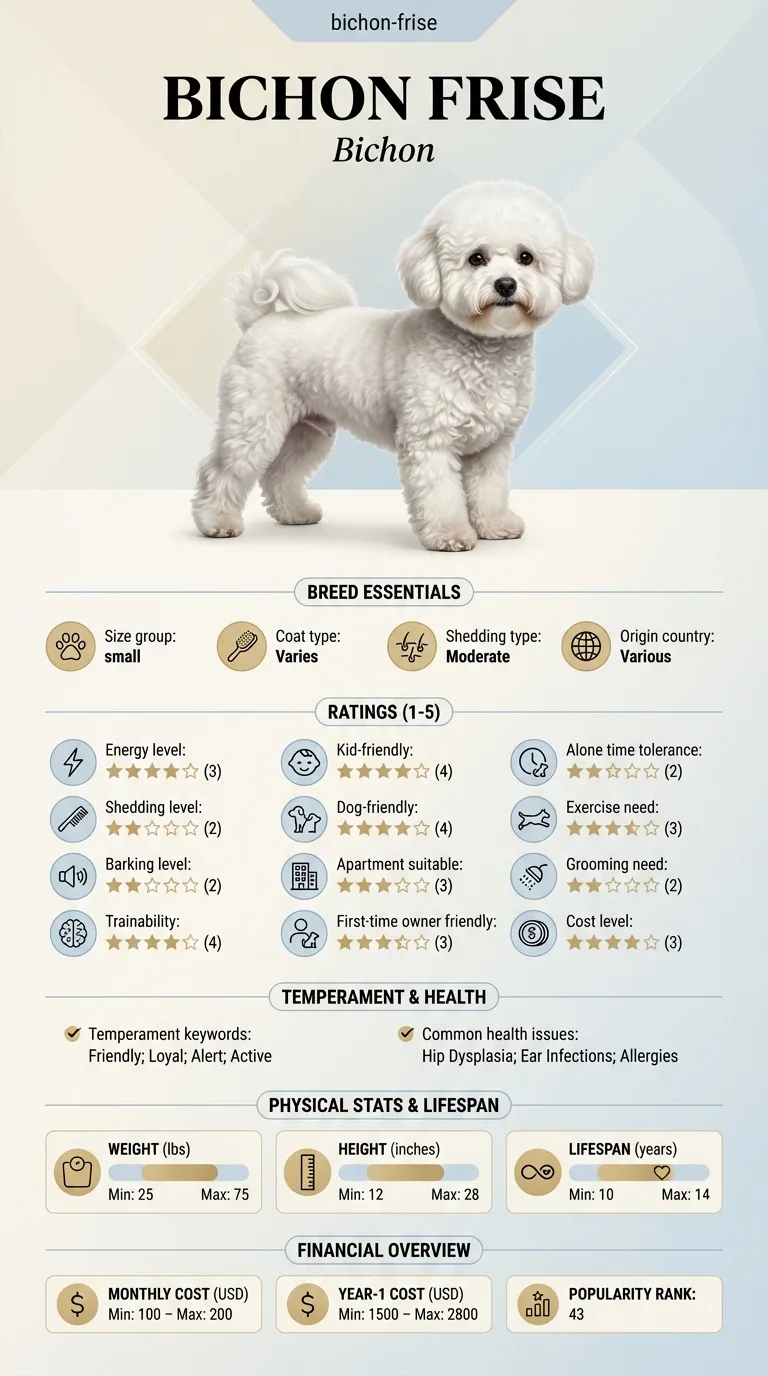
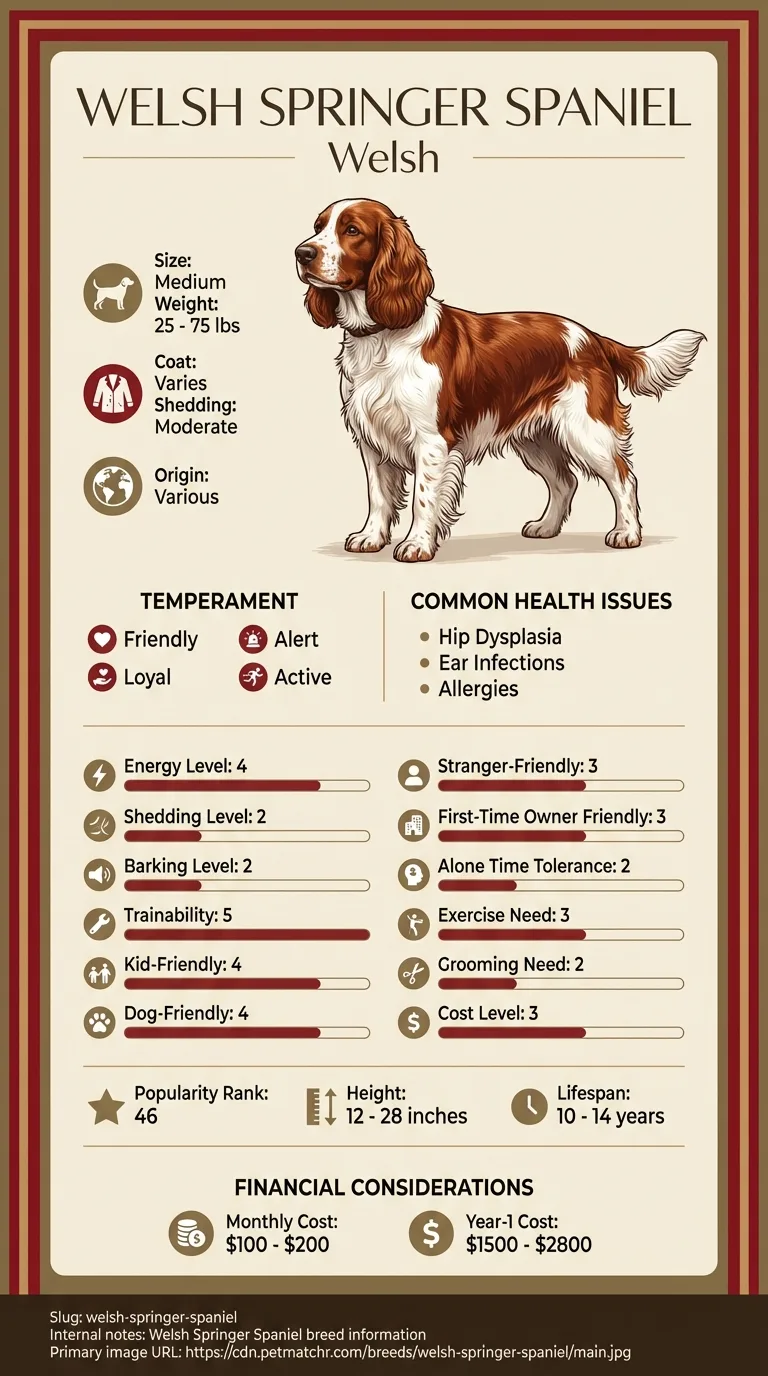
This is for someone already down to Bichon Frise and Welsh Springer Spaniel and deciding between them. For this pair the decision usually turns on apartment suitability and exercise need, so those are covered first and in most detail. Anyone choosing from a flat has a clear answer here: Bichon Frise rates 5/5 against 2/5. There is no origin story here — only what changes about your week.
Between Bichon Frise and Welsh Springer Spaniel, apartment suitability is what separates them, and Bichon Frise is the lower-effort dog of the two to keep.
Choose Bichon Frise if you are in a flat or a smaller home, this is your first dog and shedding is a problem in your house.
Choose Welsh Springer Spaniel if you do not want a standing grooming appointment, you want a dog that picks up training quickly and you want a dog that can keep up with an active routine.
| Feature | bichon frise | welsh springer spaniel | Winner |
|---|---|---|---|
| Size class | small | medium | Equal |
| Weight | 12–18 lbs | 35–55 lbs | Equal |
| Height | 9–12 in | 17–19 in | Equal |
| Lifespan | 14–15 years | 12–15 years | bichon frise |
| Exercise need | Low (2/5) | High (4/5) | bichon frise |
| Grooming need | Very high (5/5) | Moderate (3/5) | welsh springer spaniel |
| Shedding | Very low (1/5) | Moderate (3/5) | bichon frise |
| Energy level | Moderate (3/5) | High (4/5) | Equal |
| Barking | Moderate (3/5) | Moderate (3/5) | Equal |
| Apartment suitability | Very high (5/5) | Low (2/5) | bichon frise |
| Good for first-time owners | High (4/5) | Moderate (3/5) | bichon frise |
| Tolerates being alone | Low (2/5) | Low (2/5) | Equal |
| Trainability | Moderate (3/5) | High (4/5) | welsh springer spaniel |
| Good with kids | High (4/5) | High (4/5) | Equal |
| Good with other dogs | High (4/5) | High (4/5) | Equal |
| Friendly to strangers | High (4/5) | Moderate (3/5) | bichon frise |
| Cost level | Moderate (3/5) | Moderate (3/5) | Equal |
| Coat | Curly, dense double coat | Medium, straight and water-resistant | Equal |
| Origin | Various | Various | Equal |
| Typical monthly cost | $80–$150 | $100–$200 | Equal |
| Typical first-year cost | $1,100–$2,300 | $1,400–$2,900 | Equal |
Twelve to eighteen pounds against thirty-five to fifty-five: the Welsh Springer Spaniel outweighs the Bichon Frise by roughly three times and stands 17-19 inches at the shoulder compared with the Bichon's 9-12. The Welsh Springer carries a medium, straight, water-resistant coat built for working wet cover, while the Bichon's curly dense double coat is styled purely for looks. Both land in different size classes, small versus medium, and the Welsh Springer's sporting-dog frame telegraphs a more active daily life than the compact, round-bodied Bichon ever needs.
Four out of five on exercise need versus two out of five: the Welsh Springer Spaniel wants real daily activity, and its high (4/5) energy level backs that up against the Bichon's moderate (3/5). This is a flushing spaniel bred to work fields for hours, and the temperament list's 'energetic' tag isn't decorative. The Bichon, by contrast, is content with short walks and indoor games. Anyone who enjoys long hikes or field time will find the Welsh Springer a willing partner; anyone who prefers a shorter daily commitment should lean toward the Bichon's low exercise demands.
The Bichon still tops the grooming chart at very high (5/5) thanks to its curly coat's tendency to mat, against the Welsh Springer's moderate (3/5) for its medium, water-resistant coat that mainly needs regular brushing and ear checks. Shedding tells the opposite story: the Bichon barely sheds at very low (1/5) while the Welsh Springer sheds moderately at 3/5. A household sensitive to loose hair on furniture may prefer the Bichon despite the extra salon visits, while one that dislikes frequent professional grooming bills may find the Welsh Springer's routine brushing easier to manage at home.
Apartment suitability sits very high (5/5) for the Bichon and low (2/5) for the Welsh Springer, tracking directly with the exercise gap between them. Barking is tied at moderate (3/5) for both, so noise isn't the differentiator here, space and activity are. Both breeds tolerate being alone poorly, rated low (2/5) each, so neither is suited to owners gone all day. A Welsh Springer confined to a small unit without adequate daily exercise is more likely to become restless than a Bichon in the same situation, given the sizeable gap in energy output.
The Welsh Springer rates high (4/5) on trainability against the Bichon's moderate (3/5), consistent with its temperament description as loyal and even-tempered, a working-dog mindset that responds well to structure. Yet first-time-owner suitability favors the Bichon, high (4/5) versus the Welsh Springer's moderate (3/5), because the spaniel's reserved-with-strangers streak and higher exercise demand require more active management. A novice comfortable with daily exercise commitments can do well with a Welsh Springer; one who wants a lower-effort household pet will find the Bichon the gentler learning curve.
Both breeds tie at high (4/5) with kids and high (4/5) with other dogs, making either a reasonable fit for a multi-pet household with children. Strangers are where they part ways: the Bichon rates high (4/5) friendly to strangers, matching its cheerful, curious temperament, while the Welsh Springer drops to moderate (3/5), and its temperament list explicitly notes 'reserved with strangers.' Families who host frequently or want a dog that warms instantly to new faces should lean Bichon; those who like a more watchful, one-family-focused dog may prefer the Welsh Springer.
Lifespan favors the Bichon, 14-15 years against the Welsh Springer's still-respectable 12-15. Both health lists run to five items and stay mostly in the manageable range: the Bichon deals with skin allergies, patellar luxation, bladder stones, cataracts and dental disease, while the Welsh Springer's list includes hip dysplasia, ear infections, epilepsy, glaucoma and hypothyroidism. The Welsh Springer's drop ears and active outdoor lifestyle make ear infections a particularly common practical concern, worth routine checking after every muddy field outing or swim.
Monthly costs run close, $80-150 for the Bichon versus $100-200 for the Welsh Springer, and first-year costs follow at $1,100-2,300 against $1,400-2,900. Both sit in the moderate cost tier, but the spending shows up in different places: the Bichon's budget leans on grooming appointments for its 5/5-rated coat, while the Welsh Springer's leans more on food volume and gear for an active outdoor lifestyle, plus the occasional vet visit for ear infections common to floppy-eared sporting breeds.
Bichon Frise weighs 12–18 lbs and lives 14–15 years; Welsh Springer Spaniel weighs 35–55 lbs and lives 12–15 years. The two diverge most on apartment suitability, exercise need and grooming need and 1 other rated axes. They are level on tolerates being alone, barking and cost level, so those cannot decide it. Where the table declares a winner it means less work for the owner, nothing more; descriptive rows are left as ties on purpose. The value here is in the differences between the two columns; treat any single score as approximate.

Not ideally. It rates low (2/5) for apartment suitability due to its high (4/5) exercise need, while the Bichon Frise rates very high (5/5).
The Bichon Frise, rated very high (5/5) grooming need against the Welsh Springer's moderate (3/5), though the Welsh Springer sheds more.
They're more reserved than the Bichon; the Welsh Springer rates moderate (3/5) friendly to strangers and is described as reserved with strangers, while the Bichon rates high (4/5).
The Bichon Frise, rated high (4/5) for first-time owners versus the Welsh Springer's moderate (3/5).
It's on their health list, and their drop ears combined with an active outdoor lifestyle make regular ear checks a practical routine for owners.
Almost; it averages 12-15 years, just a touch behind the Bichon's 14-15 year range.
The Welsh Springer Spaniel, rated moderate (3/5) shedding against the Bichon's very low (1/5).
Bichon Frise, rated 5/5 for apartment suitability versus the Welsh Springer's 2/5.
The Welsh Springer Spaniel, explicitly described as reserved with strangers.
Yes, it rates high (4/5) on exercise need, well above the Bichon's low (2/5).
The Welsh Springer Spaniel, rated 4/5 trainability versus the Bichon's 3/5.
Secure checkout on Stripe. We never see your card.
7-day money-back guarantee. Instant access.
Health information here is general and is not veterinary advice. If your dog shows pain, sudden behaviour change, or worsening symptoms, consult a licensed veterinarian.
Some links on this site are affiliate links. We may earn a commission at no extra cost to you, and we only suggest products we believe are helpful for dog owners.
We research and check what we publish, but we do not warrant that any figure, date, price, or statement is accurate, complete, or current, and we accept no liability for any loss, cost, injury, or other harm arising from the use of this site. Use it as one reference among several. You remain responsible for your own decisions and for your dog's care - confirm anything that matters with a licensed veterinarian or another qualified professional before you act on it. Full disclaimer.
Match your lifestyle to the right dog.
Take quizNot sure which breed is right for you? Take our 2-minute quiz to find out.
Take the quiz