Health
Is Wobbler syndrome a real risk for Shetland Sheepdogs?
No, it is overwhelmingly a large and giant breed disease and is not part of this breed's documented health profile.

Quick answer
Is Wobbler syndrome a real risk for Shetland Sheepdogs?
No, it is overwhelmingly a large and giant breed disease and is not part of this breed's documented health profile.
An owner searching for wobbler syndrome after watching their Sheltie stumble has usually found the wrong search result, not the wrong dog. This page exists to redirect that search toward what is actually far more likely in a breed this size.
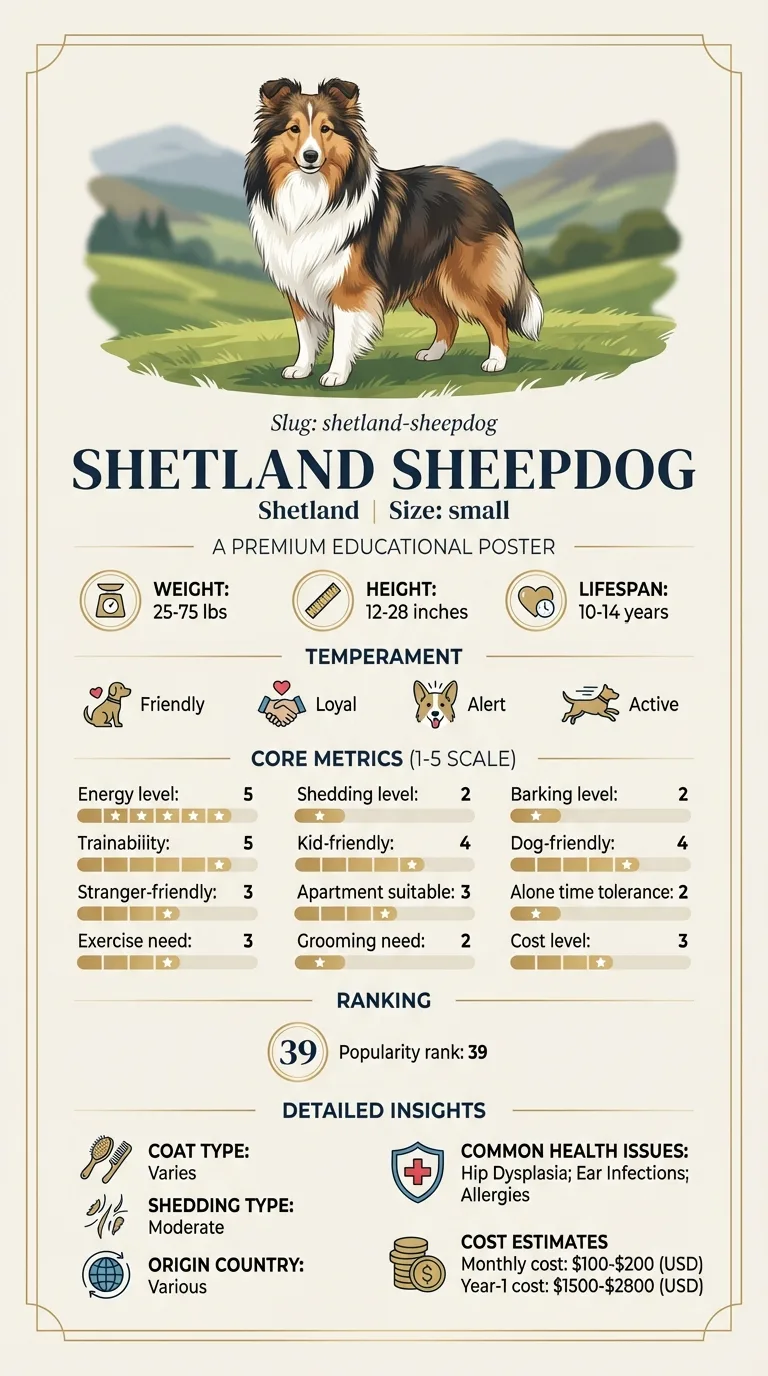
Owners who have watched their Sheltie stumble, knuckle over at the paw, or move with an odd, uncoordinated gait and searched online, landing on Wobbler syndrome content written for Great Danes and Dobermans. People trying to work out what a wobbly gait in a small breed actually tends to mean. Anyone who has been told by a well-meaning source that this is a Wobbler-prone breed and wants an honest answer.
This guide is not medical advice. If your dog shows pain, sudden behavior change, or worsening symptoms, consult a licensed veterinarian.
Some links may be affiliate links. We may earn a commission at no extra cost to you. We only suggest products we believe are helpful for dog owners.
We research and check what we publish, but we do not warrant that any figure, date, price, or statement is accurate, complete, or current, and we accept no liability for any loss, cost, injury, or other harm arising from the use of this site. Use it as one reference among several. You remain responsible for your own decisions and for your dog's care - confirm anything that matters with a licensed veterinarian or another qualified professional before you act on it. Full disclaimer.
Wobbler syndrome, or cervical spondylomyelopathy, is a neck vertebra condition overwhelmingly seen in large and giant breeds and tied closely to body size and growth rate. It is not part of the Shetland Sheepdog's documented health profile and is a very unlikely explanation for a wobbly gait in a breed this size. This page sets expectations honestly and redirects toward the small-breed-appropriate conditions, particularly patellar luxation and intervertebral disc disease, that are far more likely to explain the same symptom in a Sheltie.
True cervical spondylomyelopathy is rare to essentially unreported in dogs of this size and is not among the Shetland Sheepdog's five documented conditions. The conditions that actually explain a wobbly gait in this breed, particularly patellar luxation, are considerably more common and are the appropriate starting point for any investigation.
Nothing in the Shetland Sheepdog's build, growth pattern or documented health profile supports a predisposition to cervical spondylomyelopathy, which is mechanistically tied to the rapid growth and biomechanical load of a large or giant breed's neck. What the breed does carry, relevant to the same symptom of a wobbly gait, is a documented predisposition to patellar luxation, an entirely different, orthopedic mechanism involving the kneecap's alignment in the stifle joint, which is a far more plausible and far better documented explanation for the same visible symptom.
There is no environmental trigger specific to cervical spondylomyelopathy relevant to this breed, since the condition itself is not a realistic risk here. For the conditions that are relevant, excess weight increases load on joints predisposed to patellar luxation, and age is the dominant factor for degenerative myelopathy and general orthopedic wear. Sudden, high-impact activity can precipitate disc-related injury in a dog of any size with an already vulnerable spine.
Seek prompt veterinary assessment for any new, persistent or worsening wobbly, uncoordinated or weak gait, since several of the realistic explanations for this breed, particularly intervertebral disc disease and atlantoaxial instability, are themselves time-sensitive conditions that benefit from early diagnosis. Treat as an emergency any sudden inability to stand, paralysis, loss of bladder or bowel control, or signs of significant pain alongside the gait change. A single occasional skip or hop, especially if it resolves on its own within seconds, is commonly patellar luxation and can usually be discussed at a routine appointment rather than an emergency one, though it is still worth mentioning.
See all Shetland Sheepdog health problems, which breeds are prone to wobbler syndrome, or the full Shetland Sheepdog breed guide for temperament, exercise needs and ownership costs.
A thorough physical, orthopedic and neurological examination can usually be completed in a single appointment, with advanced imaging, if needed, arranged within a further one to two weeks. Patellar luxation, the most likely explanation, is often managed conservatively for mild cases or surgically for more significant ones, with recovery from surgery typically measured in six to eight weeks. Intervertebral disc disease and degenerative myelopathy each have their own separate management timelines once properly diagnosed.
Success is arriving at the actual, breed-appropriate diagnosis rather than assuming or worrying about a giant-breed condition that does not fit this dog's size and profile, and then managing whatever the real cause turns out to be, most often patellar luxation, according to its own established, well-documented treatment path.
Every one of these is a more statistically and mechanistically plausible explanation for a wobbly Shetland Sheepdog than true cervical spondylomyelopathy, and several of them are directly documented or well recognised in this breed specifically.
Cervical spondylomyelopathy is fundamentally a disease of biomechanics and growth. It develops from a combination of vertebral malformation, disc changes and instability in the neck that compresses the spinal cord, and the overwhelming majority of research and case records describe it in large and giant breeds, particularly rapidly growing young Great Danes and middle-aged Dobermans. The proposed mechanisms, including rapid skeletal growth outpacing soft tissue development and the sheer biomechanical load a long, heavy neck places on the cervical vertebrae, are directly tied to size and growth rate in a way that does not translate to a compact, slow-maturing small breed.
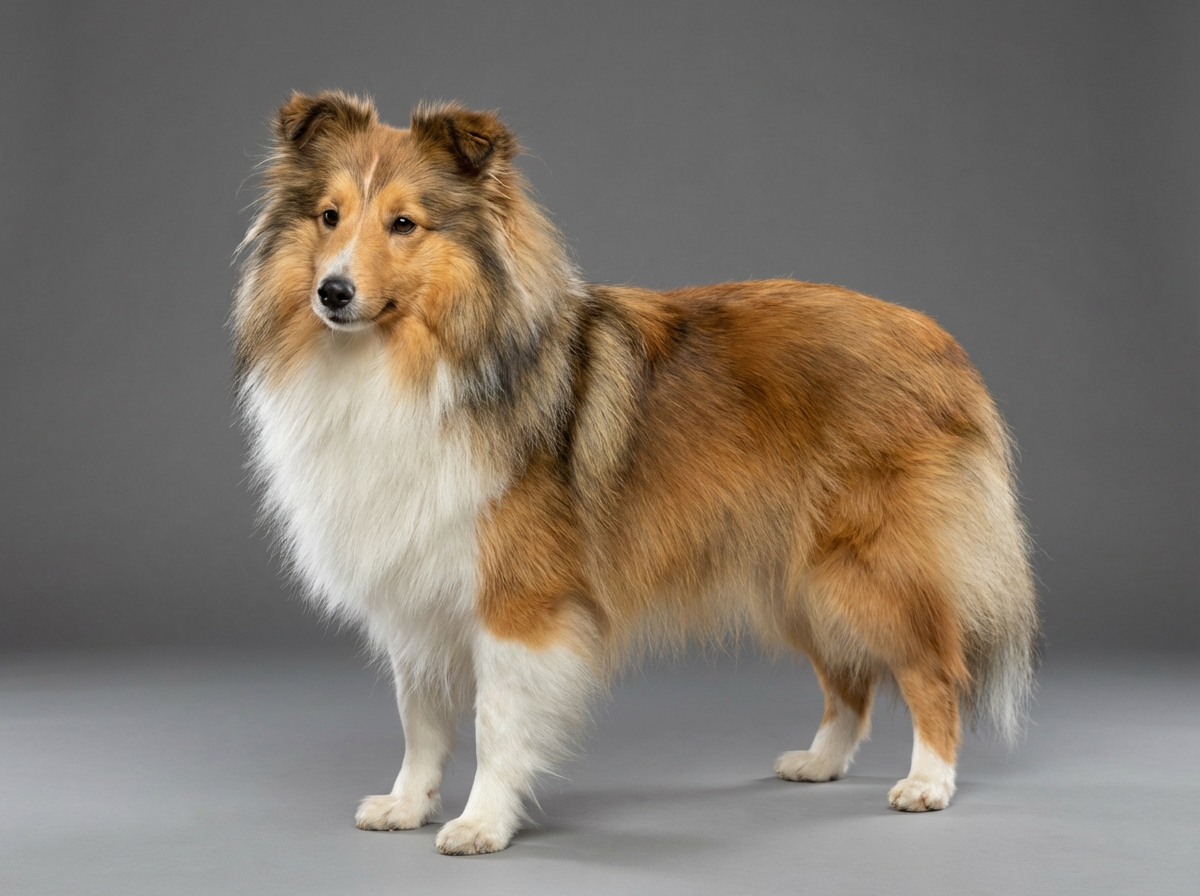
This is why the Shetland Sheepdog's documented health profile, built around Collie Eye Anomaly, MDR1 drug sensitivity, dermatomyositis, hypothyroidism and patellar luxation, contains nothing resembling cervical spondylomyelopathy, and why a Sheltie presenting with a wobbly gait should prompt a search for a small-breed-appropriate cause rather than a giant-breed spinal disease.
The cost figure sometimes quoted for Wobbler syndrome treatment, commonly ranging from several hundred dollars for conservative management up to several thousand for surgical stabilisation, is worth understanding in its true context: it applies to the actual disease in the breeds where it occurs, and citing it in connection with a Sheltie risks alarming an owner over a condition their dog is very unlikely to have, while distracting attention from the genuinely more probable, and often more affordable, explanations above. Patellar luxation, for instance, a condition this breed is actually documented for, is frequently managed far more simply, and even surgical correction when needed typically costs meaningfully less than cervical spinal stabilisation surgery.
None of this means a wobbly Shetland Sheepdog should be ignored. A genuinely uncoordinated, weak or unsteady gait always deserves proper veterinary assessment, because several of the small-breed-appropriate explanations, particularly intervertebral disc disease and atlantoaxial instability, are themselves serious and time-sensitive conditions. The point is simply that the diagnostic conversation with your vet should start from what actually fits this breed's size and documented profile, not from search results written for an entirely different kind of dog.

Skye was a six year old Sheltie whose owner, Petra, noticed an occasional skip in her left hind leg that seemed to come and go, sometimes not appearing for days at a time. A late-night internet search for wobbly gait and dog turned up several pages about Wobbler syndrome in Great Danes, and Petra arrived at her vet appointment genuinely worried about a serious spinal disease. The vet's examination told a different story within minutes. Gently manipulating Skye's left knee reproduced the exact skip Petra had described, with the kneecap sliding out of its groove and popping back with light pressure, a textbook finding for patellar luxation. X-rays confirmed a mild to moderate grade, and no neurological signs were present anywhere in the exam. Skye was managed conservatively with weight control and controlled exercise, and her skip has remained stable and infrequent in the two years since. Petra now knows to check her vet's actual findings before letting a search engine set her expectations.
Key takeaway: A wobbly gait in a small dog and in a Great Dane are usually two very different problems wearing the same description. The exam, not the search result, is what tells you which one you actually have.
It would be extremely unusual. Cervical spondylomyelopathy is overwhelmingly a large and giant breed disease tied to body size and growth rate, and it is not part of this breed's documented health profile. It is not impossible in the way that almost nothing is truly impossible in medicine, but it should be considered only after the far more likely small-breed explanations have been ruled out.
Patellar luxation, a documented condition in this breed where the kneecap slips out of position, is a very common explanation for an intermittent hind-limb skip or wobble and is well worth investigating first, alongside a general orthopedic and neurological check.
A vet distinguishes these through a combination of gait observation, palpation and, where needed, imaging. Kneecap-related wobbles tend to be intermittent and skip-like and improve when the kneecap is manually relocated, while genuine neurological gait abnormalities tend to be more consistent and often come with other signs such as weakness or abnormal reflexes.
Yes, it is a recognised concern across many breeds including smaller ones, and it is a far more plausible spinal explanation for incoordination in a Shetland Sheepdog than cervical spondylomyelopathy. It has its own distinct presentation and workup, separate from classic Wobbler syndrome.
Typically starting with a full physical and neurological exam, orthopedic assessment of the hips, knees and hocks, and blood or thyroid testing where relevant, before considering advanced imaging such as MRI if a spinal or neurological cause seems likely based on those findings.
General breed health lists sometimes include conditions that are technically possible in any breed without weighting them by actual likelihood or documented breed relevance, which can make a genuinely rare possibility look more prominent than the conditions a dog of this size and profile is actually likely to have.
No, it is overwhelmingly a large and giant breed disease and is not part of this breed's documented health profile.
Patellar luxation, a documented Sheltie condition, is a very common explanation, alongside intervertebral disc disease and, in older dogs, degenerative myelopathy.
A single stumble is not alarming, but a persistent or worsening wobbly, uncoordinated gait deserves veterinary assessment to identify the actual, breed-appropriate cause.
A physical and orthopedic exam is a modest cost; advanced imaging if needed adds significantly more, though the small-breed conditions actually likely here are often less costly to manage than giant-breed spinal surgery.
Training has no role in causing or fixing a physical gait abnormality, but a trainer can help build confidence and safe movement patterns once a vet has identified and begun managing the actual underlying cause.
A one-page prep sheet for this condition: the signs, the questions to ask, what to get priced. Unlocks here.
You get: Vet visit prep sheet
No spam. One-click unsubscribe. See our privacy policy.
See a sample page before you decide.
Early access list
The free prep sheet covers the same-day warning signs, a symptom log and the questions to ask. We are considering a fuller kit that adds a cost worksheet for the usual tests and treatments (US price ranges with their sources) and a plain-English guide to ways of covering the bill. It is not built yet; this list tells us whether it is worth building.
One email, no spam, unsubscribe anytime. Information only, not veterinary advice.