Living
Which breed should most people pick?
For quiet, low-exercise apartment living, the Maltese. For an active household that can handle a vocal, herding-driven dog, the Sheltie.

Quick answer
Which breed should most people pick?
For quiet, low-exercise apartment living, the Maltese. For an active household that can handle a vocal, herding-driven dog, the Sheltie.
Maltese or Shetland Sheepdog? On paper they differ most on shedding, and on the scales Shetland Sheepdog is the heavier at 15–25 lbs. Here is how the two compare on everything that shapes an ordinary week.
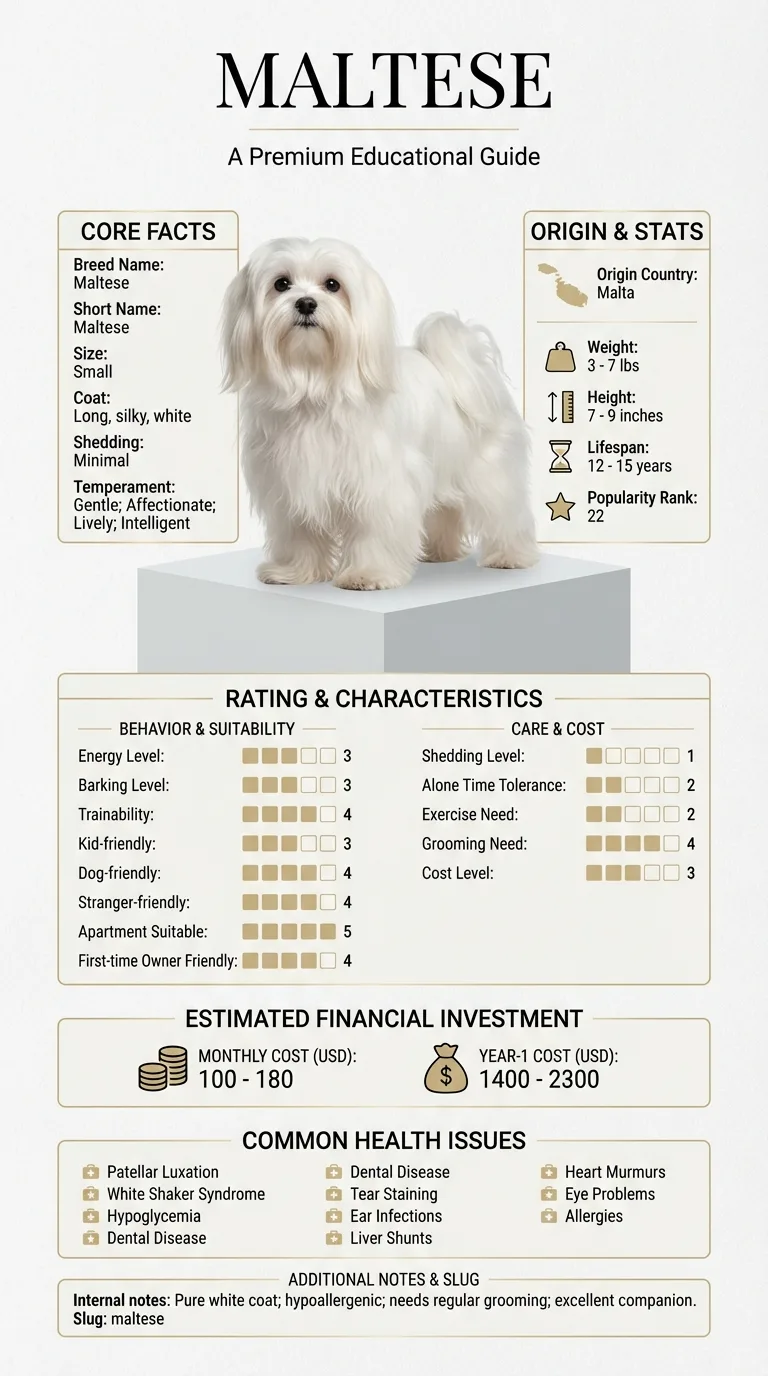
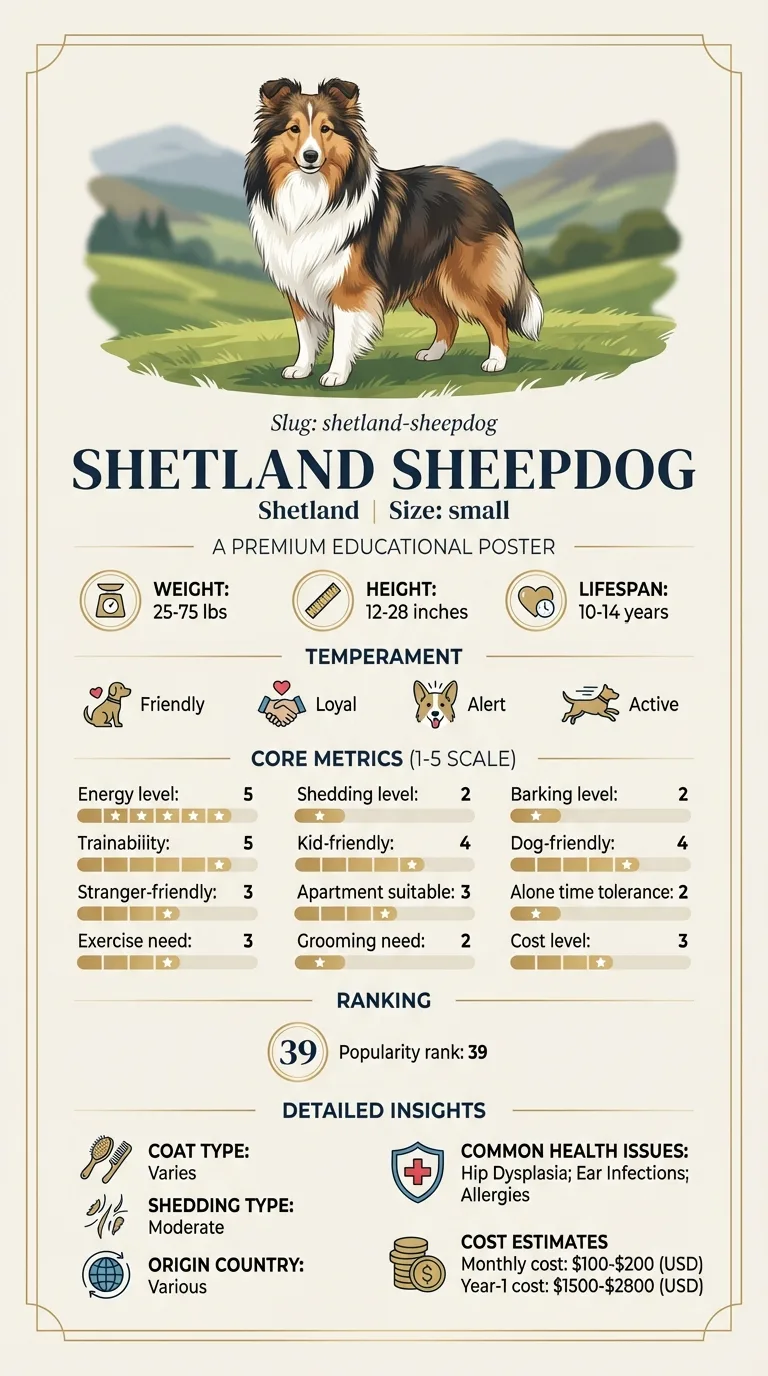
This is for someone already down to Maltese and Shetland Sheepdog and deciding between them. For this pair the decision usually turns on shedding and exercise need, so those are covered first and in most detail. Anyone choosing from a flat has a clear answer here: Maltese rates 5/5 against 3/5. The focus throughout is on daily consequences rather than breed background.
Between Maltese and Shetland Sheepdog, shedding is what separates them, and Maltese is the lower-effort dog of the two to keep.
Choose Maltese if you are in a flat or a smaller home, shedding is a problem in your house and your walking routine is modest.
Choose Shetland Sheepdog if there are young children at home, you want a dog that picks up training quickly and you want a dog that can keep up with an active routine.
| Feature | maltese | shetland sheepdog | Winner |
|---|---|---|---|
| Size class | small | small | Equal |
| Weight | 3–7 lbs | 15–25 lbs | Equal |
| Height | 7–9 in | 13–16 in | Equal |
| Lifespan | 12–15 years | 12–14 years | maltese |
| Exercise need | Low (2/5) | High (4/5) | maltese |
| Grooming need | High (4/5) | High (4/5) | Equal |
| Shedding | Very low (1/5) | High (4/5) | maltese |
| Energy level | Moderate (3/5) | High (4/5) | Equal |
| Barking | Moderate (3/5) | Very high (5/5) | maltese |
| Apartment suitability | Very high (5/5) | Moderate (3/5) | maltese |
| Good for first-time owners | High (4/5) | High (4/5) | Equal |
| Tolerates being alone | Low (2/5) | Low (2/5) | Equal |
| Trainability | High (4/5) | Very high (5/5) | shetland sheepdog |
| Good with kids | Moderate (3/5) | High (4/5) | shetland sheepdog |
| Good with other dogs | High (4/5) | High (4/5) | Equal |
| Friendly to strangers | High (4/5) | Low (2/5) | maltese |
| Cost level | Moderate (3/5) | Moderate (3/5) | Equal |
| Coat | Long, silky, white | Long, dense double coat | Equal |
| Origin | Malta | Various | Equal |
| Typical monthly cost | $100–$180 | $80–$150 | Equal |
| Typical first-year cost | $1,400–$2,300 | $1,100–$2,300 | Equal |
Both are technically small breeds, but the gap is still real: a Sheltie weighs 15-25 lbs and stands 13-16 inches, against the Maltese's 3-7 lbs and 7-9 inches — two to five times the weight. If you've pictured a Sheltie as similar in scale to a Maltese, adjust that expectation; it's a noticeably bigger, sturdier dog.
The Sheltie rates High (4/5) exercise need against the Maltese's Low (2/5) — this is a herding breed bred to move, and it needs a genuine outlet for that instinct, whether structured exercise or a job like agility. The Maltese's short-walk routine won't come close to satisfying a Sheltie long-term.
Grooming ties at High (4/5) for both, but shedding does not — the Sheltie rates High (4/5) against the Maltese's Very Low (1/5). That dense double coat blows out heavily, especially seasonally. If low shedding is your priority and you were drawn to the Sheltie's looks, know that the coat sheds substantially despite needing regular brushing too.
This is the Sheltie's weak spot: it rates Very High (5/5) on barking, the loudest breed in this comparison, against the Maltese's Moderate (3/5). Apartment suitability follows suit — Moderate (3/5) for the Sheltie versus Very High (5/5) for the Maltese. In shared-wall housing, the Sheltie's vocal, herding-bred instincts are a real consideration, not a minor quirk.
The Sheltie is exceptionally trainable, rating Very High (5/5) against the Maltese's already-strong High (4/5) — this is one of the most trainable breeds around, prized in obedience and agility circles. Both rate equally well for first-time owners (High, 4/5, each), so despite the size and exercise gap, neither is a poor choice for a beginner willing to meet its needs.
The Sheltie rates better with kids (High vs Moderate), its herding-bred energy suiting an active family well, though supervision matters since herding instincts can mean nipping at heels. Both tie with other dogs. Strangers flip the other way — the Maltese rates High versus the Sheltie's Low, as Shelties are famously reserved and watchful around unfamiliar people.
The Maltese lives slightly longer, 12-15 years versus 12-14 for the Sheltie — a small gap. Health risks diverge meaningfully: the Sheltie's list includes collie eye anomaly and MDR1 drug sensitivity, both tied to its herding-breed ancestry, plus patellar luxation, which it shares with the Maltese. Otherwise the two lists don't overlap much.
The Sheltie actually runs slightly cheaper: $80-150 a month and $1,100-2,300 in year one, against the Maltese's $100-180 and $1,400-2,300 — both tie on the overall Moderate cost rating. The Maltese's higher grooming frequency likely accounts for the modest gap despite the Sheltie's larger size.
Maltese weighs 3–7 lbs and lives 12–15 years; Shetland Sheepdog weighs 15–25 lbs and lives 12–14 years. The two diverge most on shedding, exercise need and apartment suitability and 2 other rated axes. They are level on tolerates being alone, cost level and good with other dogs, so those cannot decide it. The table below marks a winner only where one breed is genuinely easier for a typical owner; size and origin are facts rather than merits and stay level. Ratings come from one source applied to both breeds, so they are meaningful against each other rather than as absolute scores.

No — a Sheltie weighs 15-25 lbs against the Maltese's 3-7 lbs, two to five times heavier despite both being classed as small breeds.
The Sheltie, by a wide margin — Very High (5/5) against the Maltese's Moderate (3/5). It's one of the more vocal breeds in this comparison, a real factor in close-quarters housing.
The Sheltie, rated High (4/5) against the Maltese's Very Low (1/5), thanks to a dense double coat that blows out seasonally.
Yes — it ties the Maltese at High (4/5). Despite its higher exercise and grooming needs, its trainability and eagerness to please make it manageable for a committed beginner.
The Maltese, rated High versus the Sheltie's Low. Shelties are famously reserved and watchful with unfamiliar people, a trait rooted in their herding and guarding history.
The Sheltie runs slightly cheaper at $80-150 versus the Maltese's $100-180, though both tie on the overall Moderate cost rating.
Only partially — patellar luxation appears on both lists. The Sheltie also carries breed-specific risks like collie eye anomaly and MDR1 drug sensitivity not shared with the Maltese.
For quiet, low-exercise apartment living, the Maltese. For an active household that can handle a vocal, herding-driven dog, the Sheltie.
$80-150 for a Sheltie versus $100-180 for a Maltese — the Sheltie actually runs slightly cheaper despite being the larger dog.
High (4/5) — real daily activity to satisfy its herding instincts, versus the Maltese's Low (2/5).
The Maltese, slightly — 12-15 years versus 12-14 for the Sheltie.
Secure checkout on Stripe. We never see your card.
7-day money-back guarantee. Instant access.

Health information here is general and is not veterinary advice. If your dog shows pain, sudden behaviour change, or worsening symptoms, consult a licensed veterinarian.
Some links on this site are affiliate links. We may earn a commission at no extra cost to you, and we only suggest products we believe are helpful for dog owners.
We research and check what we publish, but we do not warrant that any figure, date, price, or statement is accurate, complete, or current, and we accept no liability for any loss, cost, injury, or other harm arising from the use of this site. Use it as one reference among several. You remain responsible for your own decisions and for your dog's care - confirm anything that matters with a licensed veterinarian or another qualified professional before you act on it. Full disclaimer.
Match your lifestyle to the right dog.
Take quizNot sure which breed is right for you? Take our 2-minute quiz to find out.
Take the quiz