Health
What is the difference between vomiting and regurgitation?
Vomiting is active, with abdominal heaving, and points to the stomach or intestine. Regurgitation is passive, with little effort, and points to the oesophagus.

Quick answer
What is the difference between vomiting and regurgitation?
Vomiting is active, with abdominal heaving, and points to the stomach or intestine. Regurgitation is passive, with little effort, and points to the oesophagus.
One vomiting episode after a stolen scrap is nothing. A pattern of vomiting, soft stool or discomfort that keeps returning over weeks is a different question entirely, and it is the question this page is about.
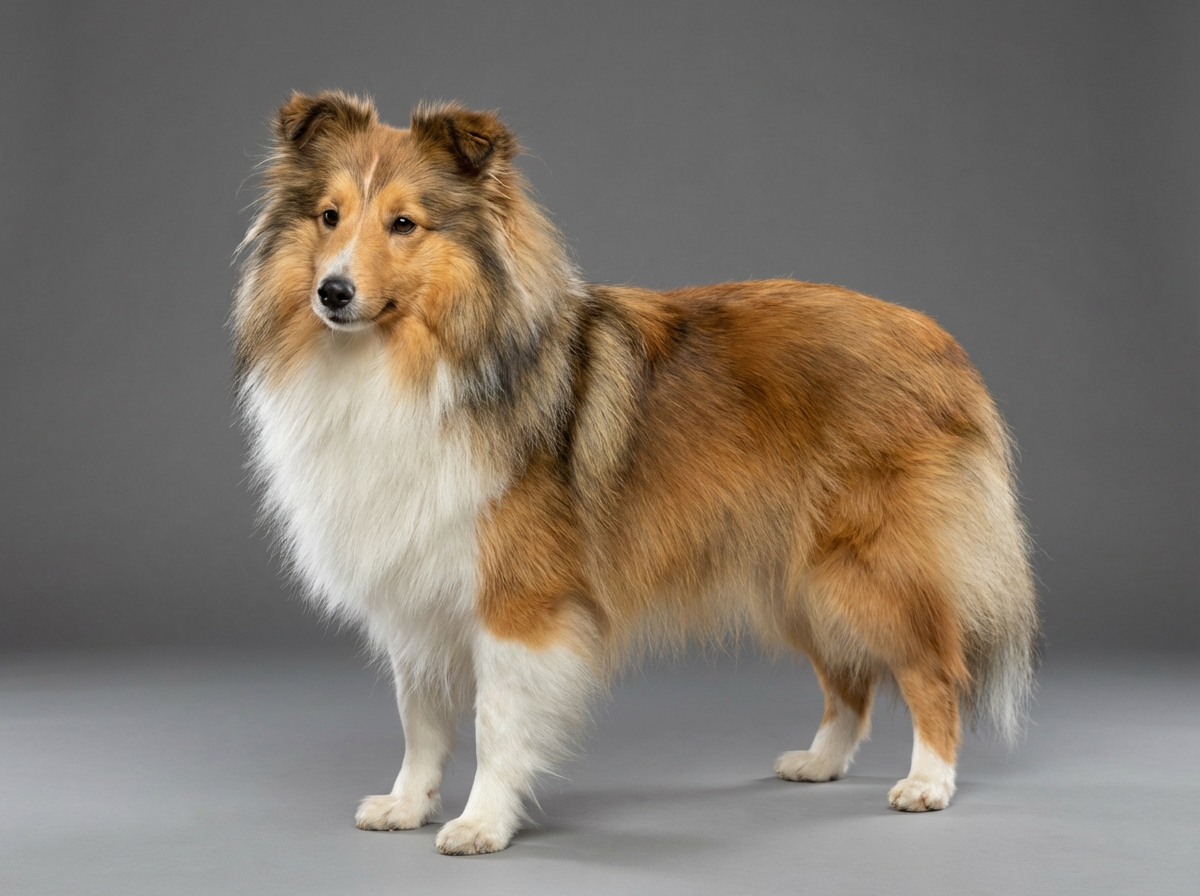
Owners of a Sheltie with recurring soft stool, occasional vomiting, or a habit of bringing up a small amount of foamy fluid on an empty stomach. People who have already tried two or three foods without lasting improvement. Anyone whose vet has mentioned a possible chronic digestive condition and wants to understand what that actually involves.
This guide is not medical advice. If your dog shows pain, sudden behavior change, or worsening symptoms, consult a licensed veterinarian.
Some links may be affiliate links. We may earn a commission at no extra cost to you. We only suggest products we believe are helpful for dog owners.
We research and check what we publish, but we do not warrant that any figure, date, price, or statement is accurate, complete, or current, and we accept no liability for any loss, cost, injury, or other harm arising from the use of this site. Use it as one reference among several. You remain responsible for your own decisions and for your dog's care - confirm anything that matters with a licensed veterinarian or another qualified professional before you act on it. Full disclaimer.
Chronic gastrointestinal disorders in Shetland Sheepdogs span several distinct conditions, including inflammatory bowel disease, pyloric stenosis, gastroesophageal reflux and hiatal hernia, that share overlapping symptoms of vomiting, regurgitation and altered stool. None are specifically documented as breed predispositions for the Sheltie, but they are common conditions across dogs generally and worth understanding on their own terms rather than lumping together as a vague upset stomach.
Individually, each of these conditions is less common than a simple dietary upset but is diagnosed regularly in general practice across all breeds. None appear among the Shetland Sheepdog's five documented health conditions, so most Sheltie owners will never encounter one, but recurring symptoms in any individual dog are common enough that they should not be dismissed indefinitely as just a sensitive stomach.
There is no specific breed predisposition documented for the Shetland Sheepdog toward inflammatory bowel disease, pyloric stenosis, reflux or hiatal hernia. What the breed contributes is largely behavioural: a highly food-motivated, trainable dog is often a fast eater, and rapid eating increases swallowed air and gastric distension, both of which can aggravate reflux-type symptoms and make a mild underlying issue more noticeable. The breed's documented hypothyroidism can also slow gut motility in affected dogs, occasionally compounding a digestive picture that looks primarily gastrointestinal.
Diet composition and consistency matter more here than in almost any other category of Sheltie health concern. Frequent food changes, rich table scraps, and inconsistent treat feeding all stress a gut that may already be marginal. Stress and disrupted routine, which this breed is sensitive to given its low ratings for tolerating time alone and ease with strangers, can also aggravate chronic digestive symptoms in a dog already prone to them.
Book promptly for vomiting or regurgitation that has recurred over more than a couple of weeks, for soft stool or diarrhoea lasting beyond two weeks, for unexplained weight loss, or for a dog that seems uncomfortable or reluctant to eat despite normal hunger cues. Go the same day for repeated vomiting that prevents the dog keeping down water, for blood in vomit or stool, or for a dog who is lethargic, painful or rapidly declining. Chronic, low-grade symptoms deserve a proper work-up rather than a fourth food change, since a real underlying condition will not resolve on diet alone.
See all Shetland Sheepdog health problems, which breeds are prone to gastrointestinal disorders, or the full Shetland Sheepdog breed guide for temperament, exercise needs and ownership costs.
Diagnosis for chronic digestive disease often takes several weeks, since ruling out simpler explanations and completing imaging or biopsy is a staged process rather than a single visit. Diet-responsive conditions typically show improvement within two to four weeks of a properly managed elimination or therapeutic diet. Surgical conditions like significant pyloric stenosis or hiatal hernia have a recovery measured in a few weeks post-operatively, with symptoms often resolving substantially once the structural problem is corrected.
Success looks different depending on the diagnosis: a managed, food-responsive dog with an occasional mild flare rather than constant symptoms, or a surgically corrected dog who eats and keeps food down normally. What it is not, for a true chronic condition, is a single dietary fix that makes the question disappear permanently without ongoing attention.
These conditions overlap enough in their symptoms that owners, and sometimes early consultations, group them together as a vague digestive problem. They are managed very differently, which is why getting past the symptom list to an actual diagnosis matters.
Owners describing a dog bringing something back up almost always use the word vomiting, and it is worth learning to separate that from regurgitation, because the two point in different directions diagnostically. Vomiting is an active process: the abdomen heaves, the dog often looks distressed beforehand, and what comes up may be digested or bile-stained. It points towards the stomach and further down the gut, which is where inflammatory bowel disease and pyloric stenosis live.
Regurgitation is passive. Food or fluid comes back up with little or no warning and little or no effort, sometimes tubular in shape if it has come straight from the oesophagus, and often undigested even hours after eating. It points towards the oesophagus, which is where reflux and hiatal hernia live. A dog that regurgitates shortly after eating, especially one that seems to swallow repeatedly or smack its lips beforehand, is telling a different story from one that vomits food several hours old with real abdominal effort.
Timing relative to meals is the second clue. Pyloric stenosis classically produces vomiting hours after eating, sometimes forcefully, because the stomach has been trying and failing to empty a full load through a narrowed opening. Reflux and hernia-related regurgitation often happen soon after eating or during rest, particularly lying down, when the physical position makes backflow easier. Inflammatory bowel disease is less tied to timing and shows up as a more general pattern of intermittent vomiting and altered stool over weeks.
None of these distinctions are meant to produce a home diagnosis. What they are meant to do is give you the vocabulary to describe the pattern accurately, because a vet working from active heaving with delayed timing investigates differently from a vet working from passive regurgitation soon after meals, and getting that description right the first time often shortens the path to an actual answer considerably.

If you think your Shetland has gastrointestinal disorders, the plan is three steps: write down what you have seen and when it started, book a veterinary appointment rather than waiting for the next flare, and take video of the behaviour or symptom before you go — the thing you are worried about rarely happens in the consulting room. Screening in the parents covers collie eye anomaly, mdr1 drug sensitivity, dermatomyositis.
What the vet visit should produce is a diagnosis and a written plan, not just reassurance: what is being ruled out, what the monitoring interval is, and which signs mean you come back sooner. Ask what the treatment costs across a year rather than per visit, because that is the number that decides whether you are managing this condition or reacting to it.
Between appointments, keep a short log — dates, what you saw, what changed. It is the single most useful thing an owner brings to a follow-up, and for gastrointestinal disorders it is often what separates a clear pattern from a guess.
Hazel was a five year old Sheltie who had started bringing up small amounts of undigested food most nights, usually not long after settling down to sleep. Her owner, Denis, assumed she was eating too fast and switched her to a slow feeder, which helped a little but did not stop it. The first vet visit ruled out an obvious dietary cause. The second, after two more weeks of the same pattern, included X-rays, which showed nothing acutely wrong but raised suspicion of reflux. A follow-up study with contrast confirmed a small hiatal hernia allowing part of Hazel's stomach to shift position after lying down. Hazel was managed initially with smaller, more frequent meals and being kept upright for half an hour after eating, which reduced the episodes substantially. When they did not resolve fully, she had surgical repair, after which the nightly regurgitation stopped.
Key takeaway: Regurgitation with little effort, especially soon after lying down, points towards the oesophagus rather than the stomach. That distinction was what eventually led to the right diagnosis.
Duration and pattern. A single bout tied to a diet change, a stolen treat or stress usually resolves within a few days. Diarrhoea or soft stool that persists beyond two weeks, recurs repeatedly, or comes with weight loss deserves proper investigation rather than another food switch.
It can be congenital, showing up in puppies as vomiting undigested food some hours after meals, or it can develop later from chronic thickening of the muscle around the outlet. Either form is diagnosed with imaging and can often be corrected surgically.
Yes, and it is by far the most common explanation. Rich table scraps, a rapid diet change, a new treat, or simple overeating all produce vomiting or soft stool that resolves once the trigger is removed. A true chronic condition is what remains after those simple explanations have been ruled out.
Bloodwork and imaging rule out other causes first, and a definitive diagnosis usually needs intestinal biopsies, taken either by endoscopy or during surgery. It is not a diagnosis made from symptoms and a food trial alone, though a food trial is often tried as part of working towards it.
No. Eating too fast, drinking a large amount of water immediately after a meal, or simple reflux without a hernia can all cause the same pattern. Imaging is what distinguishes a structural hernia from functional reflux.
Sometimes. Inflammatory bowel disease and food-responsive chronic diarrhoea are often managed long-term with a specific hydrolysed or novel protein diet, while pyloric stenosis and hiatal hernia are more often addressed with surgery or feeding position changes rather than a lifelong diet change.
Whether the dog actively heaves before bringing something up or whether it comes back with little effort, how many hours after eating it happens, and whether the material is digested or looks like recently eaten food. That description alone narrows the possibilities considerably before any testing starts.
The early signs are set out in the sections above, and they are the reason to book a veterinary appointment rather than wait. Gastrointestinal Disorders in Shetlands is diagnosed by a vet, not from a symptom list, and the sooner it is on record the more options remain open.
The early signs are set out in the sections above, and they are the reason to book a veterinary appointment rather than wait. Gastrointestinal Disorders in Shetland Sheepdogs is diagnosed by a vet, not from a symptom list, and the sooner it is on record the more options remain open.
Vomiting is active, with abdominal heaving, and points to the stomach or intestine. Regurgitation is passive, with little effort, and points to the oesophagus.
Beyond about two weeks, or if it keeps recurring, chronic digestive disease should be investigated rather than managed with another food change.
Inflammatory bowel disease and reflux are usually managed medically and with diet. Pyloric stenosis and hiatal hernia more often need surgical correction, though mild cases sometimes respond to feeding changes first.
Bloodwork, imaging and any biopsy needed to reach a real diagnosis commonly runs into several hundred to over a thousand dollars, well beyond the breed's ordinary monthly budget.
Yes, a fast eater swallows more air and stresses the stomach more with each meal, which can aggravate reflux-type symptoms even without an underlying structural problem.
A one-page prep sheet for this condition: the signs, the questions to ask, what to get priced. Unlocks here.
You get: Vet visit prep sheet
No spam. One-click unsubscribe. See our privacy policy.
See a sample page before you decide.
Early access list
The free prep sheet covers the same-day warning signs, a symptom log and the questions to ask. We are considering a fuller kit that adds a cost worksheet for the usual tests and treatments (US price ranges with their sources) and a plain-English guide to ways of covering the bill. It is not built yet; this list tells us whether it is worth building.
One email, no spam, unsubscribe anytime. Information only, not veterinary advice.