Health
When should senior kidney screening start for a Sheltie?
Around eight, with annual bloods and a urine sample together. Urine is frequently the more informative of the two and frequently the one skipped.

Quick answer
When should senior kidney screening start for a Sheltie?
Around eight, with annual bloods and a urine sample together. Urine is frequently the more informative of the two and frequently the one skipped.
By the time an old Sheltie is visibly drinking more, the disease has been underway for a long while. Everything useful happens earlier than that.
Owners of Shelties in their teens whose senior bloodwork has come back with something the vet wants to recheck, and owners who have noticed the water bowl needs refilling more often but cannot say when that started.
This guide is not medical advice. If your dog shows pain, sudden behavior change, or worsening symptoms, consult a licensed veterinarian.
Some links may be affiliate links. We may earn a commission at no extra cost to you. We only suggest products we believe are helpful for dog owners.
We research and check what we publish, but we do not warrant that any figure, date, price, or statement is accurate, complete, or current, and we accept no liability for any loss, cost, injury, or other harm arising from the use of this site. Use it as one reference among several. You remain responsible for your own decisions and for your dog's care - confirm anything that matters with a licensed veterinarian or another qualified professional before you act on it. Full disclaimer.
Chronic kidney disease in a Shetland Sheepdog is the gradual, irreversible loss of functioning kidney tissue, usually in the last third of a twelve to fourteen year life. It is silent for a long time because the kidney's reserve capacity masks it. Owners typically encounter it either through routine senior bloodwork or through a slow increase in drinking and urinating that is difficult to date. Once diagnosed, it reshapes diet, medication and monitoring for the rest of the dog's life.
Common in older dogs generally and not a specific Shetland Sheepdog predisposition. Because this breed frequently lives into its teens, a fair proportion of Shelties will show some degree of kidney impairment on senior bloodwork, most of it early stage and manageable.
There is no inherited kidney disease documented in the Shetland Sheepdog, so the breed's relevance here is about handling rather than cause. Two things matter. The first is longevity: a breed that routinely reaches twelve to fourteen gives kidneys time to accumulate wear that shorter-lived dogs never reach. The second is MDR1 drug sensitivity, which alters how certain drugs are handled at baseline and compounds the reduced clearance that kidney disease itself produces. A Sheltie kidney patient is therefore a more constrained prescribing problem than an average one.
Hydration, dental health and drug exposure are the modifiable factors. A dog that routinely runs slightly dehydrated, whether from heat, poor water access or a coat that makes it reluctant to move in summer, puts avoidable strain on the kidneys. Chronic periodontal disease provides a steady bacterial load. And repeated courses of medication given without renal consideration, including over-the-counter parasite products, can do damage that only shows up years later.
Go the same day, treating it as urgent: a dog that has stopped drinking and eating, is vomiting repeatedly, is unsteady or collapsed, has stopped producing urine, or has an ammonia-like smell to its breath. Those signs suggest a kidney crisis or acute injury and need immediate fluids and assessment. Also urgent: any sudden loss of vision in a kidney patient, since high blood pressure can cause retinal detachment. Book within a week or two: increased drinking or urinating, unexplained weight loss, a duller coat, reduced appetite, or bad breath in an older Sheltie. Book routinely: annual bloods and urine from eight, and whatever monitoring interval your vet sets after a diagnosis.
See all Shetland Sheepdog health problems, which breeds are prone to kidney disease, or the full Shetland Sheepdog breed guide for temperament, exercise needs and ownership costs.
Early stage disease found on screening often progresses slowly enough that dogs live for years, with monitoring every three to six months. Later stages are measured in months, with monitoring every few weeks and a growing list of supportive treatments. The diet takes two to four weeks to introduce properly and is worth doing gradually, because a kidney patient that stops eating is a bigger problem than one on a slightly imperfect diet.
Success is a stable set of numbers over consecutive visits, a dog that is eating well, holding its weight, and doing what it always did at a slightly reduced pace. It is not a normal blood panel, which will not return. For many Sheltie owners the honest measure is that the disease is being managed in the background rather than dominating the household, and that the dog is still recognisably itself.
The classic marker of kidney function on a blood panel does not rise until roughly three quarters of kidney function has been lost. That single fact explains almost everything about how this disease is experienced.
The first outward sign is thirst, because failing kidneys stop concentrating urine and the dog has to drink to keep up with what it is losing. In a Sheltie this is easy to miss. It is a small dog with a modest normal intake, and if there are other pets, a garden pond or a habit of drinking from puddles, the change simply does not register.
Two things move detection earlier. The first is a newer blood marker that rises when a smaller proportion of function has been lost, which is now part of many senior wellness panels and is worth asking for by name. The second is urine, which is often the more informative sample and much less often collected. A urine specific gravity that has fallen tells you the kidneys are losing concentrating ability before the blood says anything.
The practical version is this: from about eight, ask for annual bloods and a urine sample together, not bloods alone.
Kidneys clear drugs. When they work poorly, drugs and their breakdown products linger, and doses that were fine in a healthy dog become too much. Every prescription for a dog with kidney disease has to be reconsidered with that in mind, including routine ones like anti-inflammatories, which are among the drugs most capable of pushing a struggling kidney further.
On top of that ordinary caution, a Shetland Sheepdog brings its own. MDR1 drug sensitivity is documented in this breed, and it affects a pump that moves certain drugs out of the brain and also out of the gut and kidney tubules. An affected dog handles several drug classes differently at baseline, before any kidney impairment is added.
Stacking the two is where things go wrong. A Sheltie with reduced kidney clearance and an MDR1 affected genotype has two independent reasons why a standard dose may be too much, and the interaction is not intuitive.
The answer is not to avoid medication, which would be its own harm. It is to make sure the genotype is recorded prominently, to mention it at every consultation including out-of-hours ones, and to check before giving anything, including flea and worm treatments bought without a prescription.

Bram had his Sheltie, Islay, on an annual senior blood panel from the age of nine because his practice offered it as a package. The results were unremarkable four years running. When she was thirteen a new vet at the practice added a urine test to the same package as a matter of routine. Islay's blood values were still within normal limits, but her urine was barely more concentrated than water, which meant the kidneys had already lost a great deal of their ability to conserve fluid. She went onto a therapeutic renal diet immediately, had her blood pressure checked and treated, and was rechecked every four months. Bram also started measuring her water intake weekly, which gave him something concrete to report at each visit. Islay lived to just over fifteen. Her blood markers did eventually rise, but slowly, and she never had a kidney crisis. Bram's view is that the year he gained came entirely from a test that had not been on the form before.
Key takeaway: Blood panels alone find kidney disease late. Adding urine to senior screening, and asking for the earlier blood marker by name, is what shifts the diagnosis to a point where diet and blood pressure control still have years to work with.
Not as a documented breed condition. The breed's health list covers Collie Eye Anomaly, MDR1 drug sensitivity, dermatomyositis, hypothyroidism and patellar luxation. Some breeds carry familial kidney disease affecting young dogs; the Sheltie is not one of them. What Shelties get is the ordinary age-related chronic kidney disease of older dogs.
Increased drinking and larger or more frequent urinations, though both are subtle in a small dog. A more reliable home method is to measure water intake for two or three days using a marked jug, once while the dog is well to establish normal and again if you become suspicious.
Vets use a staging system based on blood markers, urine protein and blood pressure, which sorts dogs into groups with different treatment plans and different outlooks. Ask which stage your dog is in and what would move it to the next one, because that turns a frightening diagnosis into a manageable framework.
Therapeutic renal diets are one of the few interventions with genuinely good evidence behind them in this disease, and they are usually recommended from a specific stage onward. They work by moderating phosphorus and protein, which is why an ordinary low-protein food is not a substitute. Diet changes should be made through your vet.
Chronic kidney disease is not reversible; nephrons that are gone do not return. Acute kidney injury from a toxin or infection is a different situation and can sometimes be substantially recovered. The realistic goal in the chronic form is slowing progression and controlling the consequences, which is often achievable for years.
Never. A dog with kidney disease is drinking more because it must, and restricting water pushes it into dehydration quickly. If the drinking is a problem for household reasons, that is a conversation with the vet about the underlying disease, not a reason to remove the bowl.
Around eight, with annual bloods and a urine sample together. Urine is frequently the more informative of the two and frequently the one skipped.
Fill the bowl from a marked jug, record what goes in over twenty four hours, and account for what is left. Do it while the dog is well so you know normal.
Only ones the vet has chosen with the kidneys in mind, and never anything from a human medicine cabinet. MDR1 status adds a second reason to check first.
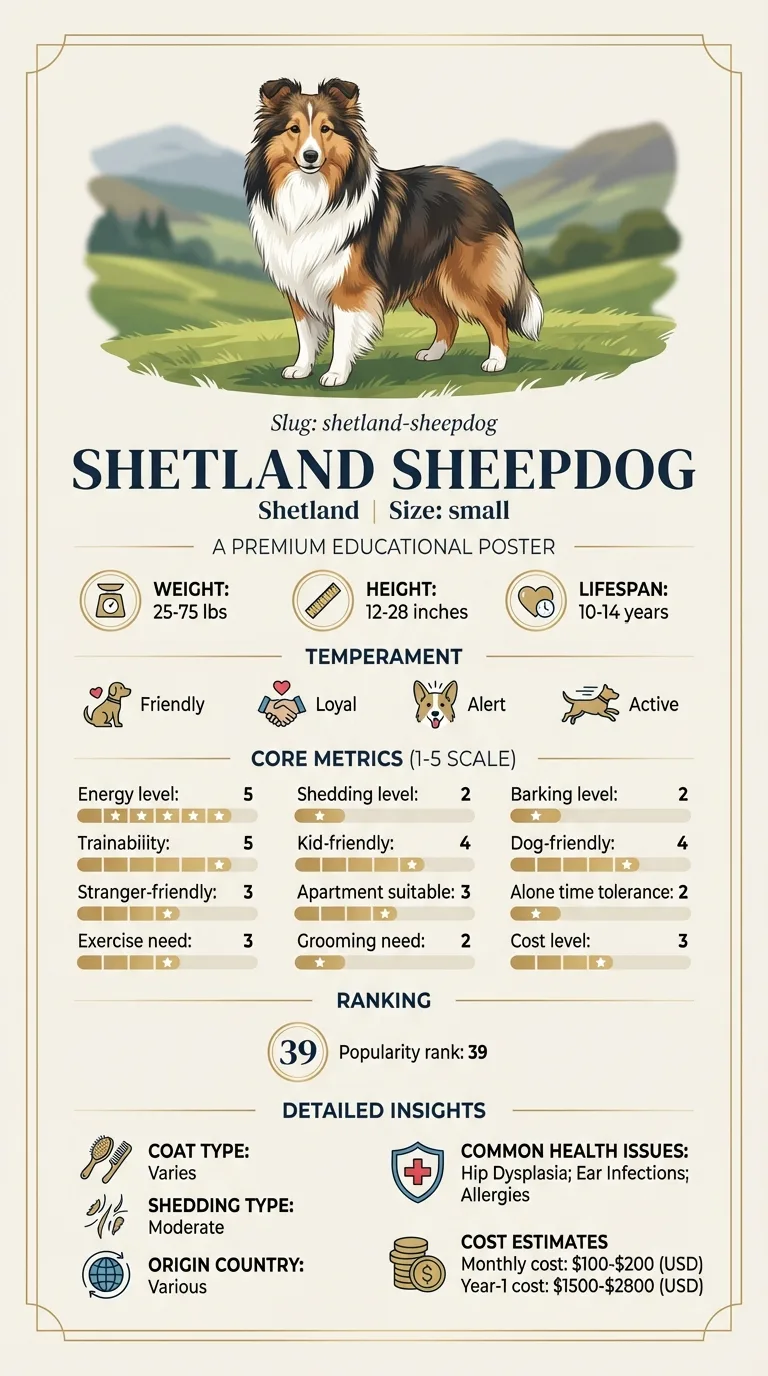
Therapeutic diet, medication and quarterly monitoring typically add a meaningful amount to this breed's usual eighty to one hundred fifty dollar month.
It can, but many dogs diagnosed in the earlier stages live for years with good quality of life on diet and monitoring alone.
A one-page prep sheet for this condition: the signs, the questions to ask, what to get priced. Unlocks here.
You get: Vet visit prep sheet
No spam. One-click unsubscribe. See our privacy policy.
See a sample page before you decide.
Early access list
The free prep sheet covers the same-day warning signs, a symptom log and the questions to ask. We are considering a fuller kit that adds a cost worksheet for the usual tests and treatments (US price ranges with their sources) and a plain-English guide to ways of covering the bill. It is not built yet; this list tells us whether it is worth building.
One email, no spam, unsubscribe anytime. Information only, not veterinary advice.