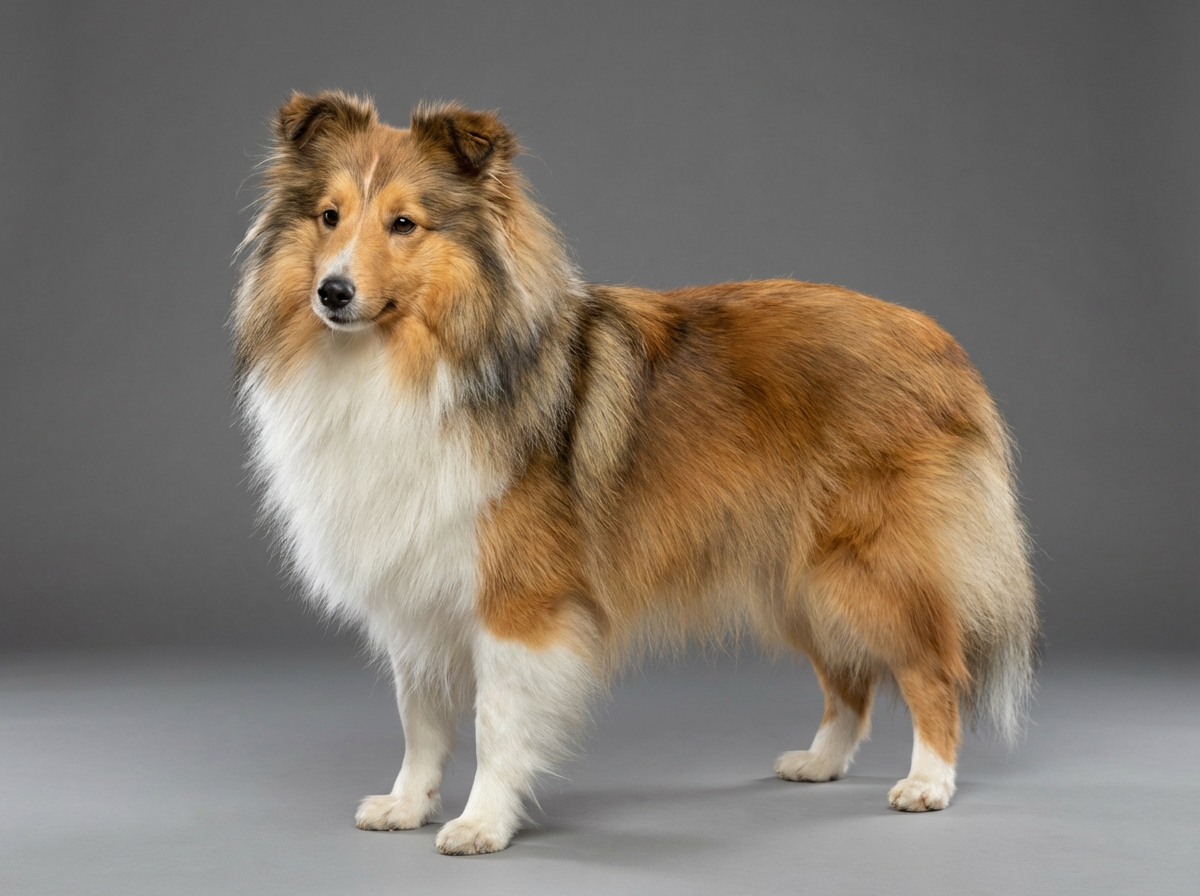
Costs
Shetland Sheepdog cost in Kansas City
$75–$141 monthly and $1,034–$2,162 in year one, modestly below average. The useful local lesson is medication economics: thyroid replacement is cheap for life, but confirming the diagnosis is not.

See Shetland Sheepdog price across all cities →
Quick answer
Shetland Sheepdog cost in Kansas City
$75–$141 monthly and $1,034–$2,162 in year one, modestly below average. The useful local lesson is medication economics: thyroid replacement is cheap for life, but confirming the diagnosis is not.
The stretch of country between Manhattan, Kansas and Columbia, Missouri, with Kansas City in the middle of it, is known in the industry as the Animal Health Corridor, and it holds the largest concentration of animal-health companies anywhere in the world. A substantial share of global veterinary pharmaceutical revenue is booked by firms with operations inside a two-hour drive of downtown. It is an odd distinction for a city to hold, and it makes a specific point easier to explain here than anywhere else.
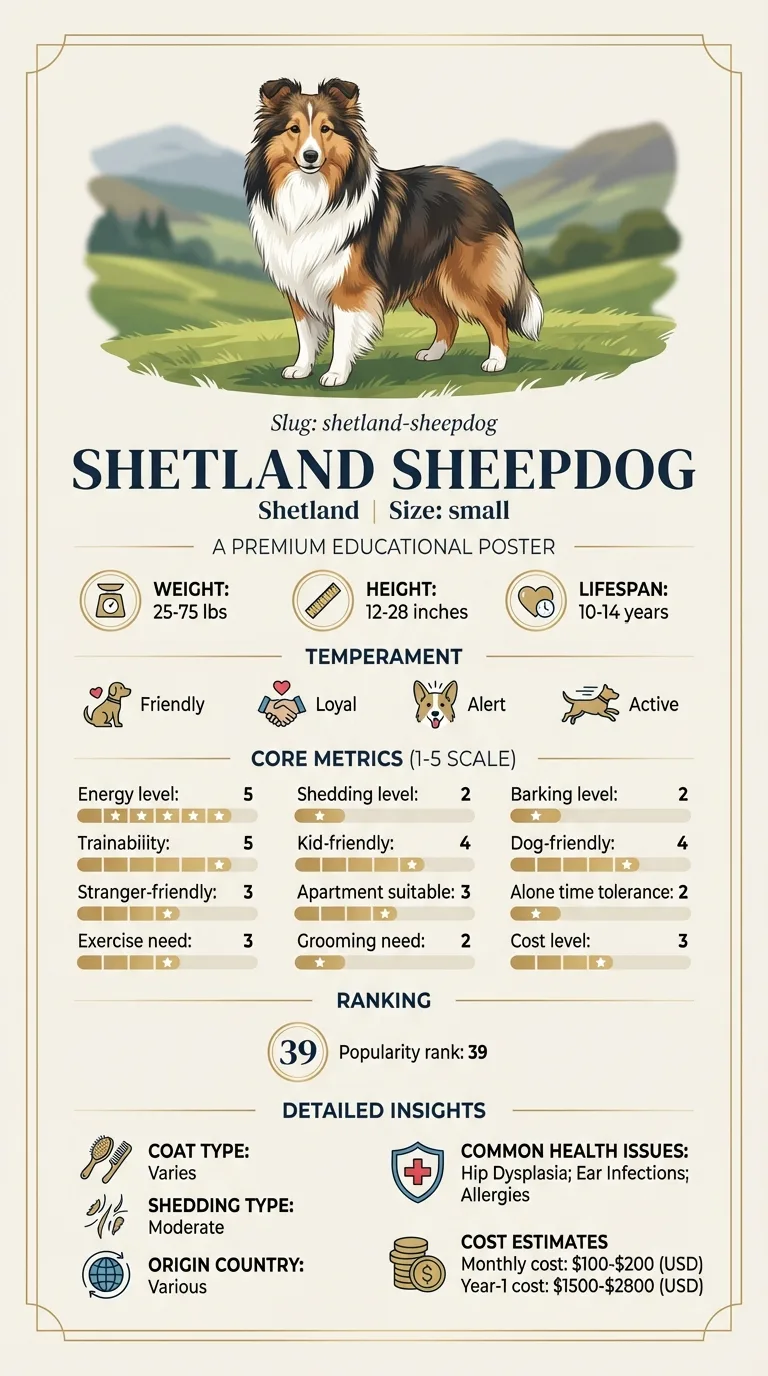
Alongside Hypothyroidism the breed carries documented Collie Eye Anomaly, MDR1 Drug Sensitivity, Dermatomyositis and Patellar Luxation. MDR1 is the inherited drug sensitivity that needs flagging on every chart: certain parasite preventives and anesthetic agents can be lethal at ordinary doses in an affected dog, and the test is a one-time expense.
Kansas City prices run modestly below national norms with an eight-month parasite window, and the distinctive line item is what a lifelong chronic medication actually adds up to.
Estimate · source: estimation · confidence: medium · updated 2026-09-06 · not a quote
| Item | Cost range |
|---|---|
Initial costs (exam, sterilization, MDR1 test, gear) Worth asking for a baseline thyroid value at the same visit so later changes have something to be compared against. | $340 - $590 |
| Item | Cost range |
|---|---|
Food Portions for a fifteen-to-twenty-five-pound dog at Kansas City grocery pricing. | $29 - $50 |
Coat maintenance Weekly work plus two heavy shedding periods a year, at local salon rates that sit under national norms. | $24 - $48 |
Thyroid medication if diagnosed A long-established generic dosed by weight; a small dog sits at the low end of the range. | $12 - $30 |
Each range starts from a national baseline for this breed's size class and is then adjusted for local cost of living and veterinary pricing. The baselines, and the source each one came from, are listed on our sources page (dataset 2026.09). Two inputs, the purchase price and the emergency reserve, have no published national figure we could verify, so we leave them to you rather than invent them.
These are planning estimates, not quotes. Your own numbers will move with the individual dog, your vet and your insurer. Build a budget with your own figures.
Hypothyroidism is the clearest illustration of why enrolment timing matters more than premium shopping for this breed.
Before any abnormal value is recorded. A thyroid result on the chart converts the condition into a pre-existing exclusion at every insurer, and no amount of shopping around undoes that.
The ongoing medication cost for this particular condition is small enough to self-fund comfortably; the case for cover rests on the orthopaedic and acute-illness side instead.
Kansas City savings come from catching a slow condition early and then buying its treatment sensibly, not from hunting for cheaper clinics.
The expensive part of canine hypothyroidism is finding it. The signs are unhelpfully ordinary: weight gain without a change in feeding, lethargy that reads as the dog maturing, a coat that thins or dulls, and skin that turns dry. Confirming it means bloodwork, sometimes repeated, and that is the four-figure risk on this page rather than the treatment.
Once confirmed, the economics invert. Thyroid hormone replacement is a long-established generic, dosed by weight, and a fifteen-to-twenty-five-pound dog sits at the cheap end of the dosing range. The realistic ongoing cost is a modest monthly medication line plus a monitoring blood panel once or twice a year to keep the dose right. Over a twelve-to-fourteen-year life that is a genuinely small number, and it is one of the few chronic diagnoses in this breed that does not threaten the household budget.
The corridor matters practically as well as rhetorically. Veterinary employment density around Kansas City is high, generic supply is competitive, and clinical trials run out of the region's veterinary schools with some regularity. None of that shows up as a discount on your invoice, but it does mean a metro where second opinions and specialist referrals are unusually easy to arrange for the price.
Kansas City straddles a state line, and the practical consequence for a dog owner is licensing and local ordinance rather than price: the Missouri and Kansas sides run separate registration requirements, and a household that moves across the line has to redo it. Veterinary pricing itself is broadly consistent across the metro and sits a little under national norms.
The parasite window is a clean eight months with a genuine winter gap, which trims a real amount against a Gulf Coast schedule. Whatever product you settle on, check it against a confirmed MDR1 genotype rather than accepting whatever is on the shelf.
Winters here are cold enough to be pleasant for this coat and summers humid enough to be hard on it. The double coat handles January in Kansas City comfortably and needs the undercoat raked out properly before July. Two heavy shedding periods a year is the normal pattern, and local grooming rates are reasonable enough that outsourcing the worst of it is not an extravagance.

An Overland Park owner spent most of a year adjusting food, cutting treats and adding walks for a Sheltie who kept gaining weight and had stopped wanting the last twenty minutes of the evening walk. The diagnosis, when it finally came, took two rounds of bloodwork and cost more than every other veterinary bill that year put together. The treatment turned out to be a tablet twice a day costing roughly what a coffee costs, plus a panel each spring to check the dose. Within two months the dog was pulling at the lead again.
Key takeaway: The expense in this condition is entirely in the diagnosis. Once you have the answer, it is one of the cheapest chronic problems a dog can hand you.
About $75 to $141, a little below the national average, with consistent pricing across both sides of the state line.
Roughly $1,034 to $2,162, including the first exam, sterilization, vaccinations and setup gear.
The diagnosis costs more than the treatment. Confirmation needs bloodwork, sometimes repeated, but the medication itself is a long-established generic dosed by weight, and a small dog sits at the cheap end of it.
Weight gain without more food, lethargy that looks like the dog settling down, a dull or thinning coat and dry skin. All of them are easy to attribute to something else, which is why it gets missed.
Not directly on the invoice. What it does provide is unusual density of veterinary expertise, easy second opinions and competitive generic supply.
About $495 covers a typical significant visit at local pricing.
$75–$141 monthly and $1,034–$2,162 in year one, modestly below average. The useful local lesson is medication economics: thyroid replacement is cheap for life, but confirming the diagnosis is not.
It is one of five documented conditions in the breed and it is very manageable once identified. The risk lies in how ordinary the early signs look rather than in the treatment.
This guide is not medical advice. If your dog shows pain, sudden behavior change, or worsening symptoms, consult a licensed veterinarian.
Some links may be affiliate links. We may earn a commission at no extra cost to you. We only suggest products we believe are helpful for dog owners.
We research and check what we publish, but we do not warrant that any figure, date, price, or statement is accurate, complete, or current, and we accept no liability for any loss, cost, injury, or other harm arising from the use of this site. Use it as one reference among several. You remain responsible for your own decisions and for your dog's care - confirm anything that matters with a licensed veterinarian or another qualified professional before you act on it. Full disclaimer.
One sheet with every line item, the emergency fund and when insurance pays off - unlocks on this page.
You get: 12-month budget sheet
No spam. One-click unsubscribe. See our privacy policy.
Preview page 1 before you decide.