Health
What is comedo syndrome in dogs?
A blockage of hair follicles, usually along the back, producing small blackhead-like plugs of oil and dead skin cells.

Quick answer
What is comedo syndrome in dogs?
A blockage of hair follicles, usually along the back, producing small blackhead-like plugs of oil and dead skin cells.
The name is borrowed from a different breed entirely, and that is worth saying plainly before anything else. This is a real skin condition that can appear in a Shetland Sheepdog, and it is not the same problem as the itchy allergic skin disease most Sheltie owners hear about first.

Owners who have found small, gritty, blackhead-like bumps along their Sheltie's back while grooming and are not sure what they are looking at. People whose vet has mentioned comedo syndrome and are surprised, since it is usually described as a Schnauzer problem. Anyone trying to work out whether this is the same thing as the allergic itch their dog already has.
This guide is not medical advice. If your dog shows pain, sudden behavior change, or worsening symptoms, consult a licensed veterinarian.
Some links may be affiliate links. We may earn a commission at no extra cost to you. We only suggest products we believe are helpful for dog owners.
We research and check what we publish, but we do not warrant that any figure, date, price, or statement is accurate, complete, or current, and we accept no liability for any loss, cost, injury, or other harm arising from the use of this site. Use it as one reference among several. You remain responsible for your own decisions and for your dog's care - confirm anything that matters with a licensed veterinarian or another qualified professional before you act on it. Full disclaimer.
Comedo, or follicular, syndrome is a blockage of hair follicles, most often along the back, producing small blackhead-like plugs of oil and dead skin. First and most commonly described in Miniature Schnauzers, it is not part of the Shetland Sheepdog's documented health profile but can occur in any dog whose coat traps oil and debris against the skin, which a dense, heavily shedding double coat can do when grooming falls behind.
Genuinely uncommon in Shetland Sheepdogs and not among the breed's five documented conditions. Where it does occur, it is typically a minor, localised finding rather than a significant health problem, and it is far less common in this breed than allergic skin disease or coat-related complications of hypothyroidism.
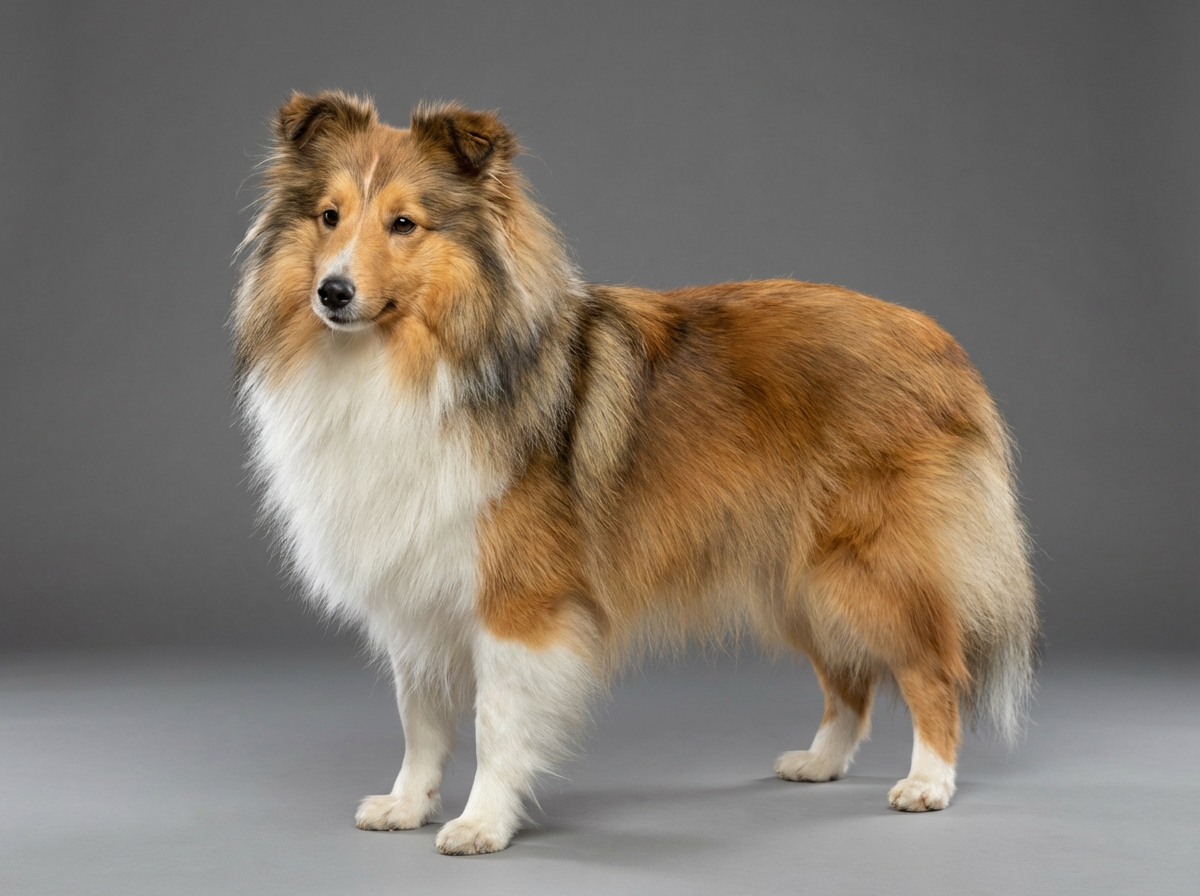
There is no documented genetic predisposition connecting this condition specifically to the Shetland Sheepdog. What the breed contributes is a coat type that creates favourable conditions for follicular blockage when grooming lapses: a long, dense double coat with heavy seasonal shedding, rated four out of five for grooming demand, sheds a large volume of loose undercoat that, left unbrushed, packs against the skin and traps the oil and debris that block follicles. This is a mechanical, coat-driven contribution rather than an inherited skin disease specific to this breed.
Grooming frequency is the dominant environmental factor. Infrequent brushing during the seasonal blow, inconsistent bathing, and damp conditions that encourage matting all increase the likelihood of follicular blockage. Warm, humid weather that increases oil production on the skin surface can also contribute, as can any underlying hormonal condition that changes skin oiliness, though this is a less common driver than simple coat maintenance.
Book a routine appointment for multiple or spreading comedones, for any that become red, sore or crusted, or for bumps that do not improve after a few weeks of consistent brushing and appropriate bathing. Go sooner if the area appears infected, with swelling, discharge or clear pain on touch, since secondary bacterial folliculitis needs specific treatment. This is not an emergency presentation in isolation; use ordinary appointment timing rather than urgent care unless infection or significant discomfort is present.
See all Shetland Sheepdog health problems, which breeds are prone to schnauzer comedo syndrome, or the full Shetland Sheepdog breed guide for temperament, exercise needs and ownership costs.
Mild, uncomplicated cases often improve within two to four weeks of consistent brushing to the skin and appropriate bathing. Infected follicles treated with veterinary care typically resolve within one to two weeks of appropriate treatment. Recurrence is common if grooming lapses again, particularly through the next seasonal shed, so this is best thought of as an ongoing coat-care habit rather than a one-time fix.
Success is a back that feels smooth rather than gritty when you run a flat hand along it, achieved through routine grooming rather than repeated veterinary treatment. For a dog with recurring mild cases, success is catching and clearing new comedones early during regular brushing, before they have a chance to become infected.
This condition is found by touch as often as by sight, because a Sheltie's coat hides the same details it hides for weight and for allergic skin change. Running flat hands down the back periodically, not just during a bath, is how most owners first notice anything.
It is fair to be skeptical when a condition named after one breed turns up in the notes for another, and the honest answer is that comedo syndrome is genuinely uncommon in Shetland Sheepdogs and is not part of the breed's documented health profile the way Collie Eye Anomaly or hypothyroidism are. What makes it plausible rather than a simple misdiagnosis is the shared mechanism, not a shared breed identity.
A hair follicle becomes blocked when oil, dead skin cells and debris cannot shed normally and instead accumulate at the follicle opening. Any factor that increases how much material sits against the skin, or slows how efficiently the follicle clears itself, raises the odds of this happening. A long, dense double coat with heavy seasonal shedding, rated four out of five for grooming demand in this breed, does exactly that: loose undercoat that is not regularly brushed out packs down against the skin, trapping oil and debris in place rather than letting it fall away, which is a mechanically similar situation to the follicular environment described in Schnauzers, even though the breed's genetics and typical presentation differ.
This is also, usefully, one of the more genuinely manageable skin findings a Sheltie owner will encounter. Where allergic skin disease and hypothyroidism-related coat change are ongoing medical conditions requiring diagnosis and sometimes lifelong management, comedo syndrome in a dog without a specific underlying predisposition often responds well to mechanical intervention: thorough brushing to the skin, particularly during the seasonal blow, appropriate bathing with a shampoo formulated to help clear follicles, and simply keeping the coat from matting down against the back where these plugs form. Persistent or recurrent cases, or ones that become infected, deserve a proper veterinary look rather than home management alone, since secondary bacterial folliculitis needs treatment in its own right.

Juno was a five year old Sheltie whose owner, Talia, had always relied on a professional groomer for the twice-yearly deep coat blow-outs and did comparatively little brushing in between. During one seasonal appointment, the groomer paused over Juno's shoulders and pointed out a patch of small, firm bumps under the coat that Talia had never noticed and could not see even when the hair was parted. A vet visit confirmed comedo syndrome, with no signs of infection. Rather than treating it as a disease requiring medication, the plan was almost entirely mechanical: brushing to the skin three times a week instead of twice a year, and a follicle-clearing shampoo used every few weeks through the rest of that shedding season. Within a month the patch had visibly smoothed out. Talia now brushes Juno properly between grooming appointments rather than treating the groomer's visit as the only time the undercoat gets attention.
Key takeaway: This is a condition most owners find by feel rather than sight, and in an uncomplicated case, more frequent brushing does more than any product.
Mechanically similar, yes. Both are a hair follicle blocked with a plug of oil and dead skin cells. In dogs the medical term is comedone, and when they occur in a pattern along the back it is described as comedo or follicular syndrome.
It was first well characterised and most commonly reported in Miniature Schnauzers, so the name stuck, in the way many conditions are named after the population they were first studied in. The underlying follicular blockage mechanism is not exclusive to that breed and can occur wherever the same conditions, particularly a dense coat trapping debris, are present.
Usually not on its own. This is one of the more reliable ways to distinguish it from allergic skin disease, which is typically intensely itchy. If the area becomes red, sore or the dog starts fussing at it, secondary infection is the more likely reason and needs veterinary attention.
Thorough brushing to the skin and a shampoo suited to clearing follicles can help mild, uncomplicated cases. If bumps are numerous, spreading, becoming inflamed, or not improving with a few weeks of proper coat care, book a veterinary check rather than continuing to manage it alone.
It is worth ruling out, since flea allergy and general allergic skin disease are both genuinely more common in this breed than comedo syndrome. The distribution helps: allergic itch tends to concentrate on the feet, ears, face, armpits and tail base, while comedones sit along the back and flanks and are not typically itchy.
Not necessarily. An isolated finding of a few comedones during grooming, without infection or spreading, is a minor and manageable issue rather than a sign of broader skin disease. Recurrent or worsening cases are the ones worth a proper veterinary assessment to rule out an underlying hormonal or immune contributor.
A blockage of hair follicles, usually along the back, producing small blackhead-like plugs of oil and dead skin cells.
No, it is uncommon and not one of the breed's documented conditions, though the mechanism can occur in any dog with a coat dense enough to trap debris against the skin.
Part the coat along the spine during grooming and feel for small, gritty bumps rather than relying on sight alone, since the coat hides them from view.
Mild cases respond to a suitable shampoo and thorough brushing, a modest cost against the breed's typical monthly expenses; infected cases needing veterinary treatment cost more.
Usually not, which is one of the clearest signs it is comedo syndrome rather than the allergic skin disease more typical of this breed.
A one-page prep sheet for this condition: the signs, the questions to ask, what to get priced. Unlocks here.
You get: Vet visit prep sheet
No spam. One-click unsubscribe. See our privacy policy.
Preview page 1 before you decide.
Early access list
The free prep sheet covers the same-day warning signs, a symptom log and the questions to ask. We are considering a fuller kit that adds a cost worksheet for the usual tests and treatments (US price ranges with their sources) and a plain-English guide to ways of covering the bill. It is not built yet; this list tells us whether it is worth building.
One email, no spam, unsubscribe anytime. Information only, not veterinary advice.