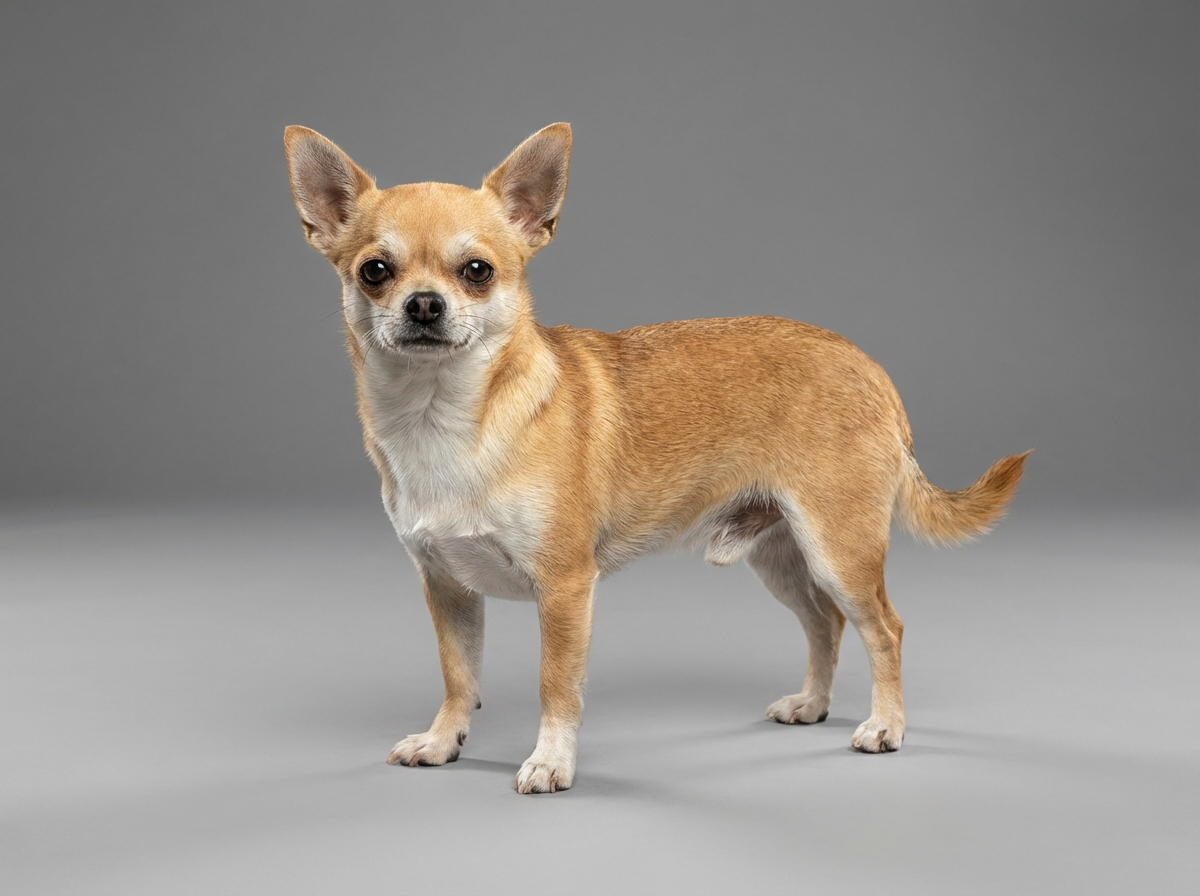
Health
Is comedo syndrome a Chihuahua condition?
No. It is specific to Miniature Schnauzers and is not among the Chihuahua's documented health issues. Bumps on a Chihuahua's back have other causes.

Quick answer
Is comedo syndrome a Chihuahua condition?
No. It is specific to Miniature Schnauzers and is not among the Chihuahua's documented health issues. Bumps on a Chihuahua's back have other causes.
If you are running your hand down a Chihuahua's spine and feeling small hard bumps, the answer is somewhere on a list. That list does not begin with a Schnauzer disease.
Owners who have found bumps or blackheads along their Chihuahua's back and have searched the symptom, landing on a breed-specific condition that does not apply. The bumps are real; the label is not.
This guide is not medical advice. If your dog shows pain, sudden behavior change, or worsening symptoms, consult a licensed veterinarian.
Some links may be affiliate links. We may earn a commission at no extra cost to you. We only suggest products we believe are helpful for dog owners.
We research and check what we publish, but we do not warrant that any figure, date, price, or statement is accurate, complete, or current, and we accept no liability for any loss, cost, injury, or other harm arising from the use of this site. Use it as one reference among several. You remain responsible for your own decisions and for your dog's care - confirm anything that matters with a licensed veterinarian or another qualified professional before you act on it. Full disclaimer.
Schnauzer comedo syndrome is a follicular disorder of Miniature Schnauzers and does not meaningfully occur in Chihuahuas. Bumps and blackheads along a Chihuahua's back are real findings with other explanations, most commonly bacterial folliculitis, demodex mites, harness friction, sun exposure in thin-coated dogs, or secondary infection following allergic itching. Diagnosis rests on pattern and simple in-clinic tests.
Skin bumps of some kind are among the most common reasons small dogs are presented to a vet, and Chihuahuas are no exception even though no specific skin disease appears among their ten documented health issues. What is genuinely rare in this breed is the condition this page is named after, and recognising that early prevents a diagnostic detour.
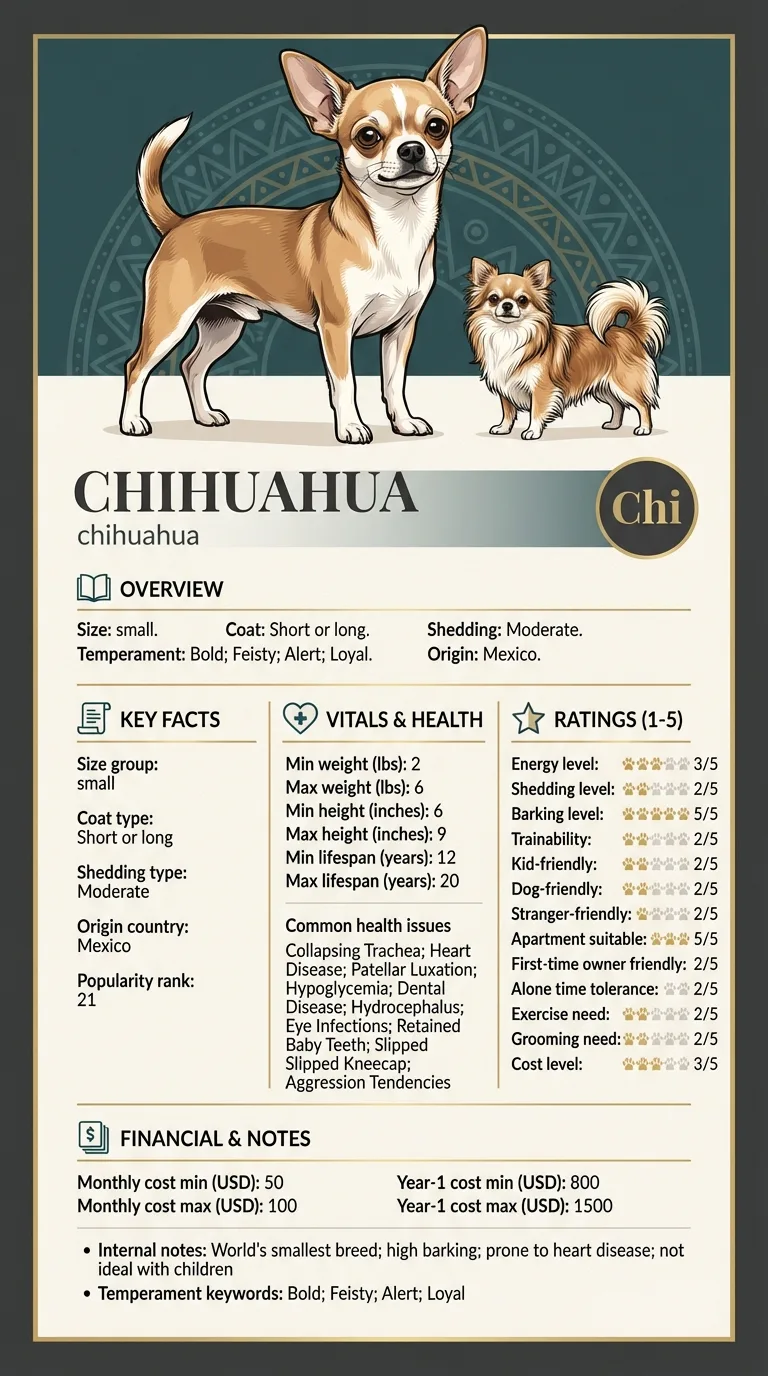
There is no Chihuahua follicular abnormality equivalent to the one that defines the Schnauzer condition. What the breed does contribute is coat and size. The Chihuahua comes in short or long coats with moderate shedding, and in short-coated individuals the skin is thinly covered, so both sun exposure and physical friction reach it more readily. At 2 to 6 pounds, a harness covers a proportionally large area of the body, so friction from equipment is spread across more of her surface than it would be on a larger dog.
Equipment is the environmental factor most often overlooked. Because tracheal collapse is documented in this breed, harnesses are correctly recommended, which means most Chihuahuas wear one regularly, and a poorly fitted or constantly worn harness rubs. Bedding materials, laundry detergents and shampoos all contact a large proportion of a small dog's skin. Sunbathing on a windowsill, which many Chihuahuas do enthusiastically given their preference for warmth, delivers concentrated exposure to thinly coated areas.
Book a routine appointment for bumps that have persisted more than a week or two, are spreading, are accompanied by hair loss, or are being scratched at. Ask for a skin scrape and a sample examined under the microscope, which are inexpensive and often diagnostic in a single visit. Seek same-day care for skin that is hot, painful, weeping or ulcerated, for a rapidly enlarging lump, for bumps accompanied by fever, lethargy or loss of appetite, or for any facial swelling, since those indicate infection or a reaction requiring prompt treatment rather than investigation. Do not squeeze, lance or apply human medication to any skin lesion at any point.
See all Chihuahua health problems, which breeds are prone to schnauzer comedo syndrome, or the full Chihuahua breed guide for temperament, exercise needs and ownership costs.
Diagnosis is often achieved in one appointment, since a skin scrape and cytology can be done and read the same day. Bacterial folliculitis typically requires several weeks of treatment and should be completed rather than stopped when the skin looks better. Demodex treatment runs longer and is monitored with repeat scrapes. Friction from equipment resolves within two to three weeks once the harness is corrected. Where an underlying allergy is driving everything, expect months rather than weeks, since that investigation is a separate and longer project.
Success is smooth skin with hair growing back and a dog who is not scratching, plus a known reason it happened in the first place. That second part matters most, because a skin problem treated without its cause identified reliably returns. If the answer turns out to be the harness, success is a correctly fitted one and a habit of taking it off indoors. If the answer is allergy, success is a longer-term management plan rather than a course of treatment.
Bacterial folliculitis is the most common answer. Infection of the hair follicles produces small raised bumps, often with a crust, sometimes with a hair standing out of the centre. It frequently follows something else, an allergy, a parasite or a break in the skin, so identifying it usually leads to a second question about what allowed it.
Demodex mites are the next consideration, particularly in young dogs and in any dog whose immune system is under strain. They live in the follicles and cause hair loss, scaling and bumps, and they are diagnosed on a skin scrape, which is quick and cheap and answers the question definitively.
Harness friction deserves more attention than it gets. A Chihuahua wearing a harness daily, which she should be given the breed's tracheal issues, has straps crossing her chest and shoulders. Where those straps rub, follicles get irritated and plugged. The pattern here is diagnostic: the affected area matches the shape of the harness rather than following the spine.
Sun damage matters in short-coated dogs. A Chihuahua with a thin coat who sunbathes on a windowsill or a patio can develop follicular changes and comedones on the sparsely covered areas, which in this breed includes the belly and the bridge of the nose more than the back.
Finally, allergic skin disease produces bumps across many sites, and a dog with itchy skin will develop secondary infection wherever she scratches. If she is scratching at the bumps, allergy moves considerably up the list.

Skin cases are solved by pattern. These observations shorten the diagnostic path considerably.
Tita had a scatter of small hard bumps across her shoulders and upper chest that her owner Ellen had been treating with an over-the-counter medicated wash for two months. It helped a little and then stopped helping. At the appointment the vet asked Ellen to bring the harness in and put it on her. The affected area matched the strap pattern almost exactly. The harness was a size too small, had been worn every day for a year including on wet walks, and had never been taken off indoors. A skin scrape ruled out mites, cytology confirmed a secondary bacterial infection, and Tita was treated for that. The lasting change was a correctly sized harness, taken off at home, and dried before it went back on. Ellen's frustration was that she had spent two months treating a symptom while the cause was hanging on the hook by the door.
Key takeaway: Before looking for a rare breed syndrome, check the equipment. If the bumps map to the shape of the harness, you have found the answer without a single test.
Effectively no. The condition is defined by a follicular abnormality specific to Miniature Schnauzers, and it is not among the ten health issues documented for the Chihuahua. A Chihuahua with blackheads along her back has something else, and the useful question is which of several common alternatives it is.
Because many are assembled by applying a general list of canine conditions across every breed rather than by checking which are actually documented. That is how giant-breed joint problems and Schnauzer skin conditions end up attached to a two to six pound Mexican breed. Treat any such list with scepticism and ask your vet what genuinely applies.
Quite possibly, and this is worth checking first because it is free. Look at whether the affected area matches the shape of the straps. Chihuahuas should wear harnesses rather than collars because of documented tracheal issues, but a harness worn constantly, fitted too tightly, or left on when wet causes friction and follicular irritation.
No. Squeezing ruptures the follicle and drives its contents into the surrounding skin, which converts a plugged follicle into an inflamed nodule and often into an infection. It is one of the most reliable ways to turn a minor skin finding into a genuine problem. Leave them alone and have them examined.
It depends entirely on the cause. Bacterial folliculitis is generally not transmissible in a meaningful way. Certain parasites and fungal conditions can be. This is another reason to get a diagnosis rather than treating on assumption, particularly in a multi-pet household or one with young children.
The Chihuahua's documented health issues include eye infections but do not list a specific skin disease. That does not mean skin problems are rare, since allergies and infections affect dogs of every breed. It does mean there is no distinctive Chihuahua skin syndrome to look for, and a skin workup here proceeds on general principles.
No. It is specific to Miniature Schnauzers and is not among the Chihuahua's documented health issues. Bumps on a Chihuahua's back have other causes.
Bacterial folliculitis, demodex mites, harness friction, sun damage in thin-coated dogs, or secondary infection from allergic itching.
Never. Squeezing ruptures the follicle into the surrounding skin and reliably turns a small problem into an inflamed, infected one.
Whether she is itching at them, and whether the affected area matches the shape of her harness. Both narrow the diagnosis considerably.
A one-page prep sheet for this condition: the signs, the questions to ask, what to get priced. Unlocks here.
You get: Vet visit prep sheet
No spam. One-click unsubscribe. See our privacy policy.
Preview page 1 before you decide.