Health
What is the first sign of hypothyroidism in a Sheltie?
Usually a change in coat quality, with symmetrical thinning over the flanks and tail and no itching to explain it.

Quick answer
What is the first sign of hypothyroidism in a Sheltie?
Usually a change in coat quality, with symmetrical thinning over the flanks and tail and no itching to explain it.
It rarely arrives as an illness. It arrives as a Sheltie that has become a bit slower, a bit heavier and a bit scruffier, and everyone blames age.
Owners of Shelties between roughly four and nine who have noticed the dog is not quite itself, and owners who have watched a once-magnificent coat go thin and dull over a season without an obvious skin problem to explain it.
This guide is not medical advice. If your dog shows pain, sudden behavior change, or worsening symptoms, consult a licensed veterinarian.
Some links may be affiliate links. We may earn a commission at no extra cost to you. We only suggest products we believe are helpful for dog owners.
Hypothyroidism is a documented Shetland Sheepdog condition in which the thyroid gland underproduces the hormone that sets the body's metabolic rate. Because that hormone touches every tissue, the signs are diffuse: a dulling coat with symmetrical thinning, creeping weight gain on unchanged food, reduced stamina, heat seeking, and skin or ear infections that keep returning. Daily life changes little once it is treated, but the treatment is permanent.
Common enough to belong on the breed's short list of documented conditions and to justify testing any middle-aged Sheltie with the classic picture. It is one of the more frequently diagnosed endocrine diseases in dogs generally, and Shelties are among the breeds where it is seen more often than average.
In Shetland Sheepdogs, as in most predisposed breeds, the usual mechanism is the dog's own immune system gradually attacking the thyroid gland over years until too little functioning tissue remains. That predisposition is inherited and runs in lines, which is why it appears on the breed's documented health list alongside Collie Eye Anomaly, MDR1 drug sensitivity, dermatomyositis and patellar luxation. It is worth noting that this breed carries several immune-mediated conditions, and the thyroid is the most treatable of them.
There is no environmental cause to avoid, and owners should be sceptical of claims otherwise. What the environment does affect is detection. A dog on certain medications, or one recovering from another illness, can produce a misleadingly low result, so timing of the blood draw matters. A dense double coat also delays recognition, because early thinning is genuinely hard to see under that much hair until it is well advanced.
This condition is rarely an emergency, with one exception: a severely hypothyroid dog that becomes weak, cold, disoriented or collapses needs immediate care, as that picture can represent a metabolic crisis. Otherwise, book within a few weeks for symmetrical coat thinning without itching, weight gain on unchanged food, a marked drop in stamina, persistent heat seeking, or recurrent ear and skin infections in a middle-aged Sheltie. Ask specifically for a thyroid panel rather than a general profile alone, and ask for it to be timed when the dog is otherwise well. Once treatment starts, do not skip the follow-up blood tests, since the first dose is an estimate rather than an answer.
See all Shetland Sheepdog health problems, which breeds are prone to hypothyroidism, or the full Shetland Sheepdog breed guide for temperament, exercise needs and ownership costs.
Expect a staged response. Brightness and energy usually improve within two to four weeks of starting replacement. Weight normalises over roughly two to three months with portion control. Coat is the slow one, taking three to six months to regrow fully, and it is normal for the new coat to look odd for a while before it settles. Dose adjustment typically takes one or two rounds of bloodwork across the first three months, then annual or twice yearly monitoring indefinitely.
Success is a Sheltie whose coat has come back, whose weight has held steady for a year, who wants the walk again, and whose annual blood test is boring. It is not a dog that stops needing medication, because that will not happen. The realistic goal is a normal life with one small permanent addition to the daily routine.
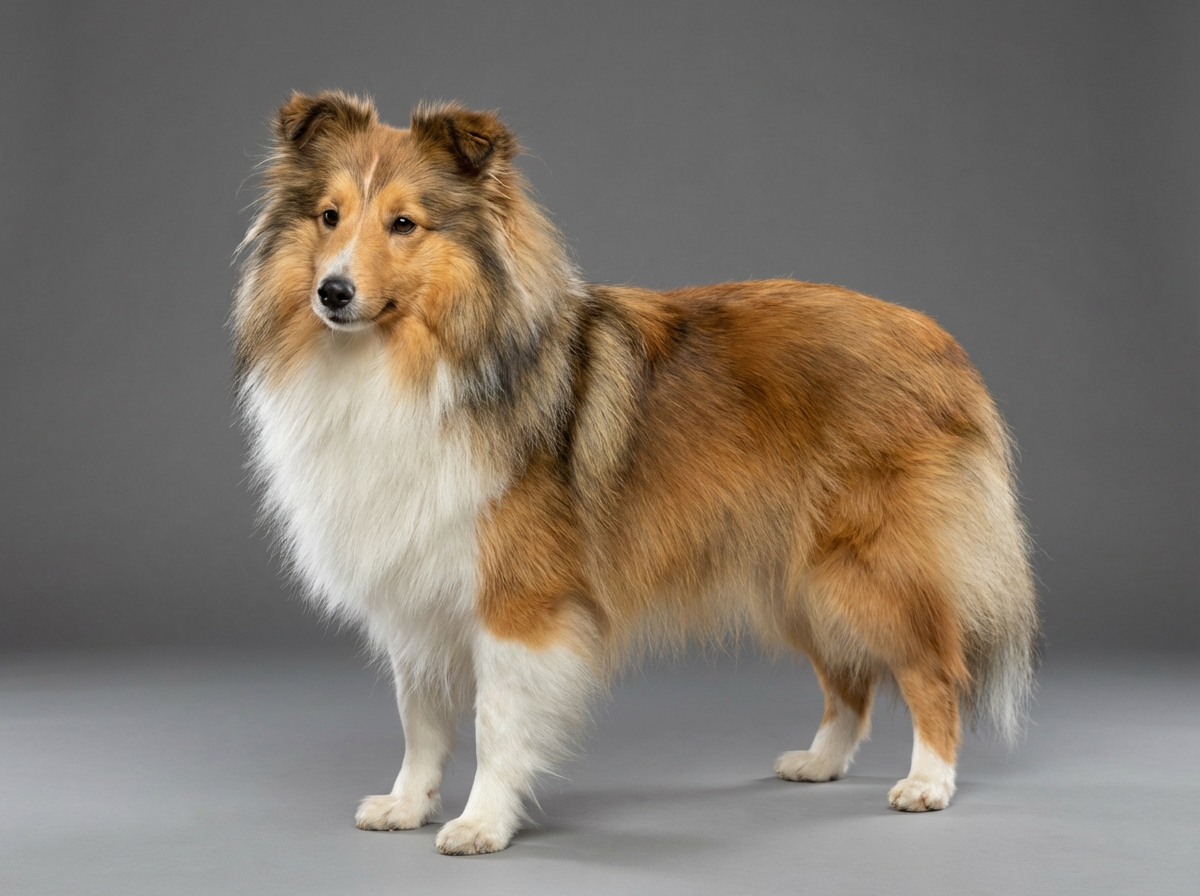
Low thyroid hormone slows everything. In a Sheltie the effects show up in a fairly consistent sequence, and the coat usually gets noticed first because there is so much of it.
Diagnosis is a blood test, but it is not a single blood test. A basic total hormone level can be pushed down by other illnesses, by stress, and by certain medications, producing a low result in a dog with a perfectly good thyroid. That trap has a name, and it is why a careful vet runs a fuller panel including free hormone and the pituitary signal that drives the gland.
Timing matters too. Do the panel when the dog is otherwise well, not in the middle of another illness, and mention every medication and supplement the dog is on.
Treatment is daily oral hormone replacement, given for life, usually twice a day and usually consistently in relation to food. The dose is not set once. It is checked by bloodwork a few weeks after starting, adjusted, checked again, and then rechecked periodically for the rest of the dog's life, because requirements drift.
What this means practically is that hypothyroidism converts your Sheltie into a dog with a permanent daily routine and a standing annual blood test. That is the whole burden. It is an unusually good deal compared with most chronic diseases, and the response is often striking.

If you think your Shetland has hypothyroidism, the plan is three steps: write down what you have seen and when it started, book a veterinary appointment rather than waiting for the next flare, and take video of the behaviour or symptom before you go — the thing you are worried about rarely happens in the consulting room. Screening in the parents covers collie eye anomaly, mdr1 drug sensitivity, dermatomyositis.
What the vet visit should produce is a diagnosis and a written plan, not just reassurance: what is being ruled out, what the monitoring interval is, and which signs mean you come back sooner. Ask what the treatment costs across a year rather than per visit, because that is the number that decides whether you are managing this condition or reacting to it.
Between appointments, keep a short log — dates, what you saw, what changed. It is the single most useful thing an owner brings to a follow-up, and for hypothyroidism it is often what separates a clear pattern from a guess.
Aoife had been telling her vet for a year that her Sheltie, Struan, was not right. He was eight, he had gained weight, he was lying on the kitchen radiator in July, and his ruff had gone flat. Each time she was told he looked well and was probably just middle-aged. What changed the conversation was a photograph. She brought in a picture from a show two years earlier, held it next to him, and the difference in coat was undeniable. The vet ran a full thyroid panel rather than a screening value, and it came back clearly abnormal. Struan started replacement therapy that week. Aoife noticed him asking for walks again within a month. His weight came off over the summer. The coat took until the following spring, and when it came back she took another photograph. She now takes one every three months and keeps them in a folder on her phone, which is a habit her vet has since recommended to other Sheltie owners.
Key takeaway: Hypothyroidism in a heavily coated breed hides behind gradual change. Photographs and a monthly weight turn something you cannot perceive day to day into evidence a vet can act on.
It is one of the breed's documented health conditions and is seen regularly in practice. It is not universal, but it is common enough that a middle-aged Sheltie with coat loss, weight gain and reduced stamina should have a thyroid panel run rather than being written off as slowing down.
Most commonly in middle age, roughly between four and nine years. It is uncommon in dogs under two. Onset is gradual, which is precisely why owners often date the change to a year or more before the diagnosis once they look back at photographs.
Thyroid-related hair loss is usually symmetrical, affects the flanks, tail and thighs, and is not itchy. Allergic hair loss follows scratching and licking, concentrates on the feet, face, armpits and belly, and the dog is visibly uncomfortable. A Sheltie can have both, which complicates the picture.
Thyroid hormone replacement is not among the drugs affected by MDR1. It still matters that the genotype is on file, because a hypothyroid Sheltie tends to accumulate other prescriptions over time for skin and ear infections, and some of those categories do interact with MDR1 status.
Energy and mental brightness typically improve first, often within a few weeks. Weight follows over a couple of months with dietary attention. Coat is slowest and can take three to six months to regrow properly, and in a breed with this much coat the regrowth is what convinces owners it worked.
No. The gland does not recover, and stopping the tablets brings the signs back over weeks. This is a managed condition, not a treated one, and the commitment is for the remainder of a twelve to fourteen year lifespan.
Yes, and it is one of the more satisfying explanations to find because it is fixable. Reduced stamina in a middle-aged Sheltie deserves a thyroid panel alongside a heart check, since the two produce a very similar picture and are managed completely differently.
Usually a change in coat quality, with symmetrical thinning over the flanks and tail and no itching to explain it.
A thyroid blood panel run while the dog is otherwise well, ideally including free hormone levels rather than a single total reading.
The medication itself is inexpensive, commonly tens of dollars a month for a small dog, plus periodic monitoring bloodwork once or twice a year.
Not usually. Portion control while the metabolism normalises matters more than the food itself, and any diet change should be discussed with the vet.
It can dull a dog or make it less tolerant, and owners often report a brighter dog after treatment. Behaviour alone is not enough to diagnose it.
A one-page prep sheet for this condition: the signs, the questions to ask, what to get priced. Unlocks here.
You get: Vet visit prep sheet
No spam. One-click unsubscribe. See our privacy policy.
Preview page 1 before you decide.