Behavior
Which needs less grooming?
The GSP, at a low 2/5 versus the Sheltie's high 4/5.

Quick answer
Which needs less grooming?
The GSP, at a low 2/5 versus the Sheltie's high 4/5.
German Shorthaired Pointer or Shetland Sheepdog? On paper they differ most on grooming need, and on the scales German Shorthaired Pointer is the heavier at 45–70 lbs. Here is how the two compare on everything that shapes an ordinary week.
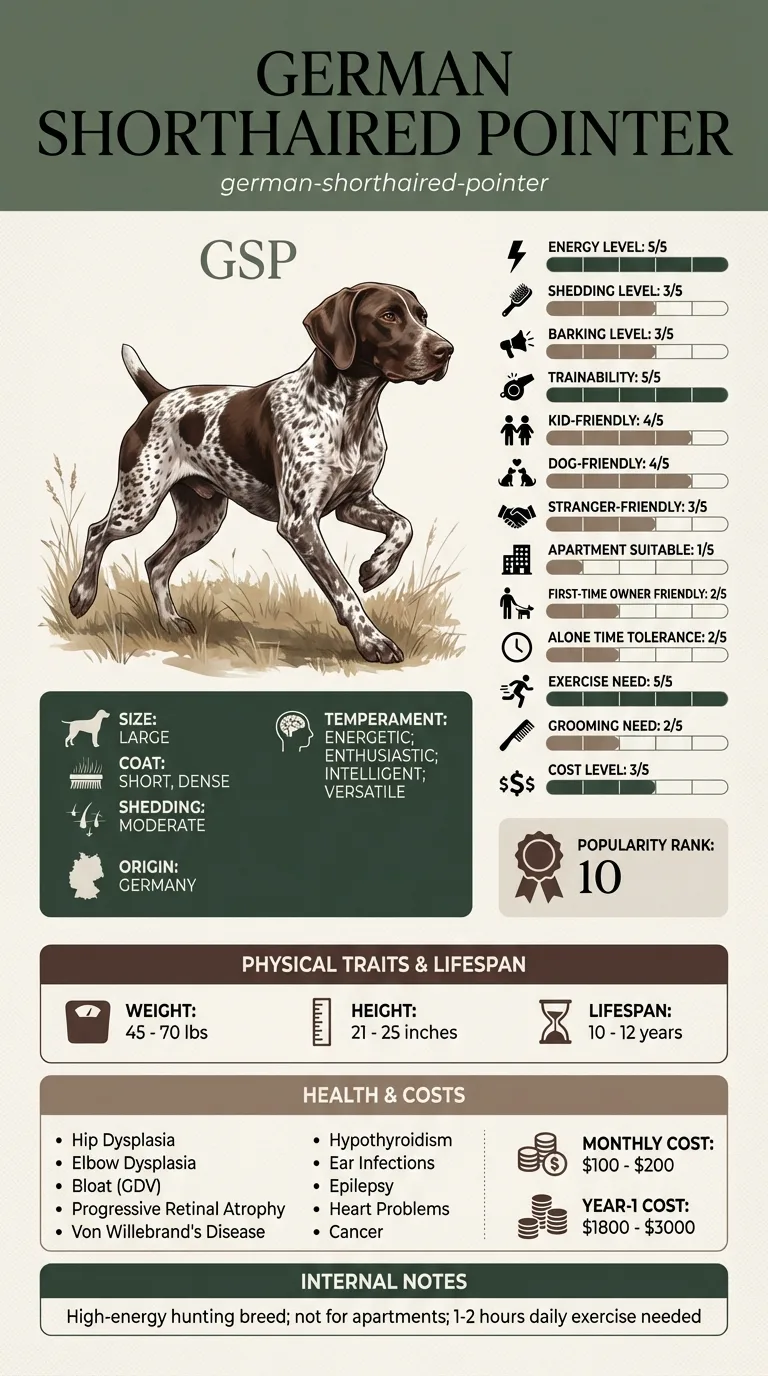
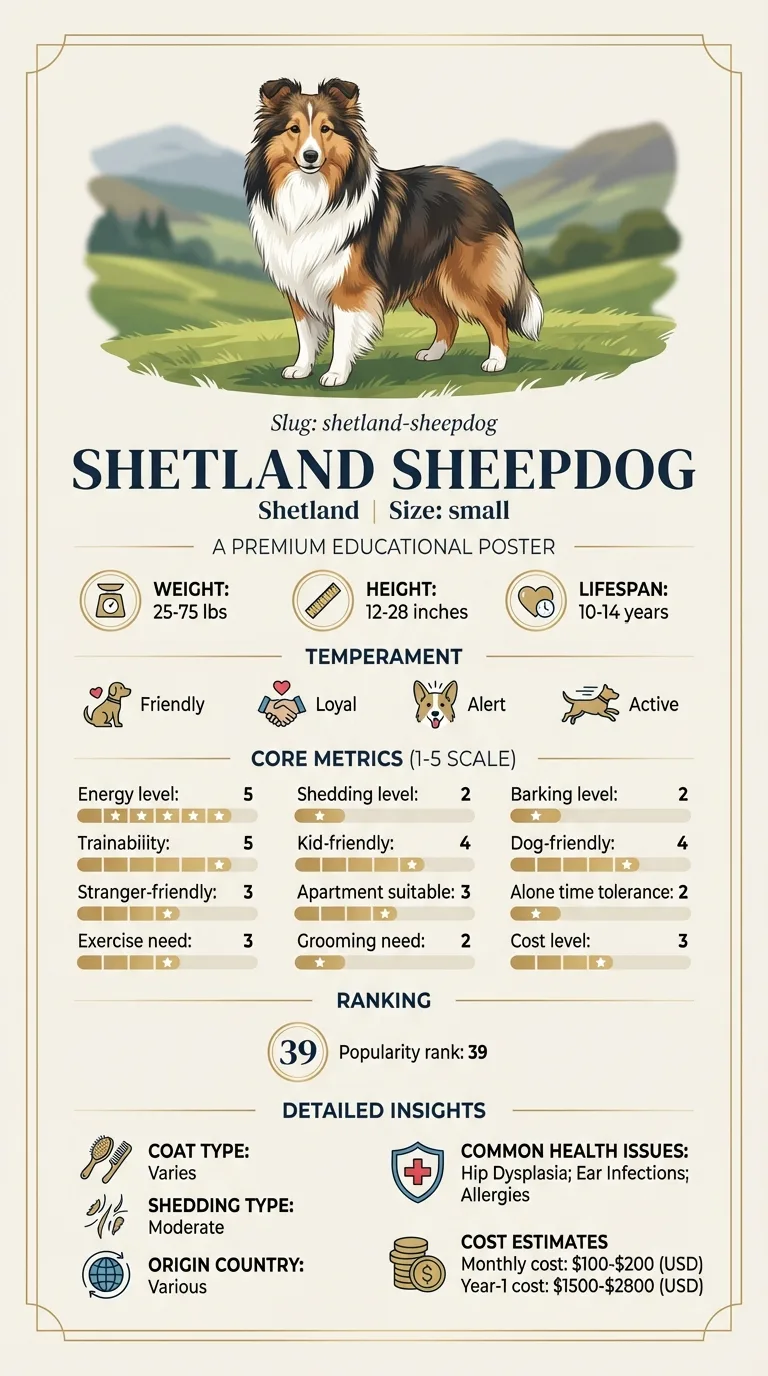
This is for someone already down to German Shorthaired Pointer and Shetland Sheepdog and deciding between them. For this pair the decision usually turns on grooming need and apartment suitability, so those are covered first and in most detail. Anyone choosing from a flat has a clear answer here: Shetland Sheepdog rates 3/5 against 1/5. It is written for the decision rather than the breed history.
Between German Shorthaired Pointer and Shetland Sheepdog, grooming need is what separates them, and Shetland Sheepdog is the lower-effort dog of the two to keep.
Choose German Shorthaired Pointer if you do not want a standing grooming appointment, shedding is a problem in your house and you want a dog that can keep up with an active routine.
Choose Shetland Sheepdog if you are in a flat or a smaller home, this is your first dog and your walking routine is modest.
| Feature | german shorthaired pointer | shetland sheepdog | Winner |
|---|---|---|---|
| Size class | large | small | Equal |
| Weight | 45–70 lbs | 15–25 lbs | Equal |
| Height | 21–25 in | 13–16 in | Equal |
| Lifespan | 10–12 years | 12–14 years | shetland sheepdog |
| Exercise need | Very high (5/5) | High (4/5) | shetland sheepdog |
| Grooming need | Low (2/5) | High (4/5) | german shorthaired pointer |
| Shedding | Moderate (3/5) | High (4/5) | german shorthaired pointer |
| Energy level | Very high (5/5) | High (4/5) | Equal |
| Barking | Moderate (3/5) | Very high (5/5) | german shorthaired pointer |
| Apartment suitability | Very low (1/5) | Moderate (3/5) | shetland sheepdog |
| Good for first-time owners | Low (2/5) | High (4/5) | shetland sheepdog |
| Tolerates being alone | Low (2/5) | Low (2/5) | Equal |
| Trainability | Very high (5/5) | Very high (5/5) | Equal |
| Good with kids | High (4/5) | High (4/5) | Equal |
| Good with other dogs | High (4/5) | High (4/5) | Equal |
| Friendly to strangers | Moderate (3/5) | Low (2/5) | german shorthaired pointer |
| Cost level | Moderate (3/5) | Moderate (3/5) | Equal |
| Coat | Short, dense | Long, dense double coat | Equal |
| Origin | Germany | Various | Equal |
| Typical monthly cost | $100–$200 | $80–$150 | Equal |
| Typical first-year cost | $1,800–$3,000 | $1,100–$2,300 | Equal |
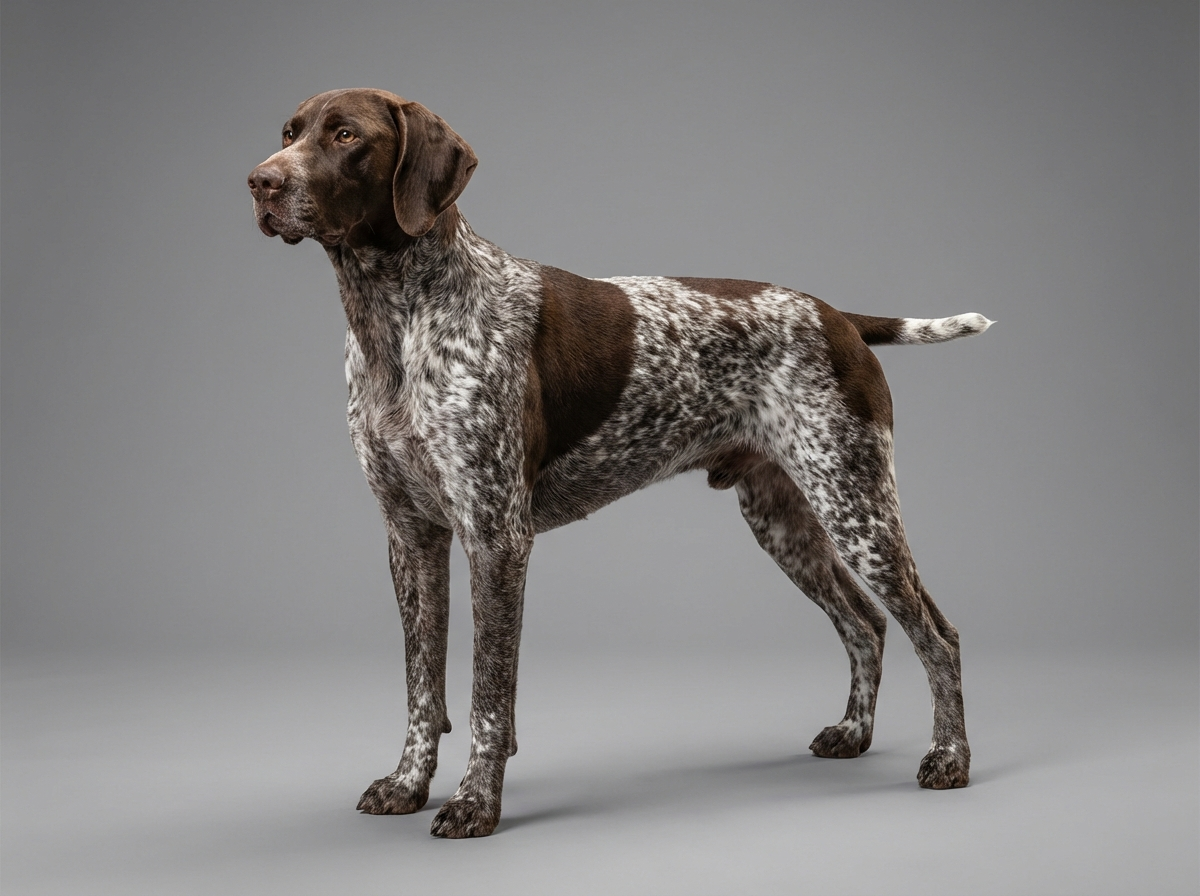
A German Shorthaired Pointer outweighs a Shetland Sheepdog by as much as three times over — 45-70 lbs against the Sheltie's 15-25 lbs — and stands a full 8 inches taller at the shoulder (21-25 in vs 13-16 in). The GSP's large, athletic frame contrasts with the Sheltie's compact, small-class build, which was shaped for herding on rough terrain rather than covering wide-open hunting ground. Anyone picturing these two side by side should expect something closer to a Labrador standing next to a fox: same general shape, entirely different scale.
Both breeds rate high on paper — very high (5/5) for the GSP, high (4/5) for the Sheltie — but the GSP's energy is built around sustained, wide-ranging movement from its pointing-and-retrieving background, while the Sheltie's is built around quick, controlled bursts from herding work. In practice that means a tired Sheltie can come from a vigorous fetch session or agility run, while a tired GSP usually needs an actual long walk or off-leash field time. Owners underestimating the GSP's stamina are the ones who end up with a dog pacing the house at 9pm.
Grooming flips in the Sheltie's disfavor: it rates high (4/5) for grooming against the GSP's low (2/5), thanks to a long, dense double coat that needs regular brushing to prevent matting, especially around the ruff and britches. Shedding follows the same pattern — the Sheltie sheds at a high 4/5 clip, blowing its undercoat seasonally, compared to the GSP's moderate 3/5. Anyone sensitive to loose hair on furniture should weigh the Sheltie's coat carefully; the GSP's short, dense coat is comparatively low-maintenance despite year-round shedding.
Vocal is one of the four words used to describe the Sheltie's temperament, and the barking score backs it up: a very high 5/5, the highest rating on this entire chart, versus the GSP's moderate 3/5. That's a serious consideration for thin-walled apartments or close neighbors. On raw space needs, though, the Sheltie is the better fit — it rates moderate (3/5) for apartment suitability against the GSP's very low (1/5). Both dogs tolerate being left alone poorly (2/5 each), so neither is suited to long solo workdays regardless of square footage.
Trainability ties at very high (5/5) for both breeds, but the gap opens up on the first-time-owner score: the Sheltie rates high (4/5), the GSP just low (2/5) — one of the widest spreads in this comparison. The Sheltie's bright, sensitive nature makes it responsive to gentle, consistent handling, which suits a less experienced trainer. The GSP's enthusiastic drive is trainable in skilled hands but can overwhelm a first-time owner who isn't ready to channel that much physical energy into structured work.
With kids, the two breeds tie at high (4/5). Other dogs: also a tie, high (4/5) for both. The real difference shows up with strangers, where the GSP rates moderate (3/5) and the Sheltie drops to low (2/5) — consistent with the Sheltie's sensitive streak and its instinct to watch newcomers warily rather than greet them. Households that host frequently or live somewhere with regular foot traffic may find the GSP's more moderate wariness toward strangers easier to manage day to day.
The Sheltie's health list runs shorter and arguably lighter: Collie Eye Anomaly, MDR1 drug sensitivity, dermatomyositis, hypothyroidism and patellar luxation — five named concerns against the GSP's ten, which include bloat (GDV), von Willebrand's disease, epilepsy, heart problems and cancer. The MDR1 sensitivity is worth flagging specifically, since it affects how a Sheltie metabolizes certain common medications and needs to be disclosed to any vet. Lifespan favors the Sheltie too, at 12-14 years against the GSP's 10-12, a modest but real edge that tracks with its smaller frame and shorter list of major conditions.
Monthly costs run close — $100-$200 for the GSP, a bit lower at $80-$150 for the Sheltie — and both carry the same moderate (3/5) cost rating. First-year totals show a wider gap: $1,800-$3,000 for a GSP puppy versus $1,100-$2,300 for a Sheltie, a difference that mostly reflects the larger dog's bigger food, gear and training bills rather than any breed-specific health cost. Sheltie owners should still budget for that grooming-heavy coat, which adds recurring costs the raw monthly figure doesn't fully capture.
German Shorthaired Pointer weighs 45–70 lbs and lives 10–12 years; Shetland Sheepdog weighs 15–25 lbs and lives 12–14 years. The two diverge most on grooming need, apartment suitability and good for first-time owners and 1 other rated axes. They are level on tolerates being alone, cost level and good with other dogs, so those cannot decide it. In the table, a "winner" means easier for an ordinary household — not better. Size, coat and origin are recorded without a verdict. Because both breeds are scored the same way, the gaps are reliable even where the absolute numbers are rough.

The GSP by a wide margin — 45-70 lbs and 21-25 inches tall, compared to the Sheltie's 15-25 lbs and 13-16 inches.
The Sheltie, rated a very high 5/5 for barking — the top score on the whole comparison chart — versus the GSP's moderate 3/5.
Yes, notably so — the Sheltie rates high (4/5) for first-time owners against the GSP's low (2/5), reflecting its more responsive, gentler trainability.
The Sheltie, at a high 4/5 versus the GSP's moderate 3/5, due to its long double coat blowing its undercoat seasonally.
Yes, typically 12-14 years versus 10-12 years for the GSP.
The GSP, rated moderate (3/5) against the Sheltie's low (2/5) — Shelties tend to be more reserved and watchful around unfamiliar people.
The GSP, at a low 2/5 versus the Sheltie's high 4/5.
The Sheltie, rated moderate (3/5) versus the GSP's very low (1/5).
The Shetland Sheepdog, with five commonly flagged conditions versus the GSP's ten.
The Shetland Sheepdog, at $1,100-$2,300 versus the GSP's $1,800-$3,000.
Secure checkout on Stripe. We never see your card.
7-day money-back guarantee. Instant access.
Health information here is general and is not veterinary advice. If your dog shows pain, sudden behaviour change, or worsening symptoms, consult a licensed veterinarian.
Some links on this site are affiliate links. We may earn a commission at no extra cost to you, and we only suggest products we believe are helpful for dog owners.
We research and check what we publish, but we do not warrant that any figure, date, price, or statement is accurate, complete, or current, and we accept no liability for any loss, cost, injury, or other harm arising from the use of this site. Use it as one reference among several. You remain responsible for your own decisions and for your dog's care - confirm anything that matters with a licensed veterinarian or another qualified professional before you act on it. Full disclaimer.
Match your lifestyle to the right dog.
Take quizNot sure which breed is right for you? Take our 2-minute quiz to find out.
Take the quiz