Health
What's the key sign of a chronic GI disorder versus a one-off upset stomach?
Symptoms recurring over several weeks despite diet changes point toward a chronic disorder rather than an isolated incident.

Quick answer
What's the key sign of a chronic GI disorder versus a one-off upset stomach?
Symptoms recurring over several weeks despite diet changes point toward a chronic disorder rather than an isolated incident.
If your Aussie has had soft stool, occasional vomiting, or reduced appetite on and off for more than a few weeks, that pattern points toward an underlying digestive disorder rather than a single dietary indiscretion.
Owners who've already tried a few different foods without lasting improvement are often the ones who eventually get a proper workup, since food trials are a reasonable first step but don't resolve every case.
This guide is not medical advice. If your dog shows pain, sudden behavior change, or worsening symptoms, consult a licensed veterinarian.
Some links may be affiliate links. We may earn a commission at no extra cost to you. We only suggest products we believe are helpful for dog owners.
We research and check what we publish, but we do not warrant that any figure, date, price, or statement is accurate, complete, or current, and we accept no liability for any loss, cost, injury, or other harm arising from the use of this site. Use it as one reference among several. You remain responsible for your own decisions and for your dog's care - confirm anything that matters with a licensed veterinarian or another qualified professional before you act on it. Full disclaimer.
Gastrointestinal disorders in Australian Shepherds most often mean inflammatory bowel disease or acid reflux, both causing a recurring pattern of digestive symptoms over weeks rather than a single isolated upset stomach. Distinguishing an ongoing disorder from a one-off dietary indiscretion is the first step, typically confirmed through bloodwork and sometimes imaging or a biopsy.
Chronic gastrointestinal symptoms are a common reason for vet visits across dog breeds generally, and this breed's documented tendency toward allergies and immune sensitivity means digestive symptoms are a familiar related concern for many owners.
This breed's documented predisposition to allergies reflects a broader pattern of immune-system reactivity that can extend to the digestive tract, contributing to conditions like inflammatory bowel disease in a subset of dogs alongside more visible skin and ear symptoms.
Diet consistency, feeding schedule, and stress levels can all influence how often GI symptoms flare, though an underlying immune or inflammatory tendency is usually what determines whether a dog develops a chronic pattern in the first place.
Talk to your vet if diarrhea, vomiting, or reduced appetite persists more than a week or keeps recurring over several weeks. Blood in stool or vomit, severe lethargy, or repeated vomiting that prevents keeping food or water down need prompt evaluation.
Chronic digestive symptoms often get managed reactively meal to meal instead of being investigated as a pattern, which is what actually leads to a diagnosis.
See all Australian Shepherd health problems, which breeds are prone to gastrointestinal disorders, or the full Australian Shepherd breed guide for temperament, exercise needs and ownership costs.
Diagnosis often takes 8 to 12 weeks including a supervised food trial and any additional testing. Once a management plan is established, most dogs show meaningful improvement within a similar timeframe.
Success means long stretches of normal digestion with occasional, manageable flare-ups rather than a permanent cure, since most chronic GI disorders are managed conditions rather than ones that fully resolve.
Inflammatory bowel disease involves chronic inflammation of the intestinal lining, typically causing recurring diarrhea, occasional vomiting, and sometimes weight loss over weeks to months. Acid reflux involves stomach acid moving backward into the esophagus, often causing more occasional vomiting, lip smacking, or discomfort, particularly on an empty stomach.
The two can coexist and share some overlapping symptoms, which is why a proper diagnosis typically involves bloodwork, sometimes imaging, and occasionally a biopsy to identify what's actually driving the pattern rather than guessing based on symptoms alone.

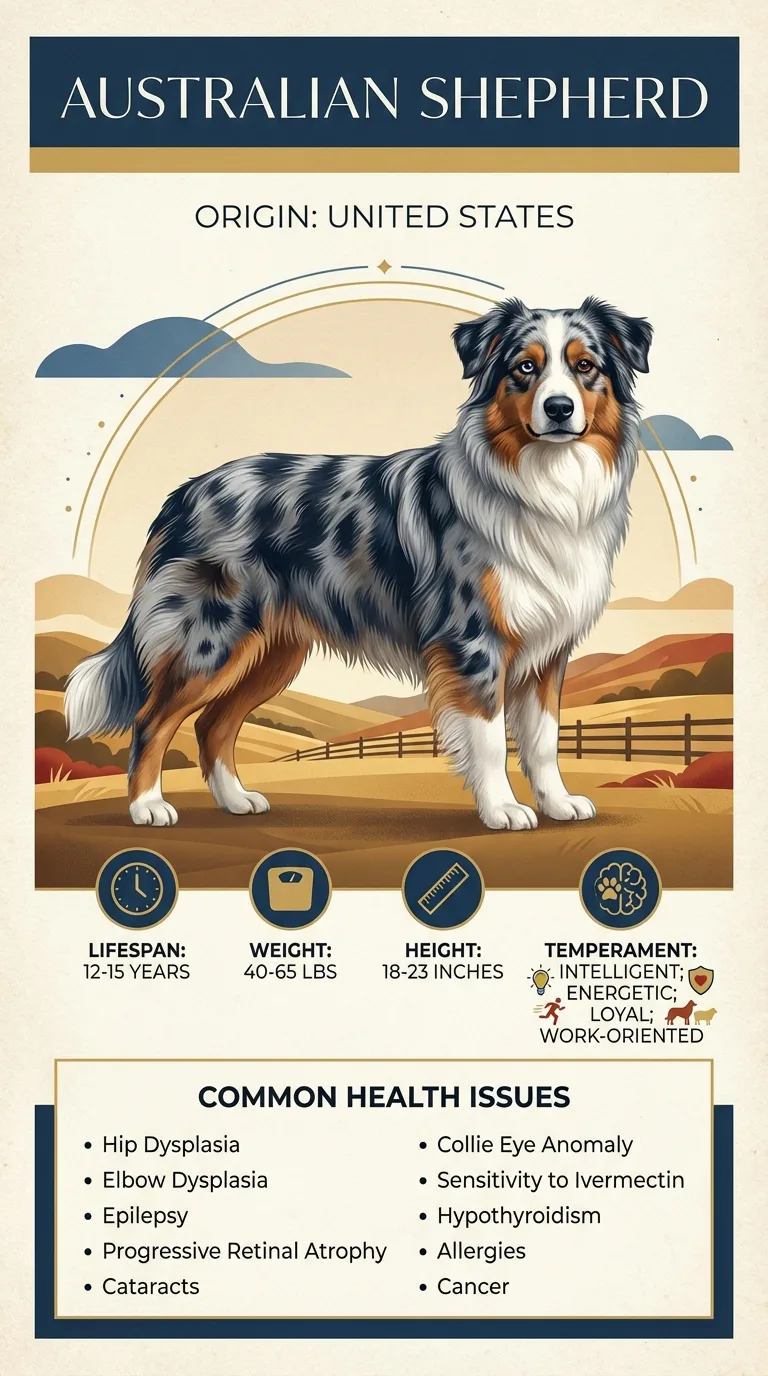
If you think your Aussie has gastrointestinal disorders, the plan is three steps: write down what you have seen and when it started, book a veterinary appointment rather than waiting for the next flare, and take video of the behaviour or symptom before you go — the thing you are worried about rarely happens in the consulting room. Screening in the parents covers hip dysplasia, elbow dysplasia, epilepsy.
What the vet visit should produce is a diagnosis and a written plan, not just reassurance: what is being ruled out, what the monitoring interval is, and which signs mean you come back sooner. Ask what the treatment costs across a year rather than per visit, because that is the number that decides whether you are managing this condition or reacting to it.
Between appointments, keep a short log — dates, what you saw, what changed. It is the single most useful thing an owner brings to a follow-up, and for gastrointestinal disorders it is often what separates a clear pattern from a guess.
Maple had intermittent soft stool and occasional vomiting for nearly six months, during which her owner, Deshawn, tried four different commercial foods without lasting improvement. A vet workup found evidence consistent with mild inflammatory bowel disease, and Deshawn committed to a single prescription elimination diet for a full 12 weeks this time, without any treats or supplements. Maple's stool normalized within the trial period, and she's maintained steady digestion for over a year since, with occasional mild flares that resolve within a day or two.
Key takeaway: Repeated short food trials had actually been getting in the way of a real answer, and committing to one diet long enough to see it through is what finally revealed what was actually helping.
A single episode that resolves within a day or two is usually just an upset stomach, while symptoms recurring over several weeks despite diet changes point toward a chronic underlying disorder.
It's chronic inflammation of the intestinal lining, typically causing recurring diarrhea, occasional vomiting, and sometimes weight loss, usually diagnosed through bloodwork and sometimes a biopsy.
Yes, acid reflux can cause occasional vomiting or regurgitation, often worse on an empty stomach, and it sometimes responds well to feeding schedule adjustments.
Most vets recommend at least 8 weeks on a single, strict diet before concluding whether it's helping, since shorter trials often don't give a clear enough picture.
Not always, but recurring diarrhea over several weeks warrants a vet workup rather than ongoing home management, since several different underlying causes can produce a similar pattern.
Yes, most chronic GI disorders are managed successfully with diet, and sometimes medication, allowing dogs to live comfortably even though the underlying tendency doesn't fully go away.
Symptoms recurring over several weeks despite diet changes point toward a chronic disorder rather than an isolated incident.
Bloodwork and sometimes a biopsy are used to confirm chronic intestinal inflammation as the cause of ongoing symptoms.
A supervised elimination diet is reasonable, but give it at least 8 weeks and consult your vet rather than switching foods repeatedly.
Diagnosis and ongoing prescription diets or medication add a recurring cost, though many cases are manageable without extensive ongoing testing once diagnosed.
Many chronic GI disorders are managed rather than cured outright, but dogs often achieve long stretches of normal digestion with consistent management.
A one-page prep sheet for this condition: the signs, the questions to ask, what to get priced. Unlocks here.
You get: Vet visit prep sheet
No spam. One-click unsubscribe. See our privacy policy.
Preview page 1 before you decide.