Costs
Saint Bernard cost in Oklahoma City
About $129–$267 monthly and $1,892–$3,612 for year one, well under average — with the local specific that a storm shelter sized for the family is not sized for a dog that occupies as much floor as an adult.

See Saint Bernard price across all cities →
Quick answer
Saint Bernard cost in Oklahoma City
About $129–$267 monthly and $1,892–$3,612 for year one, well under average — with the local specific that a storm shelter sized for the family is not sized for a dog that occupies as much floor as an adult.
A Saint Bernard in Oklahoma City costs about $129 to $267 a month, with the first year landing near $1,892 to $3,612 — well under the national average, since Oklahoma's general cost of living runs low. There is one household decision here that no other market on this list forces quite so directly, and it is measured in square feet rather than dollars: where the dog goes when the sirens sound.
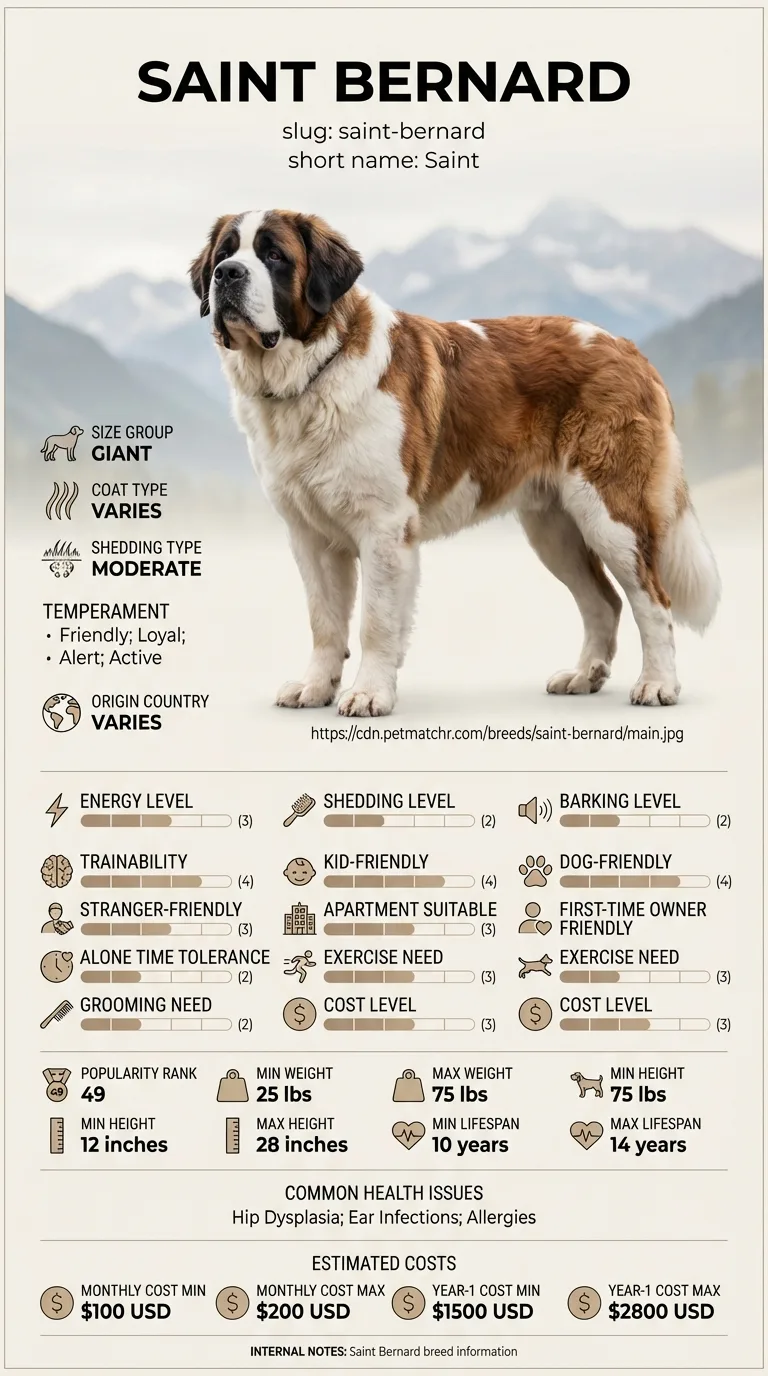
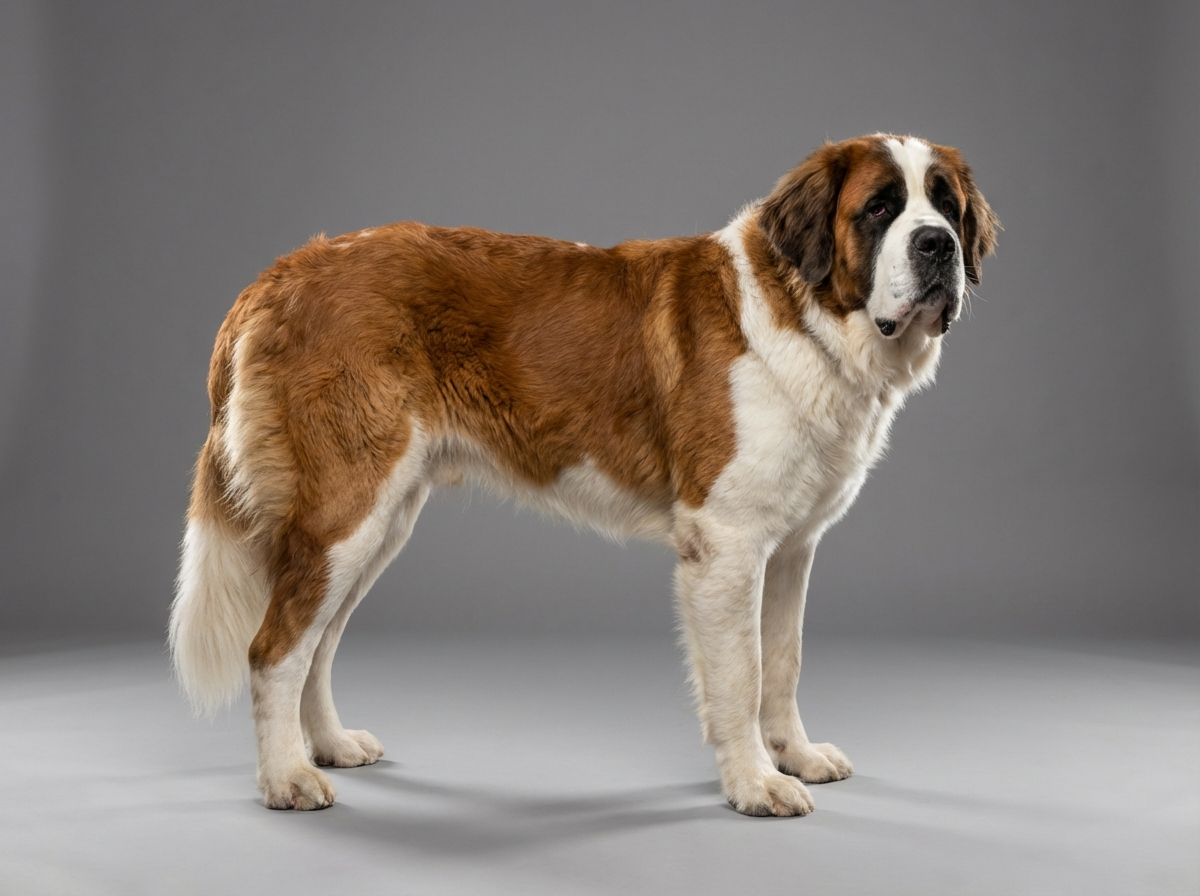
The documented medical risks — Hip Dysplasia, Elbow Dysplasia, Dilated Cardiomyopathy, Entropion and Bloat — are the same here as anywhere, and all of them cost more in a giant because every dose, implant and hour of anesthesia is scaled to a very large body. The shelter question is a one-time capital decision rather than a medical one, but it is the one that gets made wrong.
Oklahoma City is a low-cost market on every service line, with a ten-month prevention season and one capital decision — shelter size — that is unique to this part of the country.
Estimate · source: estimation · confidence: medium · updated 2026-09-06 · not a quote
| Item | Cost range |
|---|---|
One-time setup (giant crate, bed, first exam, spay/neuter) The shelter upgrade sits outside this line and belongs in the household's construction budget rather than the dog's. | $450 - $780 |
| Item | Cost range |
|---|---|
Food The largest ongoing line, with the volume dictated by a 120-to-180-pound dog rather than by Oklahoma pricing. | $62 - $111 |
Parasite prevention (ten-month season) A long warm season without quite reaching year-round, dosed at the top weight bracket available. | $28 - $50 |
Each range starts from a national baseline for this breed's size class and is then adjusted for local cost of living and veterinary pricing. The baselines, and the source each one came from, are listed on our sources page (dataset 2026.09). Two inputs, the purchase price and the emergency reserve, have no published national figure we could verify, so we leave them to you rather than invent them.
These are planning estimates, not quotes. Your own numbers will move with the individual dog, your vet and your insurer. Build a budget with your own figures.
With routine care this affordable, insurance here is a hedge against the surgical events rather than a way of managing everyday spending.
Worth pricing early if an unscheduled operation would strain the household, since implants, drugs and theatre time are not discounted by Oklahoma's cost of living.
This market makes accumulating a genuine reserve realistic, and an owner who has done so can reasonably self-fund.
The one expensive decision here is made once, at installation, and everything after that is an ordinary low-cost budget.
Residential safe rooms are sized by occupancy, and the arithmetic is unforgiving in a small space. A family of four planning a shelter to a standard specification has allocated exactly enough room for four people standing close together. Add a Saint Bernard and the space is no longer adequate, because this animal does not fold and cannot be held on a lap.
The fix is to size up at the point of purchase rather than to discover the problem during a warning. An in-ground garage shelter or a safe room built one size larger costs meaningfully less as an upgrade at installation than it does as a regret, and it is the only version of this problem that can be solved calmly.
The second half is the dog's willingness. A giant that has never gone down shelter steps will not learn to do so under a siren, at night, with people shouting. Practising the route in daylight a handful of times a year is free and takes ten minutes, and this breed's documented temperament — gentle, patient and rated 3 out of 5 for trainability, meaning responsive to consistency — makes it a realistic thing to teach.
Away from the weather, this is one of the more comfortable markets covered. Routine veterinary pricing, boarding, grooming and training all sit well under the national average, and the metro's housing gives a giant breed the floor area it needs without a premium. The parasite-prevention season runs about ten months, longer than the Midwest and short of the Gulf Coast's full year.
Summer is the constraint on daily routine. Oklahoma afternoons in July are no place for a double-coated alpine breed, so the outdoor day is bracketed early and late through the hottest stretch. That costs nothing beyond a schedule, and this breed's documented exercise requirement of 2 out of 5 makes the schedule easy to keep.
Everything else is standard giant-breed budgeting. Food is the largest recurring line and is set by the dog rather than the market. Boarding is charged by run size, and only the largest run fits.

An Oklahoma City family installed an in-ground garage shelter rated for their household of four and did not think about the Saint Bernard until a spring warning sent everyone down the steps at once. They fitted, in the sense that the door closed. Nobody was comfortable and the dog was frightened, largely because it had never been down there before. The following month they walked it down twice a week with treats until the shelter was simply another room, and they now describe the next size up as the cheap option they declined.
Key takeaway: In tornado country a giant breed is an occupant, not an accessory. Size the shelter for it, and teach the dog the route long before you need it.
About $129 to $267, well below the national average, in line with Oklahoma's low general cost of living.
Roughly $1,892 to $3,612, once the initial exam, sterilisation and giant-sized gear are added to the recurring monthly figure.
Because shelters here are sized by floor area per occupant, most local homes have no basement, and a 120-to-180-pound dog takes up roughly the same footprint as an adult.
Size the shelter one step larger at installation, when the upgrade is a modest addition, rather than discovering the shortfall during an actual warning.
Only if it has practised. Walk the route in daylight a few times a year so the shelter is familiar ground rather than a strange hole in the floor during a siren.
Around $1,050, which reflects Oklahoma's low service pricing set against the volume of everything a giant patient consumes.
About $129–$267 monthly and $1,892–$3,612 for year one, well under average — with the local specific that a storm shelter sized for the family is not sized for a dog that occupies as much floor as an adult.
This guide is not medical advice. If your dog shows pain, sudden behavior change, or worsening symptoms, consult a licensed veterinarian.
Some links may be affiliate links. We may earn a commission at no extra cost to you. We only suggest products we believe are helpful for dog owners.
We research and check what we publish, but we do not warrant that any figure, date, price, or statement is accurate, complete, or current, and we accept no liability for any loss, cost, injury, or other harm arising from the use of this site. Use it as one reference among several. You remain responsible for your own decisions and for your dog's care - confirm anything that matters with a licensed veterinarian or another qualified professional before you act on it. Full disclaimer.
One sheet with every line item, the emergency fund and when insurance pays off - unlocks on this page.
You get: 12-month budget sheet
No spam. One-click unsubscribe. See our privacy policy.
Preview page 1 before you decide.