Health
What's the main anesthesia concern for this breed?
Accurate weight-based dosing for a giant frame, plus screening for the breed's documented cardiomyopathy risk before elective procedures.

Quick answer
What's the main anesthesia concern for this breed?
Accurate weight-based dosing for a giant frame, plus screening for the breed's documented cardiomyopathy risk before elective procedures.
A 150-pound dog is not simply a bigger version of a 15-pound one when it comes to anesthesia. Dosing, monitoring and recovery all shift with size, and a giant breed with a documented heart condition in its history adds another layer that a routine spay or neuter protocol does not automatically cover.
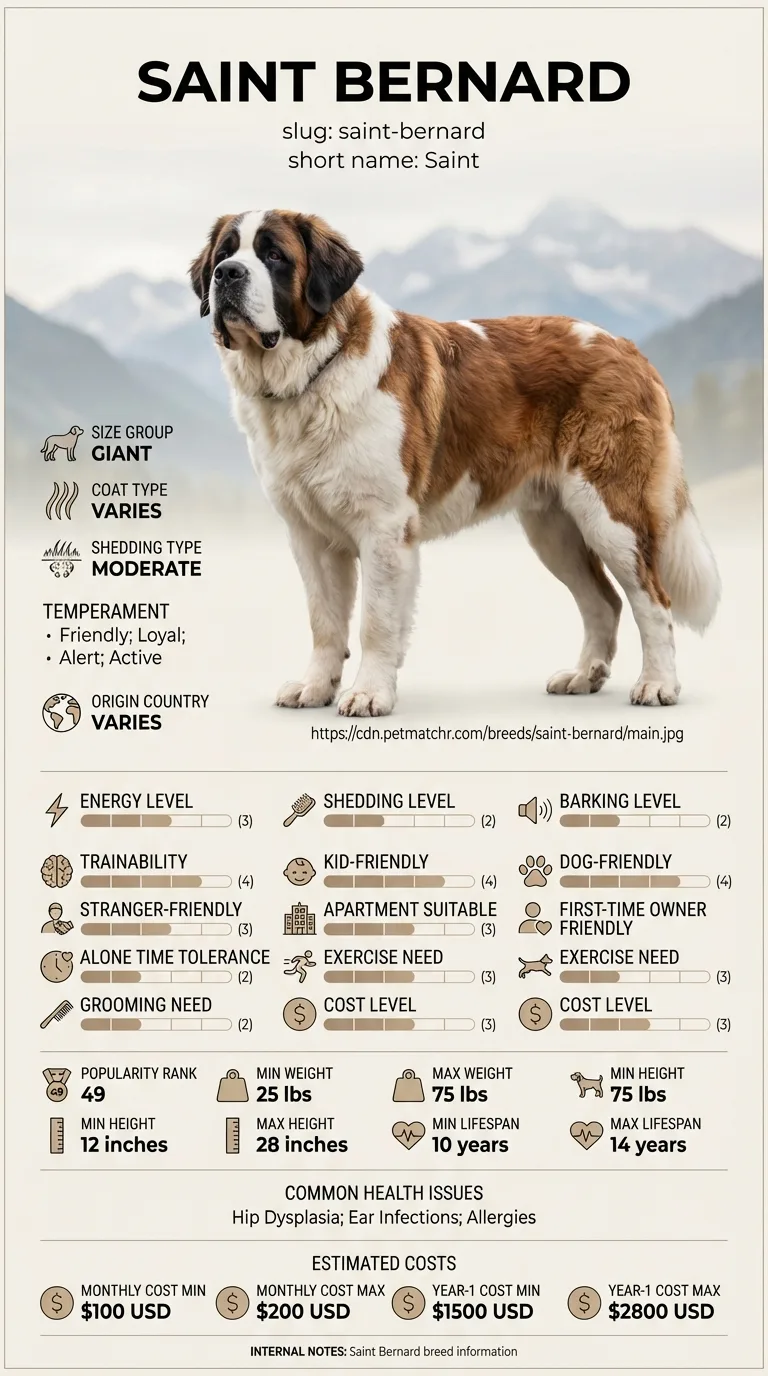
Owners facing a first surgery or dental cleaning for their Saint Bernard who assume 'bigger dog, more drug' is the whole story, and who have not yet had the pre-anesthetic conversation their vet actually needs to have with them.
This guide is not medical advice. If your dog shows pain, sudden behavior change, or worsening symptoms, consult a licensed veterinarian.
Some links may be affiliate links. We may earn a commission at no extra cost to you. We only suggest products we believe are helpful for dog owners.
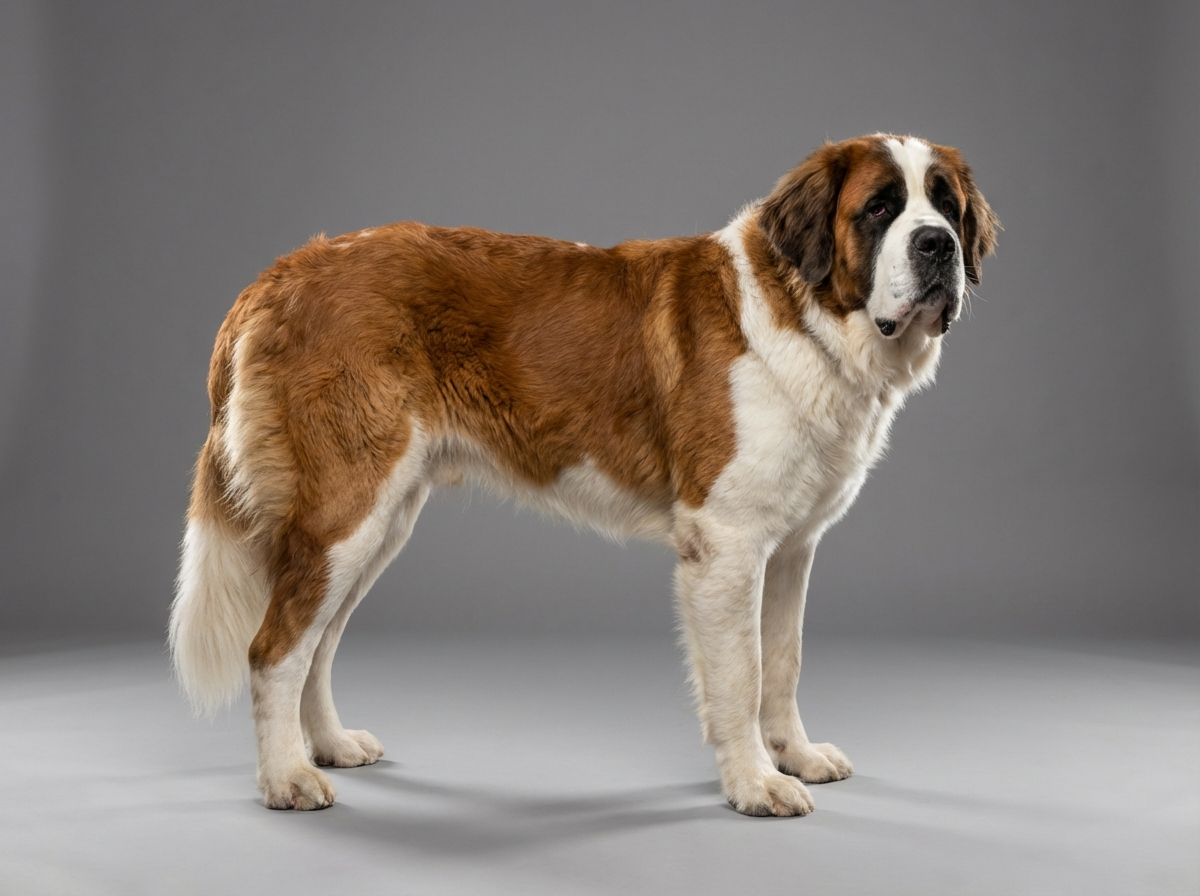
Anesthesia sensitivity in a Saint Bernard refers to the combination of factors — large body size, deep-chested build, and the breed's documented risk of dilated cardiomyopathy — that make anesthetic dosing, monitoring and recovery different from a mid-size dog's routine protocol, rather than a single disease.
Every Saint Bernard undergoing anesthesia benefits from size- and breed-aware planning, so this is less a rare complication and more a standard consideration that should apply to essentially every procedure this breed undergoes, from routine dental work to emergency surgery.
Giant body size changes drug distribution and clearance time, and the breed's documented cardiomyopathy risk means an underlying heart issue could be present without obvious symptoms at home. Deep chest conformation adds a modest bloat-related risk around abdominal surgery and in the slowed-motility recovery period.
Risk rises when a clinic without much large-breed experience uses a standard dosing formula without adjustment, or when pre-anesthetic screening is skipped to save cost or time on a seemingly healthy, young dog.
Discuss anesthesia planning at any pre-surgical consultation, not just on the day of the procedure. Contact the clinic immediately if your dog is unusually slow to wake, breathing looks labored, gums appear pale or blue, or there is any vomiting or distended abdomen in the hours after coming home — these can signal a genuine post-anesthetic emergency.
See all Saint Bernard health problems, which breeds are prone to anesthesia sensitivity, or the full Saint Bernard breed guide for temperament, exercise needs and ownership costs.
Pre-anesthetic screening adds a single extra vet visit or same-day bloodwork before a scheduled procedure. Recovery from routine anesthesia in a healthy Saint Bernard typically resolves within 24 to 48 hours, somewhat longer than in a smaller dog.
Success is a procedure planned with size- and breed-appropriate dosing, a clinic that screens proactively rather than reactively, and a recovery that matches what your vet described as normal rather than one that surprises you.
Anesthetic drugs are dosed by body weight, but the relationship is not perfectly linear. Fat and lean tissue metabolize some anesthetic agents differently, and a giant breed carrying more body mass overall needs a vet experienced with large dogs to calculate an appropriate dose rather than simply scaling up a formula built for a mid-size dog. Recovery also tends to take longer in giant breeds, partly because drugs distributed through more tissue take longer to clear.
Deep-chested dogs, which Saint Bernards are, also carry a higher baseline risk of gastric dilatation-volvulus around abdominal surgery and in the immediate post-anesthetic period, when gut motility is temporarily slowed. Vets familiar with giant breeds typically factor this into fasting protocols and recovery monitoring.
Dilated cardiomyopathy is a documented health concern in this breed, and a heart that is already working harder than it should can react poorly to anesthesia's effect on blood pressure and heart rhythm. Many vets recommend baseline bloodwork and, in older dogs or dogs with any history of exercise intolerance or fainting, an echocardiogram or ECG before elective procedures — not because every Saint Bernard has a heart problem, but because catching one before surgery is far safer than discovering it during it.
This is a conversation worth having proactively rather than assuming it is standard at every clinic. Ask specifically whether your vet screens for cardiac issues before anesthesia in giant breeds, and what monitoring will be used during the procedure itself.

Gus, a seven-year-old Saint Bernard, was scheduled for a routine dental cleaning at a new clinic his family had just started using. During the pre-anesthetic exam, the vet noted a faint heart murmur that had not been documented before and recommended an echocardiogram before proceeding. The scan showed early changes consistent with dilated cardiomyopathy, still mild enough that Gus showed no symptoms at home. The dental cleaning was postponed a week while the vet adjusted the anesthesia protocol and arranged closer monitoring equipment for the procedure. The cleaning went smoothly with the adjusted plan, and Gus's heart condition is now tracked at regular checkups.
Key takeaway: A one-week delay to screen properly caught a heart condition Gus's family had no idea existed — the extra step before anesthesia, not the anesthesia itself, was what actually mattered.
Size changes dosing calculations and recovery time, but a vet experienced with giant breeds routinely accounts for this. It is worth confirming your vet has that experience before a scheduled procedure.
Many vets recommend at least baseline screening given the breed's documented cardiomyopathy risk, especially for dogs over five or those with any history of low energy or fainting. Ask your vet directly what they recommend for your dog.
Overall anesthetic risk is low with proper protocols, but giant breeds do carry breed-specific considerations — dosing, gastric motility, and cardiac screening — that a vet experienced with large dogs will plan around.
Giant breeds often take somewhat longer to fully clear anesthetic drugs than smaller dogs, so expect a slower, groggier recovery window and follow your vet's specific monitoring instructions at home.
Follow your vet's specific fasting instructions exactly. Deep-chested breeds have particular considerations around fasting and gut motility that make following the exact protocol more important than usual.
Ask about pre-anesthetic bloodwork, whether cardiac screening is recommended, what monitoring equipment will be used during the procedure, and what a normal versus concerning recovery looks like at home.
Prolonged grogginess beyond what your vet described as normal, labored breathing, pale gums, or an inability to stand after the expected recovery window should prompt an immediate call to the clinic.
Accurate weight-based dosing for a giant frame, plus screening for the breed's documented cardiomyopathy risk before elective procedures.
Yes — deep-chested dogs have a somewhat elevated bloat risk around surgery, which experienced vets factor into fasting and recovery monitoring.
Yes, particularly for dogs over five or with any history of low stamina or fainting — ask your vet directly what they recommend.
Often somewhat slower than for smaller dogs, since more body tissue means anesthetic drugs can take longer to fully clear.
Follow the vet's specific recovery timeline; call immediately if grogginess is unusually prolonged, breathing looks labored, or gums appear pale.
A one-page prep sheet for this condition: the signs, the questions to ask, what to get priced. Unlocks here.
You get: Vet visit prep sheet
No spam. One-click unsubscribe. See our privacy policy.
Preview page 1 before you decide.