Saint Bernard cost in New Orleans
Roughly $144–$298 monthly and $2,112–$4,032 in year one, just under average — with the local point that a water city offers this breed nothing usable in the open, and a great deal inside a rehabilitation facility.
See Saint Bernard price across all cities →
Quick answer
Saint Bernard cost in New Orleans
Roughly $144–$298 monthly and $2,112–$4,032 in year one, just under average — with the local point that a water city offers this breed nothing usable in the open, and a great deal inside a rehabilitation facility.
A Saint Bernard in New Orleans costs roughly $144 to $298 a month, with year one arriving near $2,112 to $4,032 — just below the national average, with Louisiana's twelve-month parasite season as the clearest climate line. The interesting local question involves water, which this city has in enormous quantity and almost none of it usable by a dog like this one.

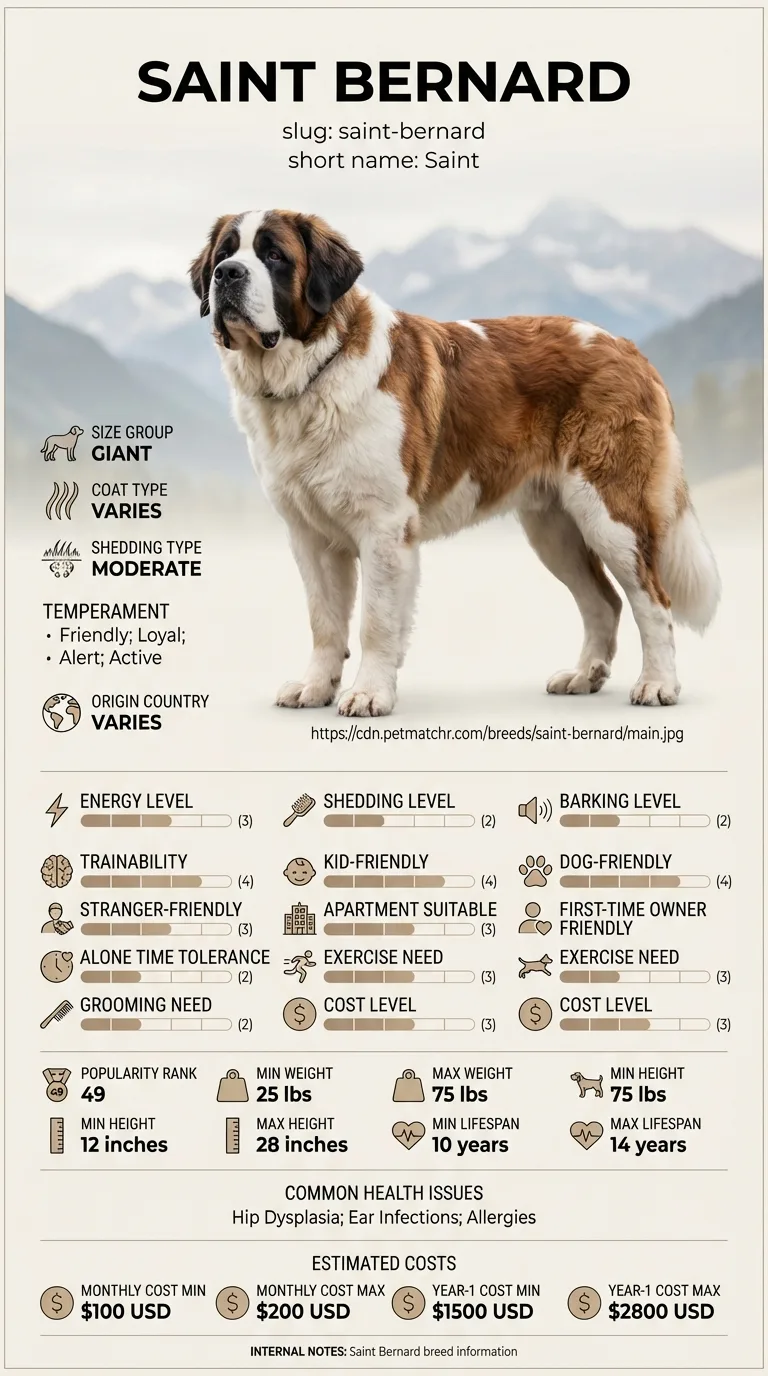
Alongside those joint conditions sit Dilated Cardiomyopathy, Entropion and Bloat. Orthopedic disease is the one where an owner's routine choices genuinely influence the trajectory, and where a rehabilitation budget can be the difference between a comfortable old dog and an immobile one — at a body weight of 120 to 180 pounds, immobility is a household problem as much as a medical one.
New Orleans prices marginally below the national average with a genuine twelve-month prevention season, and offers rehabilitation facilities that are worth planning for rather than paying for monthly.
Estimate · source: estimation · confidence: medium · updated 2026-09-06 · not a quote
| Item | Cost range |
|---|---|
One-time setup (giant crate, bed, first exam, spay/neuter) Hydrotherapy sits outside this line and is best budgeted separately, as a course of sessions when it is needed. | $500 - $865 |
| Item | Cost range |
|---|---|
Food The largest recurring line, with the quantity determined by the dog rather than the local market. | $69 - $123 |
Prevention (twelve-month Gulf season) The humid climate leaves no genuine off-season, and this breed sits at the top of every product's weight banding. | $31 - $55 |
Worth reading the policy wording on rehabilitation specifically, because coverage for post-surgical therapy varies more between insurers than coverage for the surgery itself does.
Buy early if an orthopedic procedure and its follow-up would be difficult to fund, and check whether rehabilitation is included or excluded.
An owner self-funding should budget for the surgery and the therapy course together rather than treating the operation as the whole cost.
The savings here come from using controlled facilities properly and from not paying for outings this breed cannot use.
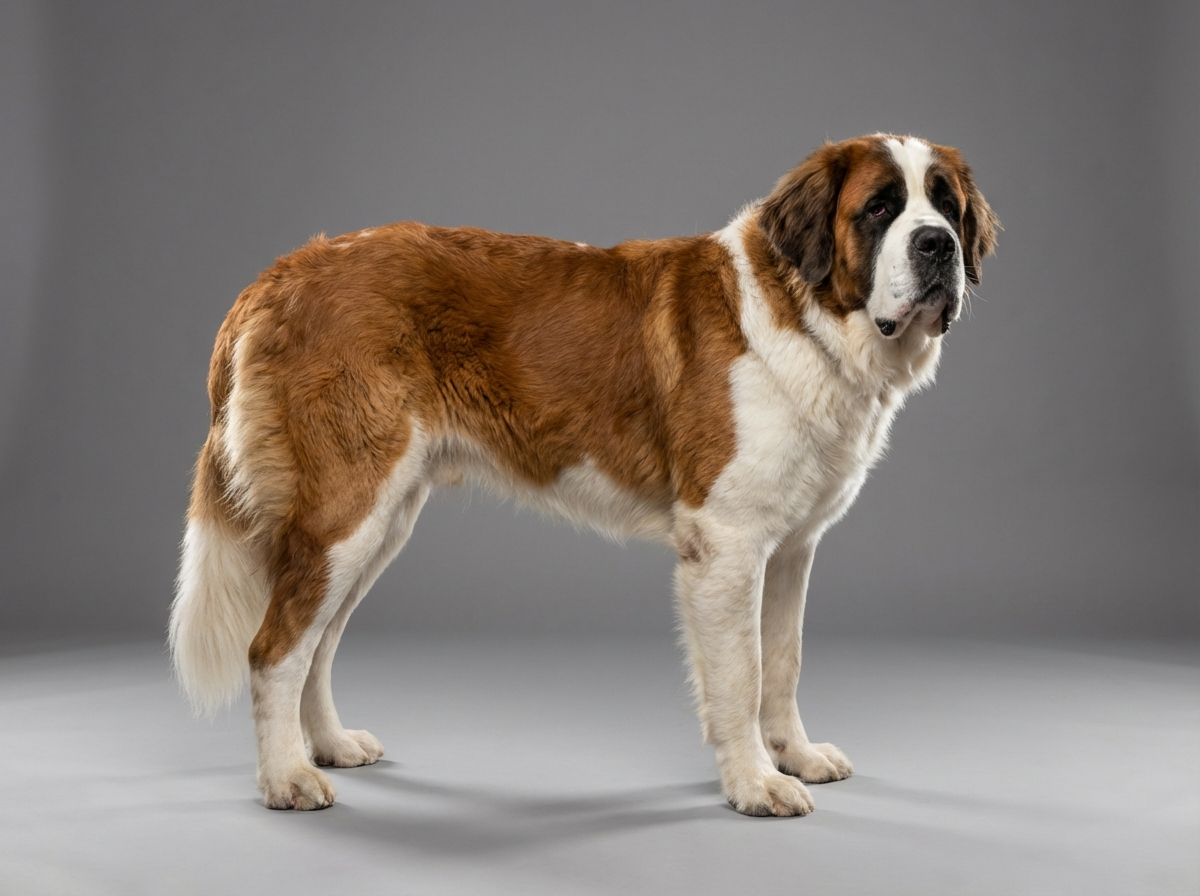
Be blunt about the breed first. A Saint Bernard is a mountain dog, not a water dog. It is heavy, deep-chested and built for pulling through snow rather than floating, and a giant that tires in open water is not something a person can retrieve. The Mississippi's current is genuinely dangerous, and neither the river nor the bayous are places to discover whether your dog enjoys swimming.
What is useful is the same principle delivered in a controlled setting. Canine rehabilitation facilities — underwater treadmills, supervised therapy pools, structured hydrotherapy — offer buoyancy-supported movement that loads joints far less than walking does. For an older giant with stiff hips, or one recovering from an orthopedic procedure, that is one of the highest-value line items available anywhere in this guide.
It is not free. Sessions are priced individually, courses run over weeks, and the equipment has to accommodate a very large dog, so confirm the facility's weight capacity before booking anything. Treat it as a planned mid-life or post-surgical expense rather than a routine one.

New Orleans never gets an off-season. Parasite prevention runs a genuine twelve months here, at the top weight bracket every product offers, and that is the single most predictable climate-driven cost in the budget. The humidity also argues for keeping a heavy double coat properly maintained rather than allowed to pack down, since a dense undercoat holds moisture close to the skin.
Housing is the other local factor. Large parts of the city are dense, with older housing and small or no yards, which is a poor match for a breed carrying the lowest apartment-suitability rating on the scale. That does not make it impossible, but it does mean the daily walk is not optional and the household layout has to accommodate an animal that will lie across a doorway and stay there.
Otherwise the numbers are ordinary. Service pricing sits marginally under the national line, food is the largest recurring cost, and boarding is priced by run size with a giant only fitting the top tier.

A New Orleans owner took a young Saint Bernard to the lakefront on a warm afternoon and let it wade, which became swimming faster than anyone intended. The dog was retrieved with help from two other people and was fine, and the owner has not repeated the experiment. Years later, when the same dog needed orthopedic surgery, the follow-up plan included an underwater treadmill course — controlled, supervised and weight-supported — which the owner describes as the water this breed should actually meet.
Key takeaway: In a city defined by water, the useful version for a giant mountain breed is indoors, supervised and prescribed. The open version is a rescue waiting to happen.
Roughly $144 to $298, a shade below the national average, with year-round prevention as the main climate cost.
Around $2,112 to $4,032, adding the initial exam, sterilisation and giant-sized equipment to the ongoing monthly total.
No. This is a heavy mountain breed rather than a water dog, the current is dangerous, and a tiring giant is not something a person can pull out.
Controlled hydrotherapy. Underwater treadmills and supervised therapy pools are excellent low-impact conditioning for giant breeds with joint disease, and they are a facility service rather than an outing.
Typically after an orthopedic procedure or in later life as hips stiffen. Budget it as a planned course of sessions rather than a recurring monthly line, and check the facility's weight limit first.
About $1,200, reflecting near-average local pricing against the quantity of everything a 120-to-180-pound patient consumes.
Roughly $144–$298 monthly and $2,112–$4,032 in year one, just under average — with the local point that a water city offers this breed nothing usable in the open, and a great deal inside a rehabilitation facility.
This guide is not medical advice. If your dog shows pain, sudden behavior change, or worsening symptoms, consult a licensed veterinarian.
Some links may be affiliate links. We may earn a commission at no extra cost to you. We only suggest products we believe are helpful for dog owners.
One sheet with every line item, the emergency fund and when insurance pays off - unlocks on this page.
You get: 12-month budget sheet
No spam. One-click unsubscribe. See our privacy policy.
Preview page 1 before you decide.