Behavior
What are quick tips for managing luxating patellas?
Maintain a healthy weight, limit jumping, and consider joint supplements to support your Dachshund's knees.

Quick answer
What are quick tips for managing luxating patellas?
Maintain a healthy weight, limit jumping, and consider joint supplements to support your Dachshund's knees.
Dachshund luxating patellas can be a painful and frustrating issue for both dogs and their owners.
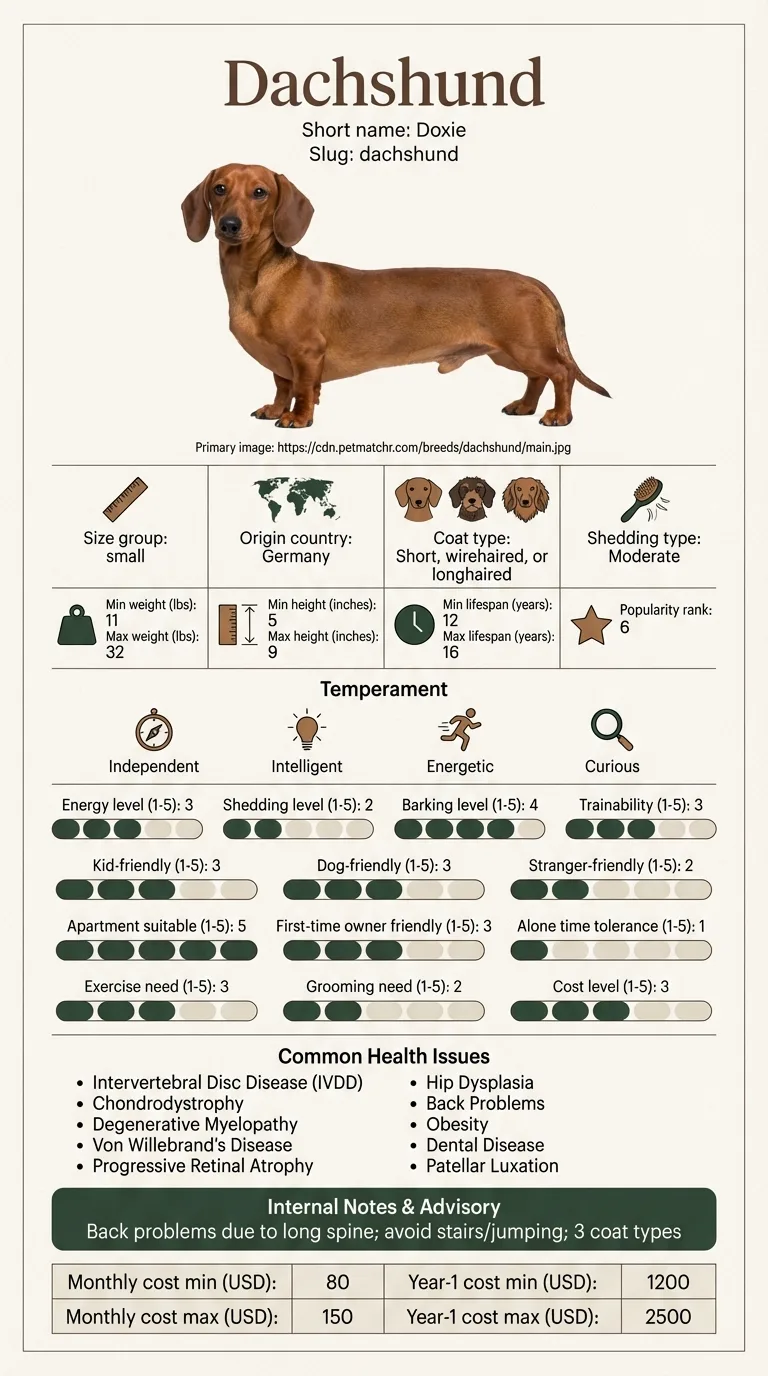
Owners of Dachshunds, particularly those who are first-time pet parents or live in homes with stairs, often struggle with managing luxating patellas. These owners may notice their Doxies limping or hesitating to jump, which can be worrying.
This guide is not medical advice. If your dog shows pain, sudden behavior change, or worsening symptoms, consult a licensed veterinarian.
Some links may be affiliate links. We may earn a commission at no extra cost to you. We only suggest products we believe are helpful for dog owners.
We research and check what we publish, but we do not warrant that any figure, date, price, or statement is accurate, complete, or current, and we accept no liability for any loss, cost, injury, or other harm arising from the use of this site. Use it as one reference among several. You remain responsible for your own decisions and for your dog's care - confirm anything that matters with a licensed veterinarian or another qualified professional before you act on it. Full disclaimer.
Check this first
Recognizing when your Dachshund's luxating patellas require immediate veterinary attention is crucial. If your dog shows signs of severe pain, such as whining, limping, or not putting weight on a leg, you should call your vet right away. Other red flags include swelling around the knee, inability to straighten the leg, or sudden changes in behavior, like becoming unusually aggressive or withdrawn.
If any of these apply, call your vet or an emergency clinic now. The rest of this page is for the cases that are not an emergency.
Dachshund luxating patellas is a common condition where the kneecap dislocates, causing your dog pain and difficulty walking. This problem can result in limping, hopping, or even reluctance to play. Owners often notice these symptoms during energetic activities or after long walks, particularly in younger Dachshunds.
Luxating patellas are quite common in Dachshunds, affecting approximately 20% of the breed. It's essential for owners to be aware of this issue, as early intervention can help manage the condition effectively.
Dachshunds are prone to luxating patellas mainly due to their unique bone structure and genetics. Their short legs and elongated bodies can create pressure on the knee joints, making dislocation more likely. This inherited trait means some Dachshunds are simply more susceptible to this issue than others.
Environmental factors also play a role. Obesity can increase stress on a Dachshund's knees, which may lead to luxation. Additionally, rough play, jumping from heights, or navigating stairs can contribute to the problem, especially in young or active dogs.
If you notice your Dachshund limping, favoring one leg, or showing signs of pain, contact your vet. They can assess the situation and recommend treatments, which may include physical therapy or, in severe cases, surgery.
Avoiding common mistakes can significantly help your Dachshund with luxating patellas. Here are some behaviors to watch out for, along with safer alternatives.
Start here: Dachshund Most Common Genetic Disorders: What to Screen For
See all Dachshund health problems, which breeds are prone to luxating patellas, or the full Dachshund breed guide for temperament, exercise needs and ownership costs.
With consistent care and management, you can expect to see improvement in your Dachshund's comfort and mobility within 4 to 6 weeks.
Success means your Dachshund can move more freely, show less discomfort, and participate in daily activities without frequent lameness.
In some cases, Dachshund luxating patellas can be mild and manageable at home. If your dog occasionally shifts its weight or seems to have a temporary limp but is still playful and eating normally, monitor the situation. You can create a plan to limit activity and provide a safe environment while keeping an eye on their symptoms. Always ensure they’re comfortable and consult your vet if things seem to worsen.

Emily, a first-time dog owner, noticed her Dachshund, Max, limping frequently. After some research, she learned that he had luxating patellas, which is common in Doxies. Emily consulted her vet, who recommended a mix of weight management, physical therapy, and specific training exercises. By sticking to this plan, she saw Max gradually regain confidence and mobility over the next two months. They even enjoyed their daily walks again, which made both of them happier.
Key takeaway: Early intervention and a consistent care plan can significantly improve your Dachshund's quality of life when dealing with luxating patellas.
Dachshund luxating patellas occur due to genetic factors and their unique body structure. The conformation of their legs and kneecaps can lead to dislocation, especially in small breeds like the Dachshund. If your dog shows signs of limping or discomfort, it's important to consult a vet.
To manage Dachshund luxating patellas, focus on maintaining a healthy weight and providing low-impact exercise. Avoid high-impact activities like jumping or running on hard surfaces. Regular vet check-ups will help monitor the condition and catch any issues early.
Common signs include limping, difficulty in getting up, or a tendency to hold one leg up when walking. You may also notice your dog suddenly 'skipping' or changing gait. If you observe these symptoms, consult a vet for a proper diagnosis.
Surgery for Dachshund luxating patellas may be needed in severe cases where the dog experiences pain or difficulty in walking. A vet will assess the severity and recommend the best course of action, which may include surgery or conservative management.
While genetics play a significant role, you can help prevent luxating patellas by keeping your Dachshund at a healthy weight and avoiding excessive jumping. Regular exercise helps strengthen their muscles and joints, providing better support.
Treatment options for Dachshund luxating patellas range from physical therapy and weight management to surgical intervention, depending on severity. Your vet will create a tailored plan that fits your dog's specific needs.
Look for signs like limping, a skipping motion while walking, or reluctance to jump. If your Dachshund seems to favor one leg or has sudden changes in mobility, it's a good idea to consult your vet.
Older Dachshunds may experience luxating patellas as their joints weaken. Speak with your vet about management options, which may include weight management, physical therapy, or pain relief treatments.
Gentle exercises like walking on a leash or swimming can be beneficial. Avoid high-impact activities, and always check with your vet before starting a new exercise routine for your Dachshund.
Luxating patellas can be hereditary, especially in breeds like Dachshunds. Factors such as weight, activity level, and overall health can also influence the condition, so it's essential to keep your dog healthy and consult your vet.
Treatment can vary from conservative management with weight control and physical therapy to surgical intervention in severe cases. Discuss the best options with your vet based on your Dachshund's specific situation.
Maintain a healthy weight, limit jumping, and consider joint supplements to support your Dachshund's knees.
Regular check-ups every 6 to 12 months can help monitor your Dachshund's joint health and catch any issues early.
Short walks on soft surfaces and gentle playtime can keep your Dachshund active without risking joint strain.
A balanced diet that helps maintain a healthy weight can reduce stress on your Dachshund's knees. Consult your vet for specific recommendations.
A one-page prep sheet for this condition: the signs, the questions to ask, what to get priced. Unlocks here.
You get: Vet visit prep sheet
No spam. One-click unsubscribe. See our privacy policy.
See a sample page before you decide.
Early access list
The free prep sheet covers the same-day warning signs, a symptom log and the questions to ask. We are considering a fuller kit that adds a cost worksheet for the usual tests and treatments (US price ranges with their sources) and a plain-English guide to ways of covering the bill. It is not built yet; this list tells us whether it is worth building.
One email, no spam, unsubscribe anytime. Information only, not veterinary advice.