DogBreedCompass
← Back to breed profile

Great Dane Luxating Patellas: What You Need to Know

Great Dane luxating patellas are a common issue that can affect your dog's mobility and comfort. This knee cap dislocation can lead to pain and problems with walking.

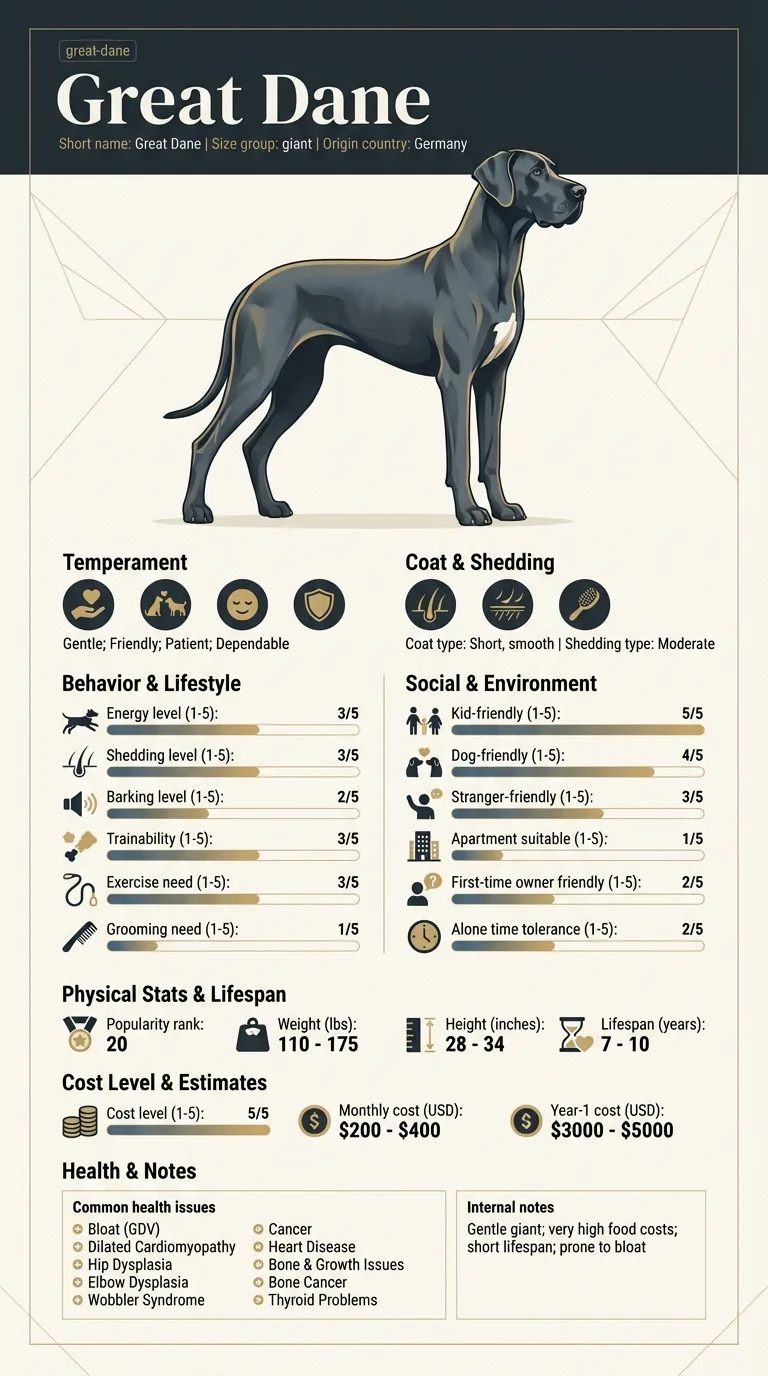
Great Dane Luxating Patellas: What You Need to Know infographic

Owners of Great Danes, particularly first-time dog parents or those unaware of this breed's specific health challenges, may struggle with luxating patellas. If your dog is showing signs of discomfort or difficulty in movement, it's important to address this issue promptly.

Important reminder

This guide is not medical advice. If your dog shows pain, sudden behavior change, or worsening symptoms, consult a licensed veterinarian.

Some links may be affiliate links. We may earn a commission at no extra cost to you. We only suggest products we believe are helpful for dog owners.

What this problem looks like

Great Dane luxating patellas can be a painful condition where the kneecap dislocates, causing your dog to limp or appear uncomfortable. This issue often arises from genetic factors and can manifest as difficulty walking or sudden lameness. If you notice your Great Dane struggling to rise or favoring one leg, it's essential to pay attention.

Common triggers

  • Genetic predisposition, especially in larger breeds
  • Injury or trauma to the knee area
  • Obesity, which puts extra stress on the joints
  • Improper exercise routines or sudden increases in activity

Luxating patellas are relatively common in Great Danes, especially given their size and weight. Many owners report seeing symptoms as early as puppyhood, but it can develop later due to factors like weight gain or injury. Regular vet check-ups can help catch this issue early.

Why this happens

Breed factors

Great Danes are a giant breed, which means their size can put extra stress on their joints. This stress can lead to luxating patellas, where the kneecap dislocates from its normal position. Additionally, genetic factors can play a significant role, as some Great Danes are predisposed to joint problems.

Environment factors

Environmental factors such as obesity can further exacerbate the risk of luxating patellas. If your Great Dane is not getting enough exercise, their weight can increase, placing additional pressure on their knees. Additionally, slippery flooring or improper grooming can lead to falls or injuries that contribute to this issue.

What you can try

At-home strategies

  • Maintain a healthy weight for your Great Dane. Regularly monitor their food intake and adjust portions to ensure they stay fit.
  • Provide a consistent exercise routine. Daily walks and gentle playtime can help strengthen their muscles and support their joints.
  • Use non-slip mats or rugs in your home to prevent slipping and falling on smooth surfaces.
  • Consider joint supplements that may support their joint health. Always consult with your vet before starting any new supplements.

When to consider a trainer

If your Great Dane is showing persistent signs of discomfort or difficulty moving, it may be time to consult a professional dog trainer. They can help you develop a customized exercise plan that considers your dog's specific needs.

When to talk to your vet

If you notice your Great Dane frequently limping, showing signs of pain, or if their kneecap appears to be dislocated, contact your vet immediately. They can assess the severity of the luxating patella and recommend appropriate treatment options.

Realistic expectations

You can expect to see improvements in about 6 to 12 weeks with consistent training and management.

Success means your Great Dane can move comfortably without pain or frequent dislocations. They can enjoy walks and playtime without limping or reluctance.

Mistakes that make this worse

Avoiding these common mistakes can help improve your Great Dane's luxating patellas and overall comfort. Here are some behaviors to watch out for.

  • Ignoring signs of pain: If your Great Dane is limping or reluctant to move, it's essential to take these signs seriously. Instead of brushing it off, consult your vet for a proper diagnosis and treatment.
  • Overexercising: While exercise is crucial, too much can worsen luxating patellas. Instead, focus on short, controlled walks and low-impact activities to keep your dog fit without straining their joints.
  • Allowing jumping or rough play: Activities that involve jumping can exacerbate luxating patellas. Provide safer alternatives, like gentle fetch on a flat surface, to prevent injury.
  • Not maintaining a healthy weight: Excess weight puts extra stress on your dog's joints. Work with your vet to create a balanced diet and exercise plan to help your Great Dane maintain a healthy weight.
  • Skipping physical therapy: Some owners may think their dog will improve on its own. However, physical therapy can significantly help. Consider incorporating exercises recommended by a professional.
  • Using inappropriate collars or harnesses: Some collars can put stress on your dog's neck and joints. Opt for a well-fitted harness that distributes pressure evenly and supports their mobility.

When Great Dane Luxating Patellas is an Emergency

Understanding when your Great Dane's luxating patellas become an emergency is crucial for their health. If you notice severe limping, inability to bear weight on a leg, or significant swelling around the knee, it's time to call your vet immediately. These symptoms suggest a serious condition that could require prompt medical attention.

On the other hand, if your Great Dane occasionally shifts their weight or seems to have mild discomfort after exercise, you can monitor the situation. Keep an eye on their behavior for any changes. Create a plan that includes regular vet check-ups and a tailored exercise routine. This approach can help manage the condition without immediate intervention.

Remember, it's always better to be safe than sorry. If your dog shows any signs of distress or if you're unsure, don't hesitate to reach out to your veterinarian for advice.

Great Dane Luxating Patellas: What You Need to Know - When Great Dane Luxating Patellas is an Emergency

Sam and Bella: Overcoming Luxating Patellas

Sam, a first-time Great Dane owner, noticed that his dog Bella was limping after walks. Concerned, he learned that Bella had luxating patellas, a common issue in large breeds. After consulting with a vet, Sam started a training routine focusing on strengthening Bella's leg muscles and managing her weight. With a mix of patience, specific exercises, and supportive gear, Bella's condition improved. Within three months, she was back to her playful self, running around the yard without discomfort.

Key takeaway: With proper training and care, you can effectively manage luxating patellas in your Great Dane, ensuring a happier, healthier life.

Frequently asked questions

Why does my Great Dane have luxating patellas?

Great Danes can develop luxating patellas due to genetic factors, injury, or joint malformation. This condition occurs when the kneecap dislocates from its normal position. It's often seen in larger breeds like Great Danes, so it's important to monitor their mobility. This answer relates to Great Dane luxating patellas.

How can I stop my Great Dane from experiencing luxating patellas?

To manage luxating patellas in Great Danes, you can start with a balanced diet to maintain a healthy weight and reduce joint stress. Regular, low-impact exercises help strengthen the muscles around the joints. Consult your vet for specific exercises and potential surgical options if necessary.

What are the signs of luxating patellas in Great Danes?

Signs of luxating patellas include limping, difficulty in walking or running, and sudden changes in posture. Your Great Dane may also hold their leg up after a jump or struggle to rise. If you notice these symptoms, it's best to see a vet for an evaluation.

Is surgery necessary for my Great Dane with luxating patellas?

Surgery may be required if the luxating patellas cause significant pain or mobility issues. Your vet will assess the severity of the condition and recommend the best course of action. Not all cases require surgery, and many dogs manage well with conservative treatments.

Can luxating patellas affect my Great Dane's quality of life?

Yes, luxating patellas can impact your Great Dane's quality of life if left untreated. They may experience pain and limitations in movement, which can affect their daily activities and happiness. Early intervention can make a significant difference.

What are the signs of luxating patellas in a Great Dane?

Common signs include limping, skipping while walking, or reluctance to jump. You may also notice your Great Dane frequently shaking or stretching their leg. If these symptoms persist, it's important to consult a vet.

Are luxating patellas common in older Great Danes?

Yes, luxating patellas can become more common as Great Danes age due to wear and tear on their joints. Older dogs may show increased discomfort or difficulty moving. Regular check-ups with a vet can help manage these issues.

How can I help my Great Dane with luxating patellas at home?

You can help by providing a soft, comfortable resting area and avoiding strenuous activities. Gentle stretching and controlled play can also benefit their joints. Always check with your vet before starting any new routine.

When should I consider surgery for my Great Dane's luxating patellas?

Surgery may be necessary if your Great Dane experiences severe pain or frequent dislocations. If conservative treatments aren't effective, consult your veterinarian about surgical options to improve their quality of life.

Can luxating patellas lead to other health issues in Great Danes?

Yes, luxating patellas can result in arthritis or other joint problems over time. It's crucial to monitor your Great Dane's mobility and seek veterinary advice if you notice changes. Early intervention can help prevent further complications.

Quick answers

View more answers
Behavior

What are some quick tips for Great Dane luxating patellas?

Monitor your Great Dane's weight to reduce stress on their joints. Regular, low-impact exercise can help strengthen muscles around the knees. Consider joint supplements after consulting your vet.

Costs

How much does it cost to treat luxating patellas in Great Danes?

Treatment costs vary widely, depending on the severity and required interventions. You might spend anywhere from $300 to $5,000 for surgery and rehabilitation.

Health

What should I do if my Great Dane shows signs of knee pain?

If you notice signs of knee pain, such as limping or reluctance to play, contact your vet for an assessment. Early diagnosis can prevent further complications.

Training

Can training help with my Great Dane's luxating patellas?

Yes, training can help improve your dog's mobility and strength. Focus on gentle exercises that strengthen their legs without putting too much pressure on the joints.

Related DogBreedCompass guides

  • Great Dane behavior problemsLearn how to manage luxating patellas and similar issues for your Great Dane.
  • Great Dane health issues guideExplore common health issues that affect Great Danes, including luxating patellas.
  • Great Dane luxating patellas trainingFind effective training strategies to help your Great Dane with luxating patellas.
  • Great Dane cost breakdownUnderstand the costs associated with owning a Great Dane and managing health problems.
  • Great Dane separation anxiety guideGet tips on managing anxiety in Great Danes, which can impact their overall health.

Related guides