Health
What is hemivertebrae?
A vertebra shaped as a wedge instead of a normal block, present from birth, most common near the tail and lower spine.

Quick answer
What is hemivertebrae?
A vertebra shaped as a wedge instead of a normal block, present from birth, most common near the tail and lower spine.
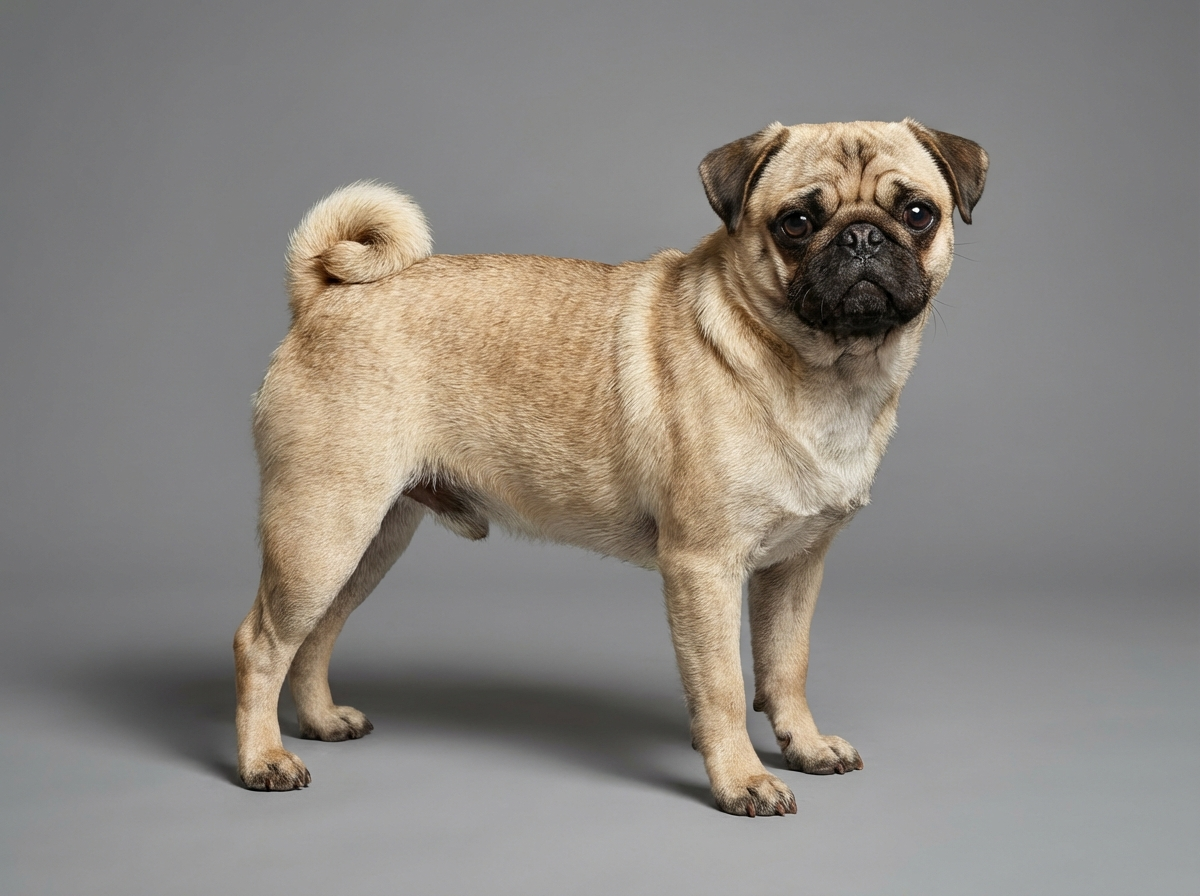
The same genetics that curl a Pug's tail can also misshape the vertebrae underneath it, sometimes harmlessly, sometimes not.
This is most relevant to owners of young Pugs, since hemivertebrae is present from birth and often first noticed on an X-ray taken for an unrelated reason. It matters most to anyone whose dog shows any sign of back pain, wobbliness, or bladder changes rather than a purely cosmetic tail curl.
This guide is not medical advice. If your dog shows pain, sudden behavior change, or worsening symptoms, consult a licensed veterinarian.
Some links may be affiliate links. We may earn a commission at no extra cost to you. We only suggest products we believe are helpful for dog owners.
We research and check what we publish, but we do not warrant that any figure, date, price, or statement is accurate, complete, or current, and we accept no liability for any loss, cost, injury, or other harm arising from the use of this site. Use it as one reference among several. You remain responsible for your own decisions and for your dog's care - confirm anything that matters with a licensed veterinarian or another qualified professional before you act on it. Full disclaimer.
Hemivertebrae is a congenital spinal malformation where one or more vertebrae, usually near the tail or lower spine, develop as an abnormal wedge shape rather than a normal block. It's genetically linked to the same trait responsible for this breed's curled tail, and most cases are mild and incidental, though severe cases can compress the spinal cord.
Hemivertebrae is well documented in this breed's skeletal makeup and frequently found incidentally on X-rays. Most cases never produce symptoms; a smaller portion involve spinal cord compression severe enough to need intervention.
Pugs carry the genetic trait responsible for their compact, curled tail, and that same developmental pathway can produce abnormally shaped vertebrae elsewhere along the spine. This is a structural, inherited trait rather than something that develops from injury or lifestyle.
There's no significant environmental driver here; hemivertebrae is set during fetal development. Environment matters more for a dog already showing symptoms, where excess weight or high-impact activity can add strain to an already vulnerable section of spine.
See a vet promptly if your Pug shows back pain when touched, a wobbly or weak hind end, dragging of the back feet, or any change in bladder or bowel control. These signs suggest spinal cord involvement and need imaging and assessment quickly rather than a wait-and-see approach.
Start here: Pug Most Common Genetic Disorders: What to Screen For
See all PUG health problems, which breeds are prone to back problems, or the full PUG breed guide for temperament, exercise needs and ownership costs.
An incidental finding needs no timeline at all beyond ongoing awareness. A symptomatic case typically requires imaging within days of symptoms appearing, with surgical recovery, if needed, spanning several weeks to a few months.
For most dogs, success simply means the finding stays incidental for life. For a symptomatic case, success means stabilizing or improving neurologic function, since a severely affected spine can rarely be returned to a fully normal shape.
A normal vertebra is roughly block-shaped, stacking evenly with the ones above and below it to form a straight, stable column protecting the spinal cord. A hemivertebra forms as a wedge or triangle instead, which can tilt the spine slightly at that point or, in more pronounced cases, create a visible kink. Many Pugs have mild hemivertebrae that never cause a problem in their lives; the vertebra is just shaped differently, and the spine around it compensates. The concern arises when the malformation is severe enough, or positioned in a way, that it narrows the spinal canal or puts abnormal pressure on the spinal cord itself.
Most hemivertebrae are found incidentally, on an X-ray done for a totally different reason, in a dog with no back pain or mobility issues at all. That's the harmless version, and it typically needs nothing more than awareness for future reference. A concerning case looks different: back pain the dog reacts to when touched, a wobbly or uncoordinated hind-end gait, dragging of the back feet, or changes in bladder or bowel control. These signs suggest the spinal cord itself is being compressed or irritated, which is a different situation entirely from an incidental X-ray finding and needs prompt veterinary imaging to assess.

When two-year-old Wally needed X-rays after a minor limp, unrelated to his spine, his vet noticed a mild hemivertebra near the base of his tail. His owner was alarmed at first, having never heard the term. The vet explained it was a common, usually harmless finding in Pugs tied to the same genetics as the curled tail, and recommended simply keeping the X-ray on file. Five years later, Wally has never shown a single sign of back pain or mobility trouble. His owner still mentions the finding at every annual exam, just as a precaution.
Key takeaway: An incidental hemivertebra finding is common in this breed and, on its own, is rarely a reason for concern; what matters is watching for actual symptoms rather than worrying about the X-ray finding itself.
No. Hemivertebrae is a congenital malformation of the vertebra itself, present from birth, while intervertebral disc disease is a separate, typically acquired condition affecting the cushioning discs between vertebrae. A Pug can have either, both, or neither; they're related to this breed's chondrodystrophic body type but are distinct conditions with different causes.
It's typically found on X-rays, sometimes taken for an unrelated reason, and confirmed with more detailed imaging like a CT or MRI if there's any concern about spinal cord involvement.
No, but it is common enough in this breed, given its link to the screw-tail trait, that vets don't consider a mild finding alarming on its own. Severity varies widely from dog to dog.
Back pain, an uncoordinated or wobbly hind-end gait, dragging of the back feet, or changes in bladder or bowel control are all signs that warrant an urgent vet visit rather than a wait-and-see approach.
Mild, asymptomatic cases usually need no treatment. Symptomatic cases involving spinal cord compression may require surgery to stabilize the spine, decided based on advanced imaging and a veterinary neurologist's assessment.
Most stay stable throughout a dog's life once skeletal growth is complete. Vets typically recommend simply being aware of the finding rather than expecting it to progress.
For a mild, asymptomatic finding, no special restrictions are usually needed. For a dog with any related symptoms, your vet will advise on activity limits based on the specific severity and location.
Some responsible breeders do have breeding stock imaged to check for significant spinal malformations, though there's no universal screening standard across the breed, and a mild finding doesn't necessarily rule a dog out of breeding programs.
A vertebra shaped as a wedge instead of a normal block, present from birth, most common near the tail and lower spine.
Most cases are mild and incidental; it becomes serious only if it compresses the spinal cord.
Back pain, hind-leg wobbliness, dragging feet, or changes in bladder or bowel control.
No, it's a congenital trait tied to the same genetics as the curled tail, not something caused by environment or care.
X-rays are relatively affordable; advanced imaging like an MRI for a suspected symptomatic case costs considerably more.
A one-page prep sheet for this condition: the signs, the questions to ask, what to get priced. Unlocks here.
You get: Vet visit prep sheet
No spam. One-click unsubscribe. See our privacy policy.
Preview page 1 before you decide.