DogBreedCompass
← Back to breed profile

Rottweiler Back Problems: Causes and Solutions

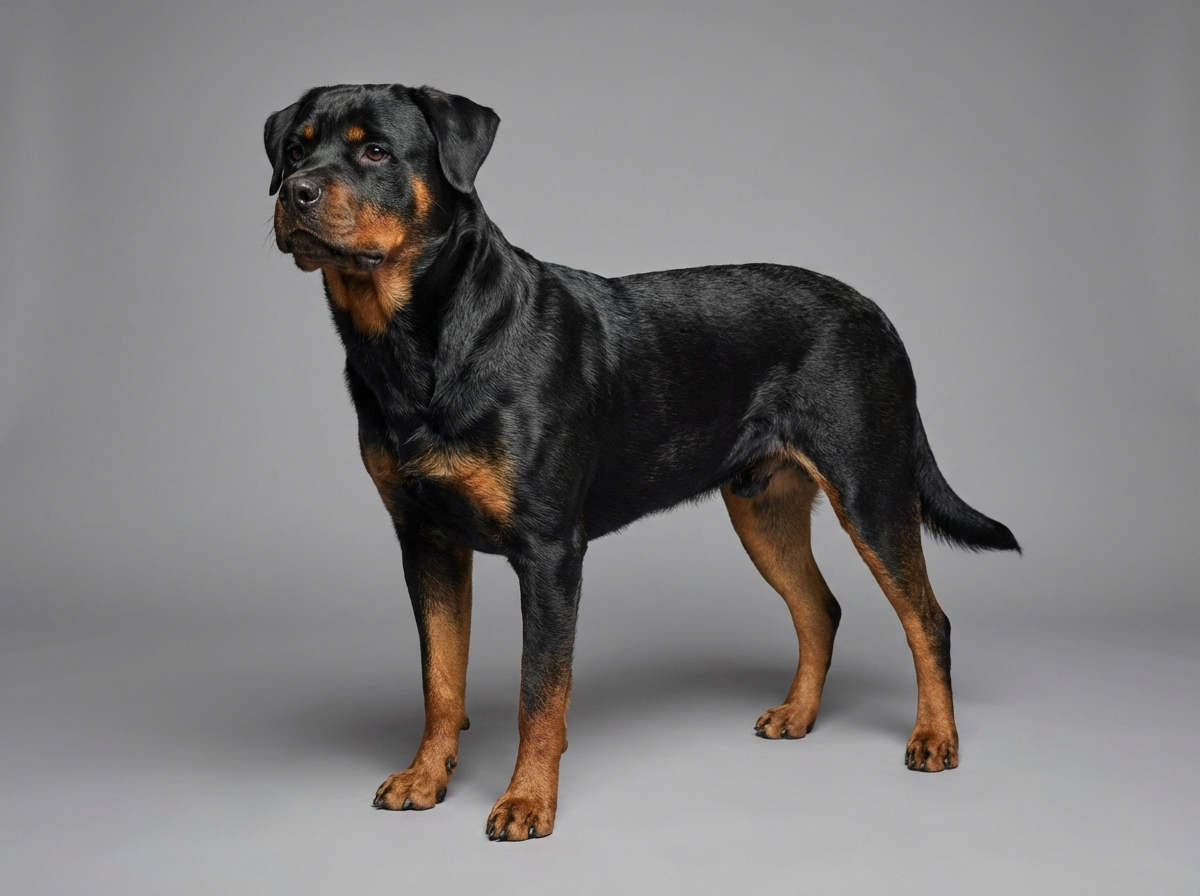
Rottweiler back problems can affect your dog's quality of life and mobility. Understanding these issues is crucial for their well-being.

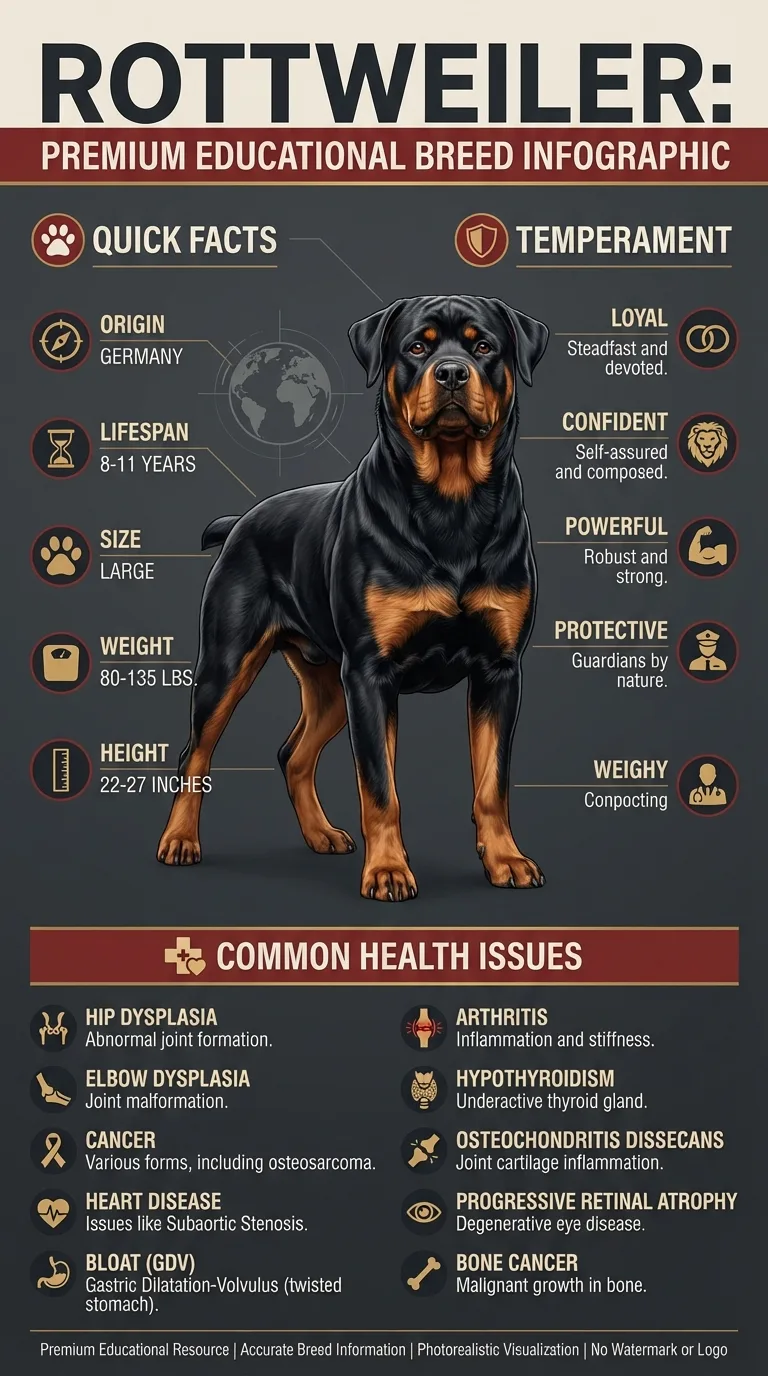
Rottweiler Back Problems: Causes and Solutions infographic

First-time Rottweiler owners and those with older dogs often face these challenges. These owners may be unsure how to recognize signs of back issues or how to best support their dogs.

Important reminder

This guide is not medical advice. If your dog shows pain, sudden behavior change, or worsening symptoms, consult a licensed veterinarian.

Some links may be affiliate links. We may earn a commission at no extra cost to you. We only suggest products we believe are helpful for dog owners.

What this problem looks like

Rottweiler back problems often manifest as difficulty in movement, reluctance to jump, or signs of pain when getting up. These issues arise primarily due to their long spine and heavy build, making them predisposed to back strain. Owners may notice their Rottweiler hesitating to play or showing discomfort when walking, which can be distressing.

Common triggers

  • Excessive jumping or running
  • Obesity and lack of exercise
  • Improper lifting or carrying
  • Sudden movements or slips

Back problems are relatively common among Rottweilers, especially as they age. Given their physical structure, many Rottweilers may experience some form of back discomfort throughout their lives. Regular vet check-ups and preventive care can help manage and reduce these issues.

Why this happens

Breed factors

Rottweilers have a long spine and short legs, which can increase the risk of back problems. This structure makes them more susceptible to conditions like intervertebral disc disease and arthritis. Additionally, their large size can put extra strain on their back as they grow.

Environment factors

Environmental factors also play a role. For instance, excessive jumping, rough play, or improper lifting can lead to injuries. Moreover, a lack of exercise or overweight conditions can exacerbate back issues, making it crucial to maintain a healthy weight and provide appropriate physical activity.

What you can try

At-home strategies

  • Ensure your Rottweiler maintains a healthy weight through a balanced diet and regular exercise. Avoid overfeeding and monitor treats.
  • Provide a supportive bed and avoid slippery floors to minimize strain on their back. Use rugs or mats to help them navigate safely.
  • Engage in gentle exercises like short walks and swimming, which are easier on their joints. Avoid high-impact activities that could worsen their condition.

When to consider a trainer

If your Rottweiler shows signs of discomfort or struggles with mobility, consider consulting a professional trainer. They can help create a tailored exercise plan to strengthen your dog's back without causing strain.

When to talk to your vet

Contact your vet if you notice persistent back pain, difficulty in movement, or changes in behavior. Early intervention can prevent more serious health issues, and your vet can recommend treatments or therapies suitable for your Rottweiler.

Realistic expectations

With consistent training and care, you can expect to see improvements in your Rottweiler's back problems within 3 to 6 months.

Success means your Rottweiler will experience less discomfort, improved mobility, and a more active lifestyle. You'll notice them engaging in play and exercise without showing signs of pain.

Mistakes that make this worse

Avoiding certain behaviors can significantly improve your Rottweiler's back problems. Here are some common mistakes and how to correct them.

  • Ignoring early signs of discomfort: Many owners dismiss early signs of back pain, like reluctance to jump or play. Instead, address these signs quickly to prevent worsening issues.
  • Overexerting during exercise: Rottweilers need exercise, but too much can strain their backs. Opt for shorter, controlled sessions to maintain fitness without overdoing it.
  • Neglecting weight management: Excess weight can put extra pressure on your Rottweiler's back. Ensure a balanced diet and regular exercise to keep their weight in check.
  • Forgetting proper lifting techniques: When lifting your Rottweiler, many don't support their back properly. Always lift with both hands, supporting the chest and hindquarters to avoid further strain.
  • Skipping regular vet check-ups: Some owners may only visit the vet when issues arise. Regular check-ups can help catch problems early and keep your Rottweiler healthy.
  • Using unsuitable bedding: Poor quality bedding can fail to support your Rottweiler's spine. Invest in orthopedic beds that provide proper support to help alleviate discomfort.
  • Ignoring training: Some behaviors may exacerbate back issues. Training your Rottweiler to follow commands can help you manage their activities better and prevent injury.

When Rottweiler Back Problems Are an Emergency

Recognizing when Rottweiler back problems become an emergency is crucial for your dog's health. If you observe severe symptoms, it's time to call your vet immediately. Signs that indicate urgent care include sudden inability to walk, severe pain when touched, or visible swelling along the spine.

In contrast, mild back issues can often be managed at home. If your Rottweiler shows slight stiffness after exercise or reluctance to jump but is still able to move around, keep a close watch. A gradual increase in exercise, along with a vet-approved plan, may suffice.

Regular check-ups are essential to monitor any developing conditions, especially for large breeds like Rottweilers.

It's essential to differentiate between these scenarios. Emergency signs require immediate action, while mild cases allow for monitoring and scheduled vet visits. Always err on the side of caution when it comes to your pup's health.

Rottweiler Back Problems: Causes and Solutions - When Rottweiler Back Problems Are an Emergency

Max's Journey with Back Problems

Jessica, a busy nurse from Atlanta, adopted Max, a lovable Rottweiler. Soon after, she noticed him struggling to get up after a nap and hesitating to jump up onto the couch. Concerned, she consulted her vet, who confirmed that Rottweilers are prone to back problems due to their long spine and short legs. Jessica learned about proper exercise routines and began a gentle stretching program for Max. She also invested in a supportive dog bed to help him rest comfortably. Over the next few months, with a mix of training and proper care, Max showed remarkable improvement, becoming more active and playful than ever before.

Key takeaway: With the right training and adjustments to their environment, Rottweilers like Max can overcome back problems and lead a more comfortable, active life.

Frequently asked questions

Why does my Rottweiler have back problems?

Rottweilers can suffer from back problems due to their long spine and short legs. This conformation can lead to strain on the spine, especially if they are overweight or not exercised properly. Regular vet check-ups can help catch any issues early.

How can I stop Rottweiler back problems?

To stop Rottweiler back problems, maintain a healthy weight and provide regular, low-impact exercise. Avoid jumping and rough play that puts strain on their back. Consult a veterinarian for a tailored exercise plan and potential physical therapy.

What are the signs of back problems in Rottweilers?

Signs of back problems in Rottweilers include difficulty standing up, reluctance to jump, changes in walking patterns, or whining when moving. If you notice these behaviors, it’s essential to consult a vet promptly for diagnosis and treatment.

Is training important for Rottweiler back problems?

Yes, training plays a crucial role in preventing back problems. Teaching your Rottweiler commands like 'stay' or 'gentle' can help manage their movements and reduce the risk of injury. Positive reinforcement can make training effective and enjoyable.

Can back problems lead to other health issues in Rottweilers?

Yes, back problems can lead to other health issues, such as arthritis or hip dysplasia. These conditions may develop due to altered movement patterns or compensatory behaviors. Early intervention is key to preventing further complications.

What are the signs of back problems in Rottweilers?

Signs of back problems in Rottweilers may include difficulty standing up, reluctance to jump or climb stairs, and noticeable changes in their gait. If your Rottweiler seems to be in pain or is less active than usual, it's essential to consult a vet.

Can Rottweilers of any age have back problems?

Yes, Rottweilers can develop back problems at any age, though older dogs are more susceptible. Regular check-ups and monitoring for any changes in mobility can help catch issues early.

How can training help with Rottweiler back problems?

Training can help strengthen your Rottweiler's core muscles, which support the spine. Focus on low-impact exercises and avoid activities that put excessive strain on their back, like jumping or rough play.

When should I take my Rottweiler to the vet for back issues?

You should take your Rottweiler to the vet if they show persistent signs of discomfort, such as whining or avoiding certain movements. Early intervention is key to managing back problems effectively.

Are there specific breeds that are more prone to back problems than Rottweilers?

Yes, some breeds, like Dachshunds and Bulldogs, are more prone to back problems due to their body structure. However, Rottweilers can still face significant risks, particularly due to their size and weight.

Quick answers

View more answers
Behavior

What are some quick tips for Rottweiler back problems?

Monitor your Rottweiler's weight to prevent strain on their back. Ensure they have a comfortable sleeping area and avoid steps when possible. Regular, controlled exercise is essential for maintaining back health.

Living

How much exercise does my Rottweiler need to prevent back problems?

Rottweilers need about 60 minutes of exercise daily, including walks and play sessions. Opt for low-impact activities to protect their back. Consistent exercise helps maintain a healthy weight and strong muscles.

Health

What should I do if my Rottweiler shows signs of back problems?

If your Rottweiler shows signs of back problems, consult your veterinarian immediately. They can diagnose the issue and recommend a treatment plan, which may include medication or physical therapy.

Related DogBreedCompass guides

  • Rottweiler back problems trainingLearn how to train your Rottweiler to prevent back issues.
  • Why does my Rottweiler have back problemsFind out why your Rottweiler might be experiencing back problems.
  • Rottweiler behavior problemsExplore common behavior issues in Rottweilers and how to address them.
  • Rottweiler separation anxiety guideDiscover how to manage separation anxiety in Rottweilers.
  • How to stop Rottweiler back problemsGet tips on caring for Rottweilers with back problems.

Related guides