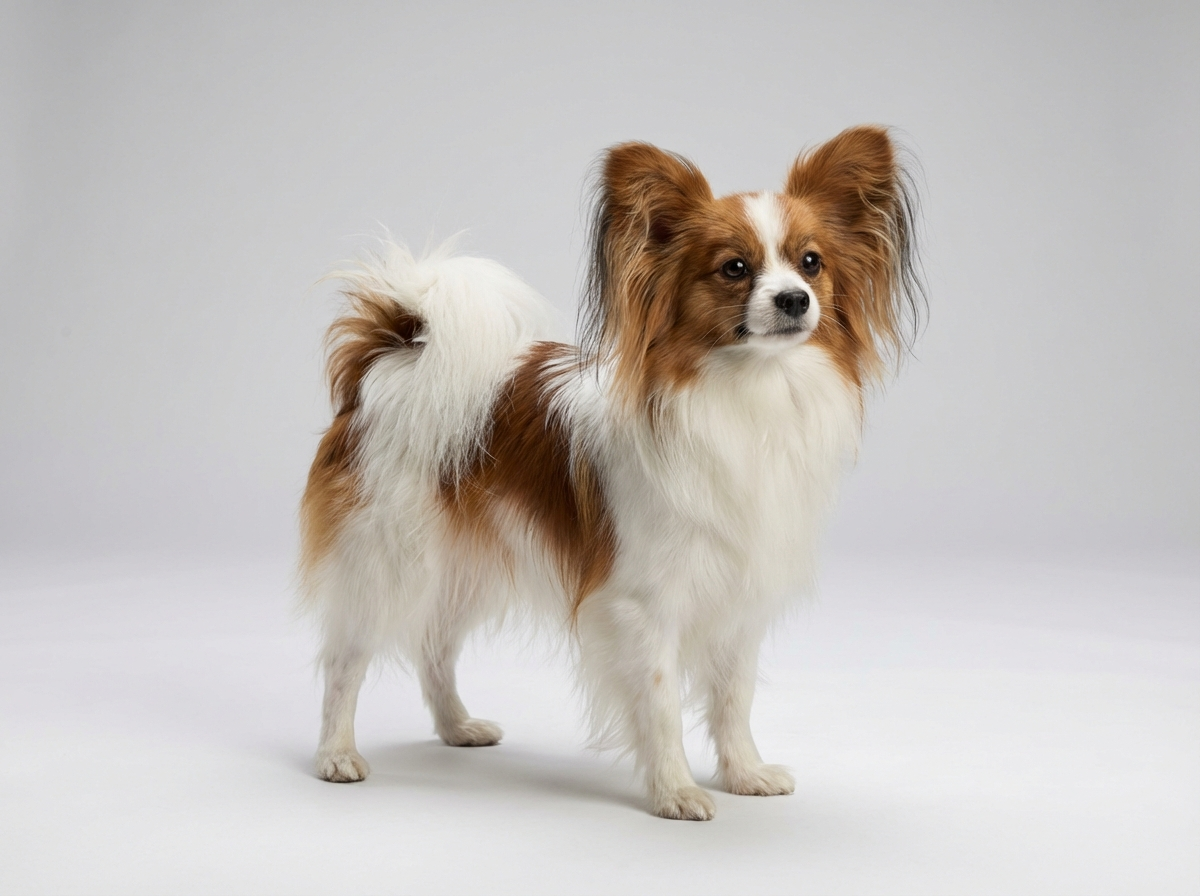
Health
What does a luxating patella look like in a Papillon?
A sudden skip: the dog carries one hind leg for two or three strides mid trot, then puts it down and continues normally as though nothing happened.

Quick answer
What does a luxating patella look like in a Papillon?
A sudden skip: the dog carries one hind leg for two or three strides mid trot, then puts it down and continues normally as though nothing happened.
The skip is the sound of a kneecap leaving its groove and popping back. Most Papillons who do it never need an operation.
Owners who have just been given a grade at a routine check up and want to know what it means for the next decade, and those watching an intermittent hitch and wondering whether to worry.
This guide is not medical advice. If your dog shows pain, sudden behavior change, or worsening symptoms, consult a licensed veterinarian.
Some links may be affiliate links. We may earn a commission at no extra cost to you. We only suggest products we believe are helpful for dog owners.
Patellar luxation is the displacement of the kneecap out of the groove it should slide in, almost always toward the inside of the leg in small breeds. It is one of the Papillon's documented health issues and the commonest cause of hind limb abnormality in the breed. The signature is intermittent rather than constant: a normally moving dog that skips for a stride or two and then carries on, sometimes several times a walk and sometimes not for weeks.
Patellar luxation is among the most frequently diagnosed orthopaedic conditions in toy breeds and is specifically listed among the Papillon's common health issues. A great many affected dogs are found incidentally at routine examinations and never develop symptoms that trouble them. The condition is common; serious disability from it is not.
The problem is developmental and inherited. In affected dogs the groove at the end of the femur forms too shallow to retain the kneecap, and the alignment of the quadriceps mechanism pulls it inward rather than straight. Because a Papillon stands eight to eleven inches tall on fine bones, the margins in that joint are tiny and small anatomical deviations matter. Hereditary transmission is why patellar evaluation of breeding animals is the standard screening ask in this breed.
The household decides how often the kneecap actually leaves its groove. Hard smooth flooring is the biggest single factor, because a dog that cannot get purchase twists as it accelerates. Furniture at nearly twice the dog's height turns every descent into an impact. Extra weight raises the force through the joint on every step, and hair growing between the pads removes what little grip small paws have.
Book a routine appointment if you notice a skipping gait, and ask for the kneecaps to be graded and the grade written down. Book sooner if an intermittent skip has become a persistent limp, if the dog is reluctant to bear weight, or if it has started sitting with the leg held out. Seek same day care if a leg is held completely off the ground and will not be used at all, if the knee is hot or swollen, or if the dog cries persistently, since a fine boned toy dog can also fracture or rupture a ligament and those need different treatment.
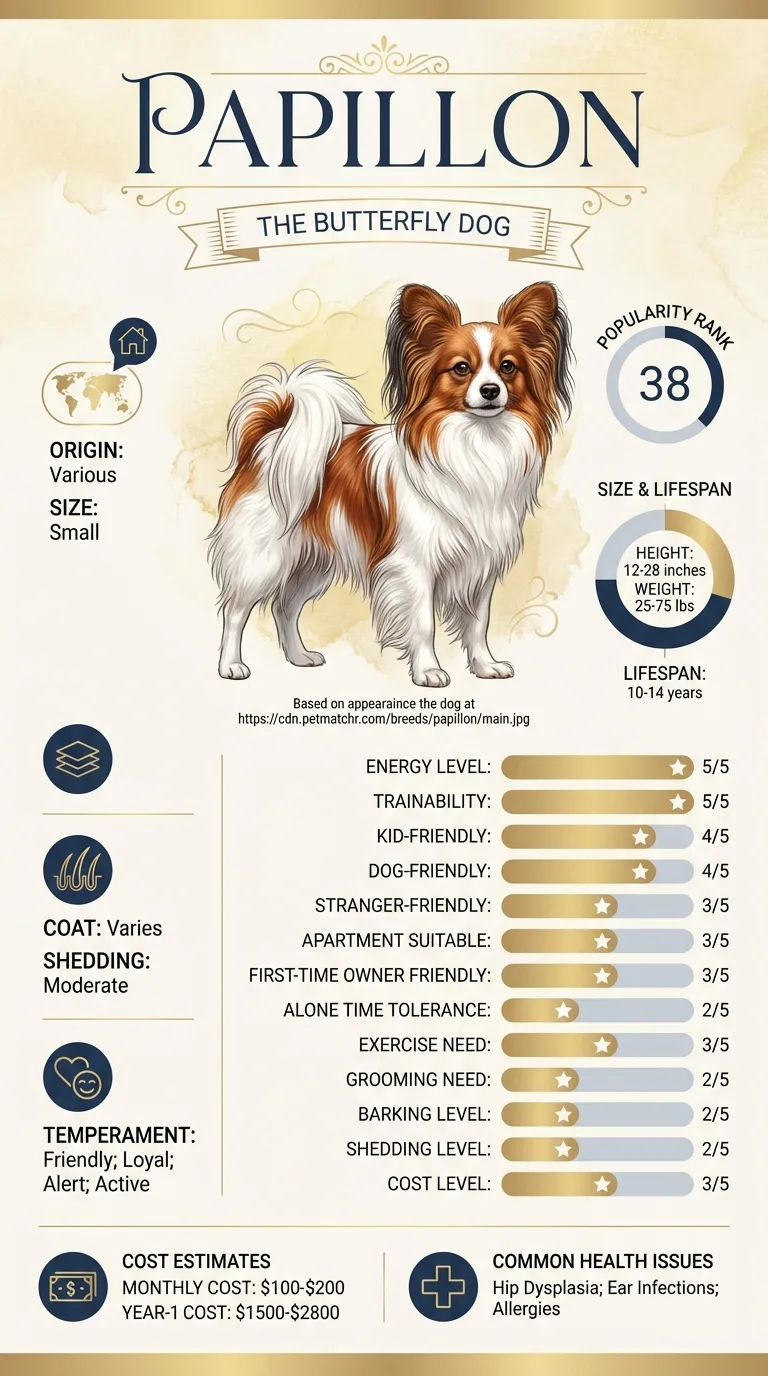
See all Papillon health problems, which breeds are prone to luxating patellas, or the full Papillon breed guide for temperament, exercise needs and ownership costs.
Household changes take an afternoon and their benefit shows within weeks as the frequency of skipping drops. Weight loss on a small dog takes two to four months to be meaningful. The condition itself does not resolve. Expect an annual grading and expect to be managing it for the whole of a fourteen to sixteen year life.
Success is a Papillon that still skips occasionally but is never lame, holds the same grade at twelve that it had at four, moves freely on every surface in the house, and has never needed an operation.
Grades run from one to four and describe how easily and how permanently the kneecap displaces, not how much the dog hurts.
At grade one the kneecap sits normally and can be pushed out of the groove by a vet during examination, but it returns immediately on its own. Many dogs at this grade never show a single symptom in their lives.
At grade two the kneecap luxates occasionally during normal movement and returns by itself or when the dog straightens the leg. This is where the classic skip appears: a few strides carried, then a small hop, then normal walking. Grade two is the most common finding in a Papillon and it is very often managed rather than operated on.
At grade three the kneecap sits out of the groove most of the time and can be pushed back but slips out again. Gait is persistently abnormal.
At grade four the kneecap is permanently displaced and cannot be repositioned manually. The dog may stand with a crouched hind end and turned in stifles.
Grades can progress, particularly in growing dogs and in dogs that gain weight, but plenty of adult Papillons hold a grade two unchanged for years. A grade is a starting point, not a forecast, and a dog's comfort matters more than its number.

None of this fixes the groove. What it does is reduce how often the kneecap is asked to leave it, which is what determines whether the joint wears.
If you think your Papillon has luxating patellas, the plan is three steps: write down what you have seen and when it started, book a veterinary appointment rather than waiting for the next flare, and take video of the behaviour or symptom before you go — the thing you are worried about rarely happens in the consulting room. Screening in the parents covers patellar luxation, progressive retinal atrophy, dental disease.
What the vet visit should produce is a diagnosis and a written plan, not just reassurance: what is being ruled out, what the monitoring interval is, and which signs mean you come back sooner. Ask what the treatment costs across a year rather than per visit, because that is the number that decides whether you are managing this condition or reacting to it.
Between appointments, keep a short log — dates, what you saw, what changed. It is the single most useful thing an owner brings to a follow-up, and for luxating patellas it is often what separates a clear pattern from a guess.
Delphine's Papillon Piaf was graded two on both knees at her first adult check up. She skipped perhaps six or seven times on a typical walk and considerably more indoors, where the whole ground floor was polished oak. Her vet suggested traction before anything else. Delphine bought two long runners for the hall and the kitchen and a rug for the landing beside the sofa, plus a small set of foam steps. She also had Piaf's foot tufts trimmed and cut her from seven pounds fourteen ounces to seven pounds two. The indoor skipping essentially stopped within a fortnight, simply because Piaf was no longer scrabbling. The outdoor skipping halved over the following months as her thigh muscle built up on daily walks. Piaf is now nine, still graded two, and has never been lame for a day.
Key takeaway: You cannot deepen a shallow groove with rugs, but you can dramatically reduce how often the kneecap has to leave it. For most Papillons, traction, weight and steady muscle are what keep a grade two from ever becoming a problem.
The moment of luxation is usually more startling than painful in low grades, which is why dogs carry on running immediately afterwards. What causes pain over time is the cartilage damage from repeated displacement, and the arthritis that follows. A dog that has started limping persistently rather than skipping briefly has moved from an annoyance to a problem.
It might, particularly during growth, after weight gain, or after an injury, but many adult dogs hold the same grade for years. Progression is not inevitable and the factors that drive it, principally weight and joint loading, are largely within your control. Ask for the kneecaps to be assessed at every annual visit so any change is documented.
No. Muscle is what stabilises the joint, and a dog kept quiet loses the very thing protecting the knee. What you change is the surfaces and the landings: traction underfoot, ramps instead of leaps off furniture, and avoiding repetitive high impact games on hard ground. Normal walks and normal play should continue.
Generally when the dog is persistently lame rather than intermittently skipping, when the grade is three or four, when pain is affecting quality of life, or when a young dog's grade is climbing. The decision belongs with an orthopaedic surgeon who has examined the dog. A grade alone is not an indication for surgery.
Bilateral involvement is common, and often one side is worse than the other. That is worth knowing before you buy insurance, because many policies treat a paired structure as a single condition, so a diagnosis on one knee can exclude the other from cover as well.
No supplement deepens a shallow groove or realigns a joint, and it is worth being clear about that before spending. Joint support products are sometimes recommended by vets as part of managing associated arthritis in older dogs, which is a different goal. Ask your vet whether they think it is worthwhile for your individual dog rather than starting on marketing claims.
A sudden skip: the dog carries one hind leg for two or three strides mid trot, then puts it down and continues normally as though nothing happened.
Usually manageable. Many Papillons hold a grade two for years with traction, weight control and steady exercise, and never need surgery.
Anything with grip. Rugs and runners along the routes the dog actually uses prevent the scrabbling take offs that displace a loosely held kneecap.
Yes. A patellar evaluation on both parents is the single most relevant orthopaedic certificate to ask for when buying this breed.
A one-page prep sheet for this condition: the signs, the questions to ask, what to get priced. Unlocks here.
You get: Vet visit prep sheet
No spam. One-click unsubscribe. See our privacy policy.
Preview page 1 before you decide.