Behavior
What are quick tips for managing Papillon anxiety?
Provide a safe space, maintain a routine, and engage in regular exercise to help manage your Papillon's anxiety.

Quick answer
What are quick tips for managing Papillon anxiety?
Provide a safe space, maintain a routine, and engage in regular exercise to help manage your Papillon's anxiety.
Papillon anxiety can be a real challenge, but you’re not alone in this journey.
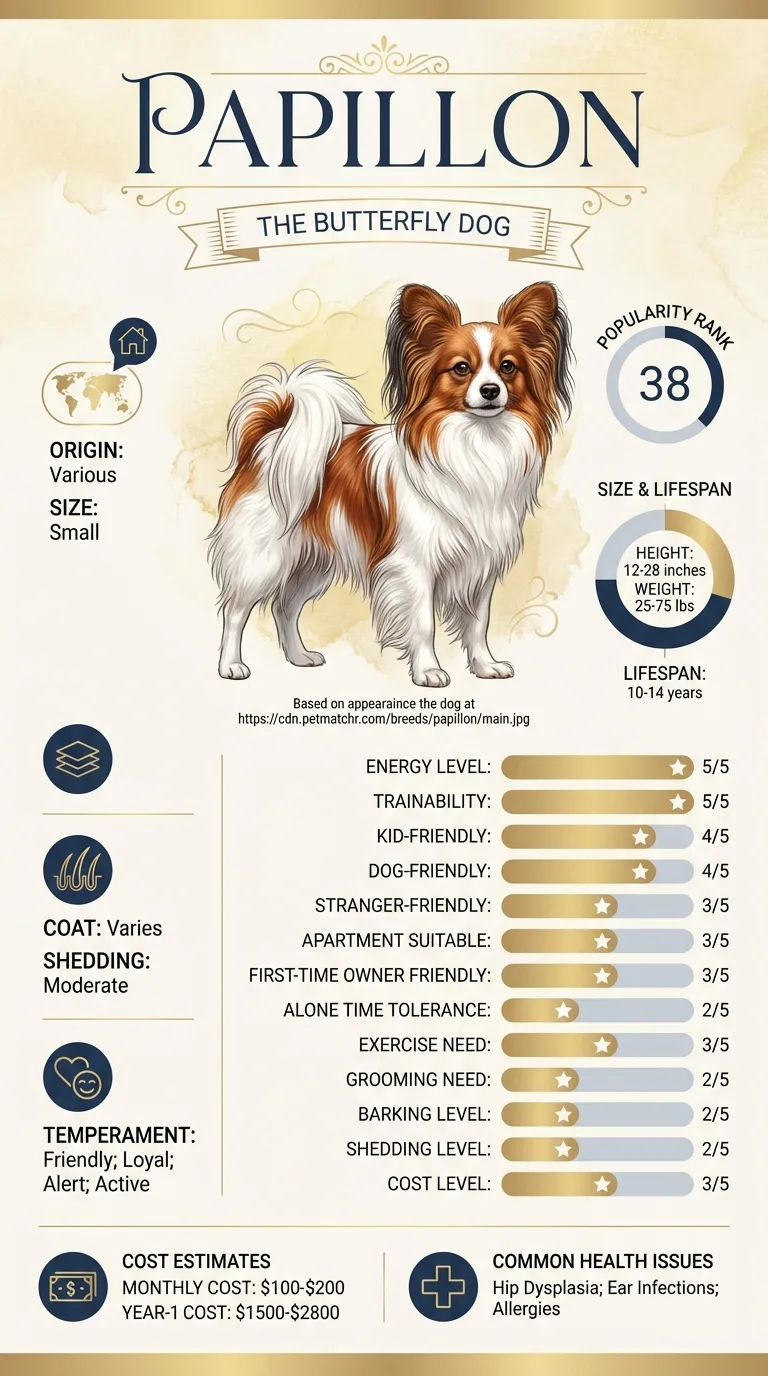
This guide is for Papillon owners who are facing anxiety issues with their dogs and want practical solutions to help them feel more secure.
Papillon anxiety often shows up as excessive barking, pacing, or signs of distress when left alone. These small dogs may become clingy and anxious, seeking constant reassurance from their owners. You might notice your Papillon acting nervous in unfamiliar situations or around strangers.
If your Papillon anxiety persists despite your efforts, consider enrolling in a training program focused on anxiety management. Look for trainers who specialize in small breeds like Papillons.
Consult a veterinarian or a certified behaviorist if your Papillon displays severe anxiety symptoms, such as excessive barking, destructive behavior, or signs of distress when left alone.
There are several tools and products designed to help manage Papillon anxiety. These can assist in creating a calmer environment and support training efforts.
Adjusting your daily routine can significantly help with Papillon anxiety. Start by establishing a consistent schedule for feeding, walks, and playtime. This predictability can make your Papillon feel more secure, reducing their anxiety levels.
Exercise is key for managing anxiety in your Papillon. Aim for at least 30 minutes of moderate activity daily. This can include walks, play sessions, or even mental games that challenge their minds.
Regular exercise helps to burn off excess energy and calms their nerves.
Another important factor is alone-time training. Gradually increase the time your Papillon spends alone, starting with short intervals. Make this time positive by leaving them with a favorite toy or treat.
This helps them learn that being alone isn't something to fear.
Additionally, consider adjusting your household routines. Create a cozy, quiet space for your Papillon to retreat to when they feel overwhelmed. This can be a designated bed area or a crate.
Using calming scents, like lavender, can also help create a soothing environment.
Finally, try to minimize sudden changes in the household. If you have guests or renovations happening, prepare your Papillon for the changes. Keeping their environment stable can help reduce stress and anxiety.
Tracking progress with Papillon anxiety is crucial for effective management. Start by observing small 'micro-wins' like your Papillon being calmer during brief periods of alone time. Notice if they are less reactive to common triggers, such as loud noises or unfamiliar visitors.
These small victories can indicate that your training and support are working.

It’s important to remember that setbacks can happen. If your Papillon suddenly becomes more anxious or regresses in their behavior, it may signal that the training plan needs adjustment. Factors like changes in routine, new environments, or stressors can influence their anxiety levels.

You’ll know your plan is effective when your Papillon shows improved behavior over time. Look for signs like increased confidence, willingness to explore new spaces, or less barking when left alone. These improvements suggest that your efforts in Papillon anxiety training are paying off.

If you don’t see any improvement after several weeks, it might be time to escalate your plan. Consider consulting a professional trainer or a vet specializing in behavior. They can offer tailored strategies for your Papillon's specific anxiety issues, ensuring you find the right path to improvement.

When Sarah adopted Bella, her Papillon, she quickly noticed Bella was very anxious, especially during thunderstorms. Bella would bark and hide under the couch, shaking with fear. Sarah tried several things at home, including creating a safe space with blankets and playing soothing music, but Bella’s anxiety remained high. Realizing she needed more help, Sarah consulted a dog trainer specializing in anxiety issues. The trainer suggested a combination of desensitization techniques and positive reinforcement training. They started with short exposure to the sound of thunder, rewarding Bella with treats for calm behavior. Over weeks, Bella became more comfortable with the noises. Now, during storms, she still seeks comfort but has learned to relax in her safe space without excessive fear.
Key takeaway: If your Papillon struggles with anxiety, early intervention and professional guidance can make a significant difference in their behavior and overall well-being.
Papillons may experience anxiety due to changes in their environment, lack of socialization, or being left alone for too long. This breed is known to be sensitive and can react strongly to stressors. Understanding the cause is the first step in managing it.
To help your Papillon with anxiety, create a calm environment and establish a consistent routine. Training techniques, like positive reinforcement, can also be effective. Consider consulting a veterinarian for advice tailored to your dog's needs.
Papillon separation anxiety occurs when your dog becomes distressed when you leave them alone. This can lead to destructive behaviors and excessive barking. Training and gradual desensitization can help ease their fears.
To help your Papillon during thunderstorms, create a safe space with their favorite toys and blankets. You might also try calming products, like anxiety wraps or pheromone diffusers. Staying calm yourself can also help reassure your dog.
Positive reinforcement and reward-based training methods work well for Papillons. Start with basic commands and gradually increase difficulty while providing praise and treats. Consistency and patience are key to success.
Papillons are social dogs and crave companionship. If they feel isolated, they may develop separation anxiety. Gradual training to increase their alone time can help them feel more secure.
Yes, older Papillons can develop anxiety due to changes in their environment or health issues. It's essential to monitor their behavior and consult with a vet to address any underlying problems.
To help your Papillon during travel, create a comfortable space with familiar items like their blanket or toys. Gradual exposure to car rides and positive reinforcement can also reduce their anxiety.
Introduce your Papillon to their new environment slowly and provide plenty of safe spaces for them to retreat to. Consistent routines and positive reinforcement will help them feel secure and reduce anxiety.
Having multiple Papillons can sometimes help alleviate anxiety, as they can provide companionship and comfort to one another. However, it’s essential to monitor their interactions and ensure they don’t have conflicting behaviors that could increase stress.
Provide a safe space, maintain a routine, and engage in regular exercise to help manage your Papillon's anxiety.
Yes, training can help reduce anxiety by providing structure and building your dog's confidence.
In some cases, medication prescribed by a vet can be a helpful option for severe anxiety.
Look for signs like excessive barking, pacing, or destructive behaviors to recognize anxiety in your Papillon.
Calming techniques include creating a cozy space, using calming music, or trying anxiety wraps.
Anxiety and pain look alike from the outside. Get the prep sheet for this breed's separation-anxiety page and take it to the vet.
You get: Vet visit prep sheet
No spam. One-click unsubscribe. See our privacy policy.
Preview page 1 before you decide.
This guide is not medical advice. If your dog shows pain, sudden behavior change, or worsening symptoms, consult a licensed veterinarian.
Some links may be affiliate links. We may earn a commission at no extra cost to you. We only suggest products we believe are helpful for dog owners.
We research and check what we publish, but we do not warrant that any figure, date, price, or statement is accurate, complete, or current, and we accept no liability for any loss, cost, injury, or other harm arising from the use of this site. Use it as one reference among several. You remain responsible for your own decisions and for your dog's care - confirm anything that matters with a licensed veterinarian or another qualified professional before you act on it. Full disclaimer.
Not sure which breed is right for you? Take our 2-minute quiz to find out.
Take the quiz