Health
Why are big dogs so much more at risk than small ones?
Leverage. A large, deep, narrow chest gives a heavy gas-filled stomach room and mechanical advantage to rotate. A compact toy-breed abdomen packs the organs closely and offers neither.

Quick answer
Why are big dogs so much more at risk than small ones?
Leverage. A large, deep, narrow chest gives a heavy gas-filled stomach room and mechanical advantage to rotate. A compact toy-breed abdomen packs the organs closely and offers neither.
Twisting a stomach takes leverage. A deep, narrow chest supplies it; a small compact one does not, which is why the risk falls away as dogs get smaller.
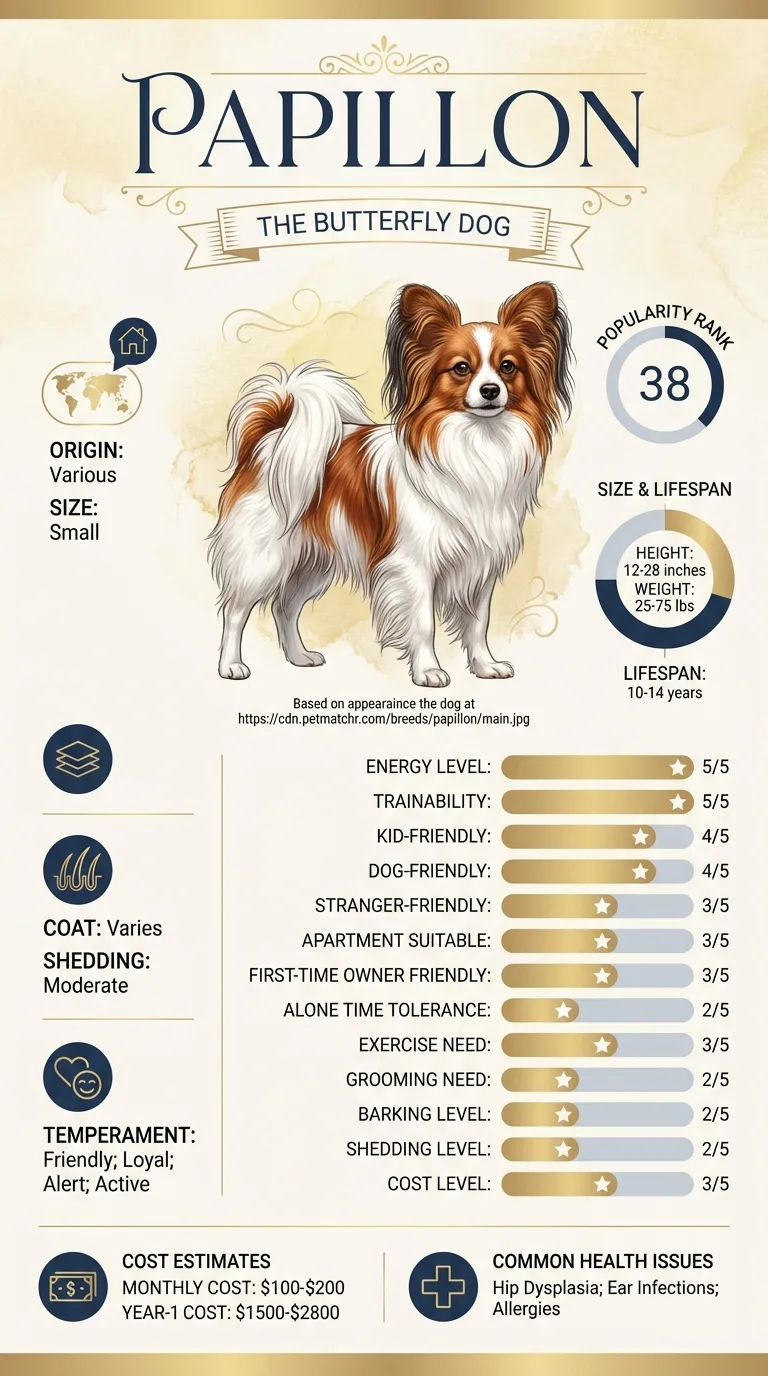
Curious owners who want to understand a condition rather than memorise a symptom list, and anyone whose Papillon burps, gurgles and looks bloated after supper and who wants to know what is really going on in there.
This guide is not medical advice. If your dog shows pain, sudden behavior change, or worsening symptoms, consult a licensed veterinarian.
Some links may be affiliate links. We may earn a commission at no extra cost to you. We only suggest products we believe are helpful for dog owners.
We research and check what we publish, but we do not warrant that any figure, date, price, or statement is accurate, complete, or current, and we accept no liability for any loss, cost, injury, or other harm arising from the use of this site. Use it as one reference among several. You remain responsible for your own decisions and for your dog's care - confirm anything that matters with a licensed veterinarian or another qualified professional before you act on it. Full disclaimer.
Gastric dilatation-volvulus is a two-stage mechanical failure: a stomach distends with gas, then rotates about its own axis, sealing both openings and strangling its own blood supply. The consequences are circulatory rather than digestive, and they develop over hours. The conditions needed for the rotation itself depend heavily on the dog's thoracic shape, which is why the disease is so unevenly distributed across breeds.
Common enough in giant breeds to justify preventive surgery, and rare enough in toy breeds that most small-animal vets see very few cases in dogs under twenty pounds. It does not appear on the Papillon's documented health list. A Papillon owner is far more likely to meet this condition as a worry than as a diagnosis.
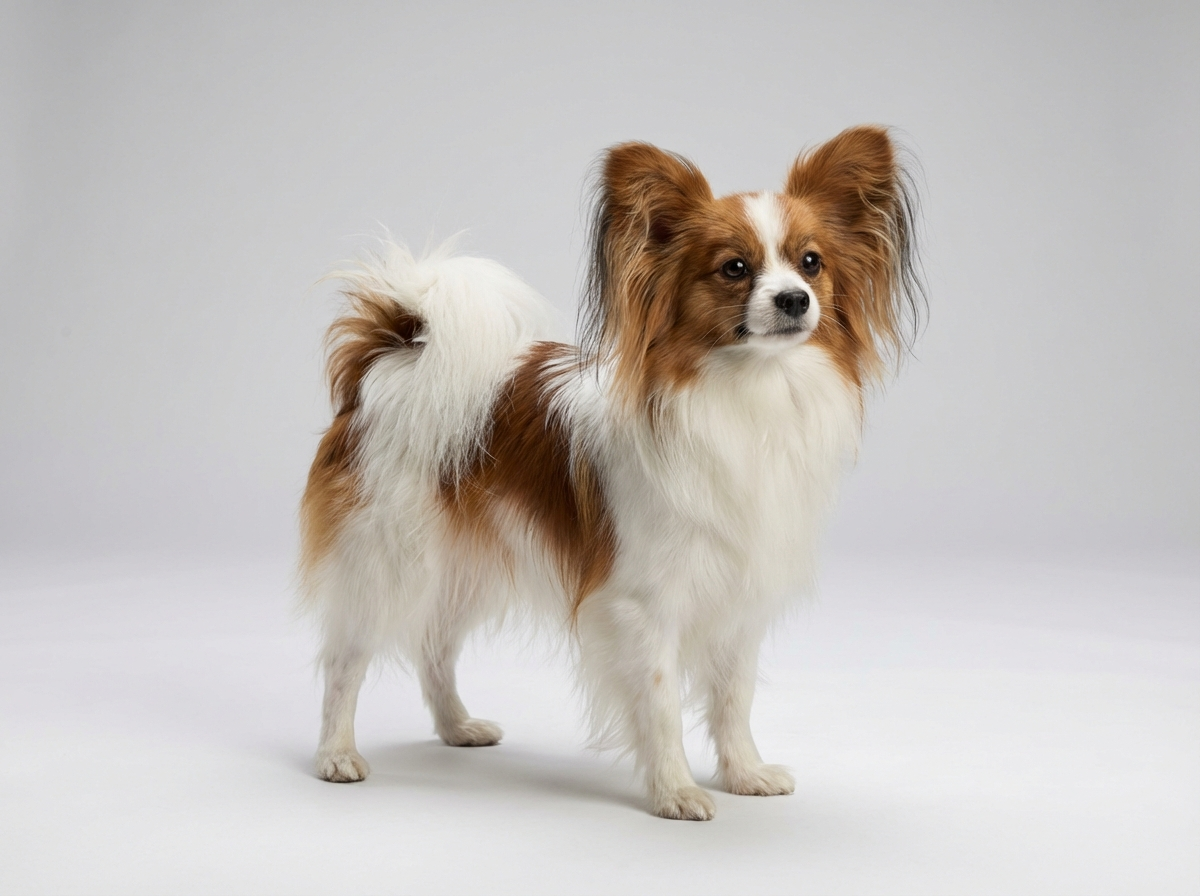
The Papillon's protection is structural rather than genetic. At eight to eleven inches tall and five to ten pounds, the breed carries a compact, moderately proportioned ribcage in which the abdominal organs are packed closely together. There is no long vertical drop for a loaded stomach to swing through, and the absolute mass of a toy dog's stomach contents is small even after a big meal. None of the breed's documented issues, which centre on the knees, eyes, teeth, skull and windpipe, touch the gastrointestinal tract.
The circumstances that fill a stomach with gas are the same in any size of dog: eating fast, competing with another animal for food, gulping while excited, and drinking a large volume in one go after exercise. In a Papillon those habits produce discomfort, flatulence and the occasional dramatic-looking round belly. What changes with a small dog is the consequence, not the behaviour.
Any dog attempting to vomit repeatedly and producing nothing, with a distended and firm abdomen, needs emergency assessment immediately regardless of breed or size. The same goes for pale, white or grey gums, obvious pain over the abdomen, restlessness with an inability to settle, laboured breathing, or collapse. This is one of the few conditions where the difference between two hours and six hours changes survival. For a Papillon showing a round belly with normal demeanour, normal gum colour and a willingness to lie down, a same-day or next-day appointment is proportionate, and worsening at any point converts it to an emergency.
See all Papillon health problems, which breeds are prone to bloat gdv, or the full Papillon breed guide for temperament, exercise needs and ownership costs.
In a genuine case, signs to surgery within a couple of hours gives the best chance, followed by three to five days of hospital care with heart rhythm monitoring and two to three weeks of restricted activity. In a Papillon, the realistic version of this topic runs on a much shorter clock: a bloated-looking evening, a calm assessment of gums and behaviour, and a normal dog by morning.
Understanding rather than vigilance. Success is an owner who knows why chest shape matters, who is not startled by a gurgling stomach, who feeds in a way that keeps swallowed air down, and who could describe the unproductive-retching picture accurately to an emergency nurse if they ever needed to.
Picture a bag of water hanging from two points inside a box. If the box is deep and narrow, the bag hangs low, has vertical room to swing, and its weight sits far from the axis it would rotate around. If the box is small and squarish, the bag is packed against the walls and organs surrounding it, and there is nowhere for it to go.
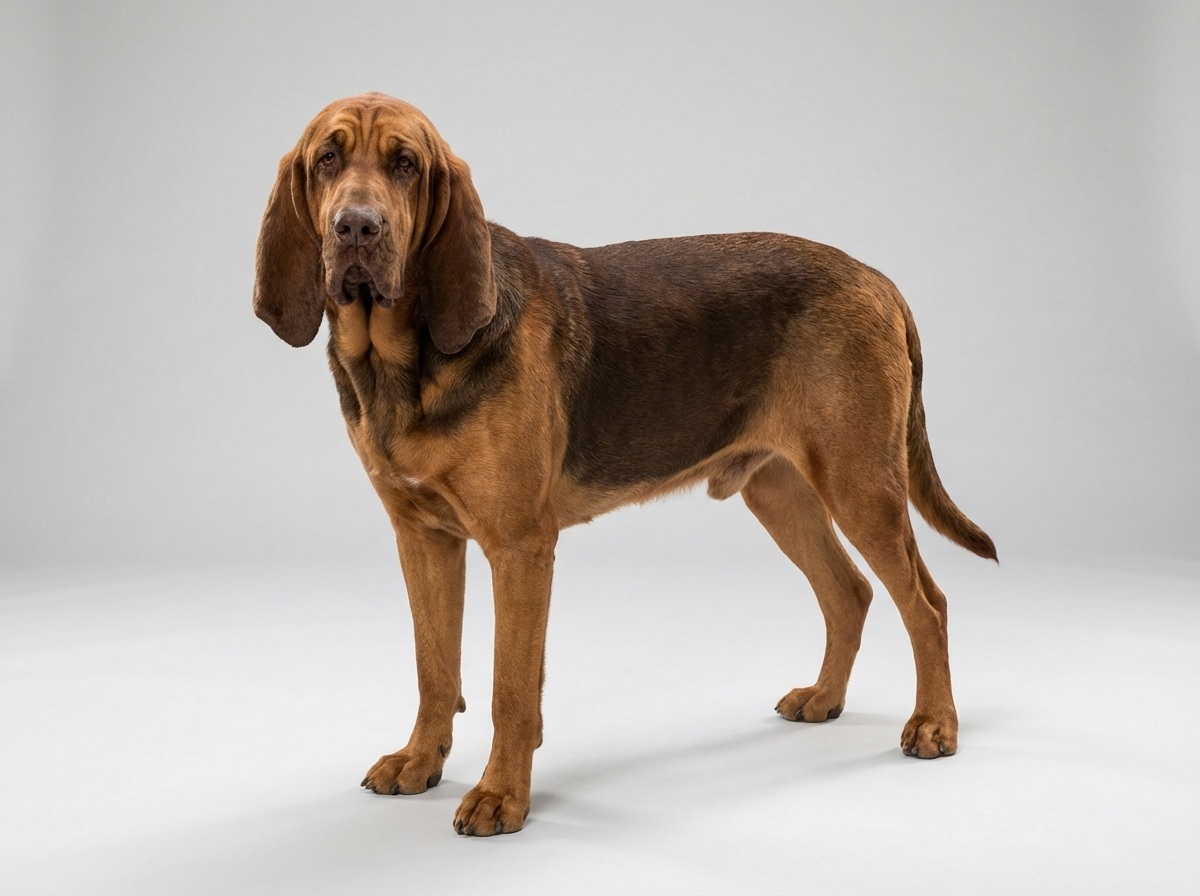
That is close to the real difference between a Great Dane's thorax and a Papillon's. It is why chest depth-to-width ratio is one of the strongest measured predictors of torsion in dogs, ahead of diet, bowl height and almost everything else owners argue about.
Gas supplies the second half of the problem. A distended stomach is heavier, larger and more mobile than an empty one, so gas accumulation is what turns a possible rotation into an actual one. Once it turns, both ends seal, gas can no longer escape in either direction, and the pressure rises without limit.

It is not the stomach bursting, which is what most people assume. Two other things happen first.
The rotated, distended stomach presses on the caudal vena cava, the large vein carrying blood from the back half of the body back to the heart. Return flow drops, so the heart has less to pump, and blood pressure collapses even though not a drop of blood has been lost. That is why a GDV dog goes into shock so quickly.
At the same time the stomach's own blood supply is twisted shut, so the wall begins to die. Dead tissue releases substances that poison the heart's electrical system, which is why these dogs develop dangerous rhythm disturbances during and after surgery and need days of monitoring.
Understanding that chain explains the urgency better than any warning ever does. It also explains why decompression, getting the pressure down, is done before anything else, and why a dog can look stable at the door and be critical an hour later.
If you think your Papillon has bloat, the plan is three steps: write down what you have seen and when it started, book a veterinary appointment rather than waiting for the next flare, and take video of the behaviour or symptom before you go — the thing you are worried about rarely happens in the consulting room. Screening in the parents covers patellar luxation, progressive retinal atrophy, dental disease.
What the vet visit should produce is a diagnosis and a written plan, not just reassurance: what is being ruled out, what the monitoring interval is, and which signs mean you come back sooner. Ask what the treatment costs across a year rather than per visit, because that is the number that decides whether you are managing this condition or reacting to it.
Between appointments, keep a short log — dates, what you saw, what changed. It is the single most useful thing an owner brings to a follow-up, and for bloat it is often what separates a clear pattern from a guess.
Petra kept two dogs: a Papillon called Suki and, for a fortnight, her sister's Weimaraner. Both were fed at the same time from bowls on the kitchen floor, and both raced through their food. One evening the Weimaraner became restless, retched repeatedly without bringing anything up, and his abdomen tightened visibly over half an hour. Petra drove him to the emergency hospital and he went to surgery for a GDV that night. Suki had eaten just as fast and had a round belly of her own. She lay down on the sofa and slept, gums pink, and was normal by morning. The contrast taught Petra more than any article had: the same behaviour, the same meal, two entirely different animals underneath. Both dogs now eat from slow feeders in separate rooms.
Key takeaway: It was never about how fast the dogs ate. The difference was the shape of the chest the food landed in, and the amount of room a loaded stomach had to move.
It is among the most consistent findings in the research. Dogs with a deep, narrow thorax relative to width have markedly higher risk, which is why the classic patients are Great Danes, Irish Setters, Weimaraners and Standard Poodles rather than compact, square-bodied dogs.
It is unusual. Distension supplies the weight and the room that make rotation possible, which is why the condition is named for both parts. Gas alone in a small dog is far more likely to be ordinary aerophagia from gulping food.
Because it swallowed air along with the food. Small dogs eat fast, and a stomach containing food and swallowed air is genuinely larger. A dog that stays bright, will lie down and passes gas or a stool within a couple of hours is describing digestion rather than an emergency.
A surgical procedure that fixes the stomach wall to the body wall so it cannot rotate. It is done at the time of GDV surgery to prevent recurrence, and preventively in high-risk giant breeds. It is not part of the standard plan for toy dogs.
Yes. Simple gastric dilatation, where the stomach fills with gas but does not rotate, is less immediately deadly and can sometimes be relieved without surgery. Telling the two apart requires a radiograph, not a hand on the belly, so the assessment is still a veterinary one.
It is a sensible precaution rather than a proven cause. The association is far weaker than body size and chest shape. For a Papillon a quiet half hour after eating is worth doing mainly because it stops the gulping and rushing that make a small dog uncomfortable.
Leverage. A large, deep, narrow chest gives a heavy gas-filled stomach room and mechanical advantage to rotate. A compact toy-breed abdomen packs the organs closely and offers neither.
Circulatory collapse. The distended stomach compresses the main vein returning blood to the heart, and the twisted stomach wall begins to die and releases toxins that disturb the heart rhythm.
On its own, no. Gurgling with a bright, comfortable dog that will lie down is normal digestion. Gurgling with retching, a hard belly, pale gums or restlessness is a different picture entirely.
Two or three measured meals, fed in a quiet spot away from competition, using a slow feeder or scattered across a mat. Less gulping means less swallowed air and a flatter, more comfortable dog.
You can change the mechanics rather than the impulse. Puzzle feeders make speed impossible, and a Papillon's high trainability means it engages with the puzzle rather than sulking about the delay.
A one-page prep sheet for this condition: the signs, the questions to ask, what to get priced. Unlocks here.
You get: Vet visit prep sheet
No spam. One-click unsubscribe. See our privacy policy.
Preview page 1 before you decide.