Behavior
What are Jack Russell Terrier bloat (gdv) quick tips?
Feed smaller meals, avoid vigorous activity after eating, and use slow feeders. These habits can help reduce the risk of bloat.

Quick answer
What are Jack Russell Terrier bloat (gdv) quick tips?
Feed smaller meals, avoid vigorous activity after eating, and use slow feeders. These habits can help reduce the risk of bloat.
Jack Russell Terrier bloat (GDV) is a serious condition that can affect your dog's life. It occurs when the stomach twists, trapping gas and causing severe pain.
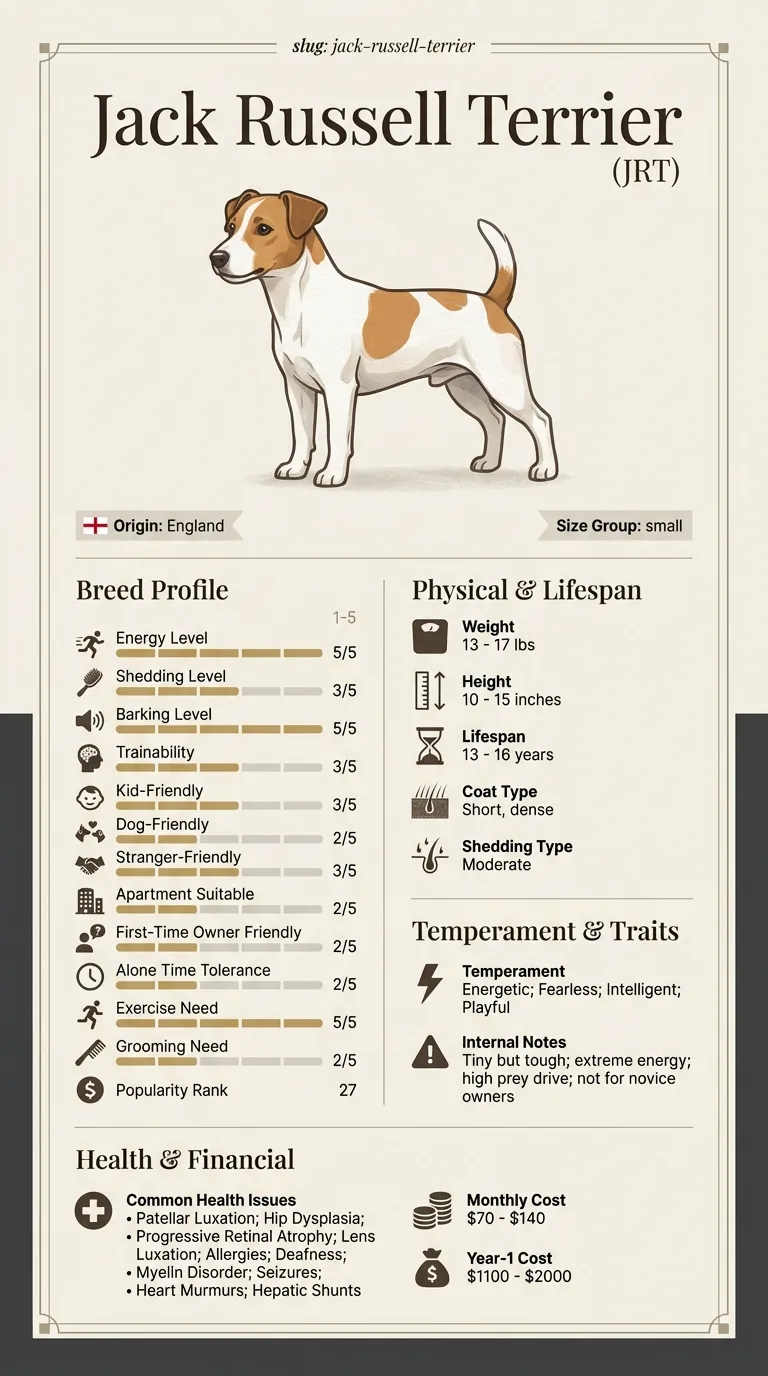
Owners of Jack Russell Terriers, especially those with active or anxious dogs, often face this issue. It's particularly concerning for first-time pet owners who may not recognize the symptoms.
This guide is not medical advice. If your dog shows pain, sudden behavior change, or worsening symptoms, consult a licensed veterinarian.
Some links may be affiliate links. We may earn a commission at no extra cost to you. We only suggest products we believe are helpful for dog owners.
We research and check what we publish, but we do not warrant that any figure, date, price, or statement is accurate, complete, or current, and we accept no liability for any loss, cost, injury, or other harm arising from the use of this site. Use it as one reference among several. You remain responsible for your own decisions and for your dog's care - confirm anything that matters with a licensed veterinarian or another qualified professional before you act on it. Full disclaimer.
Check this first
Bloat, or gastric dilatation-volvulus (GDV), is a serious condition that can be life-threatening for your Jack Russell Terrier. Recognizing the signs can be the difference between life and death. If your dog shows any red-flag symptoms, you need to call your vet immediately.
If any of these apply, call your vet or an emergency clinic now. The rest of this page is for the cases that are not an emergency.
Jack Russell Terrier bloat, or GDV (gastric dilatation-volvulus), is a serious condition where the stomach twists, leading to life-threatening complications. Daily, a Jack Russell Terrier may exhibit signs of distress, such as restlessness, drooling, or attempting to vomit without success. This condition is especially dangerous because it can escalate quickly, often requiring immediate veterinary intervention.
While bloat is more common in larger breeds, Jack Russell Terriers can still be susceptible, especially if they have a family history. It’s important for owners to be aware of the signs and risks, as timely action can be the difference between life and death.
Jack Russell Terriers are small, energetic dogs that can be prone to bloat (GDV) due to their size and shape. Their deep chests can trap gas, leading to a dangerous condition when combined with their enthusiastic eating habits. Additionally, their high energy levels can cause them to gulp air while playing or eating, increasing the risk of bloat.
Environmental factors also play a role in bloat (GDV). Stressful situations, such as a chaotic household or frequent changes, can trigger episodes. Feeding habits, like rapid eating or exercising immediately after meals, can further exacerbate the risk.
If your dog shows signs of bloat, such as a swollen abdomen, restlessness, or excessive drooling, contact your vet immediately. Additionally, if you have concerns about your dog's eating habits or if they have experienced bloat in the past, it’s wise to consult your veterinarian.
When dealing with Jack Russell Terrier bloat (GDV), it's important to avoid common mistakes that could worsen the situation. Here are some behaviors to steer clear of:
Start here: Jack Russell Terrier Most Common Genetic Disorders
See all Jack Russell Terrier health problems, which breeds are prone to bloat gdv, or the full Jack Russell Terrier breed guide for temperament, exercise needs and ownership costs.
Addressing Jack Russell Terrier bloat (GDV) typically takes several weeks to months, depending on the severity of the dog's condition and the owner's commitment to preventive measures.
Success means your Jack Russell Terrier experiences fewer digestive issues, maintains a healthy weight, and shows increased comfort during and after meals.
These symptoms indicate you should seek veterinary care right away: - Swollen abdomen that feels tight or hard. - Unproductive attempts to vomit or retch. - Signs of distress, such as pacing or drooling. - Rapid breathing or a racing heart rate. - Weakness or collapse.

If your Jack Russell Terrier shows less severe signs, such as a slight bloating without distress, you can monitor them closely for a few hours. Keep an eye on their behavior, appetite, and any changes in their abdomen. If they worsen or don't improve, contact your vet.

Always have a plan in place for emergencies. This includes knowing the nearest veterinary clinic's contact information and having a way to transport your dog quickly. Being prepared can save your Jack Russell Terrier's life.
When Sarah adopted Max, her energetic Jack Russell Terrier, she quickly noticed he was prone to bloating after meals. Worried about the risk of GDV, she researched how to stop Jack Russell Terrier bloat. Sarah began feeding Max smaller, more frequent meals and avoided exercise immediately after eating. Over a few months, Max's digestive issues reduced significantly, and he became happier and healthier overall.
Key takeaway: Preventing Jack Russell Terrier bloat requires consistent meal management and awareness of your dog's eating habits.
Bloat (gdv) can occur due to several factors, including rapid eating, exercise right after meals, or stress. Certain breeds, including Jack Russell Terriers, are more prone to this condition, so it's essential to monitor their eating habits and activity levels.
To help prevent bloat in your Jack Russell Terrier, feed smaller meals throughout the day rather than one large meal. Avoid vigorous exercise immediately after eating, and consider using a slow feeder to reduce gulping. Regular vet check-ups are also important for overall health.
While training won't directly prevent bloat, teaching your dog to eat slowly and establishing a calm meal routine can be beneficial. Using commands to encourage patience during feeding can help reduce the risk.
If you suspect your Jack Russell Terrier has bloat (GDV), get to the vet immediately. This condition is a medical emergency that can progress rapidly, and timely intervention is critical. Do not try to treat it at home.
Early signs of bloat in a Jack Russell Terrier include restlessness, pacing, and an inability to settle down. You may also notice a swollen abdomen and signs of distress such as whining or drooling. If you observe these symptoms, it's crucial to seek veterinary help immediately.
Yes, bloat (GDV) can occur in older Jack Russell Terriers, although it is more common in younger dogs. Age may contribute to a decrease in digestive efficiency, increasing the risk. Always monitor older dogs for any signs of discomfort or changes in behavior.
While there isn't a definitive genetic link for bloat (GDV) in Jack Russell Terriers, certain breeds are more prone to this condition. It is important to be aware of your dog's family history and discuss any concerns with your vet.
Feed smaller meals, avoid vigorous activity after eating, and use slow feeders. These habits can help reduce the risk of bloat.
Treatment for bloat can range from $1,500 to $3,000, depending on the severity and required procedures. It's essential to budget for potential emergencies.
Long-term effects can include digestive issues or a higher risk of future bloat. Regular vet check-ups can help monitor any changes.
Yes, stress can contribute to bloat. Creating a calm environment during meals can help reduce anxiety and the risk of bloat.
A one-page prep sheet for this condition: the signs, the questions to ask, what to get priced. Unlocks here.
You get: Vet visit prep sheet
No spam. One-click unsubscribe. See our privacy policy.
Preview page 1 before you decide.