Behavior
What are Yorkshire Terrier bloat (gdv) quick tips?
Feed smaller, more frequent meals to your Yorkie to help prevent bloat. Avoid exercise immediately after meals and consider a slow feeder to reduce gulping.

Quick answer
What are Yorkshire Terrier bloat (gdv) quick tips?
Feed smaller, more frequent meals to your Yorkie to help prevent bloat. Avoid exercise immediately after meals and consider a slow feeder to reduce gulping.
Yorkshire Terrier bloat (GDV) is a serious condition that can lead to life-threatening situations. It involves stomach torsion, which can cause extreme discomfort and even death if not treated promptly.
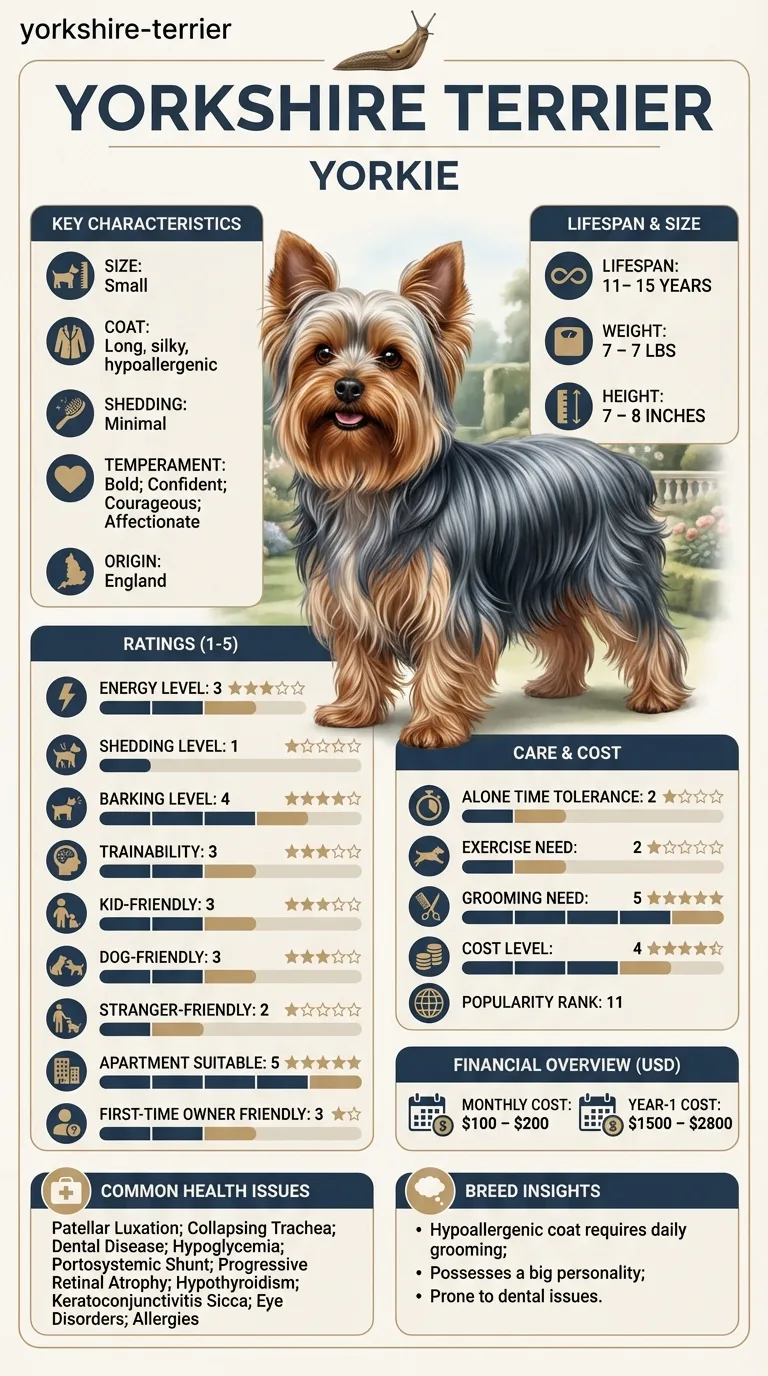
This problem affects Yorkie owners, particularly those who may not be familiar with the breed's specific health needs. Busy families or first-time dog owners may find it challenging to recognize the early signs of bloat, making it crucial to stay informed.
This guide is not medical advice. If your dog shows pain, sudden behavior change, or worsening symptoms, consult a licensed veterinarian.
Some links may be affiliate links. We may earn a commission at no extra cost to you. We only suggest products we believe are helpful for dog owners.
We research and check what we publish, but we do not warrant that any figure, date, price, or statement is accurate, complete, or current, and we accept no liability for any loss, cost, injury, or other harm arising from the use of this site. Use it as one reference among several. You remain responsible for your own decisions and for your dog's care - confirm anything that matters with a licensed veterinarian or another qualified professional before you act on it. Full disclaimer.
Check this first
Yorkshire Terrier bloat (GDV) can be a life-threatening condition. It's essential to know when to act quickly. If your Yorkie exhibits any of the following red-flag signs, call your vet immediately:
- Swollen abdomen: If your dog's belly looks noticeably distended, this is a clear warning sign. - Unproductive attempts to vomit: If your pup tries to vomit but nothing comes up, it’s a serious concern. - Restlessness or pacing: If your Yorkshire Terrier seems unable to settle down and is pacing or whining, this signals distress.
- Rapid breathing or panting: Increased respiratory rate can indicate pain or anxiety.
In contrast, there are milder symptoms you can monitor at home. If your dog shows signs like mild discomfort, slight bloating, or a reduced appetite, keep an eye on them. Make a note of their behavior for the next few hours.
If symptoms worsen or persist, seek veterinary advice.
It's vital to trust your instincts. If you're unsure, it's always better to err on the side of caution. Early intervention can save your Yorkie's life.
Remember, Yorkshire Terriers are small, and their health can decline quickly. Be proactive and attentive to any changes in their behavior or physical condition.
If any of these apply, call your vet or an emergency clinic now. The rest of this page is for the cases that are not an emergency.
Yorkshire Terrier bloat (gdv) is a serious condition where the stomach twists, causing a buildup of gas and blood. This can lead to severe pain and can be life-threatening if not treated quickly. Common signs include a swollen abdomen, restlessness, and excessive drooling. It’s important to monitor your Yorkie's behavior closely, as this condition can escalate rapidly.
While bloat (gdv) is relatively rare in Yorkshire Terriers compared to larger breeds, it can still occur and is a serious concern. Owners should be aware of the symptoms and potential triggers, especially since these small dogs have unique health vulnerabilities.
Yorkshire Terriers, being small dogs, have a unique anatomy that makes them more susceptible to bloat (GDV). Their narrow chests can create a space for the stomach to twist, especially during or after eating. Additionally, their energetic nature can lead to gulping air, increasing bloat risks.
Environmental factors also play a role. Stressful situations, such as loud noises or changes in routine, can contribute to anxiety and lead to bloat. Feeding practices, such as rapid eating or large meals, can exacerbate the problem, especially if combined with vigorous exercise.
If you notice signs of bloat, such as a swollen abdomen, retching without vomiting, or signs of distress, contact your vet immediately. Bloat is a serious condition that requires prompt medical attention. Additionally, if your Yorkie experiences frequent gastrointestinal issues, a vet visit is warranted to rule out any underlying health concerns.
Avoiding common pitfalls can significantly improve your Yorkshire Terrier's chances of overcoming bloat (GDV). Here are some mistakes to watch out for.
Start here: Yorkshire Terrier Most Common Genetic Disorders: Screening
See all Yorkshire Terrier health problems, which breeds are prone to bloat gdv, or the full Yorkshire Terrier breed guide for temperament, exercise needs and ownership costs.
Managing Yorkshire Terrier bloat (gdv) requires ongoing observation and proactive care. You’ll likely see significant improvements within 4 to 6 weeks of implementing changes like feeding habits and care.
Success means your Yorkie is less prone to episodes of bloat, shows improved eating behavior, and has a more stable digestion. Regular vet check-ups and monitoring are essential.
Emma, a busy vet tech in Denver, noticed her Yorkshire Terrier, Bella, frequently experiencing discomfort after meals. After a particularly scary episode of bloat, Emma consulted her vet. They established a new feeding routine, switching to smaller, more frequent meals and avoiding vigorous play right after eating. Emma also enrolled Bella in a training class focused on calm behavior around food. Over the next month, Bella became more relaxed during meal times, and her episodes of bloat decreased significantly.
Key takeaway: Proactive management of feeding routines and behavior can significantly reduce the risk of Yorkshire Terrier bloat (gdv).
Yorkshire Terrier bloat, or GDV, occurs when the stomach twists, trapping gas and food inside. Factors like fast eating, stress, or genetics can contribute. It's crucial to recognize the signs early, as this condition can be life-threatening.
Look for symptoms like a swollen abdomen, restlessness, rapid breathing, or attempts to vomit without producing anything. If your Yorkie shows any of these signs, seek immediate veterinary help. Time is critical in these situations.
To help prevent bloat, feed your Yorkshire Terrier smaller meals throughout the day rather than one large meal. Avoid vigorous exercise after eating and consider using a slow feeder to reduce gulping. Regular vet check-ups can also help monitor any health issues.
If you suspect your Yorkshire Terrier has bloat, take them to the vet immediately. Treatment often involves decompressing the stomach and stabilizing your pet. Follow-up care may include medication and lifestyle changes to prevent recurrence.
Yes, some Yorkshire Terriers may have a genetic predisposition to bloat. Older dogs, those with a deep chest, or those that eat quickly are at higher risk. Regular monitoring and preventive measures are essential for at-risk pets.
Early signs of Yorkshire Terrier bloat (GDV) include restlessness, a swollen abdomen, and attempts to vomit without success. Your Yorkie may also show signs of distress or discomfort. It's crucial to act quickly, as GDV can be life-threatening.
Yes, older Yorkshire Terriers can be at risk for bloat (GDV), especially if they have a history of digestive issues. If your senior Yorkie shows any signs of discomfort or bloating, consult your vet immediately for advice.
To help prevent Yorkshire Terrier bloat (GDV), feed smaller, more frequent meals instead of one large meal. Avoid vigorous exercise immediately after eating, and consider using a slow feeder to reduce gulping. Regular vet check-ups can also help catch potential problems early.
If you suspect your Yorkshire Terrier has bloat (GDV), take them to the vet immediately. Do not wait, as this condition can escalate quickly and requires emergency treatment. Early intervention is critical to improving outcomes.
Yes, stress can contribute to digestive issues in Yorkshire Terriers, potentially increasing the risk of bloat (GDV). Ensuring a calm and stable environment for your Yorkie can help reduce stress and its associated health risks.
Feed smaller, more frequent meals to your Yorkie to help prevent bloat. Avoid exercise immediately after meals and consider a slow feeder to reduce gulping.
Look for signs like a swollen belly, excessive drooling, or attempts to vomit. If you notice these symptoms, act fast and see a vet.
Training your Yorkie to eat slowly can reduce the risk of bloat. Use commands to promote calm behavior during feeding times.
A one-page prep sheet for this condition: the signs, the questions to ask, what to get priced. Unlocks here.
You get: Vet visit prep sheet
No spam. One-click unsubscribe. See our privacy policy.
Preview page 1 before you decide.