Health
Is PRA the same thing as this breed's documented cataracts?
No, they're different diseases affecting different parts of the eye, the lens for cataracts and the retina for PRA.

Quick answer
Is PRA the same thing as this breed's documented cataracts?
No, they're different diseases affecting different parts of the eye, the lens for cataracts and the retina for PRA.
One eye disease clouds the lens you can see; the other quietly kills the light-sensing cells behind it, often before anything looks visibly wrong.
Owners noticing their dog is suddenly clumsier in dim light or reluctant to go outside at dusk, changes that are easy to write off as clumsiness rather than an early vision problem.
This guide is not medical advice. If your dog shows pain, sudden behavior change, or worsening symptoms, consult a licensed veterinarian.
Some links may be affiliate links. We may earn a commission at no extra cost to you. We only suggest products we believe are helpful for dog owners.
Progressive retinal atrophy is an inherited group of diseases causing gradual degeneration of the retina's light-sensing cells, distinct from this breed's more specifically documented cataracts. Night blindness is typically the earliest sign, often appearing well before any visible change to the eye itself, which is why it commonly goes unnoticed until vision loss is fairly advanced.
PRA isn't among this breed's most prominently documented conditions, cataracts hold that position instead, but it remains a real, if less commonly discussed, possibility worth screening for if night-vision changes appear, regardless of how it ranks against the breed's headline eye condition.
This breed's own documented health profile centers on cataracts as its flagship eye condition rather than PRA specifically, though PRA's inherited genetic basis means it can still occur here, following the same general retinal degeneration mechanism recognized across many dog breeds.
There's no significant environmental trigger for PRA itself, since it's a genetically driven degenerative process, though a well-lit, consistent home environment can meaningfully ease the transition as a dog's vision gradually declines.
Talk to your vet about any new hesitation or clumsiness in dim light or at dusk. This isn't an emergency, but earlier diagnosis gives you more time to adapt the home environment gradually rather than reacting after vision loss is already significant.
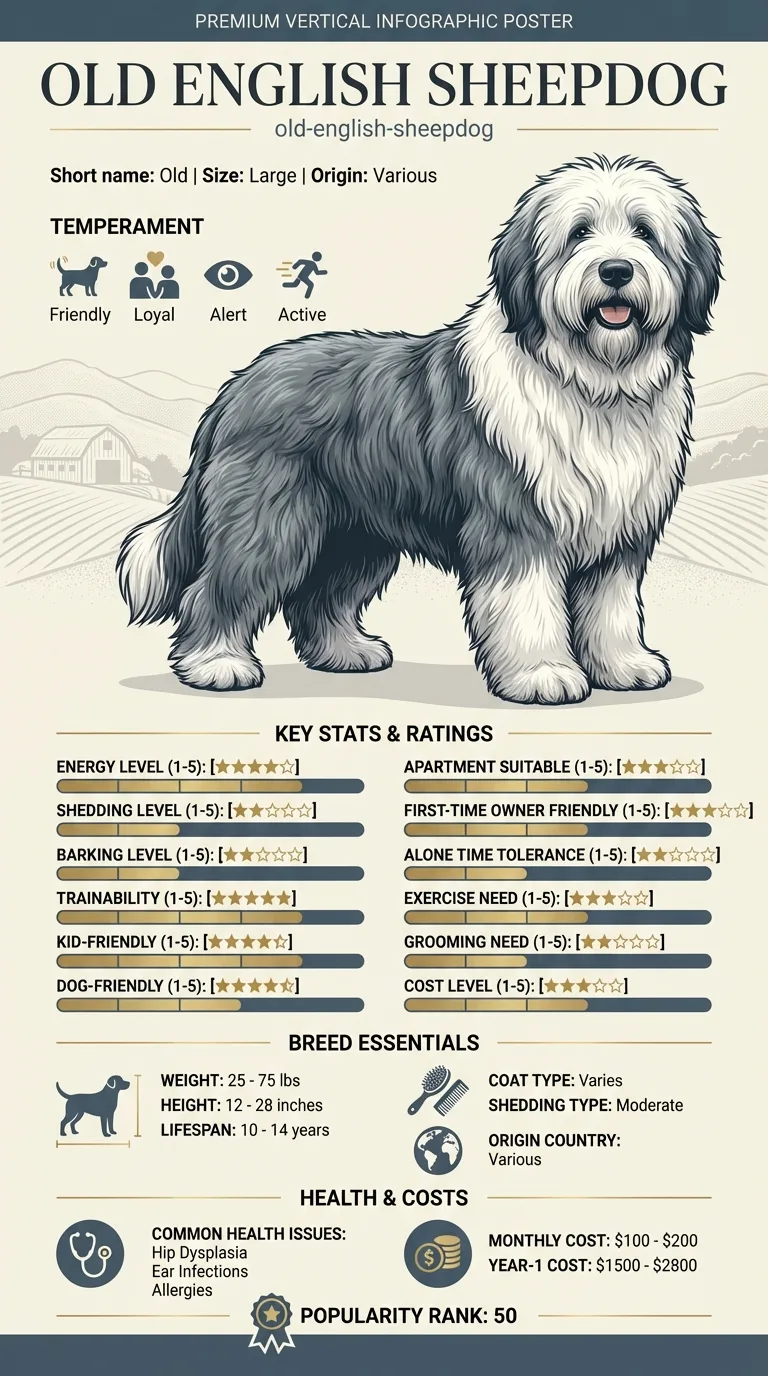
See all OLD English Sheepdog health problems, which breeds are prone to progressive retinal atrophy pra, or the full OLD English Sheepdog breed guide for temperament, exercise needs and ownership costs.
PRA typically progresses from early night blindness to more complete vision loss over months to a couple of years, giving most owners a meaningful window to adapt gradually rather than facing a sudden change.
Success looks like early recognition allowing a gradual, supported transition, with a dog that continues to navigate its home confidently using scent, memory, and consistent routines even after vision is significantly reduced.
PRA is a group of inherited diseases in which the retina's photoreceptor cells, the rods and cones responsible for detecting light, gradually degenerate over time. Because rod cells, responsible for low-light vision, are typically affected first and most severely, the earliest and most reliable sign is often night blindness: a dog that used to move confidently in a dim room or at dusk starts bumping into furniture or hesitating at the top of dark stairs. This is a meaningfully different mechanism than a cataract, which physically clouds the lens and can often be seen as a visible haze or bluish tint in the pupil. PRA, by contrast, frequently shows no visible change to the eye's appearance at all in its earlier stages, even as functional vision is already declining, which is exactly why it's so often missed until vision loss is fairly advanced.
A veterinary ophthalmologist can often identify characteristic retinal changes during a dilated eye exam, and electroretinography, a test measuring the retina's electrical response to light, can confirm reduced photoreceptor function even before changes are visible on exam. Genetic testing exists for some of the specific mutations known to cause PRA in various breeds, though its applicability depends on which mutation, if any, is relevant to a given dog's case. There's no treatment that reverses or halts PRA's progression, which typically continues toward complete blindness over months to a couple of years, but affected dogs generally adapt remarkably well to vision loss, particularly in a familiar home environment, making quality of life a real and achievable focus even without a treatment for the underlying disease.

If you think your Old has progressive retinal atrophy (pra), the plan is three steps: write down what you have seen and when it started, book a veterinary appointment rather than waiting for the next flare, and take video of the behaviour or symptom before you go — the thing you are worried about rarely happens in the consulting room. Screening in the parents covers hip dysplasia, cataracts, hypothyroidism.
What the vet visit should produce is a diagnosis and a written plan, not just reassurance: what is being ruled out, what the monitoring interval is, and which signs mean you come back sooner. Ask what the treatment costs across a year rather than per visit, because that is the number that decides whether you are managing this condition or reacting to it.
Between appointments, keep a short log — dates, what you saw, what changed. It is the single most useful thing an owner brings to a follow-up, and for progressive retinal atrophy (pra) it is often what separates a clear pattern from a guess.
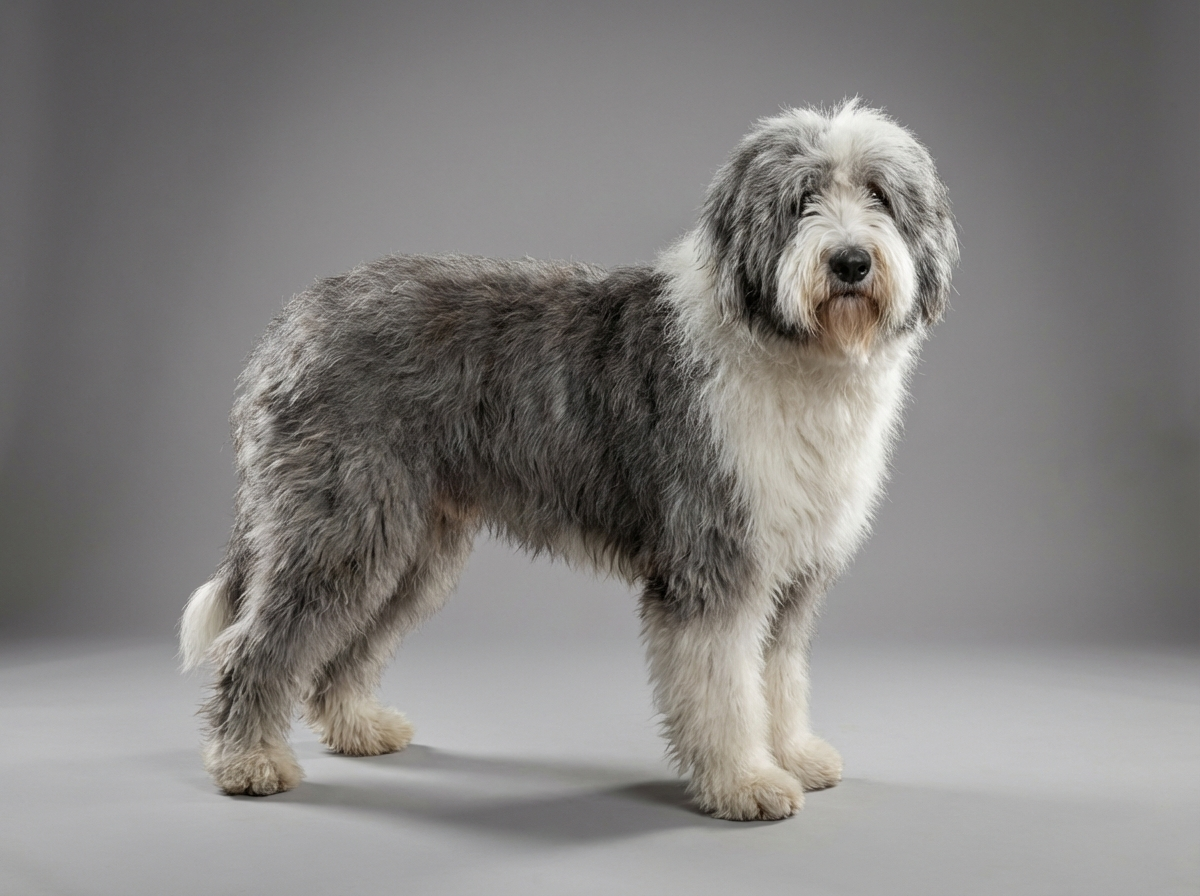
Smoke, a seven-year-old Old English Sheepdog in Portland, started pausing at the top of the deck stairs at dusk, something he'd never done before, and occasionally bumping into a side table in the dimly lit hallway at night. His owner Chris initially chalked it up to getting older, but when the pattern held steady across several weeks regardless of lighting changes in the house, he scheduled a veterinary ophthalmology exam. The exam and electroretinography confirmed early PRA, with Smoke's daytime vision still largely intact. Chris kept the furniture layout consistent and added a few night lights near stairs and hallways. Over the following year, as Smoke's vision gradually declined further, he continued moving through the house confidently, clearly relying on memory and routine rather than sight alone.
Key takeaway: A hesitation only visible at dusk was the one clue that led to an early diagnosis, giving Chris and Smoke a full year to adapt gradually instead of being caught off guard by a sudden loss of vision.
No, cataracts cloud the eye's lens and are this breed's specifically documented eye condition. PRA is a separate disease affecting the retina's light-sensing cells, and the two require different diagnostic tools to tell apart.
Night blindness is typically the earliest sign, a dog that becomes noticeably clumsier or more hesitant in dim light or at dusk, often well before any daytime vision changes are apparent.
A veterinary ophthalmologist can identify characteristic retinal changes during a dilated exam, and electroretinography can confirm reduced photoreceptor function, sometimes before visible changes appear on a standard exam.
No, there's currently no treatment that halts or reverses PRA's progression. Management instead focuses on adapting the home environment and supporting the dog's quality of life as vision declines.
It varies, but progression from early night blindness to complete blindness typically unfolds over months to a couple of years, giving most owners a meaningful window to adapt routines and environment gradually.
Yes, remarkably well in many cases, particularly in a familiar home environment where scent and memory can compensate significantly for lost vision.
Not as prominently as cataracts, which are this breed's specifically documented eye condition. PRA is a less commonly discussed risk here, though it remains a real possibility worth screening for if night-vision changes appear.
No, they're different diseases affecting different parts of the eye, the lens for cataracts and the retina for PRA.
Night blindness, a dog becoming clumsier or hesitant in dim light, often before any other visible change.
No, there's no treatment that halts progression; management focuses on adapting the environment as vision declines.
A veterinary ophthalmology exam plus electroretinography typically runs a few hundred dollars for a full workup.
Yes, many dogs adapt remarkably well to vision loss, especially in a familiar home, making quality of life a realistic and achievable goal.
A one-page prep sheet for this condition: the signs, the questions to ask, what to get priced. Unlocks here.
You get: Vet visit prep sheet
No spam. One-click unsubscribe. See our privacy policy.
Preview page 1 before you decide.