Living
Which is the better overall choice?
It's mostly a household-size question: the OES fits a bigger home with room to spare, the Yorkie fits a small space — grooming costs land at the same tier either way.

Quick answer
Which is the better overall choice?
It's mostly a household-size question: the OES fits a bigger home with room to spare, the Yorkie fits a small space — grooming costs land at the same tier either way.
Old English Sheepdog or Yorkshire Terrier? On paper they differ most on apartment suitability, and on the scales Old English Sheepdog is the heavier at 60–100 lbs. Here is how the two compare on everything that shapes an ordinary week.
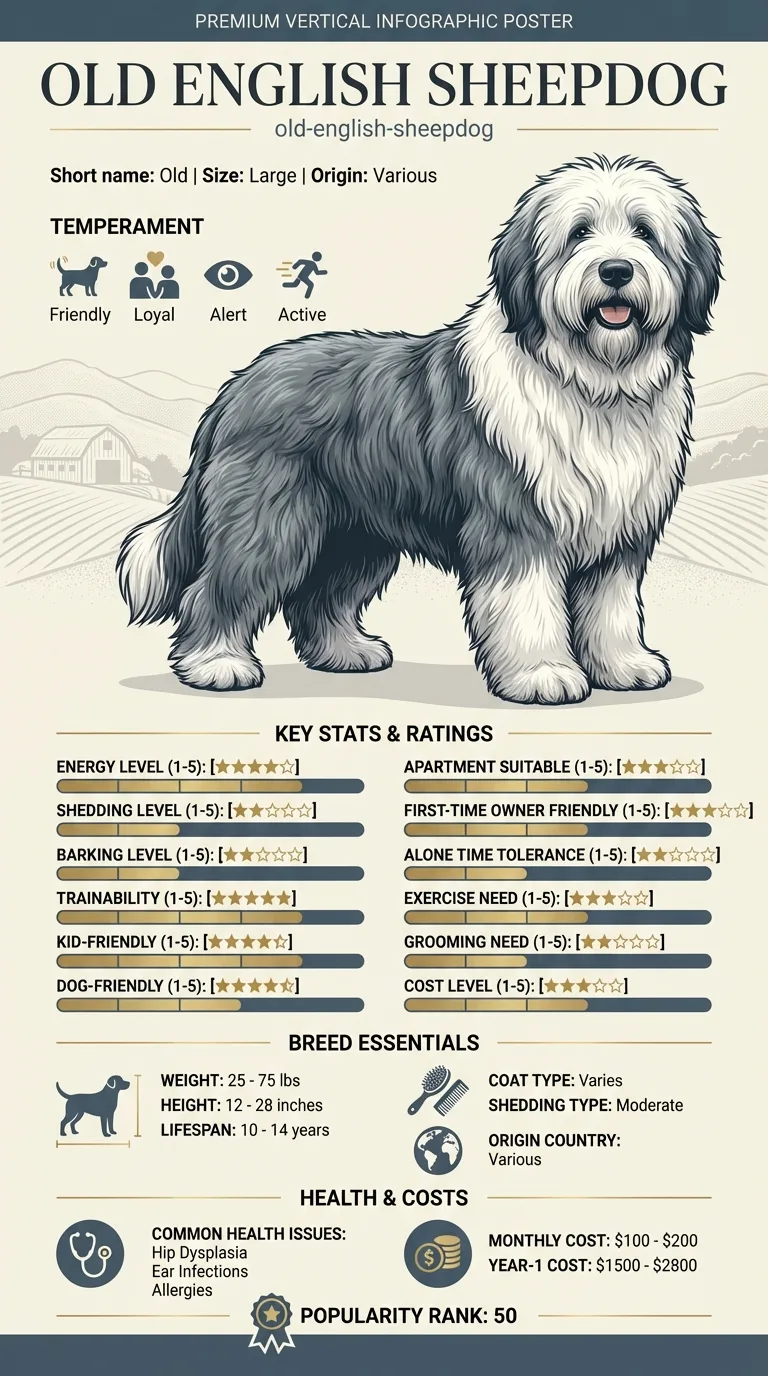
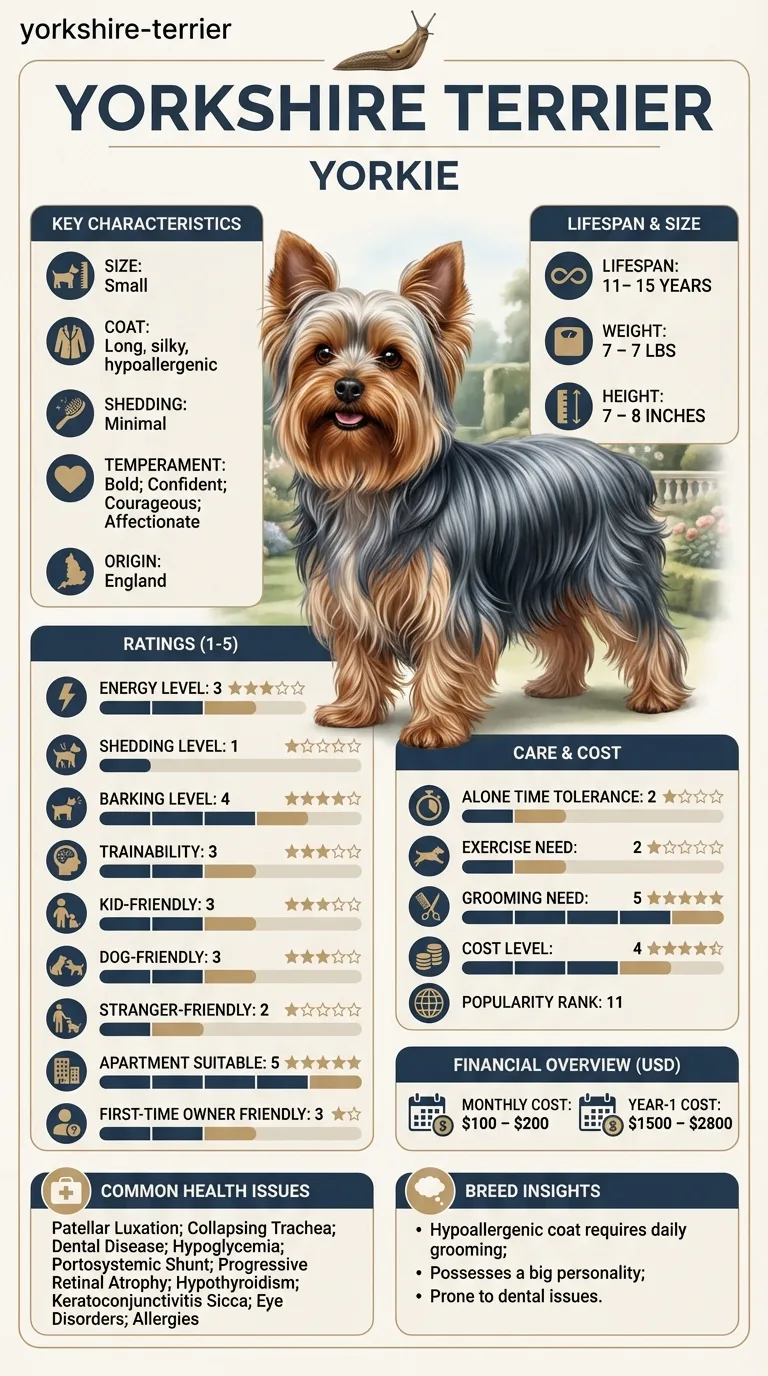
This is for someone already down to Old English Sheepdog and Yorkshire Terrier and deciding between them. For this pair the decision usually turns on apartment suitability and shedding, so those are covered first and in most detail. Anyone choosing from a flat has a clear answer here: Yorkshire Terrier rates 5/5 against 2/5. There is no origin story here — only what changes about your week.
Between Old English Sheepdog and Yorkshire Terrier, apartment suitability is what separates them, and Yorkshire Terrier is the lower-effort dog of the two to keep.
Choose Old English Sheepdog if there are young children at home, you already have another dog and you want a dog that can keep up with an active routine.
Choose Yorkshire Terrier if you are in a flat or a smaller home, this is your first dog and shedding is a problem in your house.
| Feature | old english sheepdog | yorkshire terrier | Winner |
|---|---|---|---|
| Size class | large | small | Equal |
| Weight | 60–100 lbs | 4–7 lbs | Equal |
| Height | 20–24 in | 7–8 in | Equal |
| Lifespan | 10–12 years | 11–15 years | yorkshire terrier |
| Exercise need | Moderate (3/5) | Low (2/5) | yorkshire terrier |
| Grooming need | Very high (5/5) | Very high (5/5) | Equal |
| Shedding | High (4/5) | Very low (1/5) | yorkshire terrier |
| Energy level | Moderate (3/5) | Moderate (3/5) | Equal |
| Barking | Moderate (3/5) | High (4/5) | old english sheepdog |
| Apartment suitability | Low (2/5) | Very high (5/5) | yorkshire terrier |
| Good for first-time owners | Low (2/5) | Moderate (3/5) | yorkshire terrier |
| Tolerates being alone | Low (2/5) | Low (2/5) | Equal |
| Trainability | Moderate (3/5) | Moderate (3/5) | Equal |
| Good with kids | Very high (5/5) | Moderate (3/5) | old english sheepdog |
| Good with other dogs | High (4/5) | Moderate (3/5) | old english sheepdog |
| Friendly to strangers | High (4/5) | Low (2/5) | old english sheepdog |
| Cost level | High (4/5) | High (4/5) | Equal |
| Coat | Long, shaggy double coat | Long, silky, hypoallergenic | Equal |
| Origin | Various | England | Equal |
| Typical monthly cost | $110–$240 | $100–$190 | Equal |
| Typical first-year cost | $1,700–$3,200 | $1,400–$2,900 | Equal |
Put these two side by side and the mismatch is almost comic: the OES tops out around 100 lbs and stands up to 24 inches, while the Yorkshire Terrier maxes out at 7 lbs and 8 inches. That's roughly a 14-to-1 weight difference between the top ends of each range — one of the widest size gaps on this site.
Despite the size gap, energy levels sit closer than you'd expect — moderate (3/5) for both breeds. Exercise need tips slightly toward the OES, moderate (3/5) against the Yorkie's low (2/5). Neither dog needs marathon exercise, which is a little surprising given the OES's working-dog background. A Yorkie's short legs and small size naturally cap how much exercise it needs regardless of temperament.
Here's the real surprise: both breeds rate very high (5/5) for grooming need, tying despite being nearly opposite in size. The OES's long double coat mats without regular brushing; the Yorkie's long, silky coat needs just as much upkeep to avoid tangles, even with far less of it. Shedding splits sharply — high (4/5) for the OES against very low (1/5) for the Yorkie.
The Yorkie wins for small spaces — very high (5/5) apartment suitability against the OES's low (2/5), tracking with the size difference. Barking runs the other direction, though: high (4/5) for the Yorkie against moderate (3/5) for the OES, so a small apartment with a Yorkie may mean more noise, not less. Both tie at low (2/5) for tolerating time alone.
The Yorkie rates slightly better for first-time owners, moderate (3/5) against the OES's low (2/5), but trainability itself ties at moderate (3/5) for both. Neither breed is difficult to train exactly — they're just not the most eager-to-please dogs on this site. Both benefit from early, consistent routines rather than one dramatic training push, and patience matters more than raw trainability score for either.
The OES rates ahead of the Yorkie across the board: very high (5/5) with kids against moderate (3/5), high (4/5) with other dogs against moderate (3/5), and high (4/5) friendliness to strangers against the Yorkie's low (2/5). If your household is loud and full of visitors, the numbers favor the OES. The Yorkie's boldness and confidence come through more as one-owner devotion than broad social ease.
The Yorkie lives longer on paper — 11 to 15 years against the OES's 10 to 12 — and the two breeds' health risks barely overlap, sharing only hypothyroidism. The OES's remaining risks (hip dysplasia, bloat, a rare respiratory condition) are typical large-breed concerns; the Yorkie's ten-item list leans toward small-breed issues instead, like collapsing trachea and hypoglycemia. Dental disease and eye disorders round out the Yorkie's list, both common concerns in toy breeds generally.
Cost level ties at high (4/5) for both breeds, easy to miss given the size difference. The dollar ranges are close too: $110–$240 monthly for the OES against $100–$190 for the Yorkie, and $1,700–$3,200 against $1,400–$2,900 in year one. Grooming, not food, is likely doing the heavy lifting on the Yorkie's side of that number. Food costs should tilt the other way, in the Yorkie's favor, given how little a 7-lb dog eats compared to a 100-lb one.
Old English Sheepdog weighs 60–100 lbs and lives 10–12 years; Yorkshire Terrier weighs 4–7 lbs and lives 11–15 years. The two diverge most on apartment suitability, shedding and good with kids and 1 other rated axes. They are level on tolerates being alone, cost level and energy level, so those cannot decide it. Where the table declares a winner it means less work for the owner, nothing more; descriptive rows are left as ties on purpose. The value here is in the differences between the two columns; treat any single score as approximate.

By a wide margin — up to 100 lbs for the OES against a top weight of 7 lbs for the Yorkie, roughly 14 to 1 at the high end.
No — shedding is one of the biggest differences here. The OES rates high (4/5) while the Yorkie rates very low (1/5), even though both need very high (5/5) grooming effort.
Somewhat better suited than the OES — moderate (3/5) for first-time owners against low (2/5) — though its high grooming need and vocal tendencies are still real commitments.
The Yorkie, clearly — very high (5/5) apartment suitability against the OES's low (2/5). Just expect more barking, rated high (4/5) for the Yorkie against moderate (3/5) for the OES.
Slightly — $100–$190 a month against $110–$240 for the OES, though both rate high (4/5) on overall cost level, unusual for such different-sized dogs.
Only hypothyroidism overlaps. Otherwise their risks split along size lines — large-breed issues for the OES, small-breed issues like collapsing trachea and hypoglycemia for the Yorkie.
Grooming. The Yorkie's small size keeps food and medication costs down, but its very high (5/5) grooming need — the same rating as the much larger OES — pulls its overall cost level up to match.
It's mostly a household-size question: the OES fits a bigger home with room to spare, the Yorkie fits a small space — grooming costs land at the same tier either way.
Closer than the size gap suggests: $110–$240 for the OES versus $100–$190 for the Yorkie.
The OES slightly, moderate (3/5) against the Yorkie's low (2/5) — though neither is a high-energy demand.
The Yorkie, typically 11 to 15 years against the OES's 10 to 12.
Secure checkout on Stripe. We never see your card.
7-day money-back guarantee. Instant access.
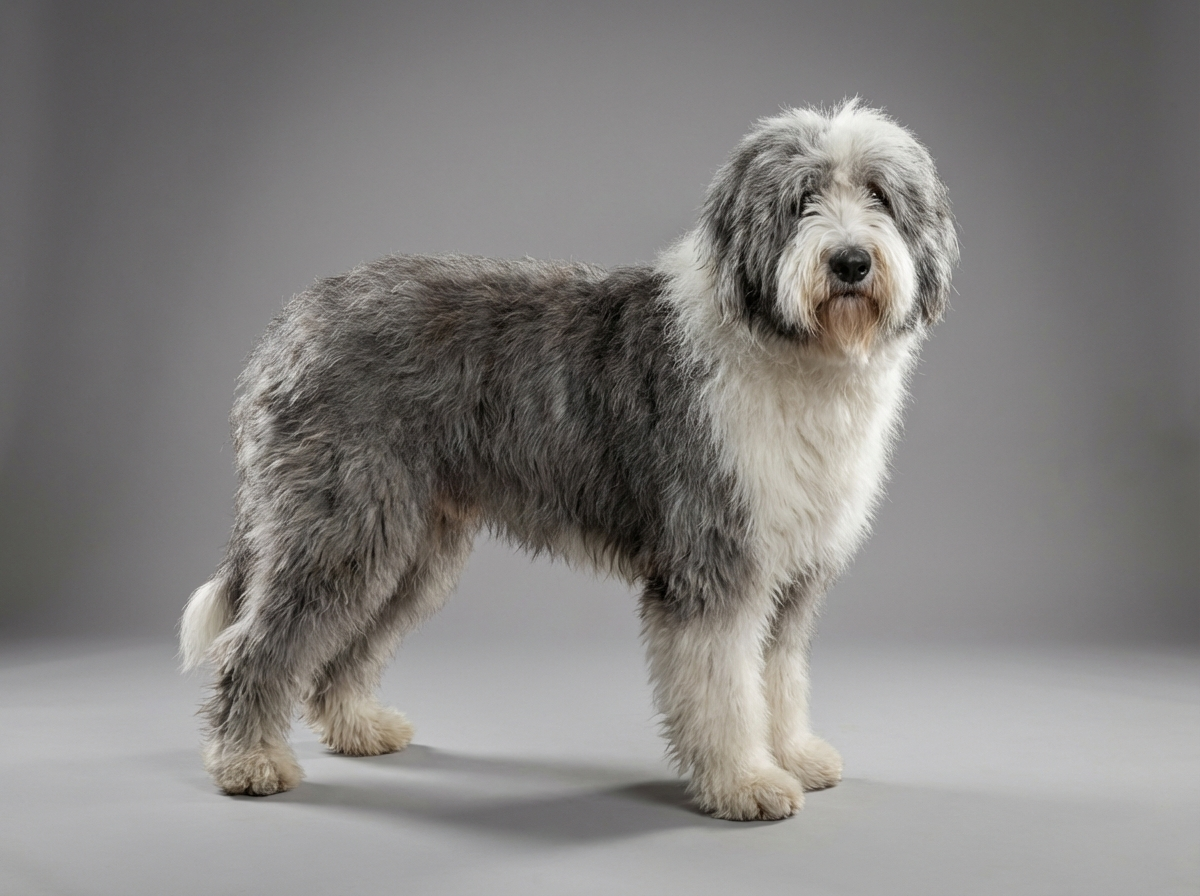
Health information here is general and is not veterinary advice. If your dog shows pain, sudden behaviour change, or worsening symptoms, consult a licensed veterinarian.
Some links on this site are affiliate links. We may earn a commission at no extra cost to you, and we only suggest products we believe are helpful for dog owners.
We research and check what we publish, but we do not warrant that any figure, date, price, or statement is accurate, complete, or current, and we accept no liability for any loss, cost, injury, or other harm arising from the use of this site. Use it as one reference among several. You remain responsible for your own decisions and for your dog's care - confirm anything that matters with a licensed veterinarian or another qualified professional before you act on it. Full disclaimer.
Match your lifestyle to the right dog.
Take quizNot sure which breed is right for you? Take our 2-minute quiz to find out.
Take the quiz