Health
Does this breed carry the CDDY gene?
No, that trait is associated with short-legged, long-backed breeds, a body type this breed doesn't have.

Quick answer
Does this breed carry the CDDY gene?
No, that trait is associated with short-legged, long-backed breeds, a body type this breed doesn't have.
If a health checklist told you this breed carries chondrodystrophy, it's describing a body type that simply doesn't match an Old English Sheepdog's actual proportions.
This mostly matters for owners trying to make sense of a generic breed health list, or anyone comparing notes with an owner of a genuinely chondrodystrophic breed and wondering if the same precautions apply here. They don't.
This guide is not medical advice. If your dog shows pain, sudden behavior change, or worsening symptoms, consult a licensed veterinarian.
Some links may be affiliate links. We may earn a commission at no extra cost to you. We only suggest products we believe are helpful for dog owners.
We research and check what we publish, but we do not warrant that any figure, date, price, or statement is accurate, complete, or current, and we accept no liability for any loss, cost, injury, or other harm arising from the use of this site. Use it as one reference among several. You remain responsible for your own decisions and for your dog's care - confirm anything that matters with a licensed veterinarian or another qualified professional before you act on it. Full disclaimer.
Check this first
Because CDDY-related early disc disease isn't a relevant concern for this breed, sudden inability to stand, dragging a limb, or loss of bladder or bowel control are more likely, if they occur, to relate to age-related disc degeneration or an acute injury rather than the classic young-onset Type I disc disease seen in chondrodystrophic breeds. Regardless of the underlying cause, these signs are always an emergency requiring immediate veterinary attention.
For this breed, the more realistic skeletal concerns to watch during different life stages are growth-plate issues in puppies, hip-dysplasia-driven arthritis in adults, and age-related disc degeneration in seniors, a different map than the one used for a chondrodystrophic breed.
If any of these apply, call your vet or an emergency clinic now. The rest of this page is for the cases that are not an emergency.
Chondrodystrophy (CDDY) is a genetic trait behind the short-legged, long-backed body type of breeds like Dachshunds and Corgis, and their associated early-onset disc disease risk. Old English Sheepdogs are a proportionate, square-built large breed and don't carry this trait, making it a mislabeled concern when applied to this breed specifically.
CDDY itself does not occur in this breed's population, since it isn't a chondrodystrophic breed. This page exists because the term shows up in generic breed checklists that don't reflect this breed's actual documented health profile.
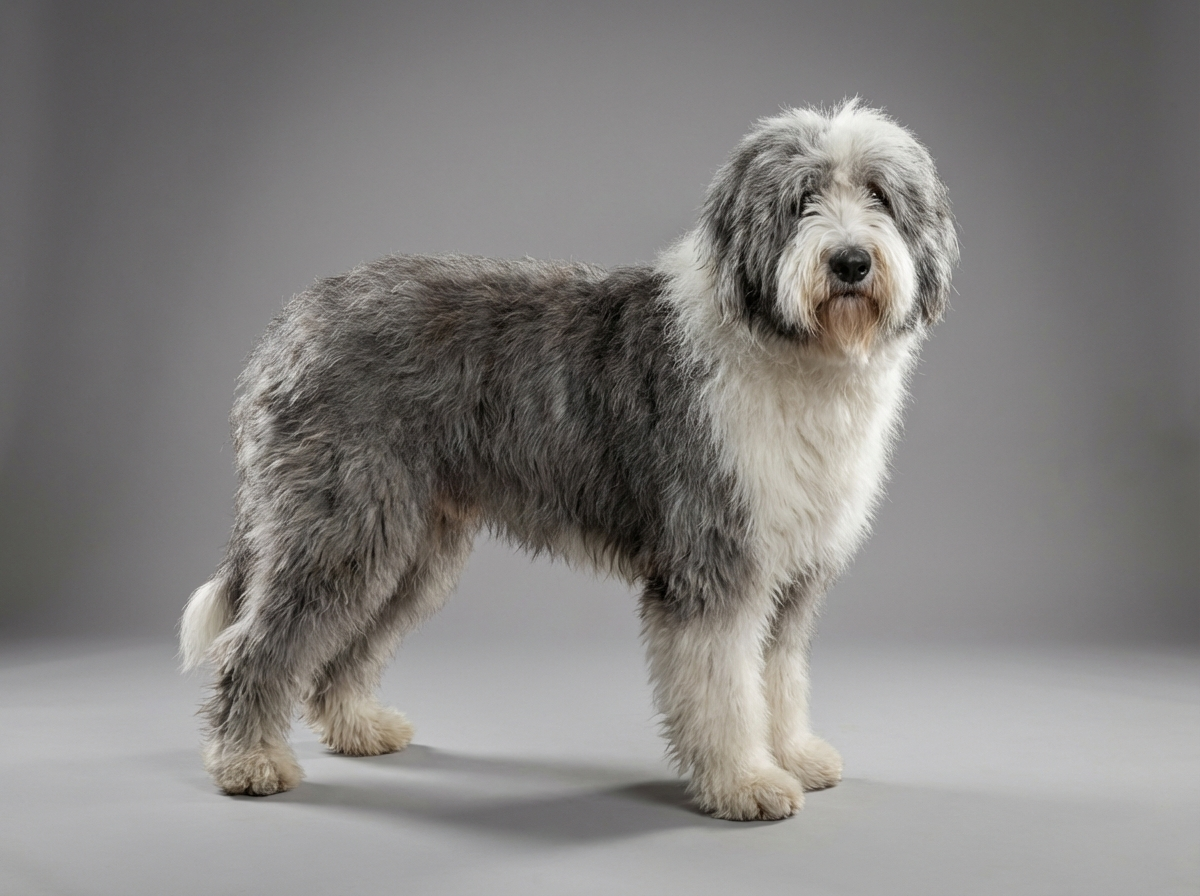
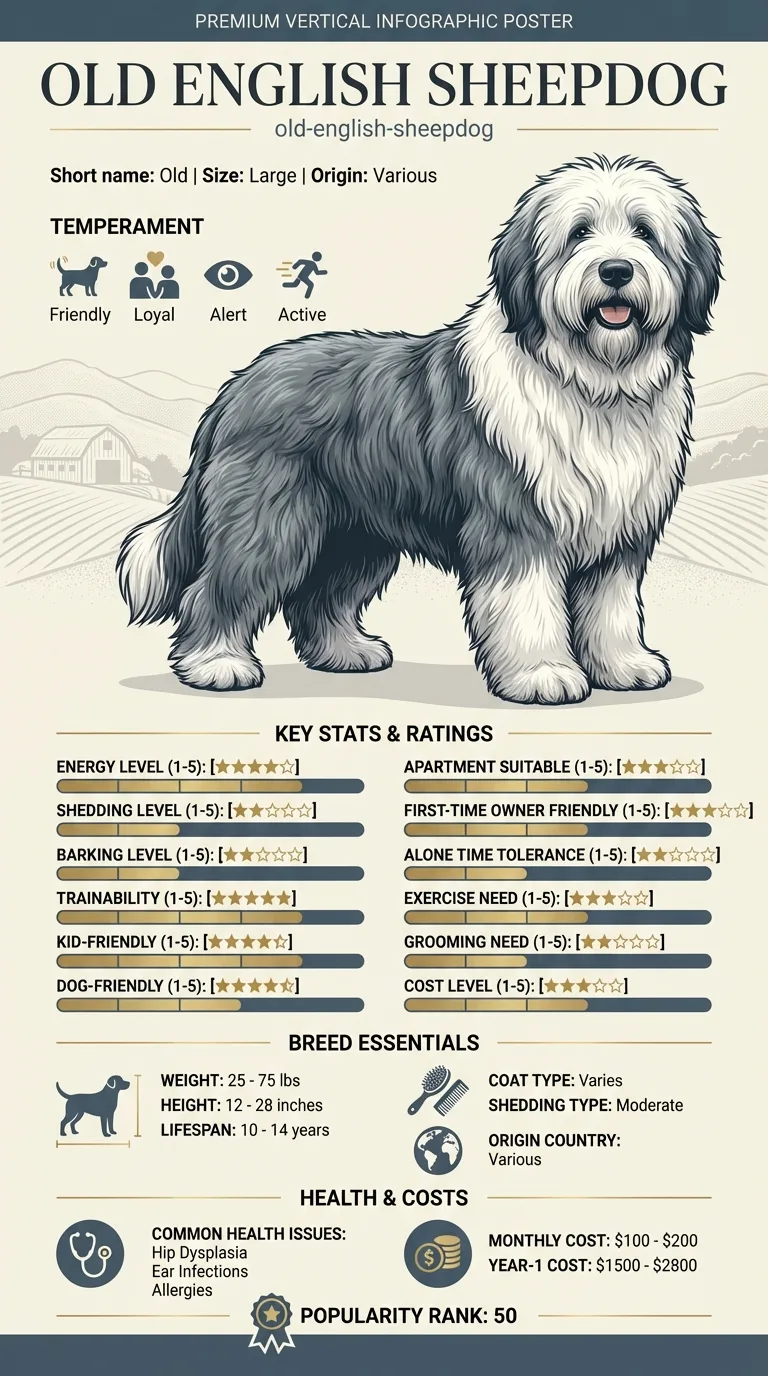
Old English Sheepdogs are bred to a proportionate, square-built standard, 20-24 inches tall and 60-100 pounds, without the shortened limb structure that defines chondrodystrophic breeds. This breed's documented skeletal concerns, hip dysplasia and age-related disc degeneration, arise from entirely different mechanisms than CDDY.
Not applicable to CDDY itself in this breed, since the underlying genetic trait isn't present. Environmental factors relevant to this breed's actual skeletal risks, weight, exercise, and growth management, are covered on the pages addressing those specific conditions.
Talk to your vet about this breed's actual documented skeletal risks, hip dysplasia and age-related disc degeneration, rather than CDDY-specific concerns, which don't apply here.
Since CDDY doesn't apply here, importing precautions meant for a different body type can distract from what this breed's skeleton actually needs.
See all OLD English Sheepdog health problems, which breeds are prone to chondrodystrophy cddy, or the full OLD English Sheepdog breed guide for temperament, exercise needs and ownership costs.
There's no timeline to manage here, since CDDY isn't a condition this breed develops. Understanding this distinction is a one-time clarification rather than an ongoing management process.
Success looks like directing your attention and any preventive budget toward this breed's actual documented risks rather than a condition that doesn't apply to it.
If you think your Old has chondrodystrophy (cddy), the plan is three steps: write down what you have seen and when it started, book a veterinary appointment rather than waiting for the next flare, and take video of the behaviour or symptom before you go — the thing you are worried about rarely happens in the consulting room. Screening in the parents covers hip dysplasia, cataracts, hypothyroidism.
What the vet visit should produce is a diagnosis and a written plan, not just reassurance: what is being ruled out, what the monitoring interval is, and which signs mean you come back sooner. Ask what the treatment costs across a year rather than per visit, because that is the number that decides whether you are managing this condition or reacting to it.
Between appointments, keep a short log — dates, what you saw, what changed. It is the single most useful thing an owner brings to a follow-up, and for chondrodystrophy (cddy) it is often what separates a clear pattern from a guess.
Scout's owner found a health checklist online listing chondrodystrophy as a concern for Old English Sheepdogs before bringing home their puppy, and asked the breeder directly whether this was something to test for. The breeder explained that CDDY is a trait specific to short-legged breeds, and Scout's line, like the breed generally, doesn't carry it. The breeder instead pointed to hip screening results for Scout's parents as the more relevant genetic health information for this breed, which the owner reviewed before finalizing the adoption.
Key takeaway: A generic checklist claim is worth verifying with someone who actually knows the breed. In this case, asking the right question redirected attention to the screening that actually mattered.
No. This breed is a proportionate, square-built large dog, not the short-legged, long-backed body type that defines chondrodystrophic breeds like Dachshunds and Corgis.
It's a genetic trait responsible for shortened limbs relative to body length and is associated with an increased risk of early-onset intervertebral disc disease in the breeds that carry it.
Generic breed health checklists sometimes apply a broad list of canine conditions across all breeds without confirming which are actually documented or biologically applicable, which is how a chondrodystrophic-breed trait can end up mislabeled onto a proportionate breed like this one.
Yes, but a different type: age-related Type II disc degeneration, which develops gradually later in life, rather than the early-onset Type I disease associated with CDDY.
Growth-related concerns during puppyhood, hip dysplasia and the arthritis it can lead to in adulthood, and general age-related joint and disc wear in the senior years.
No, they're unrelated. Hip dysplasia is a joint conformation issue, documented in this breed, while CDDY is a separate gene affecting limb and spine proportions that this breed doesn't carry.
General health testing, including hip and eye screening, is worthwhile for this breed, but CDDY testing specifically isn't a relevant concern given the breed's proportionate build.
No, that trait is associated with short-legged, long-backed breeds, a body type this breed doesn't have.
Age-related Type II disc degeneration later in life, not the early-onset Type I disease linked to CDDY.
No, they're separate and unrelated conditions.
Puppy growth issues, hip-dysplasia-driven arthritis, and age-related disc wear, depending on life stage.
Not to the same degree; general joint-friendly habits are still useful, but the same strict precautions aren't necessary for this proportionate build.
A one-page prep sheet for this condition: the signs, the questions to ask, what to get priced. Unlocks here.
You get: Vet visit prep sheet
No spam. One-click unsubscribe. See our privacy policy.
See a sample page before you decide.
Early access list
The free prep sheet covers the same-day warning signs, a symptom log and the questions to ask. We are considering a fuller kit that adds a cost worksheet for the usual tests and treatments (US price ranges with their sources) and a plain-English guide to ways of covering the bill. It is not built yet; this list tells us whether it is worth building.
One email, no spam, unsubscribe anytime. Information only, not veterinary advice.