Health
Is bloat a documented risk in this breed?
Yes, bloat (GDV) is listed among this breed's documented common health issues.

Quick answer
Is bloat a documented risk in this breed?
Yes, bloat (GDV) is listed among this breed's documented common health issues.
A dog that was fine at breakfast can be in surgery by dinner. Bloat is fast, and understanding the mechanism ahead of time is what makes the difference between catching it early and catching it too late.
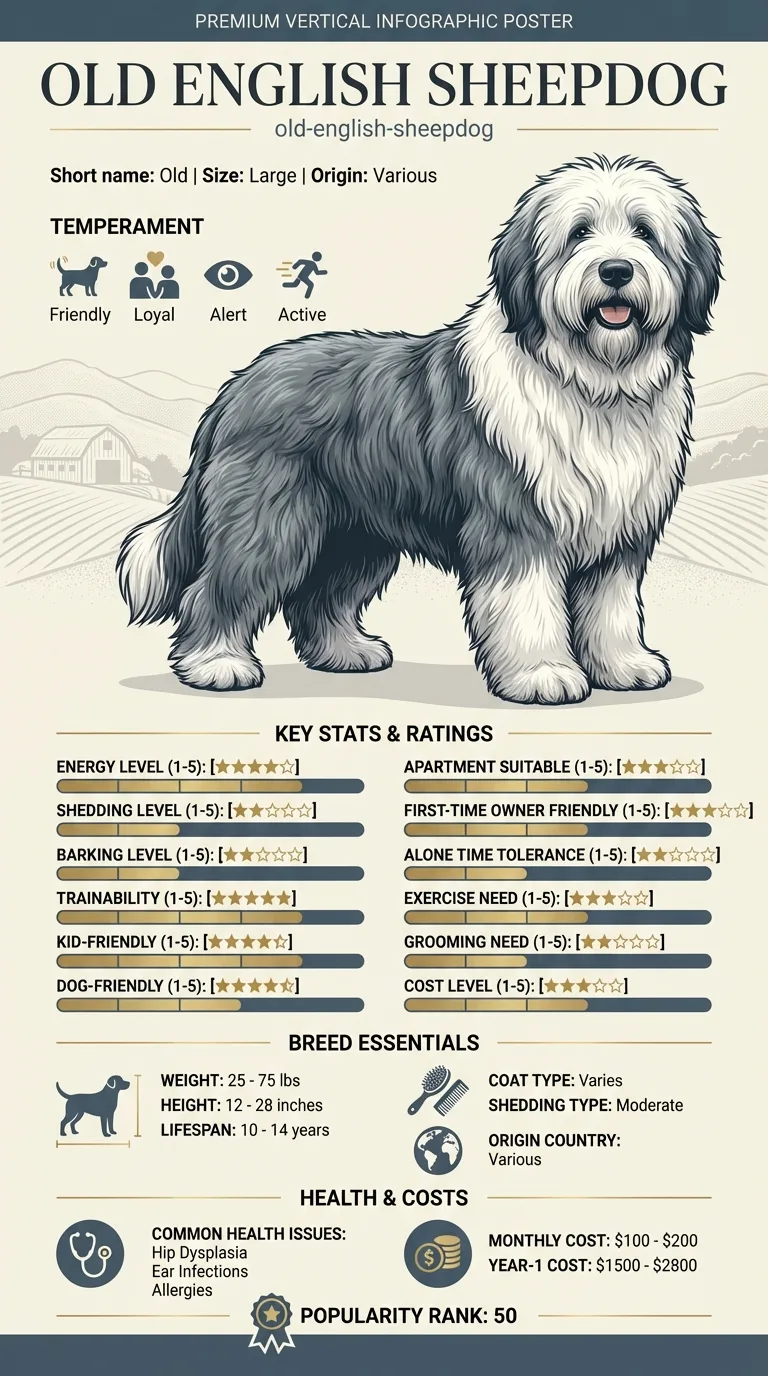
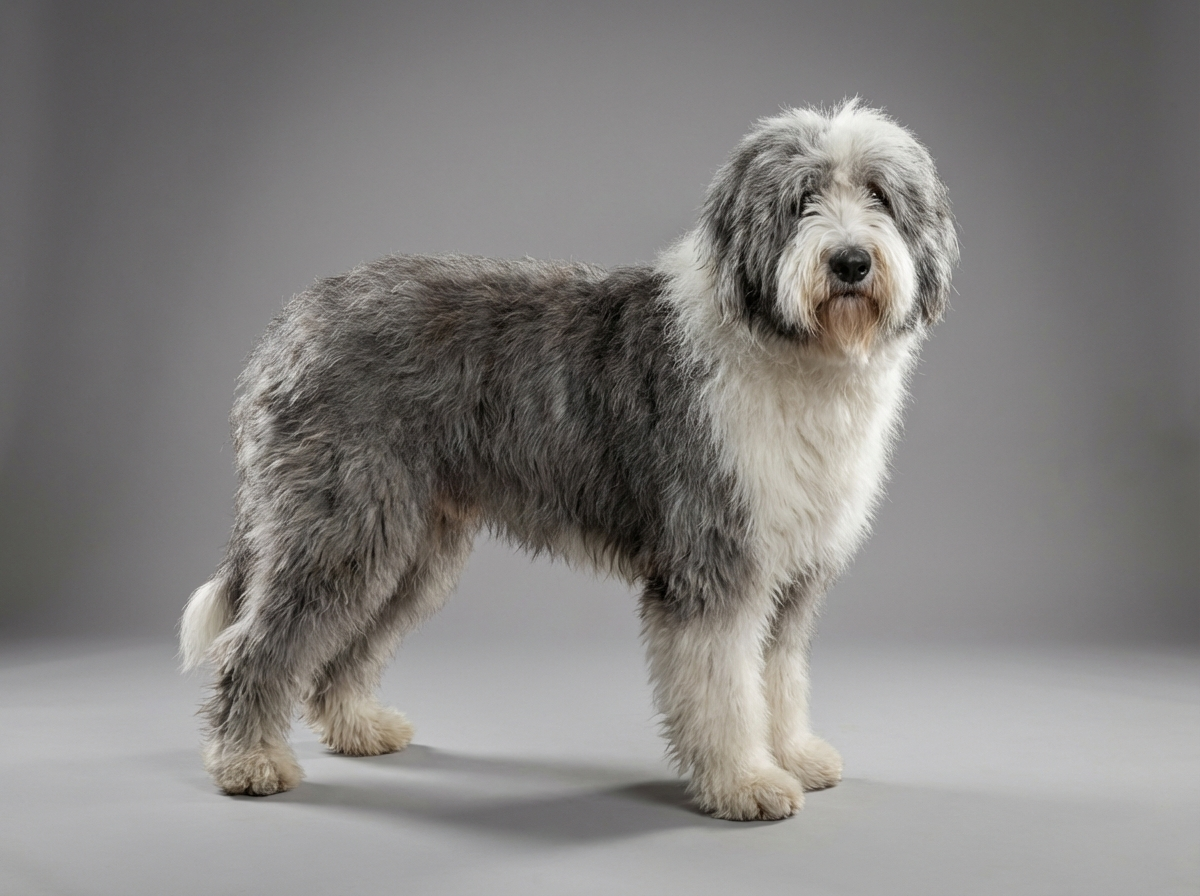
Every owner of a large, deep-chested dog should understand this condition, but it's especially relevant for Old English Sheepdog owners specifically, since it's a documented risk in this breed rather than a generic large-breed caution.
This guide is not medical advice. If your dog shows pain, sudden behavior change, or worsening symptoms, consult a licensed veterinarian.
Some links may be affiliate links. We may earn a commission at no extra cost to you. We only suggest products we believe are helpful for dog owners.
We research and check what we publish, but we do not warrant that any figure, date, price, or statement is accurate, complete, or current, and we accept no liability for any loss, cost, injury, or other harm arising from the use of this site. Use it as one reference among several. You remain responsible for your own decisions and for your dog's care - confirm anything that matters with a licensed veterinarian or another qualified professional before you act on it. Full disclaimer.
Check this first
Unlike many conditions on this site, there is no mild, watch-and-wait version of bloat. A visibly distended or hard abdomen, unproductive retching (trying to vomit with nothing coming up), restlessness or pacing that won't settle, excessive drooling, and a rapid decline into weakness or collapse are the hallmark signs, and every one of them means immediate emergency veterinary care, not a phone call in the morning.
GDV involves the stomach filling with gas and then twisting on itself, cutting off blood supply and trapping gas and fluid with no way out. Every hour of delay measurably worsens the odds of survival. If you suspect bloat at 2 a.m., the correct move is the emergency vet at 2 a.m., not waiting to see if it resolves by morning.
If any of these apply, call your vet or an emergency clinic now. The rest of this page is for the cases that are not an emergency.
Bloat (gastric dilatation-volvulus) is a documented, life-threatening health issue in Old English Sheepdogs in which the stomach fills with gas and twists, cutting off blood supply. It requires emergency surgery and carries real mortality risk even with prompt treatment, making prevention and early recognition especially important for this breed.
Bloat is one of this breed's documented common health issues, meaning it occurs meaningfully more often here than in small or shallow-chested breeds, though it remains a minority of dogs rather than something every dog will experience.
This breed's large, deep chest cavity gives the stomach more room to move and twist once it fills with gas, which is the core anatomical reason large, deep-chested breeds carry documented elevated bloat risk. Bloat is explicitly listed among this breed's common health issues.
Feeding practices play a real role: large single meals, rapid eating, and exercise too close to mealtimes are all associated with higher risk in the research on this condition.
Discuss feeding practices, individual risk factors, and whether preventive gastropexy makes sense for your dog at a routine visit, well before any emergency.
None of these guarantee bloat will happen, and none of their opposites guarantee it won't, but each one is a documented risk factor worth taking seriously.
See all OLD English Sheepdog health problems, which breeds are prone to bloat gastric dilatation volvulusgdv, or the full OLD English Sheepdog breed guide for temperament, exercise needs and ownership costs.
There is no 'timeline' for bloat itself in the way there is for a chronic condition; it is an acute emergency measured in hours, not weeks. Recovery from emergency surgery, if needed, typically involves several days of hospitalization and a few weeks of restricted activity afterward.
Success looks like never needing the emergency scenario at all, through consistent feeding practices and, for many owners of this breed, a preventive gastropexy discussion with their vet well before any symptoms appear.
If you think your Old has bloat (gastric dilatation-volvulus/gdv), the plan is three steps: write down what you have seen and when it started, book a veterinary appointment rather than waiting for the next flare, and take video of the behaviour or symptom before you go — the thing you are worried about rarely happens in the consulting room. Screening in the parents covers hip dysplasia, cataracts, hypothyroidism.
What the vet visit should produce is a diagnosis and a written plan, not just reassurance: what is being ruled out, what the monitoring interval is, and which signs mean you come back sooner. Ask what the treatment costs across a year rather than per visit, because that is the number that decides whether you are managing this condition or reacting to it.
Between appointments, keep a short log — dates, what you saw, what changed. It is the single most useful thing an owner brings to a follow-up, and for bloat (gastric dilatation-volvulus/gdv) it is often what separates a clear pattern from a guess.
Max, a four-year-old Old English Sheepdog, was scheduled for a routine spay-adjacent abdominal procedure for an unrelated issue. His vet mentioned that a preventive gastropexy could be added during the same surgery at a modest additional cost, given the documented bloat risk in this breed. Max's owner nearly declined, assuming bloat was unlikely for their otherwise healthy, moderate-energy dog. After reviewing the numbers and the relatively low marginal cost of adding the procedure during an already-planned surgery, they went ahead. Eighteen months later, a housemate dog of a different breed experienced a bloat episode that required emergency surgery, and Max's owner was glad the preventive step had already been taken.
Key takeaway: A preventive gastropexy doesn't have to be its own dramatic decision; when a dog is already under anesthesia for something else, it's worth asking whether adding it makes sense.
Bloat (GDV) is a documented health issue in this breed. Large, deep-chested dogs generally carry more risk because their anatomy allows the stomach more room to twist after it fills with gas, and this breed's size puts it squarely in that higher-risk category.
The stomach fills with gas and, in the volvulus part of GDV, twists on itself. That twist cuts off blood flow to the stomach and often the spleen, and traps gas and fluid with no way to escape, which is what makes it rapidly life-threatening.
Not with certainty, but risk can be meaningfully reduced with feeding practices like smaller, more frequent meals, avoiding vigorous exercise right around mealtimes, and slow-feed bowls. A preventive gastropexy surgery is the most effective single intervention for stopping the volvulus (twisting) part specifically.
It's a surgical procedure that tacks the stomach to the abdominal wall to prevent it from twisting. It doesn't prevent gas buildup (bloat itself) but does prevent the twist (volvulus), which is the part that cuts off blood supply and turns a bloat episode into a true emergency.
Emergency surgery for GDV commonly runs from around $1,500 on the low end to $7,500 or more depending on complications, hospitalization time, and whether the spleen or part of the stomach needs to be removed.
It can progress from first symptoms to critical within a couple of hours. This is not a condition where waiting overnight to see if it improves is a safe option.
No. Simple indigestion doesn't typically cause a visibly distended, hard abdomen, repeated unproductive retching, or rapid decline into weakness. Any of those specific signs point toward bloat rather than routine stomach upset.
This is a decision to make with your vet based on your individual dog's risk factors and your own risk tolerance. Given this breed's documented bloat risk, it's a conversation worth having rather than skipping.
Yes, bloat (GDV) is listed among this breed's documented common health issues.
A visibly distended, hard abdomen combined with unproductive retching, trying to vomit with nothing coming up.
Typically $1,500 to $7,500 or more, depending on complications and hospitalization needs.
Yes, smaller, more frequent meals and avoiding vigorous exercise right around mealtimes are commonly recommended precautions.
It prevents the stomach from twisting (volvulus), though it doesn't prevent gas buildup (bloat) itself.
A one-page prep sheet for this condition: the signs, the questions to ask, what to get priced. Unlocks here.
You get: Vet visit prep sheet
No spam. One-click unsubscribe. See our privacy policy.
See a sample page before you decide.
Early access list
The free prep sheet covers the same-day warning signs, a symptom log and the questions to ask. We are considering a fuller kit that adds a cost worksheet for the usual tests and treatments (US price ranges with their sources) and a plain-English guide to ways of covering the bill. It is not built yet; this list tells us whether it is worth building.
One email, no spam, unsubscribe anytime. Information only, not veterinary advice.