Health
Is this breed at real risk for eye trauma?
Yes, given its active outdoor, herding heritage, exposure to brush, debris, and rough terrain is a genuine practical risk.

Quick answer
Is this breed at real risk for eye trauma?
Yes, given its active outdoor, herding heritage, exposure to brush, debris, and rough terrain is a genuine practical risk.
An eye that suddenly looks irritated after time outdoors, running through brush or tall grass, is more likely a scratch or foreign body than anything hereditary.

This is most relevant to owners who exercise their dog in fields, wooded areas, or off-leash settings, where the risk of direct contact with branches, seeds, dust, or debris is highest.
This guide is not medical advice. If your dog shows pain, sudden behavior change, or worsening symptoms, consult a licensed veterinarian.
Some links may be affiliate links. We may earn a commission at no extra cost to you. We only suggest products we believe are helpful for dog owners.
We research and check what we publish, but we do not warrant that any figure, date, price, or statement is accurate, complete, or current, and we accept no liability for any loss, cost, injury, or other harm arising from the use of this site. Use it as one reference among several. You remain responsible for your own decisions and for your dog's care - confirm anything that matters with a licensed veterinarian or another qualified professional before you act on it. Full disclaimer.
Check this first
Sudden, heavy squinting, visible redness, a cloudy or bluish appearance to the cornea, or a dog pawing aggressively at one eye after outdoor activity are signs of a possible corneal injury and warrant same-day veterinary attention. A visible foreign object embedded in the eye, or an eye that appears to be bulging or displaced after trauma, is a clear emergency requiring immediate care.
Any eye injury involving visible bleeding, a penetrating object, or obvious structural damage should go straight to an emergency vet rather than waiting, since delayed treatment of a significant corneal or globe injury can affect long-term vision outcomes.
If any of these apply, call your vet or an emergency clinic now. The rest of this page is for the cases that are not an emergency.
This breed's active, historically outdoor working heritage creates a genuine, practical risk of eye trauma, scratches, foreign debris, and blunt injury, distinct from its hereditary and coat-related eye conditions covered elsewhere. Prevention and prompt recognition are the most useful tools here.
Eye trauma is a genuinely common occurrence in active, outdoor dogs generally, and this breed's herding heritage and activity level place it squarely in that higher-exposure category.
This breed's herding heritage and generally active outdoor lifestyle mean more direct physical exposure to branches, debris, and rough terrain than a more sedentary or exclusively indoor breed would typically encounter, making trauma a practically relevant risk here.
Terrain type, weather conditions like wind, and how thoroughly an area is scanned before off-leash activity all directly influence how likely and how severe an eye injury is likely to be during outdoor exercise.
Talk to your vet about any squinting, redness, or discharge that doesn't resolve quickly after outdoor activity. Seek emergency care for a visible foreign object, bleeding, or a bulging or displaced-looking eye.
Most eye trauma in active dogs is preventable, and how it's handled afterward matters for recovery.
See all OLD English Sheepdog health problems, which breeds are prone to eye problems, or the full OLD English Sheepdog breed guide for temperament, exercise needs and ownership costs.
Minor scratches and irritation typically resolve within a week or so of appropriate treatment. More significant injuries can take longer and may need specialist follow-up to confirm full healing.
Success looks like catching and treating minor injuries early through routine post-activity checks, keeping more serious complications rare through basic prevention habits.
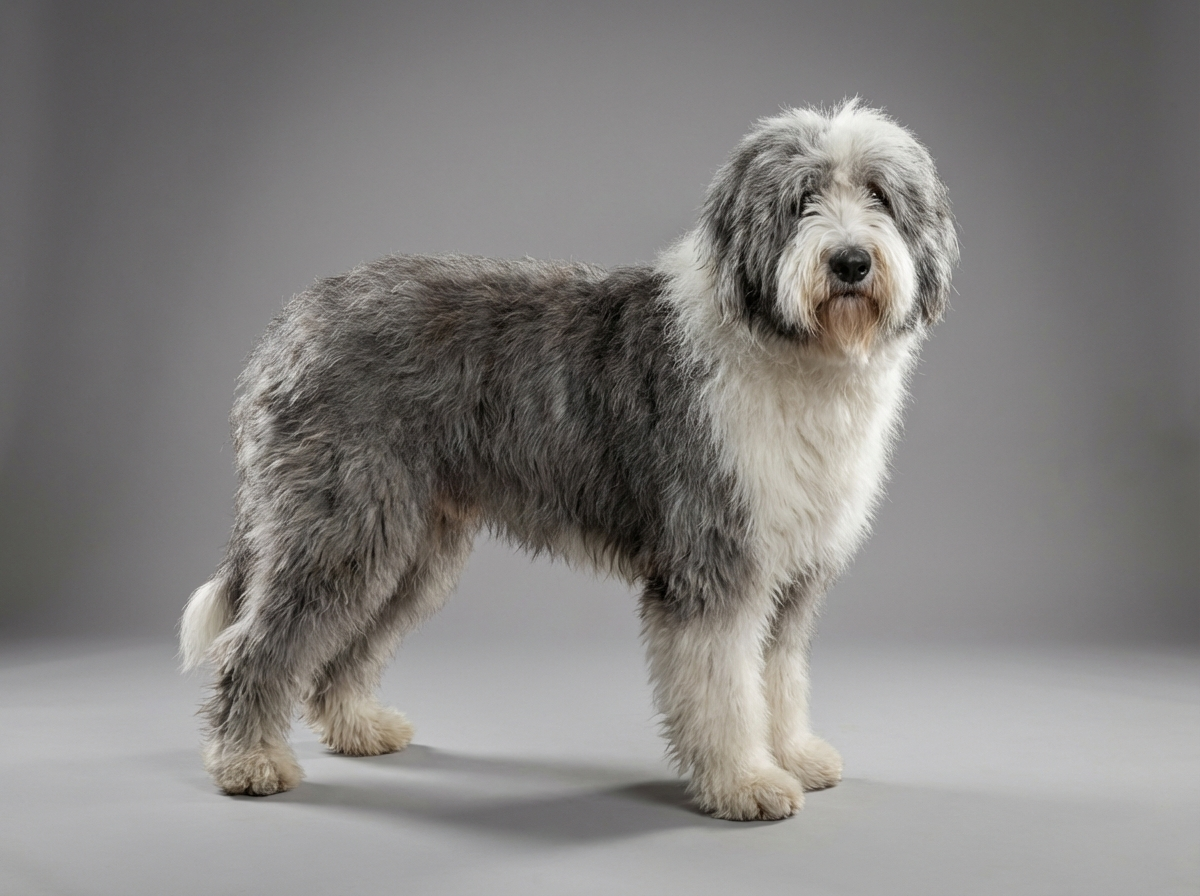
Sadie, a four-year-old Old English Sheepdog, ran enthusiastically into an unfamiliar patch of tall grass during a hike and came out squinting hard on one side. Her owner checked and found a small scratch on her cornea, likely from a hidden branch or thorn, with no foreign object still present. A vet visit confirmed a superficial corneal scratch, treated with medication and an e-collar for about a week, with full healing confirmed at a recheck. Sadie's owner now does a quick visual scan of unfamiliar terrain before letting her run freely off-leash.
Key takeaway: For an active outdoor breed like this, a quick scan before off-leash play and a check afterward catch most eye injuries early, before they become bigger problems.
Given this breed's herding heritage and active outdoor lifestyle, yes, exposure to branches, grass seeds, dust, and other debris during outdoor activity creates a genuine, practical risk of minor scratches or foreign bodies.
Look for sudden squinting, redness, excessive tearing, or pawing at one eye, especially right after outdoor activity in brush or tall grass. A vet exam, sometimes with special dye, confirms whether a foreign object or scratch is present.
Gentle rinsing with a vet-approved saline solution is reasonable for visible surface debris, but avoid using tap water, tools, or anything that could push an object deeper or scratch the eye further. When in doubt, go to a vet.
Typically with prescribed eye medication and sometimes an e-collar to prevent pawing at the eye during healing, along with a recheck to confirm proper healing.
You can't eliminate the risk entirely for an active outdoor breed, but scanning unfamiliar terrain before letting your dog run freely, and checking the eyes after activity in brush or dusty conditions, meaningfully reduces both the chance and severity of injuries.
It's always worth checking, even if it turns out to be minor. Persistent squinting that doesn't resolve within a short time, or that's accompanied by redness or discharge, should prompt a vet visit.
A straightforward corneal scratch treated early often costs under a couple hundred dollars; more significant injuries or those requiring specialist care can cost considerably more.
Yes, given its active outdoor, herding heritage, exposure to brush, debris, and rough terrain is a genuine practical risk.
Sudden squinting, redness, tearing, or pawing at one eye, especially after outdoor activity.
Gentle rinsing with vet-approved saline is reasonable for visible debris; avoid tap water or tools, and see a vet for anything persistent.
It warrants same-day veterinary attention, especially with heavy squinting, redness, or cloudiness.
Scanning unfamiliar terrain before off-leash running and checking eyes after brush exposure meaningfully reduces risk.
A one-page prep sheet for this condition: the signs, the questions to ask, what to get priced. Unlocks here.
You get: Vet visit prep sheet
No spam. One-click unsubscribe. See our privacy policy.
See a sample page before you decide.
Early access list
The free prep sheet covers the same-day warning signs, a symptom log and the questions to ask. We are considering a fuller kit that adds a cost worksheet for the usual tests and treatments (US price ranges with their sources) and a plain-English guide to ways of covering the bill. It is not built yet; this list tells us whether it is worth building.
One email, no spam, unsubscribe anytime. Information only, not veterinary advice.