Health
Is this breed prone to sudden disc ruptures like Dachshunds?
No, that's Type I disc disease in chondrodystrophic breeds. This breed's concern is Type II, a slower, age-related process.

Quick answer
Is this breed prone to sudden disc ruptures like Dachshunds?
No, that's Type I disc disease in chondrodystrophic breeds. This breed's concern is Type II, a slower, age-related process.
If you've read that this breed is at high risk for the same sudden disc ruptures that affect Dachshunds, that's the wrong type of disc disease for this build. What actually applies here develops gradually, over years.
This matters most for owners of dogs past seven or eight, since Type II disc degeneration is a slow process, and for owners who've read generic breed checklists that don't distinguish between disc disease types.
This guide is not medical advice. If your dog shows pain, sudden behavior change, or worsening symptoms, consult a licensed veterinarian.
Some links may be affiliate links. We may earn a commission at no extra cost to you. We only suggest products we believe are helpful for dog owners.
We research and check what we publish, but we do not warrant that any figure, date, price, or statement is accurate, complete, or current, and we accept no liability for any loss, cost, injury, or other harm arising from the use of this site. Use it as one reference among several. You remain responsible for your own decisions and for your dog's care - confirm anything that matters with a licensed veterinarian or another qualified professional before you act on it. Full disclaimer.
Check this first
Sudden loss of the ability to stand or walk, dragging one or both hind legs, loss of bladder or bowel control, or a dog that yelps sharply when the back is touched are all emergencies requiring immediate veterinary attention. With disc disease, the window between first neurological signs and permanent nerve damage can be short, so 'wait and see' is the wrong approach once real weakness or incoordination appears.
Because this breed is not chondrodystrophic, the sudden, dramatic ruptures sometimes seen in young Dachshunds are less typical here. What's more common is a gradual decline that owners may initially write off as arthritis or old age, which makes it especially important to treat any progressive hind-limb weakness as a reason for prompt evaluation rather than assuming it will plateau on its own.
If any of these apply, call your vet or an emergency clinic now. The rest of this page is for the cases that are not an emergency.
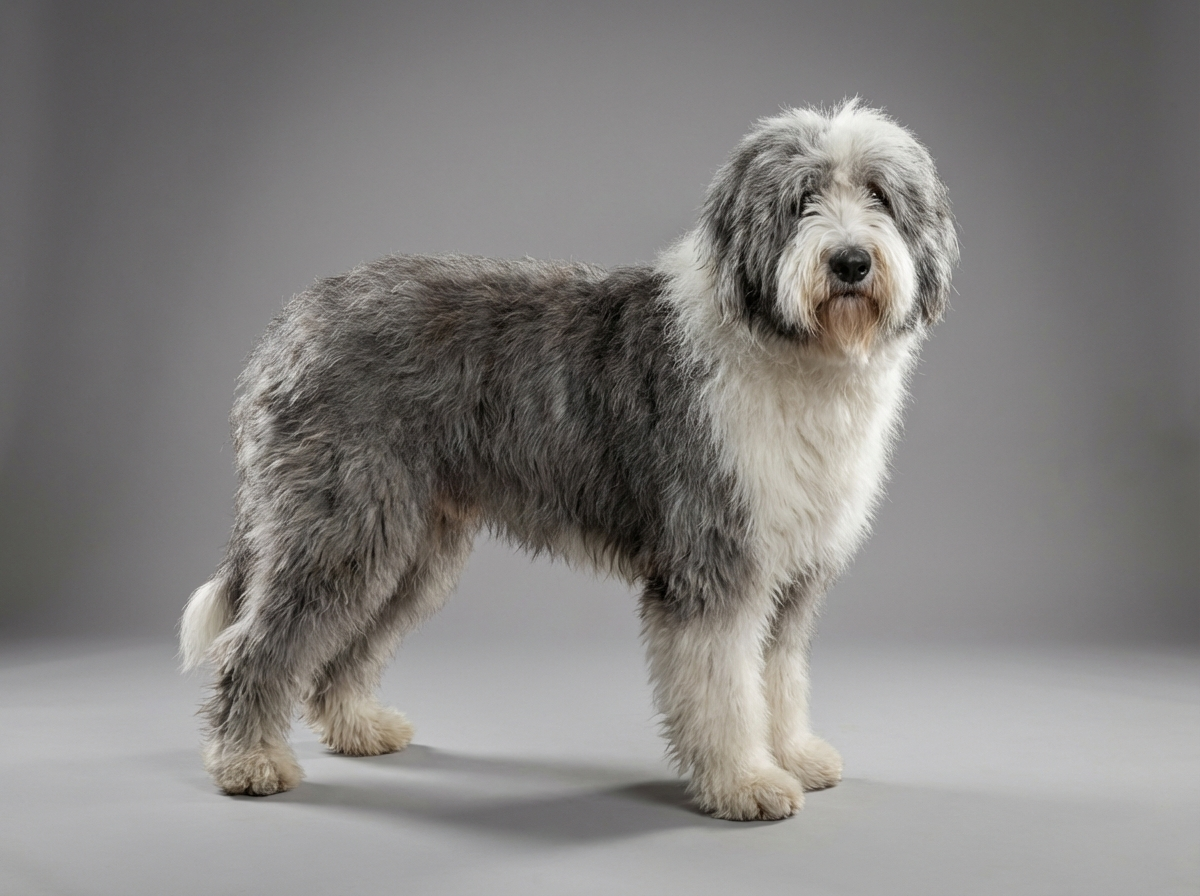
Back and spine issues in Old English Sheepdogs are more realistically tied to Type II intervertebral disc disease, a slow, age-related degeneration, rather than the early-onset Type I disease seen in chondrodystrophic breeds like Dachshunds. Symptoms typically build gradually over months rather than appearing overnight.
Type II disc degeneration becomes more common as large dogs reach their senior years. It's less dramatic and less frequently diagnosed than Type I disease in chondrodystrophic breeds, but it's a real and underrecognized cause of gradual mobility decline in breeds like this one.
Because this breed is not chondrodystrophic, it doesn't carry the early disc calcification risk seen in Dachshunds and similar breeds. Instead, normal age-related disc wear, compounded by this breed's large size and the mechanical load that comes with sixty to a hundred pounds of body weight, is the more realistic driver of spinal issues here.
Excess weight, repeated jumping impact, and long stretches of inactivity followed by intense exercise all add cumulative stress to aging discs and the muscles that support the spine.
Talk to your vet about reluctance to jump, a hunched posture, or a shortened stride. Seek emergency care immediately for dragging a limb, sudden inability to stand, or loss of bladder or bowel control.
Because Type II disc disease develops slowly, small ongoing habits matter more here than any single event.
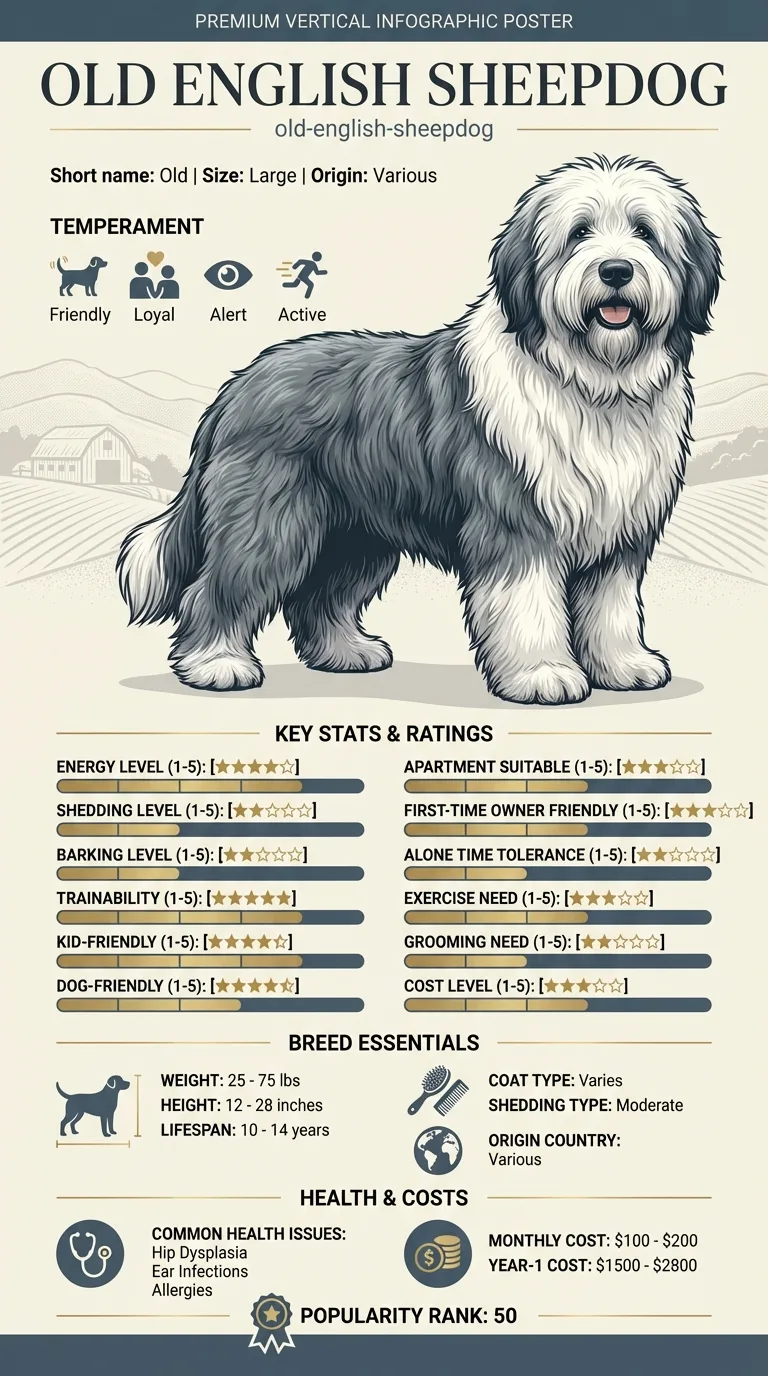
See all OLD English Sheepdog health problems, which breeds are prone to backspine issues, or the full OLD English Sheepdog breed guide for temperament, exercise needs and ownership costs.
Mild, early Type II disc degeneration managed conservatively may show improvement within a few weeks of rest and weight management. More advanced cases involving surgery typically require a recovery period of six to twelve weeks.
Success looks like stable or improved mobility and comfort, with the goal of preventing progression to significant neurological deficit rather than reversing changes that have already occurred.
Bear, a nine-year-old Old English Sheepdog, had been slowing down for months. His owner assumed it was ordinary arthritis until a vet exam found subtly delayed reflexes in his hind legs, a neurological sign rather than a purely orthopedic one. Imaging confirmed age-related disc degeneration in his lower back. Because it was caught before any dragging or incontinence developed, Bear was managed conservatively with weight loss, restricted jumping, and anti-inflammatory treatment, and his mobility stabilized over the following two months.
Key takeaway: A slow decline that looks like ordinary aging can be a spinal issue worth catching early, before it progresses to something surgery-dependent.
Not in the same way. Dachshunds and other chondrodystrophic breeds are prone to Type I disc disease, which involves early disc calcification and sudden ruptures. Old English Sheepdogs are not chondrodystrophic, so the more relevant concern here is Type II disc disease, a slower, age-related degeneration.
Type I tends to appear in younger dogs of chondrodystrophic breeds and can cause sudden, severe symptoms. Type II develops gradually over years, typically in middle-aged to older dogs of any breed, and tends to progress more slowly.
Look for subtle signs like reluctance to jump, a slightly hunched or arched back, a shortened stride, or mild hind-end wobbliness, often before any dramatic symptom appears.
Not always. Milder Type II cases are sometimes managed with rest, weight control, and medical management, while more advanced cases with significant neurological deficits often require surgical evaluation. Your vet, often alongside a veterinary neurologist, determines the right path based on severity.
There's no proven way to fully prevent age-related disc degeneration, but maintaining a healthy weight reduces the mechanical load on the spine, which is a meaningful, evidence-based way to reduce strain.
A neurological exam is the starting point, followed by imaging such as X-rays, and often an MRI or CT if surgery is being considered, since plain X-rays don't show disc material well.
It depends heavily on how much neurological function was affected before treatment started and how quickly treatment began. Dogs treated early, before significant weakness sets in, generally have a better outlook than those with prolonged, severe symptoms.
No, that's Type I disc disease in chondrodystrophic breeds. This breed's concern is Type II, a slower, age-related process.
Reluctance to jump, a hunched back, or a subtly shortened stride, often well before any dramatic symptom.
Yes, dragging a limb or sudden inability to stand needs immediate veterinary attention, not a wait-and-see approach.
Conservative management runs in the hundreds of dollars for imaging and medication, while surgery with a specialist can run into the thousands.
Yes, keeping a lean body weight measurably reduces the mechanical stress placed on the spine over time.
A one-page prep sheet for this condition: the signs, the questions to ask, what to get priced. Unlocks here.
You get: Vet visit prep sheet
No spam. One-click unsubscribe. See our privacy policy.
Preview page 1 before you decide.