DogBreedCompass
← Back to breed profile

Jack Russell Terrier Degenerative Myelopathy (DM): What You Need to Know

Jack Russell Terrier degenerative myelopathy (DM) is a serious condition affecting your dog's mobility and quality of life.

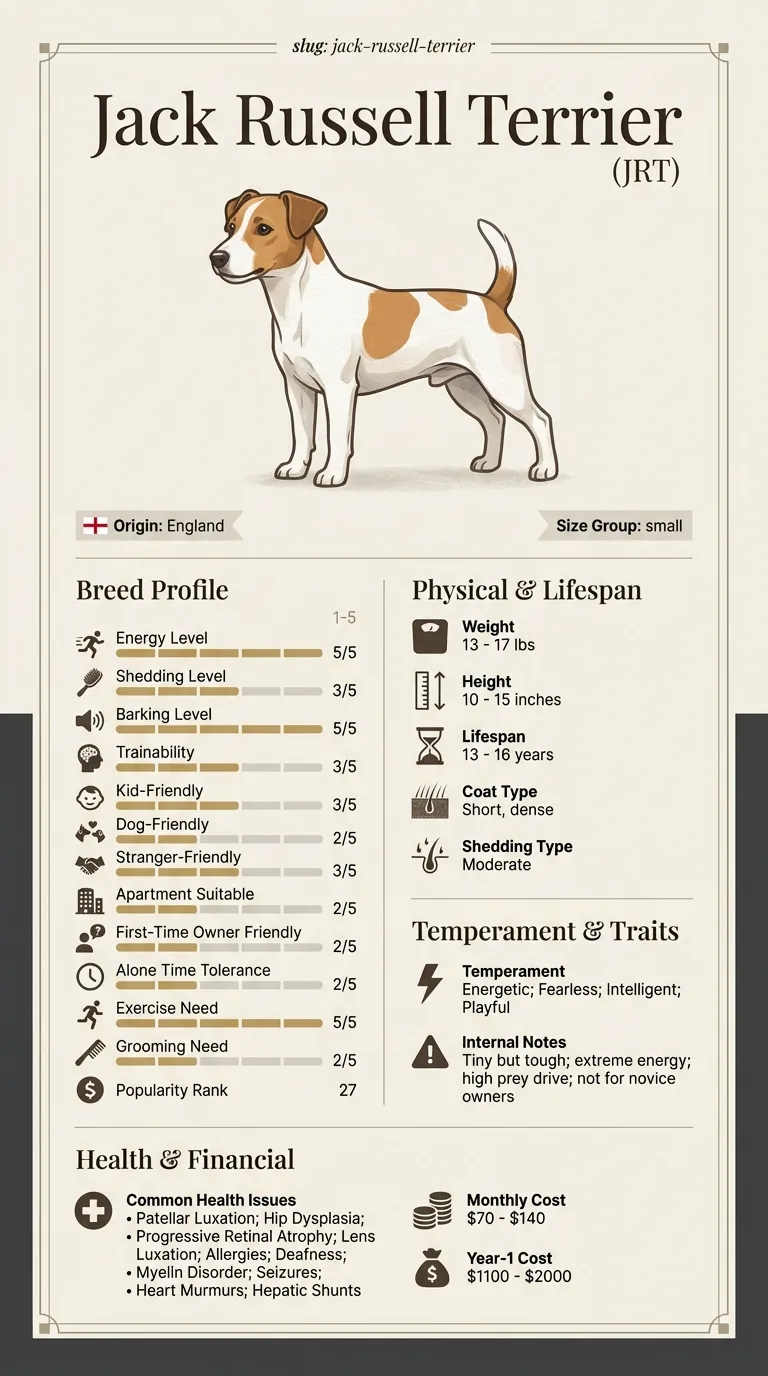
Jack Russell Terrier Degenerative Myelopathy (DM): What You Need to Know infographic

Owners of Jack Russell Terriers typically face this issue, particularly as their pets age. Those who are not prepared for the emotional and physical challenges of DM may find it especially difficult to cope with their dog’s declining health.

Important reminder

This guide is not medical advice. If your dog shows pain, sudden behavior change, or worsening symptoms, consult a licensed veterinarian.

Some links may be affiliate links. We may earn a commission at no extra cost to you. We only suggest products we believe are helpful for dog owners.

What this problem looks like

Jack Russell Terrier degenerative myelopathy (DM) is a progressive spinal cord disease affecting mobility. It typically starts with subtle signs like a wobbly gait or loss of coordination, which can worsen over time. Owners may notice their JRT having difficulty climbing stairs or getting up after resting, making daily life increasingly challenging.

Common triggers

  • Genetics, as DM often runs in families of Jack Russell Terriers.
  • Age, since the disease typically affects older dogs.
  • Injury or trauma, which may exacerbate existing mobility issues.

Degenerative myelopathy is relatively common in Jack Russell Terriers, especially as they age. While not every JRT will develop DM, it's estimated that around 10-20% of older JRTs may show signs of this condition, making it a significant concern for many owners.

Why this happens

Breed factors

Jack Russell Terriers can inherit degenerative myelopathy (DM) due to genetic factors. This condition is more common in breeds with strong, active lifestyles and can be linked to their energetic nature. Additionally, their small size and high activity level may exacerbate spinal issues.

Environment factors

Environmental factors can also contribute to the progression of DM. Lack of physical exercise, poor nutrition, and an unhealthy weight can increase the risk. Stress from changes in the household or environment may also impact their overall health.

What you can try

At-home strategies

  • Create a balanced diet with vet-recommended supplements to support spinal health.
  • Engage in low-impact exercises such as swimming or gentle walks to maintain muscle strength.
  • Set up a comfortable, supportive space for your Jack Russell Terrier to rest and recover.
  • Use ramps or other aids to help them navigate stairs and avoid injury.
  • Monitor their weight closely and adjust their food intake to prevent obesity.

When to consider a trainer

If your Jack Russell Terrier shows signs of discomfort or difficulty in movement, consider seeking a professional dog trainer. A trainer familiar with DM can provide tailored exercises and strategies to improve mobility and quality of life.

When to talk to your vet

It's essential to consult a vet if you notice changes in your dog's movement, behavior, or overall health. A vet can provide a proper diagnosis, recommend treatments, and suggest supportive therapies tailored to managing Jack Russell Terrier degenerative myelopathy (dm).

Realistic expectations

You can expect to see changes in your Jack Russell Terrier's mobility within a few months after diagnosis. Progress may vary, but maintaining a regular routine and consistent care can help manage the symptoms over time.

Success looks like a balanced approach to managing your dog's condition. This includes maintaining their quality of life through appropriate exercise, dietary adjustments, and regular veterinary check-ups.

Mistakes that make this worse

Avoiding certain behaviors can help your Jack Russell Terrier with degenerative myelopathy (DM). Here are some common mistakes dog owners make and safer alternatives to consider.

  • Ignoring early signs of DM: Many owners overlook signs like weakness in the hind legs. Early intervention can lead to better management, so consult your vet if you notice any changes.
  • Overexerting your dog: Some owners mistakenly believe that exercise will strengthen their dog's muscles. Instead, focus on gentle, controlled exercise to prevent fatigue and injury.
  • Neglecting a supportive environment: Failing to provide ramps or non-slip surfaces can hinder mobility. Create a safe space to help your Jack Russell navigate comfortably.
  • Using harsh training methods: Some owners may resort to forceful training techniques. Positive reinforcement is much more effective and less stressful for your dog.
  • Skipping vet check-ups: Regular vet visits are crucial for monitoring your dog's condition. Don’t wait until problems escalate; stay proactive about their health.
  • Not adjusting diet: Feeding a high-calorie diet without considering their reduced activity level can lead to weight gain. Consult with your vet to ensure a balanced diet suitable for your dog's needs.
  • Forgetting mental stimulation: Owners may focus solely on physical exercise, overlooking the importance of mental challenges. Engage your dog with puzzles or training games to keep their mind active.

When Jack Russell Terrier Degenerative Myelopathy (DM) is an Emergency

Recognizing when Jack Russell Terrier degenerative myelopathy (DM) is an emergency is crucial for your dog's health. Some signs indicate you need to call your vet immediately, while others can be monitored at home. Understanding the difference can help you react appropriately and ensure your furry friend gets the right care.

Jack Russell Terrier Degenerative Myelopathy (DM): What You Need to Know - When Jack Russell Terrier Degenerative Myelopathy (DM) is an Emergency

Red-Flag Signs to Call Your Vet Now

If your Jack Russell Terrier shows any of these symptoms, it's time to seek veterinary help:

Jack Russell Terrier Degenerative Myelopathy (DM): What You Need to Know - Red-Flag Signs to Call Your Vet Now
  • Sudden inability to walk or stand without support.
  • Severe weakness in the legs or body.
  • Loss of bladder or bowel control.
  • Difficulty breathing or severe coughing.
  • Severe pain or discomfort that doesn’t improve.

Mild Cases to Watch and Wait

If your dog exhibits these signs, you can monitor at home with a care plan:

Jack Russell Terrier Degenerative Myelopathy (DM): What You Need to Know - Mild Cases to Watch and Wait
  • Mild weakness or wobbliness in the back legs.
  • Occasional stumbling or tripping during walks.
  • Gradual loss of coordination without severe symptoms.
  • Minor changes in behavior or activity level.

Conclusion

Being aware of the emergency signs for Jack Russell Terrier degenerative myelopathy (DM) can help you act quickly when needed. If you notice severe symptoms, don't hesitate to call your vet. For milder signs, keep a close watch and consult your vet for a management plan.

Emily and Max's Journey with DM

Emily, a nurse living in a small apartment with her energetic Jack Russell Terrier, Max, noticed he was having more trouble getting up and walking. After a vet visit, she learned he had degenerative myelopathy (DM). At first, she felt overwhelmed, but she quickly researched how to stop Jack Russell Terrier degenerative myelopathy (dm) through training and lifestyle changes. With patience, she adapted Max's daily routine by incorporating low-impact exercises and joint supplements. As months passed, Max seemed happier and more comfortable, proving that while DM is challenging, a loving owner can make a significant difference.

Key takeaway: Understanding DM and making small adjustments to your dog's routine can greatly enhance their quality of life.

Frequently asked questions

What is Jack Russell Terrier degenerative myelopathy (DM)?

Jack Russell Terrier degenerative myelopathy (DM) is a progressive spinal cord disease that affects the nerves controlling movement. Symptoms typically start with weakness in the hind legs and can lead to paralysis over time. It's important to consult a vet for a proper diagnosis and management plan.

Why does my Jack Russell Terrier have degenerative myelopathy (DM)?

The exact cause of degenerative myelopathy in Jack Russell Terriers isn't fully understood, but genetics play a significant role. Certain inherited traits may increase the risk of developing this condition. Regular vet check-ups can help identify symptoms early.

How can I manage my Jack Russell Terrier's degenerative myelopathy (DM)?

Managing DM often involves creating a supportive environment for your Jack Russell Terrier. This can include physical therapy, using mobility aids like a harness, and adjusting their exercise routine to maintain strength without overexertion. Working closely with your vet is crucial for tailored advice.

Can training help my Jack Russell Terrier with degenerative myelopathy (DM)?

While training won't cure degenerative myelopathy, it can help improve your dog's overall quality of life. Focus on gentle exercises to maintain mobility and engage in mental stimulation activities. Consistent, positive reinforcement can strengthen your bond and encourage adaptability.

What are the signs of Jack Russell Terrier degenerative myelopathy (DM)?

Early signs of DM in Jack Russell Terriers include difficulty standing, dragging their hind legs, or losing coordination. As the disease progresses, you may notice increased weakness and eventual paralysis. Observing these changes early can help in managing their care effectively.

Is there a cure for Jack Russell Terrier degenerative myelopathy (DM)?

Currently, there is no cure for Jack Russell Terrier degenerative myelopathy (DM). Treatment focuses on managing symptoms and improving your dog's quality of life. Regular vet visits and supportive care can help you navigate this challenging condition.

What are the early signs of degenerative myelopathy (DM) in Jack Russell Terriers?

Early signs of Jack Russell Terrier degenerative myelopathy (DM) may include difficulty walking, dragging their back legs, or a wobbling gait. You might also notice a loss of coordination or weakness in the hind limbs. Observing these signs early can help in seeking timely advice from a veterinarian.

How can I support my older Jack Russell Terrier with degenerative myelopathy (DM)?

For older Jack Russell Terriers with degenerative myelopathy (DM), supportive care is crucial. Consider using mobility aids like harnesses or slings to help them move around safely. Regular vet check-ups and a comfortable, warm resting space can also enhance their quality of life.

Can dietary changes help manage degenerative myelopathy (DM) in Jack Russell Terriers?

While there is no specific diet to cure degenerative myelopathy (DM) in Jack Russell Terriers, a balanced diet rich in omega fatty acids may support overall health. Consult your veterinarian for tailored dietary recommendations that could help maintain your dog's strength and energy levels.

When should I consider euthanasia for my Jack Russell Terrier with degenerative myelopathy (DM)?

Deciding on euthanasia for a Jack Russell Terrier suffering from degenerative myelopathy (DM) is deeply personal and often challenging. It's important to consult with your vet to assess your dog's quality of life and discuss any pain management or comfort care options available before making this decision.

Are there specific exercises to help a Jack Russell Terrier with degenerative myelopathy (DM)?

Gentle, low-impact exercises can help maintain muscle strength in a Jack Russell Terrier with degenerative myelopathy (DM). Activities like short, controlled walks or swimming can be beneficial, but always consult your veterinarian for a tailored exercise plan suited to your dog's condition.

Quick answers

View more answers
Behavior

What are quick tips for Jack Russell Terrier degenerative myelopathy (DM)?

Focus on maintaining a safe environment and providing supportive aids like harnesses. Regular vet check-ups and gentle exercises can help keep your dog engaged and comfortable.

Living

How can I help my Jack Russell Terrier with mobility issues due to DM?

Consider using dog wheelchairs or slings to assist your Jack Russell Terrier with mobility. Additionally, keep their living space free of obstacles to prevent falls.

Health

What should I feed my Jack Russell Terrier with degenerative myelopathy (DM)?

Provide a balanced diet with high-quality protein to support their muscle health. Consult your vet for specific dietary recommendations tailored to their condition.

Related DogBreedCompass guides

Related guides