Behavior
What are German Shepherd allergies quick tips?
Keep your German Shepherd clean and groomed to reduce allergens on their coat. Monitor their diet closely and consult your vet for a proper allergy management plan.

Quick answer
What are German Shepherd allergies quick tips?
Keep your German Shepherd clean and groomed to reduce allergens on their coat. Monitor their diet closely and consult your vet for a proper allergy management plan.
German Shepherd allergies can be a frustrating issue for owners. They may lead to discomfort for your dog and require careful management.
Owners of German Shepherds, especially those new to the breed, often face challenges with allergies. Busy families or individuals who may not have extensive experience with dog health issues can find this particularly overwhelming.
This guide is not medical advice. If your dog shows pain, sudden behavior change, or worsening symptoms, consult a licensed veterinarian.
Some links may be affiliate links. We may earn a commission at no extra cost to you. We only suggest products we believe are helpful for dog owners.
We research and check what we publish, but we do not warrant that any figure, date, price, or statement is accurate, complete, or current, and we accept no liability for any loss, cost, injury, or other harm arising from the use of this site. Use it as one reference among several. You remain responsible for your own decisions and for your dog's care - confirm anything that matters with a licensed veterinarian or another qualified professional before you act on it. Full disclaimer.
Check this first
Call your vet right away if your German Shepherd shows severe symptoms. These include difficulty breathing, swelling of the face or throat, or hives. These signs suggest a serious allergic reaction, which requires urgent medical attention.
You should also seek immediate help if your dog experiences persistent vomiting or diarrhea, especially if they are lethargic or dehydrated. These could be symptoms of a serious food allergy or intolerance that can quickly worsen.
On the other hand, if your dog is experiencing mild itching or you notice some sneezing, it may not be an emergency. In such cases, monitor your pet closely, and consider trying over-the-counter antihistamines after consulting your vet. You can also keep track of when symptoms occur to help identify allergens.
Creating a plan for managing these mild allergy symptoms can help improve your dog's comfort and quality of life. Regular grooming and cleaning your home can reduce allergens, while also keeping an eye on their environment will help you spot triggers early. If symptoms persist or worsen, don’t hesitate to reach out to your vet for further guidance.
If any of these apply, call your vet or an emergency clinic now. The rest of this page is for the cases that are not an emergency.
German Shepherd allergies can seriously impact your dog's quality of life. Common symptoms include itchy skin, excessive scratching, and chronic ear infections. These issues can lead to discomfort and frustration for both you and your dog.
Allergies are a prevalent issue among German Shepherds, affecting many dogs throughout their lives. It's estimated that about 10-15% of GSDs will experience some form of allergies, making it a significant concern for owners.
German Shepherds, like many large breeds, can be genetically predisposed to allergies. Their dense double coat can trap allergens, leading to skin irritation and other allergic reactions. Additionally, their high energy and active lifestyle might expose them to more environmental allergens.
Allergies can also stem from environmental factors such as pollen, dust, and mold. If your home has poor ventilation or if your German Shepherd spends time in areas with high allergen levels, this can worsen their symptoms. Seasonal changes often exacerbate these issues, leading to increased itching and discomfort.
If your dog shows persistent signs of allergies, like excessive scratching, ear infections, or digestive issues, it's time to consult a vet. They can provide a proper diagnosis and recommend suitable treatments or medications.
Managing German Shepherd allergies can be tricky. Here are common mistakes that might make the situation worse, along with safer alternatives.
Start here: German Shepherd Most Common Genetic Disorders: Screening
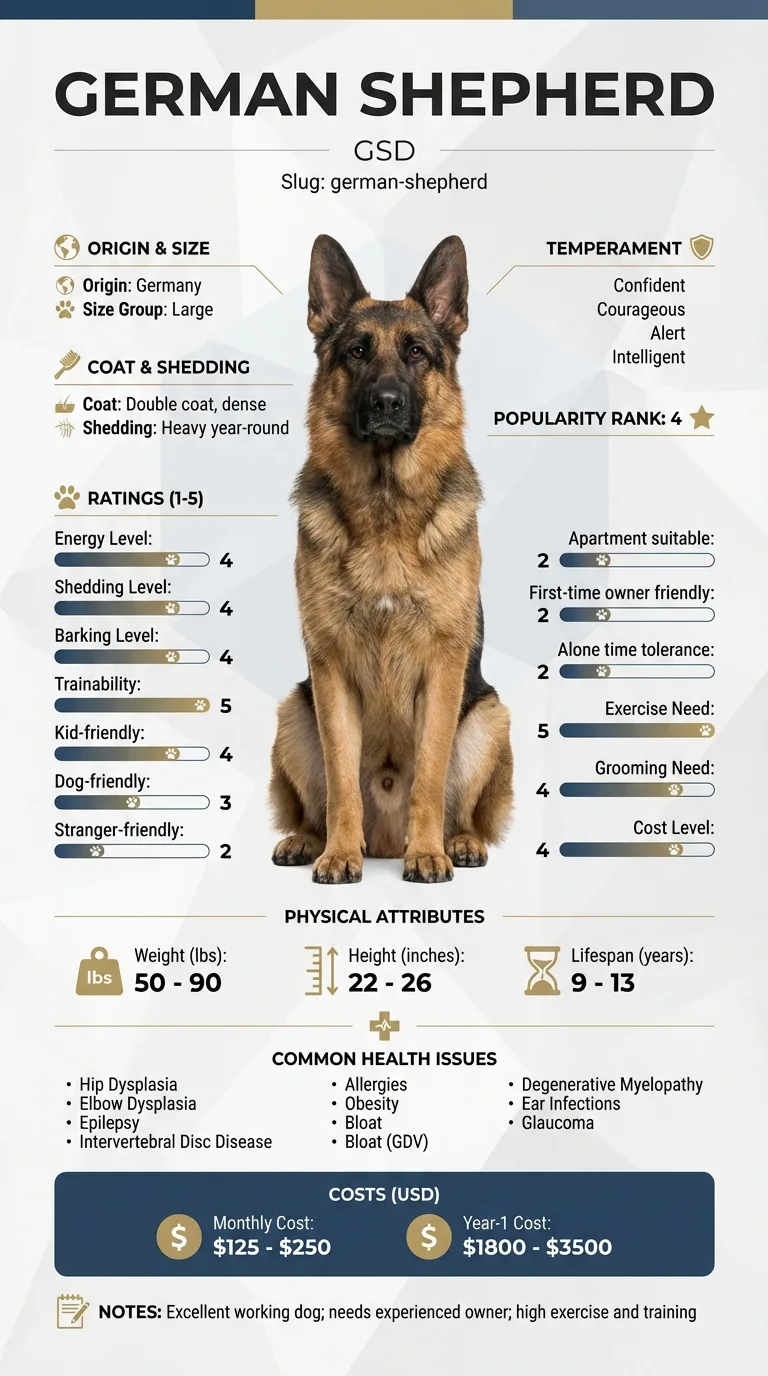
See all German Shepherd health problems, which breeds are prone to allergies, or the full German Shepherd breed guide for temperament, exercise needs and ownership costs.
It usually takes 4 to 12 weeks to see significant improvement after addressing German Shepherd allergies with the right treatment plan. Consistency is key in care and managing the dog's environment.
Success means your German Shepherd has fewer allergy symptoms, such as less itching, better skin condition, and improved overall comfort. You’ll also notice a reduction in chronic ear infections and a happier dog.
When Sarah adopted Max, her energetic German Shepherd, she noticed him scratching constantly. After a vet visit, Sarah learned that Max had several allergies, including to common environmental allergens. Determined to help him, she worked with her vet to create a tailored plan, which included a special diet and anti-allergy medication. Over several weeks, Max's symptoms improved significantly. Sarah also learned to keep her home cleaner and to avoid common allergens, like certain plants and dust. Now, Max enjoys his daily walks without the discomfort he once had.
Key takeaway: Addressing German Shepherd allergies requires a proactive approach, including a vet consultation and lifestyle adjustments to ensure your dog's comfort and happiness.
German Shepherd allergies can stem from various sources, including food, pollen, dust mites, or fleas. Environmental factors often trigger allergic reactions, leading to symptoms like itching, redness, or ear infections. If you notice these signs, consult your vet to identify the specific allergen.
To manage German Shepherd allergies, start by identifying allergens through vet-recommended tests. Once you know the triggers, you can change their diet, limit exposure to allergens, or use medications like antihistamines or steroids as prescribed. Regular grooming can also help reduce allergen buildup in their coat.
Yes, common food allergens for German Shepherds include beef, chicken, dairy, and grains. If you suspect food allergies, consider a hypoallergenic diet under your vet's guidance. This can help determine which ingredients your dog can tolerate without adverse reactions.
While training itself doesn't directly address allergies, it can help manage your dog's behavior. Teaching commands like 'leave it' can prevent your GSD from scratching or chewing at itchy areas. Consistent training can also reduce stress, which may help alleviate allergy symptoms.
If your German Shepherd's allergies are severe, it's crucial to consult a veterinarian. They may recommend allergy testing or prescribe medications to manage symptoms. A specialized diet may also be necessary to address food allergies.
Yes, German Shepherds can develop allergies as they age, even if they previously showed no symptoms. Changes in their environment or diet can trigger allergic reactions. Keeping a close eye on any new developments is important as they grow older.
Signs of food allergies in German Shepherds can include itchy skin, gastrointestinal upset, or chronic ear infections. If you suspect food allergies, it’s best to work with your vet on an elimination diet to identify the offending ingredient. Monitoring their reactions can help pinpoint the issue.
Common environmental allergens for German Shepherds include pollen, dust mites, mold, and certain grasses. Seasonal changes can also exacerbate these allergies. Regular cleaning and minimizing exposure to these elements can help reduce allergy symptoms.
You should consult your vet if your German Shepherd shows persistent itching, skin infections, or gastrointestinal issues. If symptoms worsen or don't improve with at-home care, professional guidance is necessary. Allergies can lead to more serious health problems if left untreated.
Keep your German Shepherd clean and groomed to reduce allergens on their coat. Monitor their diet closely and consult your vet for a proper allergy management plan.
Bathe your German Shepherd every 4 to 6 weeks to help manage allergens. Use a gentle, hypoallergenic shampoo to avoid further irritation.
Some over-the-counter antihistamines may be safe for German Shepherds, but always consult your vet first. They can recommend the right dosage and ensure it won't interfere with other medications.
Managing German Shepherd allergies can range from $50 to $200 monthly, depending on treatments and dietary changes. Regular vet visits can add to this cost, so budget accordingly.
A one-page prep sheet for this condition: the signs, the questions to ask, what to get priced. Unlocks here.
You get: Vet visit prep sheet
No spam. One-click unsubscribe. See our privacy policy.
Preview page 1 before you decide.