Health
How do I know if my Goldendoodle's stomach issues are chronic?
If vomiting, soft stool, or regurgitation keeps recurring over several weeks rather than resolving, treat it as a pattern worth a vet visit.

Quick answer
How do I know if my Goldendoodle's stomach issues are chronic?
If vomiting, soft stool, or regurgitation keeps recurring over several weeks rather than resolving, treat it as a pattern worth a vet visit.
Occasional soft stool is normal. A repeating pattern over weeks is what points toward a chronic gastrointestinal condition worth investigating.
Owners whose Goldendoodle has recurring vomiting, chronic loose stool, regurgitation, or discomfort after eating that doesn't resolve with a simple diet tweak are the ones who typically end up researching this.
This guide is not medical advice. If your dog shows pain, sudden behavior change, or worsening symptoms, consult a licensed veterinarian.
Some links may be affiliate links. We may earn a commission at no extra cost to you. We only suggest products we believe are helpful for dog owners.
Check this first
Most of what's covered here — occasional soft stool, mild regurgitation, an isolated bout of vomiting — can be tracked and discussed at a routine vet visit rather than treated as an emergency. The distinction is frequency and severity: a pattern over weeks points toward a chronic condition to investigate, not a same-day crisis.
That said, some signs cross the line into urgent. Repeated vomiting that prevents keeping any food or water down, blood in vomit or stool, sudden severe lethargy, a painful or distended abdomen, or rapid weight loss all warrant a same-day vet visit rather than waiting for a scheduled appointment.
Projectile vomiting, especially in a younger dog and especially if it happens consistently right after eating, is worth flagging specifically — it's associated with pyloric stenosis, a narrowing at the stomach outlet. It's seen more often in small or brachycephalic breeds, but it can occur in any dog, so it shouldn't be dismissed just because this cross isn't a typical case.
When in doubt about whether a symptom is a chronic-management issue or an emergency, a same-day call to the vet for guidance is the safer choice.
If any of these apply, call your vet or an emergency clinic now. The rest of this page is for the cases that are not an emergency.
This is a survey of chronic, recurring digestive conditions in Goldendoodles: inflammatory bowel disease, acid reflux, hiatal hernia, and pyloric stenosis. Unlike acute bloat or esophagus-specific disease, these show up as an ongoing pattern of vomiting, soft stool, or discomfort rather than a single sudden event.
None of these conditions are documented as a defining risk specifically for Goldendoodles, and pyloric stenosis in particular is more associated with small or brachycephalic breeds. Chronic digestive complaints are common across dogs generally, so a recurring pattern is worth investigating regardless of breed rather than assumed to be breed-specific.
None of these conditions are established as a specific genetic risk documented in this breed's health record. Strong food motivation typical of the retriever side can make fast eating and scavenging more common, which can aggravate reflux-type symptoms or contribute to occasional GI upset, but that's a behavioral tendency rather than a confirmed structural predisposition.
Frequent diet changes, table scraps, fast eating, and stress around mealtimes are common environmental contributors to recurring digestive symptoms, and can make an underlying condition harder to distinguish from ordinary dietary indiscretion.
Talk to a vet if a symptom pattern repeats over several weeks, or right away if you see repeated vomiting that won't stay down, blood in vomit or stool, a painful or distended abdomen, rapid weight loss, or projectile vomiting — the last of which can point toward pyloric stenosis and deserves same-day attention.
Chronic gastrointestinal issues are usually a pattern, not an event. These habits make that pattern harder to catch and treat.
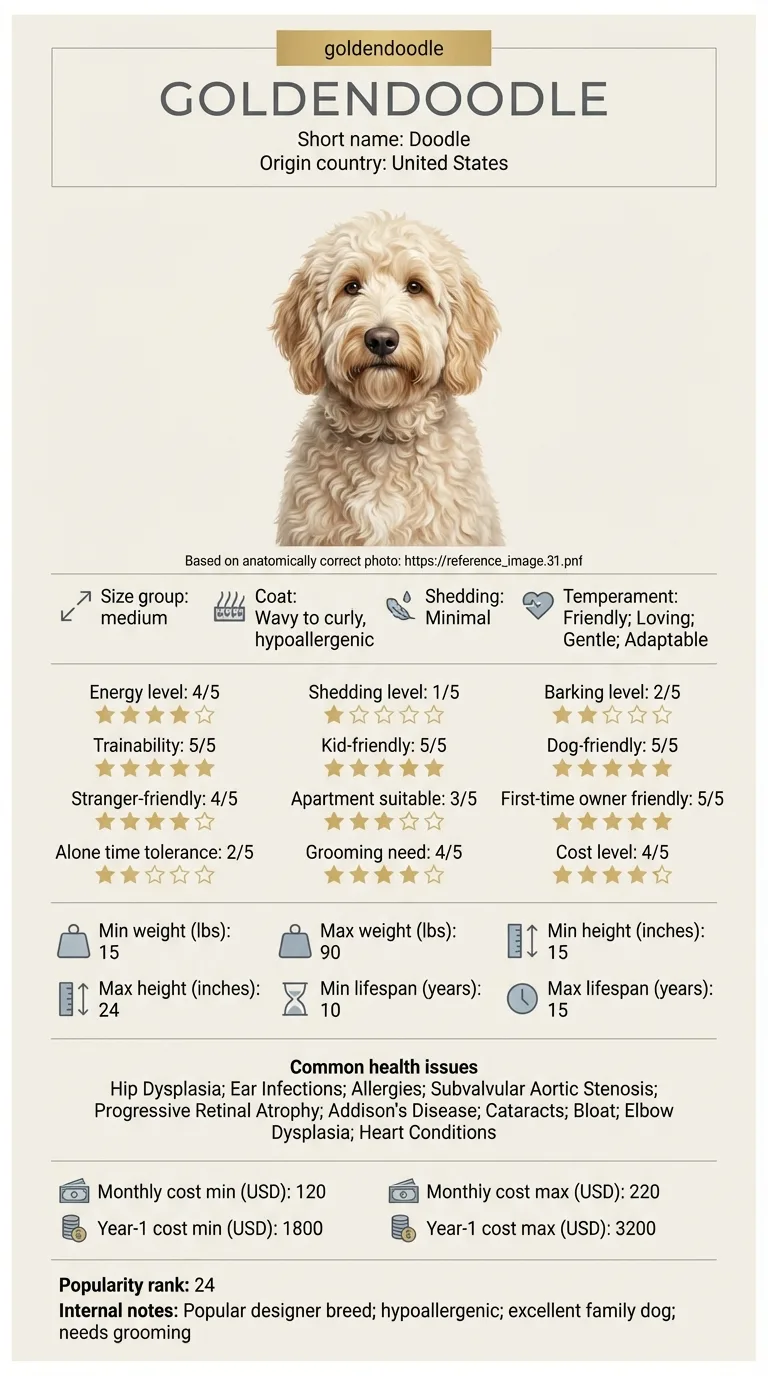
See all Goldendoodle health problems, which breeds are prone to gastrointestinal disorders, or the full Goldendoodle breed guide for temperament, exercise needs and ownership costs.
Diagnosis often takes a few weeks, since food trials need time to show results and some conditions require imaging or specialist referral. Once a cause is identified, symptom control frequently takes another few weeks to stabilize.
For conditions like IBD, success usually means long-term management rather than a cure — fewer flare-ups, stable weight, and predictable stool quality. Structural issues like a hiatal hernia may need ongoing diet management or, in some cases, surgical correction.
If you think your Doodle has gastrointestinal disorders, the plan is three steps: write down what you have seen and when it started, book a veterinary appointment rather than waiting for the next flare, and take video of the behaviour or symptom before you go — the thing you are worried about rarely happens in the consulting room. Screening in the parents covers hip dysplasia, ear infections, allergies.
What the vet visit should produce is a diagnosis and a written plan, not just reassurance: what is being ruled out, what the monitoring interval is, and which signs mean you come back sooner. Ask what the treatment costs across a year rather than per visit, because that is the number that decides whether you are managing this condition or reacting to it.
Between appointments, keep a short log — dates, what you saw, what changed. It is the single most useful thing an owner brings to a follow-up, and for gastrointestinal disorders it is often what separates a clear pattern from a guess.
Aisha Malik noticed her Goldendoodle Clementine had been having soft stool on and off for nearly two months in Bend, OR, along with the occasional bout of vomiting a few hours after dinner. Aisha had tried switching foods twice, but nothing seemed to fully resolve it. At a vet visit, Aisha brought a two-month log of exactly when the episodes happened. That pattern helped the vet narrow down testing, and Clementine was ultimately started on a structured elimination diet alongside vet-directed treatment. Symptoms became far less frequent over the following weeks.
Key takeaway: The written log of when and how often symptoms occurred was what made diagnosis faster — describing 'it happens sometimes' from memory would have given the vet far less to work with.
A single episode of vomiting or soft stool that resolves within a day or two is usually not a concern. A pattern that repeats over several weeks, or that keeps recurring after a food change, is what points toward a chronic condition worth a vet workup.
Inflammatory bowel disease is chronic inflammation of the digestive tract that causes recurring vomiting, diarrhea, or weight loss. It's typically managed long-term with diet and vet-directed treatment rather than cured outright.
It's more often seen in small or brachycephalic breeds, but it can occur in any dog, including a Goldendoodle. The hallmark sign is projectile vomiting, often shortly after meals, and it should be evaluated by a vet rather than assumed to be simple fast eating.
Acid reflux is stomach acid moving up into the esophagus, causing discomfort or regurgitation. A hiatal hernia is a structural issue where part of the stomach shifts through the diaphragm, which can cause similar symptoms but usually needs imaging to diagnose.
Vets typically start with bloodwork and a detailed history, then may use imaging or endoscopy depending on the suspected cause. Bringing a log of when symptoms occur and how often makes this process faster.
No. Bloat (GDV) is an acute, sudden emergency involving stomach twisting, covered separately. This page is about ongoing, recurring digestive issues that build a pattern over time rather than a single sudden crisis.
Sometimes a food trial resolves symptoms tied to a specific ingredient sensitivity, but conditions like IBD or a hiatal hernia usually need a vet-directed treatment plan beyond diet alone.
If vomiting, soft stool, or regurgitation keeps recurring over several weeks rather than resolving, treat it as a pattern worth a vet visit.
Log how often symptoms occur, timing relative to meals, and any diet changes — patterns are far easier to diagnose than a memory of 'it happens sometimes.'
Diagnostics like bloodwork or imaging add upfront cost, and some conditions need an ongoing prescription diet, so expect both a workup cost and possible recurring food expense.
Slower-feeding routines and calmer mealtime environments can help some dogs, though training doesn't address a structural or inflammatory condition on its own.
Yes — expect possible appetite changes, reluctance to eat, lip-licking, or general discomfort behaviors like restlessness around mealtimes.
A one-page prep sheet for this condition: the signs, the questions to ask, what to get priced. Unlocks here.
You get: Vet visit prep sheet
No spam. One-click unsubscribe. See our privacy policy.
Preview page 1 before you decide.